
The 2026 Guide to Buying an E-Bike: Motors, Batteries, and Classes Explained
Navigating the e-bike market requires understanding a new language of watt-hours, torque sensors, and legal classifications. Here is how to choose the right electric bicycle for your commute, budget, and riding style.
By Factlen Editorial Team
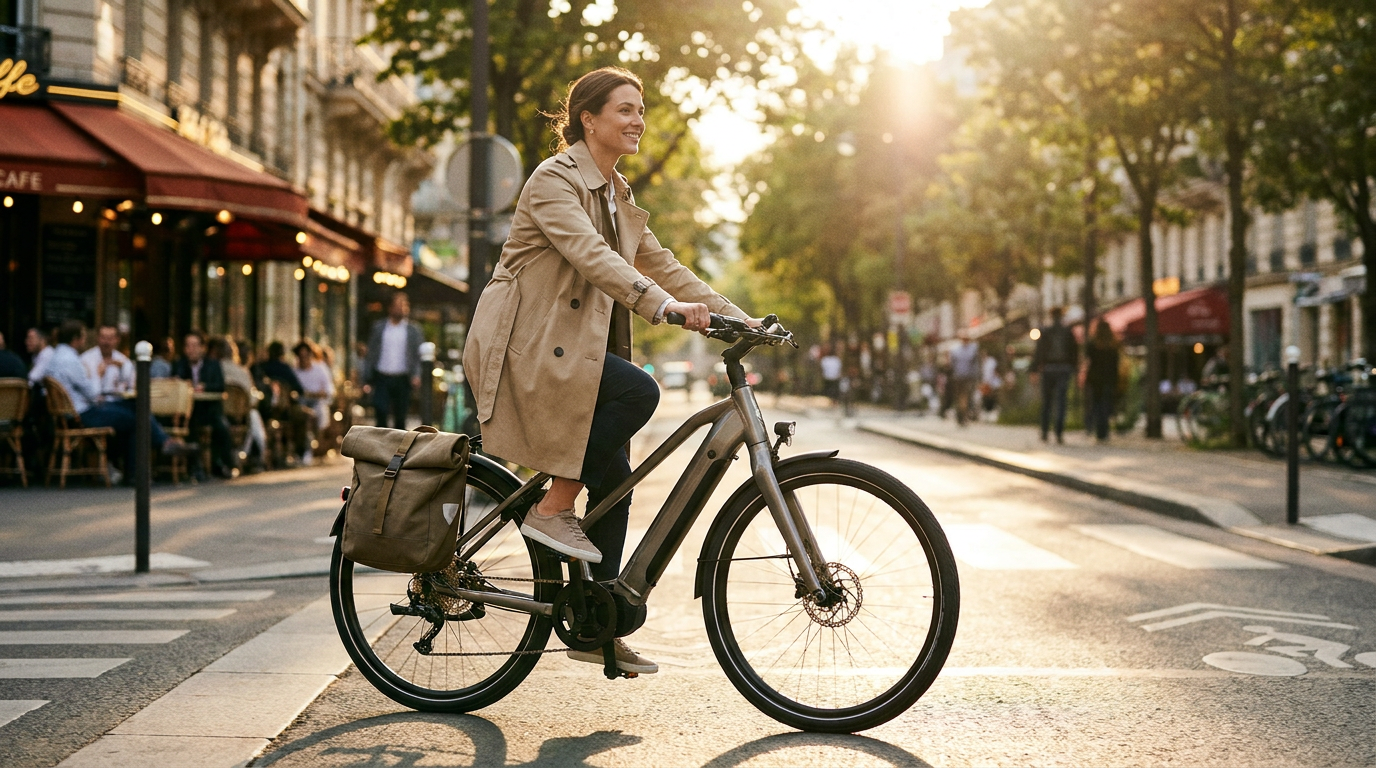
- Urban Commuters
- Value speed, cargo capacity, and car-replacement utility.
- Recreational Trail Riders
- Prioritize natural pedal feel, exercise, and off-road capability.
- Safety Advocates & Mechanics
- Focus on UL certifications, battery fire prevention, and repairability.
What's not represented
- · Pedestrians and traditional cyclists who share multi-use paths with heavier, faster e-bikes.
Why this matters
An e-bike is a significant investment that can replace car trips, improve cardiovascular health, and shrink your carbon footprint. Understanding the underlying technology ensures you buy a safe, serviceable vehicle rather than a disposable electronic toy.
Key points
- E-bikes are divided into three classes based on top speed and throttle presence.
- Mid-drive motors offer better hill climbing and balance than cheaper hub motors.
- Torque sensors provide a natural riding feel, while cadence sensors act like an on/off switch.
- Safety experts strongly advise buying e-bikes with UL 2849 electrical certifications to prevent battery fires.
- Quality entry-level e-bikes typically start around $1,500, with premium models exceeding $3,000.
The electric bicycle has transitioned from a niche novelty to a mainstream transportation powerhouse. As cities expand bike infrastructure and commuters seek alternatives to gridlocked traffic, e-bike sales have surged globally. But for first-time buyers in 2026, walking into a bike shop or browsing online can feel like stepping into a consumer electronics convention.[8]
Purchasing an e-bike is fundamentally different from buying a traditional bicycle. You are no longer just evaluating frame geometry and gear ratios; you are investing in a battery, a motor, and a software ecosystem. Making the right choice requires decoding a new language of watt-hours, torque sensors, and legal classifications.[2][5]
The first and most critical decision a buyer faces is navigating the three-class system, which dictates where and how fast you can ride. In the United States, this framework has been widely adopted by state legislatures to separate e-bikes from mopeds and motorcycles, ensuring they can still utilize traditional cycling infrastructure.[1][5]

Class 1 e-bikes are the most universally accepted category. They provide electrical assistance only when the rider is actively pedaling, and the motor cuts off entirely once the bike reaches 20 miles per hour. Because they closely mimic the behavior and speed of a traditional bicycle, Class 1 models are typically permitted on any bike path, greenway, or mountain bike trail.[1][5]
Class 2 e-bikes introduce a throttle to the handlebars. Like Class 1, they are capped at a maximum motor-assisted speed of 20 mph, but the rider can propel the bike forward without pedaling at all. This feature is highly valued by riders who may need help accelerating from a dead stop at a traffic light, or those with physical limitations. However, because of the throttle, Class 2 bikes are often restricted from dedicated off-road mountain bike trails.[5][6]
For those looking to entirely replace a car commute, Class 3 e-bikes are often the top choice. These are pedal-assist only—meaning no throttle—but the motor continues to provide power up to 28 mph. This higher top speed allows riders to safely keep pace with urban street traffic, though the increased velocity means Class 3 bikes are frequently banned from shared multi-use pedestrian paths.[5][6]
Once the legal classification is settled, the next major hardware choice is the motor's location. The market is divided into two primary architectures: hub motors and mid-drive motors. Each offers a drastically different riding experience and price point.[3][4]
Once the legal classification is settled, the next major hardware choice is the motor's location.
Hub motors are housed directly inside the center of the rear or front wheel. They are mechanically simpler and significantly cheaper to manufacture, making them the standard choice for budget-friendly e-bikes. While they provide excellent, reliable propulsion for flat city riding, a heavy rear-hub motor can make the bike feel unbalanced and back-heavy when lifting it onto a rack.[4]

Mid-drive motors, conversely, are positioned at the bike's bottom bracket, right between the pedals. This placement keeps the bike's center of gravity low and central, drastically improving handling. More importantly, a mid-drive motor leverages the bicycle's existing gears. When the rider shifts into an easier gear to climb a steep hill, the motor also benefits from that mechanical advantage, making mid-drives vastly superior for hilly terrain.[4][6]
The way the motor delivers its power is governed by sensors, and this is where the ride quality diverges sharply. Entry-level e-bikes typically rely on cadence sensors, which simply detect whether the pedals are turning. If the pedals move, the motor kicks in with a predetermined amount of power, often feeling like an abrupt on/off switch.[5][6]
Premium e-bikes utilize torque sensors, which measure exactly how much physical force the rider is applying to the pedals. The motor then amplifies that specific effort in real-time. If you pedal lightly, the motor whispers; if you stand up and mash the pedals on a climb, the motor surges to match you. This creates a seamless, bionic feel that cadence sensors cannot replicate.[5][6]

Powering these systems is the battery, typically measured in watt-hours (Wh). For a standard commuter or recreational e-bike, a capacity between 500 and 750 Wh is the industry norm, generally yielding a realistic range of 30 to 50 miles per charge depending on the assist level used, rider weight, and terrain.[3][7]
However, battery safety has become the most pressing issue in the e-bike industry. The proliferation of cheap, uncertified lithium-ion batteries from anonymous online sellers has led to a spike in dangerous battery fires. Safety advocates and fire departments now strongly urge consumers to only purchase e-bikes whose electrical systems are certified to UL 2849 standards, which ensures rigorous testing against thermal runaway.[1][2]
This safety imperative ties directly into budget expectations. While the internet is flooded with e-bikes priced under $1,000, experts warn that these models often cut corners on battery safety, braking power, and component durability. Furthermore, many local bike shops refuse to service direct-to-consumer bikes with proprietary, unbranded electronics due to liability and a lack of replacement parts.[2][8]
For a reliable, safe, and serviceable e-bike in 2026, the sweet spot generally begins around $1,500 to $2,500 for a quality hub-drive model, and scales up to $3,000 to $4,000 for a mid-drive bike from a reputable manufacturer like Bosch, Yamaha, or Shimano. Investing in hydraulic disc brakes is also highly recommended to safely stop the heavier 45-to-70-pound frame.[7][8]
Ultimately, an e-bike is a significant investment in mobility and health. Buyers are encouraged to test ride multiple styles at a local dealer, prioritize certified electrical systems, and choose a motor and class that genuinely aligns with their daily geography. When chosen correctly, an e-bike doesn't just sit in the garage—it fundamentally changes how you move through the world.[8][9]
Viewpoints in depth
Urban Commuters
Riders focused on replacing car trips with efficient, high-speed travel.
For daily commuters, the e-bike is a utility vehicle. This camp heavily favors Class 3 e-bikes capable of 28 mph, allowing them to safely take the lane in city traffic and cut down commute times. They prioritize practical features over off-road capability, seeking out step-through frames for riding in work clothes, integrated lighting systems, and robust rear racks capable of carrying heavy panniers or groceries.
Recreational Trail Riders
Cyclists seeking outdoor exercise and natural riding dynamics.
Recreational riders and mountain bikers prioritize the 'bicycle' feel over raw motorized power. They overwhelmingly prefer Class 1 mid-drive e-bikes equipped with sensitive torque sensors. Because these bikes require active pedaling and amplify human effort naturally, they provide a genuine cardiovascular workout while allowing riders to conquer steeper hills and longer distances than they could on a traditional analog bike.
Safety Advocates & Mechanics
Industry professionals focused on battery safety and long-term serviceability.
Bike mechanics and fire safety officials view the e-bike market through the lens of risk and repair. They strongly caution against ultra-cheap, direct-to-consumer e-bikes that lack UL 2849 electrical certification, citing the severe fire risks of unbranded lithium-ion batteries. Furthermore, mechanics advocate for buying from established brands because proprietary, anonymous electronics are often impossible to source parts for when they inevitably break.
What we don't know
- How future state and local legislation might further restrict or reclassify high-speed Class 3 e-bikes on shared pedestrian paths.
- Whether solid-state battery technology will become commercially viable for e-bikes in the near future, which could drastically reduce weight and eliminate fire risks.
Key terms
- Mid-Drive Motor
- An electric motor positioned at the bike's pedals that leverages the bicycle's mechanical gears for superior hill-climbing efficiency.
- Hub Motor
- An electric motor housed inside the center of the front or rear wheel, offering a simpler and more budget-friendly propulsion system.
- Torque Sensor
- A premium sensor that measures exactly how hard the rider is pedaling and delivers proportional motor assistance for a smooth, natural feel.
- Cadence Sensor
- A basic sensor that detects if the pedals are turning, delivering a fixed amount of motor power regardless of the rider's physical effort.
- UL 2849
- A critical safety standard certifying that an e-bike's electrical system and battery have been rigorously tested against fire and electrical risks.
- Watt-Hour (Wh)
- A measurement of battery capacity; a higher Wh number generally indicates a longer riding range per charge.
Frequently asked
Do I need a license or insurance to ride an e-bike?
In most US states, Class 1, 2, and 3 e-bikes are legally classified as bicycles, meaning no driver's license, registration, or insurance is required. However, local trail access rules can vary.
Can I ride an electric bike in the rain?
Yes. Quality e-bikes from reputable brands are designed to be highly water-resistant and are safe to ride in the rain. However, they should never be fully submerged in water or cleaned with a high-pressure power washer.
How long do e-bike batteries last before needing replacement?
Most lithium-ion e-bike batteries last between 3 to 5 years, or roughly 500 to 1,000 full charge cycles, before their capacity significantly degrades and requires replacement.
Are e-bikes much heavier than regular bikes?
Yes. While a standard bicycle might weigh 30 pounds, most e-bikes weigh between 45 and 70 pounds due to the motor and battery. However, the motor's assistance makes the extra weight unnoticeable while riding.
Sources
Source coverage
9 outlets
3 viewpoints surfaced








[1]Bicycle ColoradoSafety Advocates & Mechanics
E-Bike Buying Guide
Read on Bicycle Colorado →[2]E-bike LoversSafety Advocates & Mechanics
The Ultimate E-bike Buying Guide
Read on E-bike Lovers →[3]Epic Road RidesRecreational Trail Riders
E-bike buying guide: what to know before buying
Read on Epic Road Rides →[4]BikeLine AustraliaRecreational Trail Riders
E-Bike Buying Guide for Beginners
Read on BikeLine Australia →[5]Priority BicyclesSafety Advocates & Mechanics
E-Bike Classes Explained
Read on Priority Bicycles →[6]Crossroads CyclingSafety Advocates & Mechanics
The Three E-bike Classes Explained
Read on Crossroads Cycling →[7]Bike24Safety Advocates & Mechanics
E-Bike Buying Guide: 5 Tips
Read on Bike24 →[8]Riding 5Urban Commuters
How to Choose an E-bike
Read on Riding 5 →[9]Factlen Editorial TeamSafety Advocates & Mechanics
Synthesis by Factlen editorial team
Read on Factlen Editorial Team →
More in shopping
See all 9 stories →E-Bike Tech
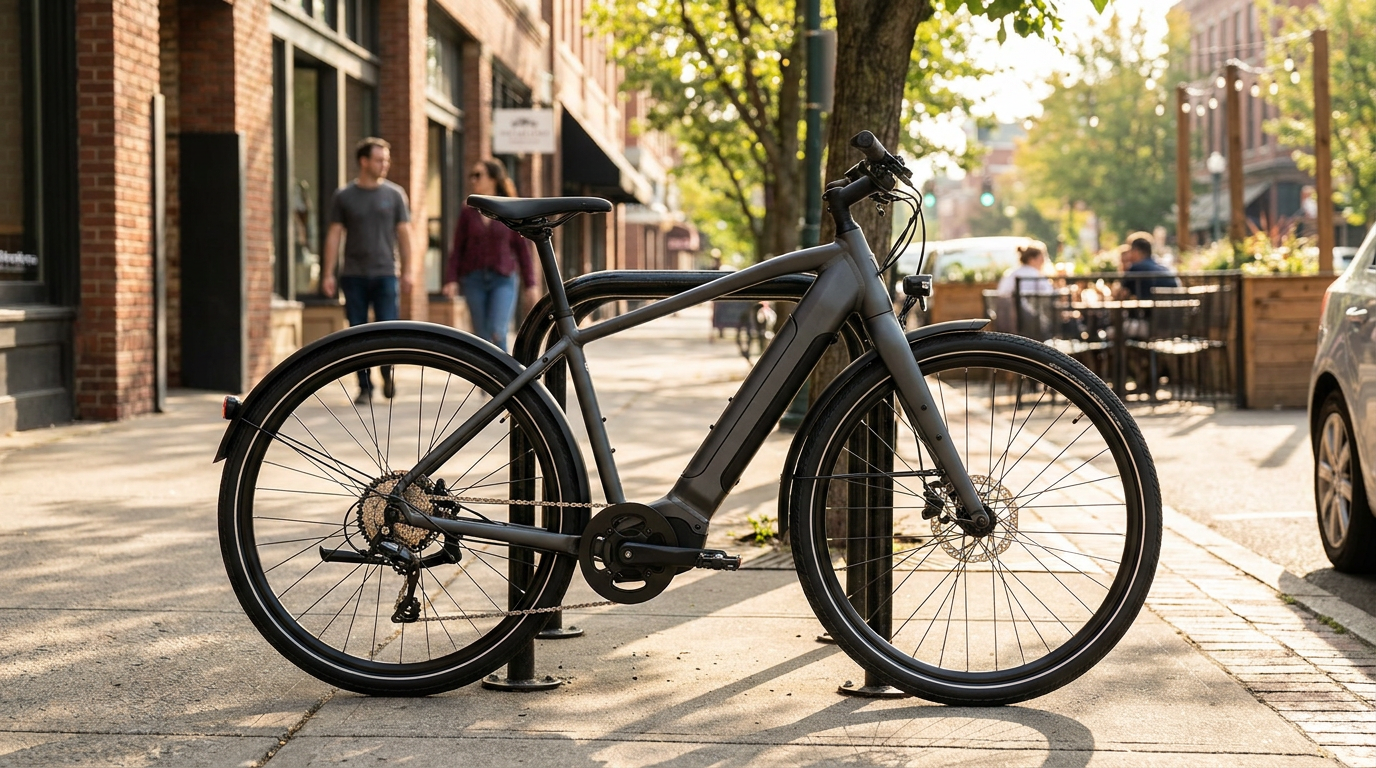
The 2026 E-Bike Buying Guide: Motors, Classes, and the Safety Specs You Can't Ignore
7 sources
EV Tech
The 2026 Electric Motorcycle Buyer's Guide: Range, Charging, and the Solid-State Shift
7 sources
TV Tech
OLED vs. Mini-LED TVs in 2026: The Complete Technology Comparison
7 sources

Summer Sales
Amazon Shifts Prime Day to June, Triggering Massive Summer Retail Showdown
6 sources

Every angle. Every day.
Get shopping stories with full source coverage and perspective breakdowns delivered to your inbox.