
The 2026 E-Bike Buying Guide: Motors, Classes, and the Safety Specs You Can't Ignore
As electric bicycles replace cars for millions of commuters, understanding motor types, the three-class system, and mandatory UL safety certifications is crucial for finding a reliable ride.
By Factlen Editorial Team
- Urban Commuters
- Prioritize affordability, low maintenance, and convenience for city travel.
- Off-Road & Cargo Riders
- Demand high performance, natural ride feel, and maximum torque for challenging conditions.
- Safety Regulators
- Focused on mitigating fire risks and establishing baseline electrical standards.
What's not represented
- · Traditional Cyclists
- · Delivery Couriers
Why this matters
Buying the wrong e-bike can leave you struggling up hills, banned from local trails, or exposed to severe battery fire risks. Knowing how to read the technical specifications ensures you invest in a safe, capable vehicle that genuinely improves your daily commute.
Key points
- The e-bike market relies on a 3-class system that dictates speed limits and throttle usage, determining where bikes can legally ride.
- Hub motors offer affordable, low-maintenance cruising for flat terrain, while mid-drive motors integrate with the bike's gears for superior hill climbing.
- Torque (measured in Nm) is a more important metric than watts for riders who need to carry cargo or tackle steep inclines.
- UL 2849 certification is now the industry standard for fire safety, testing the entire electrical system rather than just the battery.
- Major cities are increasingly banning the sale of uncertified e-bikes to prevent catastrophic lithium-ion battery fires in residential buildings.
The electric bicycle market in 2026 has definitively matured from a niche recreational hobby into a primary mode of transportation for millions of people. As cities expand their cycling infrastructure and commuters seek alternatives to gridlocked traffic and expensive parking, e-bikes have emerged as the ultimate urban mobility solution. However, this explosion in popularity has flooded the market with thousands of models, ranging from highly engineered commuter tools to cheaply assembled imports. For consumers, the difference between a reliable daily driver and a dangerous liability is no longer obvious at first glance; it is hidden deep within the engineering details. Navigating this landscape requires moving past flashy marketing claims about top speed and focusing on the core architecture of the machine.[7]
The stakes for making an informed purchase have never been higher. Beyond the frustration of a flat tire or a broken chain, buying the wrong e-bike can have severe consequences. A motor with insufficient torque will leave a rider struggling up hills, while purchasing the wrong legal classification can result in being banned from local bike paths and nature trails. Most critically, the proliferation of untested lithium-ion batteries has introduced severe fire hazards into homes and apartment buildings. Understanding the technical specifications and safety certifications is no longer an optional deep dive for enthusiasts—it is a mandatory prerequisite for anyone looking to safely integrate an electric bicycle into their daily life.[4][7]
The first and most fundamental decision any buyer must make is navigating the three-class system, a legal framework that dictates where and how fast an e-bike can be ridden. Class 1 e-bikes are designed to provide motor assistance only when the rider is actively pedaling, with the electrical support capping out at 20 miles per hour. Because they require human effort to move and operate at moderate speeds, Class 1 models are widely considered the "gold standard" for access. They are generally permitted on most paved bike paths, multi-use urban trails, and purpose-built mountain bike singletrack, making them the most versatile option for riders who want to mix commuting with recreation.[1]
Class 2 e-bikes introduce a throttle mechanism, allowing the bicycle to propel itself forward without any pedaling effort from the rider, though the motor assistance is still legally capped at 20 miles per hour. This feature makes Class 2 models exceptionally popular for stop-and-go city traffic, allowing riders to accelerate easily from a dead stop at traffic lights. They are also highly beneficial for riders with limited mobility or those carrying heavy cargo. However, because they can operate essentially as low-speed electric mopeds, Class 2 bikes face stricter regulations and are frequently banned from non-motorized nature trails and certain pedestrian-heavy paths.[1]

Finally, Class 3 e-bikes, often referred to as "speed pedelecs," are engineered for high-performance commuting. Like Class 1, they typically require the rider to pedal to engage the motor, but they provide electrical assistance up to a much faster 28 miles per hour. These models are specifically designed for long-distance road commuting, allowing cyclists to safely keep pace with vehicular traffic on city streets. Due to their higher speeds, Class 3 e-bikes are almost universally restricted from multi-use paths and off-road trails, and riders must be hyper-aware of local traffic laws, which often mandate helmet use and restrict riders under a certain age.[1]
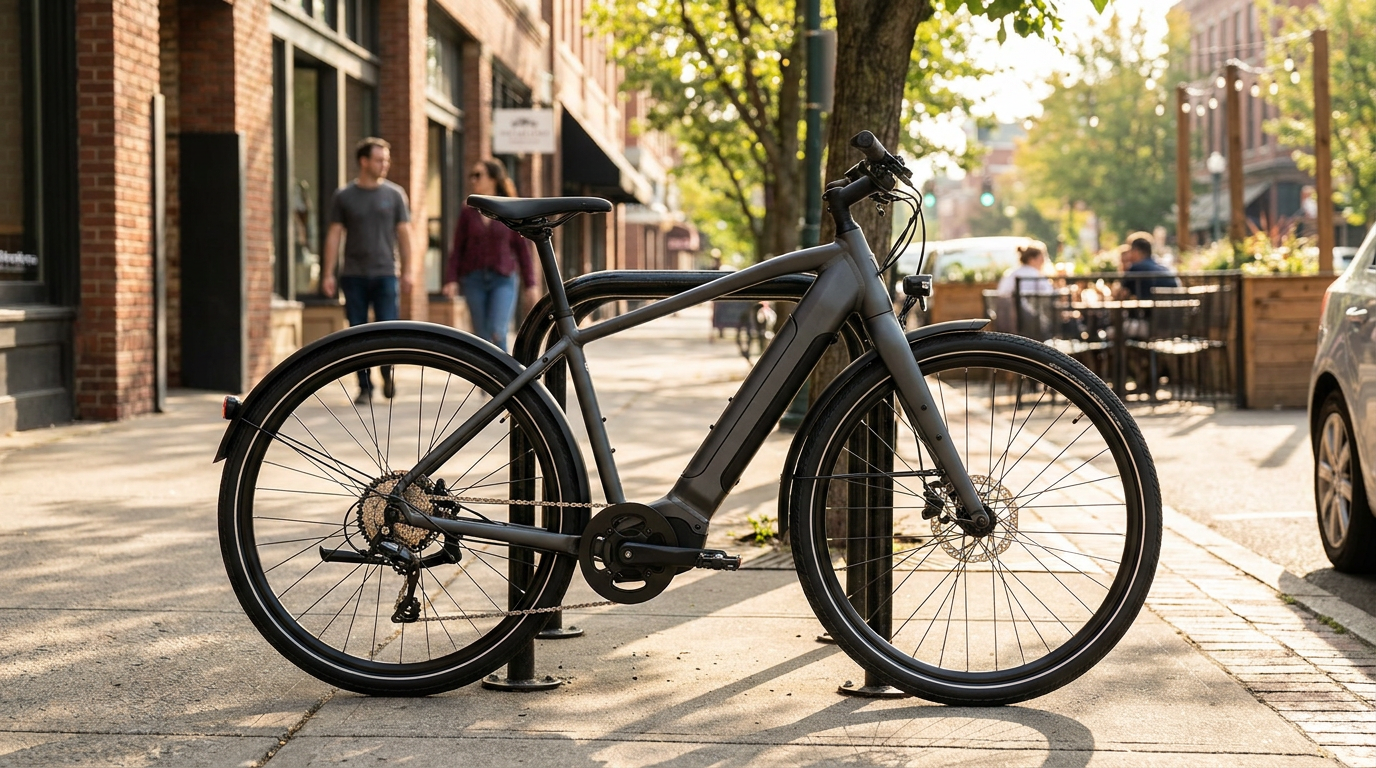
Once the appropriate legal class is chosen, the next major architectural decision is selecting the motor type: hub-drive versus mid-drive. Hub motors represent the older, more common technology and are built directly into the center of either the front or rear wheel. Because they are housed entirely within the wheel hub, they operate completely independently of the bicycle's traditional drivetrain. When the motor engages, it simply pushes or pulls the wheel forward, functioning much like the engine on a motorcycle or scooter, without interacting with the chain or the gears.[2][3]
Hub motors offer several distinct advantages, primarily their affordability and simplicity. Because they do not run power through the bike's chain, they cause significantly less wear and tear on the drivetrain, resulting in lower maintenance costs over time. They provide a straightforward, consistent push that is ideal for flat urban commutes and casual cruising. However, their independence from the gear system is also their biggest limitation; because they cannot leverage the bike's mechanical advantage, hub motors often struggle and lose efficiency on steep inclines. Additionally, placing a heavy motor in the rear wheel can create an unbalanced, rear-heavy feel that negatively impacts the bike's handling.[2][3]
Hub motors offer several distinct advantages, primarily their affordability and simplicity.
Mid-drive motors, by contrast, are positioned at the bicycle's bottom bracket, situated directly between the pedals. This central and low placement fundamentally changes the physics of the bicycle, creating a perfectly balanced weight distribution that closely mimics the handling of a traditional, non-electric bike. Because the weight is centered, mid-drive e-bikes are significantly more nimble and stable, particularly when navigating tight corners, carrying heavy loads on rear racks, or riding over uneven and technical off-road terrain.[2]

Crucially, mid-drive motors transfer their power directly through the bicycle's chain and rear cassette. This integration allows the motor to take full advantage of the bike's mechanical gears. Just as shifting into a lower gear makes it easier for a human to pedal up a hill, it also makes it easier for the motor to drive the bike upward. This makes mid-drive systems vastly superior for climbing steep hills, hauling heavy cargo, or navigating challenging mountain trails. The primary trade-offs for this performance are a significantly higher upfront cost and increased wear on the chain and gears, requiring more frequent drivetrain maintenance.[2][3]
When evaluating the power of these motors, buyers often fixate entirely on wattage, but torque is actually the true measure of an e-bike's real-world capability. Watts dictate the motor's overall power consumption and influence its top speed, but torque—measured in Newton-meters (Nm)—represents the raw rotational force or "muscle" the motor can generate. If watts determine how fast the bike can go on a flat road, torque determines how quickly it can accelerate from a stop and how effectively it can conquer a steep hill without stalling.[7]
Understanding torque ratings is essential for matching an e-bike to its intended environment. A motor producing 30 to 40 Nm of torque might feel perfectly adequate for a lightweight commuter navigating flat urban streets. However, riders who face steep daily inclines, intend to haul groceries or children, or plan to ride off-road should look for motors offering between 60 and 85 Nm of torque. This higher torque rating is what gets a heavy, fully loaded bicycle moving from a dead stop and sustains its momentum when gravity is working against it.[7]
Despite the importance of motor specs, the most critical shift in the 2026 e-bike landscape is the strict enforcement of electrical safety certifications, specifically the UL 2849 standard. Over the past few years, a surge in catastrophic lithium-ion battery fires—often caused by cheap, untested imports and aftermarket chargers—has forced regulators to crack down on the micro-mobility industry. The U.S. Consumer Product Safety Commission has issued stark warnings, and consumers are increasingly realizing that cutting corners on battery safety is a risk they cannot afford to take.[4][5]
UL 2849 is a comprehensive, system-level safety standard developed by Underwriters Laboratories. Unlike older standards like UL 2271, which only tested the battery pack in isolation, UL 2849 evaluates the e-bike's entire electrical system as a unified whole. It rigorously tests the battery, the motor, the controller, and the charger to ensure they communicate safely and can withstand electrical stress. The testing process verifies that the components will not overcharge, short circuit, or enter thermal runaway, providing a critical layer of fire and electrocution protection.[4][6]

The importance of this certification has moved from a consumer recommendation to a strict legal requirement in many major markets. In jurisdictions like New York City, it is now entirely illegal to sell, lease, or distribute an e-bike that does not carry a UL 2849 certification from a recognized testing laboratory. For buyers anywhere in the world, checking for a legitimate UL 2849 badge on the frame or battery is now the non-negotiable baseline for safely bringing an electric bicycle into a home, garage, or office building.[5]
Ultimately, choosing the best e-bike in 2026 requires looking past the marketing hype and aligning the machine's engineering with your specific daily needs. Whether you opt for the low-maintenance simplicity of a Class 2 hub-drive for flat city streets, or invest in the high-torque climbing power of a Class 1 mid-drive for mountain trails, the core principles remain the same. By understanding the legal classes, prioritizing torque over raw wattage, and absolutely insisting on UL 2849 safety certification, riders can confidently invest in a vehicle that genuinely transforms their mobility and enhances their daily life.[7]
How we got here
2021-2022
E-bike adoption surges globally, but a rise in lithium-ion battery fires from untested imports sparks safety concerns.
March 2023
New York City passes Initiative 663-A, making it illegal to sell e-bikes without third-party electrical certification.
2026
UL 2849 certification becomes the de facto baseline for reputable e-bike manufacturers across the global market.
Viewpoints in depth
Urban Commuters
Prioritize affordability, low maintenance, and convenience for city travel.
For riders navigating flat city streets, the nuances of gear integration matter less than arriving at work sweat-free. This camp heavily favors Class 2 e-bikes with hub motors, as the throttle allows for easy starts at traffic lights without pedaling. They value integrated lighting, cargo racks, and puncture-resistant tires over high-end torque specs, viewing the e-bike primarily as a car replacement for short-distance utility.
Off-Road & Cargo Riders
Demand high performance, natural ride feel, and maximum torque for challenging conditions.
Mountain bikers and parents hauling heavy cargo trailers require motors that can multiply their effort on steep inclines. This group universally prefers mid-drive motors because they leverage the bike's mechanical cassette, preventing the motor from bogging down on hills. Furthermore, because many trail networks ban throttles, this camp strictly adheres to Class 1 pedal-assist models to maintain access to non-motorized singletrack and multi-use paths.
Safety Regulators
Focused on mitigating fire risks and establishing baseline electrical standards.
Following a sharp increase in lithium-ion battery fires linked to cheap, uncertified micro-mobility devices, regulators and fire departments have taken a hardline stance. They argue that voluntary standards are insufficient and advocate for mandatory UL 2849 certification across the industry. By requiring the entire electrical system to be tested as a unified whole, they aim to eliminate the thermal runaway events that have devastated apartment buildings and homes.
What we don't know
- How secondary markets for used e-bikes will adapt to new safety laws, as older, uncertified models become difficult to legally resell.
- Whether federal legislation will eventually unify the patchwork of local e-bike trail access laws across different states and municipalities.
Key terms
- Pedal Assist (PAS)
- A system where the electric motor only provides power when the rider is actively pedaling.
- Throttle
- A mechanism, usually on the handlebar, that allows the motor to propel the bike without the rider needing to pedal.
- Torque (Nm)
- The rotational force produced by the motor, measured in Newton-meters. Higher torque means better acceleration and hill-climbing ability.
- Watt-hours (Wh)
- A measure of battery capacity. It indicates how much energy the battery can store, directly impacting the bike's maximum range.
- UL 2849
- A comprehensive safety standard that evaluates an e-bike's entire electrical system for fire and electrical hazards.
Frequently asked
Do I need a driver's license to ride an e-bike?
In most regions, no. As long as the e-bike falls within the standard 3-class system and the motor is under 750 watts, it is legally treated as a bicycle, not a motor vehicle.
What is the difference between a hub motor and a mid-drive motor?
A hub motor is built into the wheel and pushes the bike independently of the gears. A mid-drive motor is located at the pedals and uses the bike's chain and gears, making it much better for climbing hills.
Why is UL 2849 certification so important?
UL 2849 tests the entire electrical system—battery, motor, and charger—to ensure they work together safely. It prevents thermal runaway and battery fires, and is now legally required in cities like New York.
How far can an e-bike go on a single charge?
Range varies widely based on battery capacity (Watt-hours), motor efficiency, terrain, and rider effort. Most modern commuter e-bikes offer a realistic range of 30 to 60 miles per charge.
Sources
Source coverage
7 outlets
3 viewpoints surfaced







[1]Bicycle ColoradoOff-Road & Cargo Riders
E-Bike Buying Guide
Read on Bicycle Colorado →[2]Polygon BikesOff-Road & Cargo Riders
Electric Bike Motors: Hub or Mid?
Read on Polygon Bikes →[3]eBikelingUrban Commuters
Hub vs Mid Drive: The Ultimate Ebike Motor Comparison
Read on eBikeling →[4]ACT LABSafety Regulators
Testing for UL 2849 Electrical Systems for eBikes
Read on ACT LAB →[5]SGSSafety Regulators
Understanding E-Bike Standard UL 2849: Commonly Asked Questions
Read on SGS →[6]Tern BicyclesSafety Regulators
UL Certification for eBikes: What to Look For Before You Buy
Read on Tern Bicycles →[7]Factlen Editorial Team
Synthesis by Factlen editorial team
Read on Factlen Editorial Team →

More in shopping
See all 6 stories →EV Tech
The 2026 Electric Motorcycle Buyer's Guide: Range, Charging, and the Solid-State Shift
7 sources
TV Tech
OLED vs. Mini-LED TVs in 2026: The Complete Technology Comparison
7 sources

Summer Sales
Amazon Shifts Prime Day to June, Triggering Massive Summer Retail Showdown
6 sources

Sleep Tech
How Accurate Is Your Sleep Tracker? A Review of the Clinical Evidence
6 sources

Every angle. Every day.
Get shopping stories with full source coverage and perspective breakdowns delivered to your inbox.