
US and Iran Open High-Stakes Nuclear Talks in Switzerland Amid Lebanon Strikes and Hormuz Threats
Delegations from the US and Iran have launched a 60-day negotiation window at the Lake Lucerne Summit, mediated by Qatar and Pakistan. The fragile diplomatic effort faces immediate hurdles following renewed violence in Lebanon, threats from President Trump, and Iran's move to close the Strait of Hormuz.
By Factlen Editorial Team
- US Administration
- Aims to use the 60-day window to secure permanent restrictions on Iran's nuclear program while using the threat of military force to deter proxy attacks in Lebanon.
- Iranian Leadership
- Demands strict adherence to the interim ceasefire—specifically regarding Israeli operations in Lebanon—and is leveraging the Strait of Hormuz to force economic concessions.
- Mediating Nations
- Focused on preventing the collapse of the fragile dialogue by compartmentalizing the disputes into technical working groups and maintaining a neutral environment.
What's not represented
- · Israeli Government Officials
- · Lebanese Civilians
- · Global Energy Importers
Why this matters
These negotiations represent the most significant attempt to end a 114-day conflict that has destabilized the Middle East and driven global oil prices above $100 a barrel. The outcome of the 60-day window will dictate whether the region steps back from the brink of broader war or plunges into deeper economic and military chaos.
Key points
- US and Iranian delegations opened a 60-day negotiation window at the Lake Lucerne Summit in Switzerland.
- The talks aim to finalize the Islamabad MoU, addressing Iran's nuclear program and regional security.
- Violence in Lebanon escalated as Israel launched strikes and Hezbollah retaliated, straining the ceasefire.
- Iran announced the closure of the Strait of Hormuz, pushing global oil prices above $100 a barrel.
- President Trump threatened military strikes and US-imposed tolls on the Strait if a deal fails.
- Qatar and Pakistan are mediating the talks, establishing technical groups to navigate the deep divides.
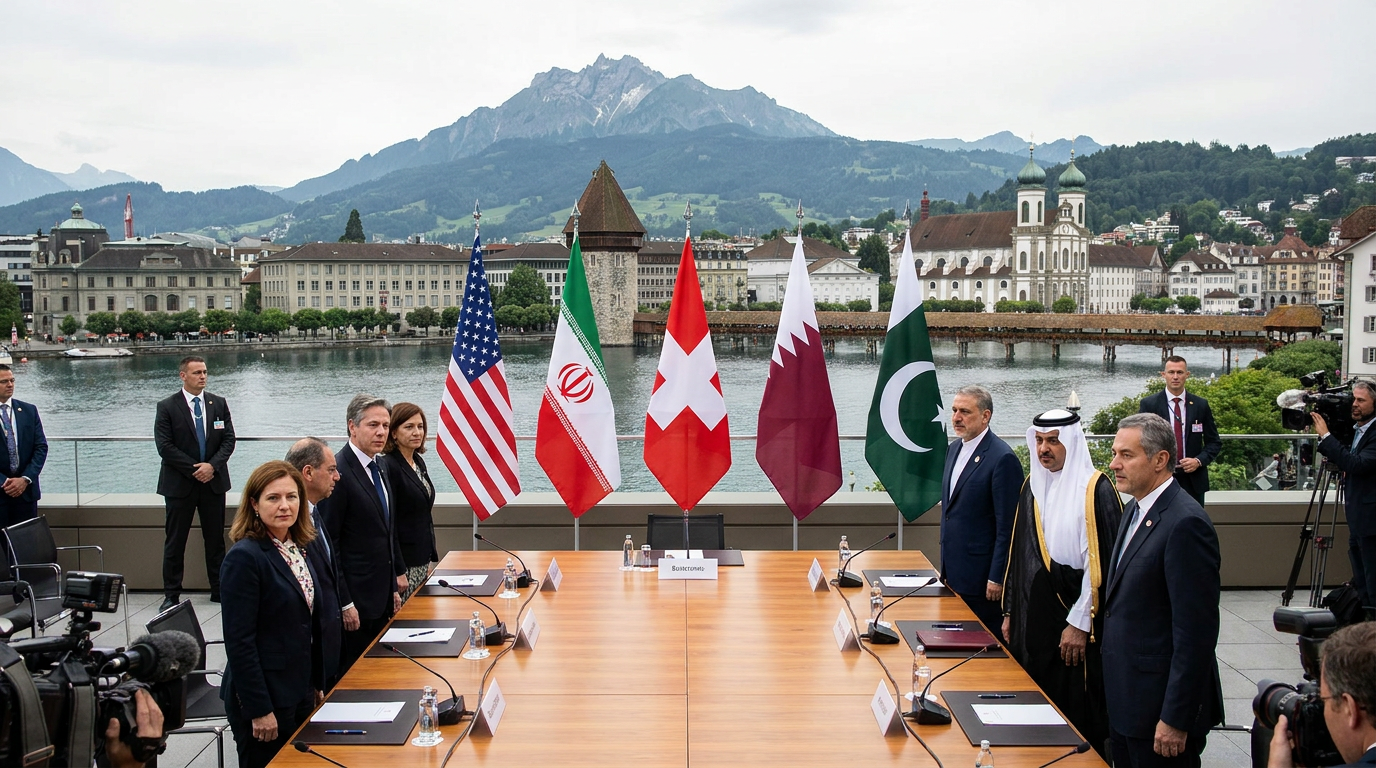
High-stakes diplomatic negotiations between the United States and Iran have officially opened at the Bürgenstock resort overlooking Lake Lucerne in Switzerland. The summit aims to forge a permanent resolution to a 114-day conflict that has violently reshaped the Middle East and rattled global energy markets.[2][8]
The primary objective of the Lake Lucerne Summit is to operationalize the "Islamabad Memorandum of Understanding," a fragile interim peace framework signed electronically just days prior. Negotiators are now racing against a 60-day clock to convert that preliminary ceasefire into a durable treaty addressing Iran's nuclear program, regional security, and crippling economic sanctions.[1][8]
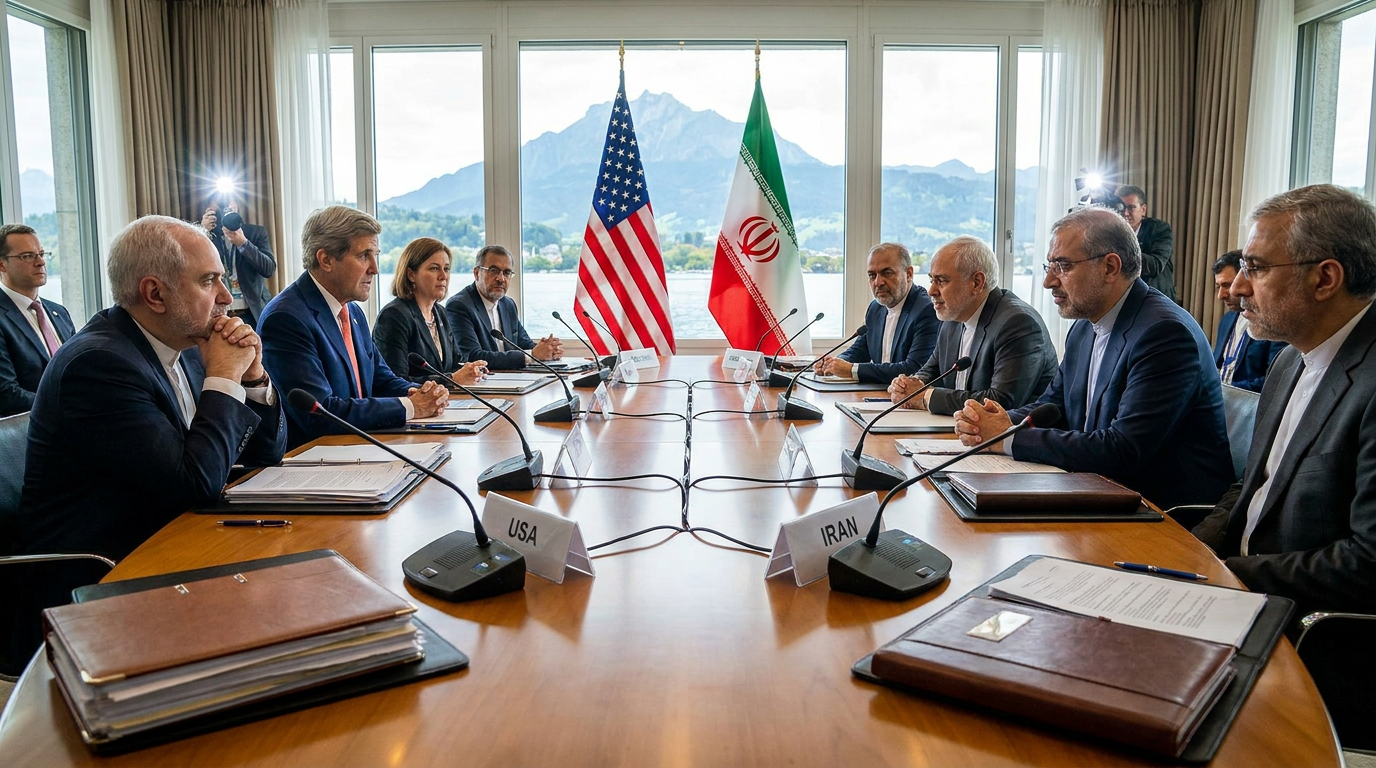
The delegations reflect the gravity of the moment. The United States is represented by Vice President JD Vance, alongside Special Envoy Steve Witkoff and Jared Kushner. Across the table, the Iranian delegation is led by Parliament Speaker Mohammad Bagher Ghalibaf and Foreign Minister Abbas Araghchi.[2][6]

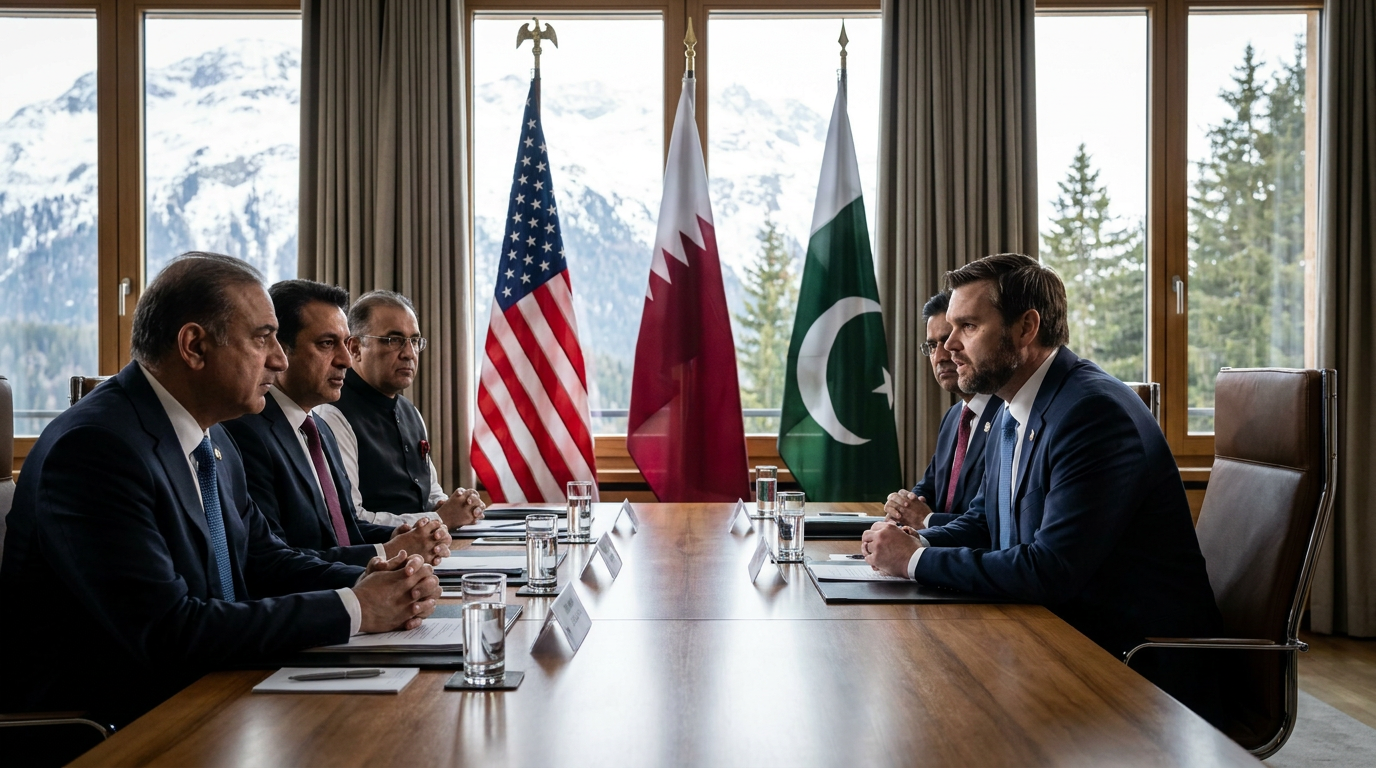
Because Washington and Tehran do not maintain formal diplomatic relations, the summit relies heavily on the mediating presence of Qatar and Pakistan. Qatari Prime Minister Sheikh Mohammed bin Abdulrahman Al Thani and Pakistani Prime Minister Shehbaz Sharif are both in attendance, working to keep the dialogue from collapsing under the weight of immediate regional crises.[7][8]
The talks opened under a severe cloud of escalating violence. Just as diplomats were arriving in Switzerland, Israel launched a wave of retaliatory airstrikes in southern Lebanon and the Bekaa Valley, killing at least 18 people following Hezbollah rocket attacks that killed four Israeli soldiers.[4]
Iranian officials immediately condemned the Israeli strikes as a direct violation of the Islamabad MoU, which Tehran insists mandates a comprehensive ceasefire across all fronts, including Lebanon. In retaliation, Iran's Islamic Revolutionary Guard Corps (IRGC) announced it was closing the Strait of Hormuz.[2]
In retaliation, Iran's Islamic Revolutionary Guard Corps (IRGC) announced it was closing the Strait of Hormuz.
The closure of the Strait of Hormuz—a critical maritime chokepoint through which roughly a fifth of the world's global oil and liquefied natural gas supplies pass—has already sent shockwaves through the global economy, pushing oil prices soaring above $100 per barrel.[2]

The diplomatic atmosphere was further strained by online interventions from US President Donald Trump. As the summit commenced, Trump posted threats to strike Iran if it did not "immediately stop their highly paid proxies in Lebanon from causing trouble."[5][6]
Trump also issued an unprecedented economic threat regarding the maritime blockade, stating that if a final deal is not reached within the 60-day window, the United States might begin imposing its own tolls on vessels passing through the Strait of Hormuz as compensation for acting as the region's "Guardian Angel."[2]
These public threats triggered immediate friction inside the negotiation room. Iranian state media and sources speaking to Reuters reported that the Iranian delegation paused the talks and walked out of the venue after roughly 80 minutes in direct protest of the US President's comments.[5]
However, US diplomats and Axios quickly disputed the walkout narrative, maintaining that while the talks were tense, the Iranian delegation had not left the Bürgenstock resort and that technical-level discussions were continuing as planned.[1][5]
Despite the severe geopolitical turbulence, Vice President Vance projected optimism to the press. He claimed that "great progress" had been made in the opening hours of the summit, framing the gathering as a historic opportunity to permanently transform the Middle East if Iran is willing to abandon its nuclear weapons ambitions.[6]

The core substantive divide remains vast. The US is demanding tighter restrictions on uranium enrichment and ironclad monitoring mechanisms. Iran, meanwhile, is conditioning any broader agreement on the strict implementation of the Lebanon ceasefire, the lifting of oil sanctions, and the release of blocked national assets.[5][8]
To navigate these complexities, Qatari mediators have established specialized technical working groups. Over the next two months, these groups will attempt to untangle decades of animosity and draft a final agreement, even as the military realities on the ground threaten to tear the framework apart before the ink can dry.[7][8]
How we got here
February 2026
The broader US-Israel-Iran conflict begins, destabilizing the region.
June 18, 2026
The US and Iran electronically sign the Islamabad Memorandum of Understanding, establishing a fragile interim ceasefire.
June 19, 2026
Israel and Hezbollah trade heavy fire in Lebanon, threatening the newly signed MoU.
June 20, 2026
Iran's IRGC announces the closure of the Strait of Hormuz in response to the Lebanon strikes.
June 21, 2026
The Lake Lucerne Summit officially opens in Switzerland to begin 60 days of technical negotiations.
Viewpoints in depth
US Administration
Aims to use the 60-day window to secure permanent restrictions on Iran's nuclear program while using the threat of military force to deter proxy attacks in Lebanon.
The US delegation, led by Vice President JD Vance, views the summit as a historic opportunity to permanently alter the security architecture of the Middle East. Their primary objective is to lock in verifiable, long-term restrictions on Iran's uranium enrichment capabilities. However, the administration is pairing this diplomatic outreach with aggressive deterrence. President Trump's threats to strike Iran over Hezbollah's actions in Lebanon, and his proposal to impose US tolls on the Strait of Hormuz, signal that Washington is willing to use maximum economic and military pressure if the 60-day technical talks fail to produce a satisfactory treaty.
Iranian Leadership
Demands strict adherence to the interim ceasefire—specifically regarding Israeli operations in Lebanon—and is leveraging the Strait of Hormuz to force economic concessions.
For Tehran, the negotiations cannot proceed in a vacuum while its regional allies remain under fire. The Iranian delegation insists that the Islamabad MoU mandates a comprehensive ceasefire, and they view ongoing Israeli airstrikes in Lebanon as a direct violation of that pact. By announcing the closure of the Strait of Hormuz, Iran is demonstrating its capacity to inflict severe pain on the global economy—pushing oil prices past $100 a barrel—as leverage. Tehran's ultimate goal in the 60-day window is to secure the release of blocked national assets and the permanent lifting of crippling oil sanctions, but they refuse to make nuclear concessions while military hostilities continue.
Mediating Nations
Focused on preventing the collapse of the fragile dialogue by compartmentalizing the disputes into technical working groups and maintaining a neutral environment.
Qatar and Pakistan find themselves tasked with keeping the dialogue alive amid active hostilities and public threats. Qatari Prime Minister Sheikh Mohammed bin Abdulrahman Al Thani and Pakistani Prime Minister Shehbaz Sharif are attempting to insulate the negotiation room from the daily friction of the conflict. Their strategy involves breaking the massive geopolitical dispute into smaller, manageable pieces by forming specialized technical groups. These groups are tasked with quietly negotiating the granular details of sanctions relief, oil exports, and nuclear monitoring, hoping that bureaucratic momentum can sustain the 60-day window even when political rhetoric flares.
What we don't know
- Whether the technical working groups can successfully draft a nuclear agreement within the strict 60-day deadline.
- How global energy markets will respond if the Strait of Hormuz remains closed for an extended period.
- Whether Israel will agree to halt its military operations in Lebanon to satisfy Iran's ceasefire demands.
Key terms
- Islamabad Memorandum of Understanding
- A fragile, interim ceasefire framework signed electronically by the US and Iran to temporarily halt hostilities and open a window for permanent negotiations.
- Strait of Hormuz
- A narrow maritime chokepoint between the Persian Gulf and the Gulf of Oman through which approximately 20% of the world's oil supply passes.
- Uranium Enrichment
- The process of increasing the concentration of the U-235 isotope in uranium, which the US seeks to heavily restrict to prevent Iran from developing nuclear weapons.
Frequently asked
What is the Lake Lucerne Summit?
It is a high-level diplomatic meeting in Switzerland between the US, Iran, Qatar, and Pakistan aimed at negotiating a permanent end to the recent Middle East conflict.
What is the 60-day window?
The US and Iran have agreed to a 60-day period of technical negotiations to turn their preliminary 'Islamabad Memorandum of Understanding' into a comprehensive treaty.
Why is the Strait of Hormuz involved?
Iran's IRGC announced the closure of the Strait—a vital waterway for 20% of global oil—in retaliation for what it claims are Israeli violations of the ceasefire in Lebanon.
Who is mediating the talks?
Because the US and Iran do not have formal diplomatic relations, the Prime Ministers of Qatar and Pakistan are physically present to mediate the negotiations.
Sources
Source coverage
8 outlets
3 viewpoints surfaced






[1]AxiosUS Administration
Inside U.S.-Iran talks in Switzerland
Read on Axios →[2]Al JazeeraIranian Leadership
Iran war day 114: US, Iranian delegations in Switzerland for key talks
Read on Al Jazeera →[3]Fox NewsUS Administration
Vance: 'The Iranians just landed' as Switzerland talks get underway
Read on Fox News →[4]The GuardianMediating Nations
Talks due to take place on Friday between the US and Iran in Switzerland cancelled
Read on The Guardian →[5]Reuters / Iran InternationalIranian Leadership
Talks between Iran and US in Switzerland paused, not ended, source tells Reuters
Read on Reuters / Iran International →[6]Channel News AsiaUS Administration
Vance hopes US, Iran can turn the page at 'historic' talks
Read on Channel News Asia →[7]The HinduMediating Nations
Mediator Qatar confirms launch of U.S.-Iran talks in Switzerland
Read on The Hindu →[8]The NationalMediating Nations
US and Iranian officials set to begin peace talks in Switzerland
Read on The National →
Every angle. Every day.
Get news politics stories with full source coverage and perspective breakdowns delivered to your inbox.