
How the Gut-Brain Axis Works: The Science of Psychobiotics and Mood
Emerging research reveals that the trillions of bacteria in the human digestive tract actively communicate with the brain, influencing mood, stress, and cognitive function. This explainer breaks down the biological mechanisms of the gut-brain axis and the evidence behind 'psychobiotics'—dietary interventions designed to support mental health.
By Factlen Editorial Team
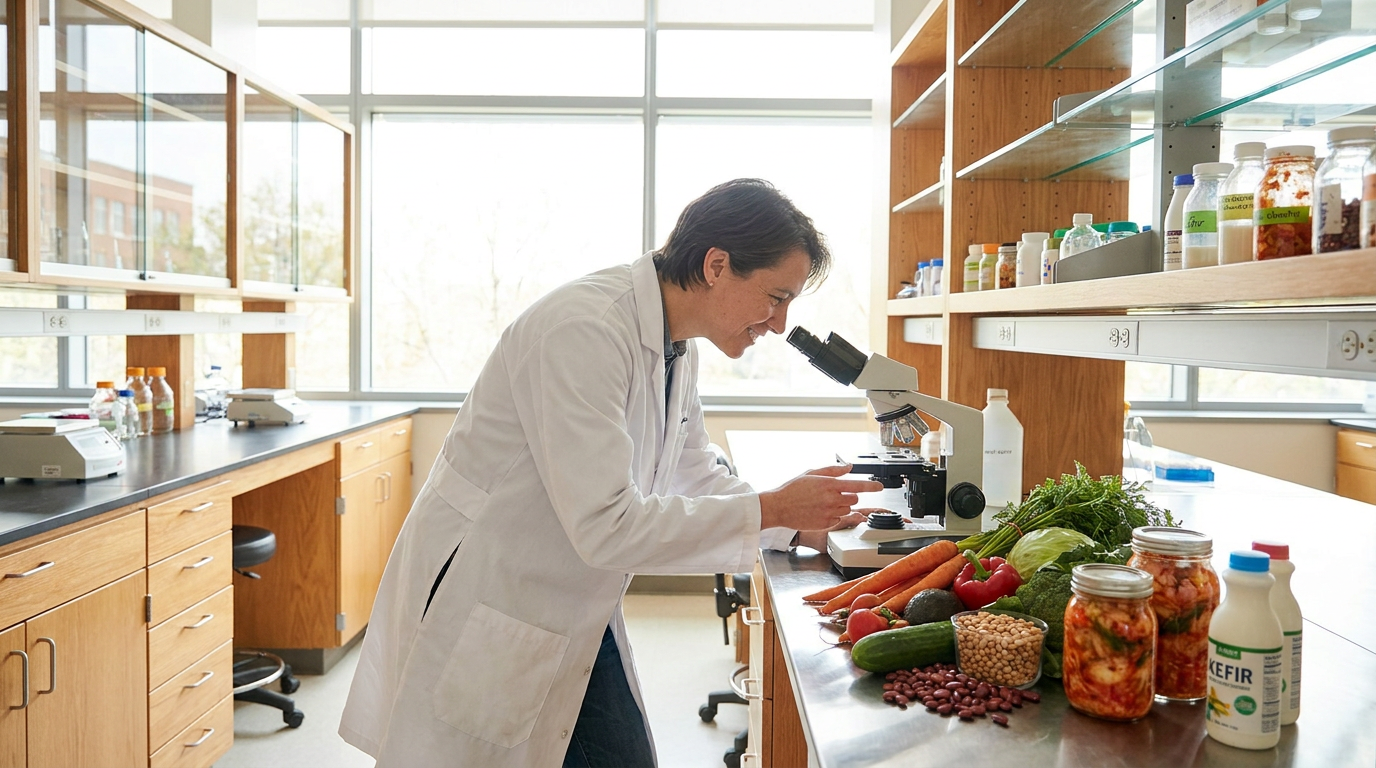
- Nutritional Psychiatrists
- Dietary intervention is a viable, evidence-based pillar of mental health treatment.
- Microbiome Researchers
- The focus must remain on mapping the specific mechanisms of bacterial-host communication.
- Clinical Skeptics
- The commercialization of 'psychobiotics' has outpaced the clinical evidence.
What's not represented
- · Patients who face systemic barriers to accessing fresh, whole foods in food deserts.
- · Individuals with severe gastrointestinal disorders who cannot tolerate high-fiber diets.
Why this matters
Understanding the gut-brain connection empowers individuals to view their daily dietary choices not just as fuel for the body, but as active maintenance for their mental well-being. By demystifying how fiber and fermented foods influence neurotransmitters, this science offers an accessible, everyday tool for managing stress and supporting cognitive health.
Key points
- The gut and brain are in constant two-way communication via the vagus nerve.
- Roughly 95% of the body's serotonin is produced in the gastrointestinal tract.
- Dietary fiber and fermented foods promote bacteria that reduce systemic neuroinflammation.
- Nutritional psychiatry uses diet as an evidence-based tool to support mental health.
- Experts warn that commercial probiotic supplements often lack rigorous clinical validation compared to whole-food diets.
The human body is an ecosystem. For decades, mental health was viewed strictly as a function of the brain, isolated within the skull and treated primarily through neurochemical interventions. But modern gastroenterology and neuroscience have converged on a paradigm-shifting realization: the brain is in constant, two-way communication with the digestive tract. This biological bridge, known as the gut-brain axis, is reshaping how medical science understands mood, anxiety, and cognitive resilience.[6]
To understand this connection, one must first grasp the sheer scale of the human microbiome. The gut hosts roughly 100 trillion microbial cells, outnumbering human cells. This complex community of bacteria, fungi, and viruses does far more than simply break down food. It acts as a secondary endocrine system, producing a vast array of chemicals and metabolites that directly influence how we feel, think, and react to psychological stress.[2]
The primary physical highway for this communication is the vagus nerve. Wandering from the brainstem down through the neck and into the abdomen, this massive nerve bundle serves as a bidirectional biological telegraph. When gut bacteria metabolize dietary fiber, they produce short-chain fatty acids (SCFAs) like butyrate. These fatty acids stimulate the vagus nerve, which in turn sends signals of satiety, safety, and calm upward to the brain.[4]

The chemical communication is equally profound. It is a striking biological reality that an estimated 95 percent of the body's serotonin—a neurotransmitter critical for regulating mood, sleep, and appetite—is manufactured not in the brain, but in the gastrointestinal tract. Specialized cells in the gut lining produce this vital chemical, heavily influenced by the specific strains of bacteria residing nearby.[1]
The gut itself is lined with a network of over 500 million neurons, often referred to by scientists as the "second brain" or the enteric nervous system. This vast network operates independently to manage the complex mechanics of digestion, but it is deeply intertwined with our emotional state. This physiological reality explains why nervousness often manifests physically as "butterflies in the stomach," or why acute stress can cause immediate digestive distress.[3]
Recognizing this profound connection has given rise to a rapidly expanding medical field: nutritional psychiatry. At the center of this discipline is the concept of "psychobiotics." Originally defined narrowly as live bacteria (probiotics) that confer a mental health benefit when ingested, the term has since expanded. It now encompasses prebiotics—the specific types of indigestible dietary fiber that serve as the primary food source for these beneficial, mood-altering bacteria.[5]
Recognizing this profound connection has given rise to a rapidly expanding medical field: nutritional psychiatry.
The core claim of nutritional psychiatry is highly empowering: modifying the diet can alter the microbiome's composition, thereby improving mental health outcomes. The evidence supporting this mechanism is robust and growing. Diets rich in diverse plant fibers, fermented foods like kefir and kimchi, and omega-3 fatty acids have been consistently linked to lower rates of depression and anxiety in large-scale epidemiological studies across diverse populations.[2][5]

Moving beyond observational data, randomized controlled trials have begun to demonstrate clear causation. In landmark clinical studies, patients suffering from clinical depression who were prescribed a Mediterranean-style diet—high in vegetables, whole grains, and legumes—showed significantly higher rates of remission compared to control groups who only received standard social support counseling. The food itself acted as an active intervention.[5]
One of the key mechanisms by which a healthy microbiome protects the brain is by regulating systemic inflammation. A diet high in ultra-processed foods and refined sugars can degrade the intestinal lining, leading to a condition colloquially known as "leaky gut." This degradation allows bacterial toxins to enter the bloodstream, triggering an immune response that causes neuroinflammation—a physiological state increasingly recognized as a root cause of depressive symptoms.[1][4]
Recent clinical research has specifically highlighted the outsized power of fermented foods in this equation. Regular consumption of yogurt, kombucha, sauerkraut, and other fermented products has been shown in controlled settings to increase microbial diversity and decrease markers of inflammation across the entire body. This provides a direct, highly accessible dietary intervention for systemic health that requires no prescription.[2]
However, researchers caution against viewing psychobiotics as a panacea or a replacement for traditional psychiatric care. The microbiome is highly individualized, functioning much like a biological fingerprint. What works to optimize one person's gut ecosystem may not work for another's, meaning that broad dietary advice, while helpful, is not a targeted medical cure for severe psychiatric illness.[6]

Furthermore, the commercial supplement industry has rapidly capitalized on this science, flooding the market with over-the-counter probiotic pills claiming to cure anxiety and boost mood. Clinical psychiatrists emphasize that while whole-food dietary changes are universally beneficial, the efficacy of specific, isolated probiotic strains in pill form remains highly variable, often lacking the rigorous regulatory oversight required of actual pharmaceuticals.[3][5]
The future of this field lies in the promise of precision medicine. Scientists are actively developing advanced tools to map an individual's unique microbiome profile. In the near future, this technology could allow dietitians and psychiatrists to prescribe highly specific prebiotic fibers or targeted probiotic strains tailored to correct an individual patient's specific microbial imbalances.[4]
Ultimately, the science of the gut-brain axis democratizes a crucial aspect of mental health care. It reframes the dinner plate as a daily tool for cognitive resilience. By consciously feeding the trillions of unseen microbial allies in our digestive tract, individuals are, quite literally, feeding their minds and taking active control of their psychological well-being.[6]
How we got here
Early 2000s
The Human Microbiome Project begins mapping the trillions of microbes living in and on the human body.
2013
The term 'psychobiotics' is coined by researchers to describe live organisms that produce a health benefit in patients suffering from psychiatric illness.
2017
The SMILES trial publishes landmark results showing that dietary intervention can significantly improve symptoms of clinical depression.
2024
Major psychiatric associations begin formally including nutritional and metabolic guidelines in their comprehensive treatment recommendations.
Viewpoints in depth
Nutritional Psychiatrists' view
Dietary intervention is a viable, evidence-based pillar of mental health treatment.
Practitioners in this emerging field argue that mental health treatment has historically ignored the foundational role of metabolic health. By prescribing specific dietary patterns—such as the Mediterranean diet, rich in diverse fibers and fermented foods—they aim to lower systemic inflammation and provide the biological building blocks for neurotransmitter production. They view food not as an alternative to medication, but as a necessary physiological foundation for psychiatric resilience.
Microbiome Researchers' view
The focus must remain on mapping the specific mechanisms of bacterial-host communication.
Basic scientists and gastroenterologists emphasize the staggering complexity of the gut ecosystem. Their priority is identifying exactly which bacterial strains produce specific short-chain fatty acids and how those metabolites cross the blood-brain barrier. They caution that while broad dietary advice is helpful, true medical breakthroughs will require precise, individualized mapping of a patient's microbiome to target specific neurological pathways.
Clinical Skeptics' view
The commercialization of 'psychobiotics' has outpaced the clinical evidence.
While acknowledging the reality of the gut-brain axis, skeptical clinicians warn against the 'probiotic gold rush.' They point out that many over-the-counter supplements do not survive stomach acid, and the strains they contain may not be the ones a specific patient actually lacks. They stress that severe depression and anxiety require comprehensive psychiatric care, and worry that vulnerable patients might abandon proven therapies in favor of unproven commercial supplements.
What we don't know
- Exactly which specific strains of bacteria are responsible for alleviating specific psychiatric symptoms.
- How to reliably and permanently alter an adult's microbiome composition using isolated supplements rather than whole-food diets.
- The precise threshold at which dietary changes begin to yield measurable cognitive benefits for different individuals.
Key terms
- Microbiome
- The combined genetic material of the microorganisms in a particular environment, such as the trillions of bacteria living in the human digestive tract.
- Psychobiotics
- Beneficial bacteria (probiotics) or support for such bacteria (prebiotics) that influence bacteria-brain relationships to improve mental health outcomes.
- Vagus Nerve
- The longest cranial nerve in the body, acting as the primary bidirectional communication highway between the brain and the digestive system.
- Short-Chain Fatty Acids (SCFAs)
- Chemical compounds produced when gut bacteria ferment dietary fiber, which play a crucial role in reducing systemic inflammation and signaling the brain.
- Enteric Nervous System
- A vast network of over 500 million neurons lining the gastrointestinal tract that governs digestion and communicates heavily with the brain.
Frequently asked
Can eating differently cure depression?
No, diet is not a standalone cure for clinical depression. However, research shows that a microbiome-friendly diet can significantly reduce symptoms and improve the effectiveness of traditional psychiatric treatments.
Do over-the-counter probiotic pills work for mental health?
The evidence is mixed. While some specific strains have shown promise in clinical trials, many commercial supplements lack the rigorous testing needed to prove they effectively survive digestion and alter brain chemistry.
What are the best foods for the gut-brain axis?
Diets high in diverse plant fibers (vegetables, legumes, whole grains) and fermented foods (kefir, yogurt, kimchi, sauerkraut) are consistently shown to support a healthy, diverse microbiome.
Sources
Source coverage
6 outlets
3 viewpoints surfaced






[1]National Institutes of HealthMicrobiome Researchers
The Gut-Brain Axis: The Missing Link in Depression
Read on National Institutes of Health →[2]Harvard T.H. Chan School of Public HealthNutritional Psychiatrists
The Microbiome and Human Health
Read on Harvard T.H. Chan School of Public Health →[3]American Psychological AssociationClinical Skeptics
That gut feeling: How bacteria influence the brain
Read on American Psychological Association →[4]Nature Reviews Gastroenterology & HepatologyMicrobiome Researchers
Microbiota-gut-brain axis in health and disease
Read on Nature Reviews Gastroenterology & Hepatology →[5]The Lancet PsychiatryNutritional Psychiatrists
Nutritional psychiatry: the present state of the evidence
Read on The Lancet Psychiatry →[6]Factlen Editorial TeamClinical Skeptics
Synthesis by Factlen editorial team
Read on Factlen Editorial Team →
More in health
See all 7 stories →Paternal Health
The Biology of Fatherhood: How Men's Brains and Hormones Adapt to Parenthood
6 sources

Neuroplasticity
The Science of 'Dad Brain': How Fatherhood Rewires the Male Brain
6 sources

Paternal Neuroplasticity
The Paternal Brain: How Fatherhood Physically Rewires Men's Neural Networks
6 sources

Gut Microbiome
The Science of Natural GLP-1: How Dietary Fiber and the Microbiome Regulate Metabolism
6 sources
Every angle. Every day.
Get health stories with full source coverage and perspective breakdowns delivered to your inbox.