
Far-Right Lawyer Abelardo de la Espriella Narrowly Wins Colombia's Presidency
Political outsider Abelardo de la Espriella defeated left-wing Senator Iván Cepeda in a razor-thin runoff, signaling a sharp rightward shift for Colombia.
By Factlen Editorial Team
- Security and Market Advocates
- Argue that Colombia needs an iron-fisted approach to crime and a revitalized oil sector to stabilize the country.
- Progressive Reformers
- Argue that military-led security policies have historically failed and that Colombia must prioritize social programs and negotiated peace.
- Electoral Monitors
- Emphasize that the election was conducted transparently and orderly, pushing back against claims of fraud.
What's not represented
- · Indigenous and rural communities directly affected by the armed conflict and potential military crackdowns.
- · Environmental organizations concerned about the reversal of the moratorium on new oil and gas exploration.
Why this matters
Colombia is a critical U.S. ally and the world's largest producer of cocaine. A shift from a left-wing government focused on peace negotiations to a hardline administration promising military crackdowns will drastically alter regional security dynamics, international drug enforcement, and Latin American diplomacy.
Key points
- Far-right lawyer Abelardo de la Espriella won Colombia's presidential runoff with 49.65% of the vote.
- He defeated left-wing Senator Iván Cepeda, who secured 48.70%.
- The victory ends the four-year tenure of Colombia's first leftist president, Gustavo Petro.
- De la Espriella campaigned on a hardline security platform, promising to end peace talks with armed groups.
- He plans to boost the oil and gas sector and closely align foreign policy with the United States.
- Outgoing President Petro alleged irregularities in the vote count, though international observers reported a transparent process.
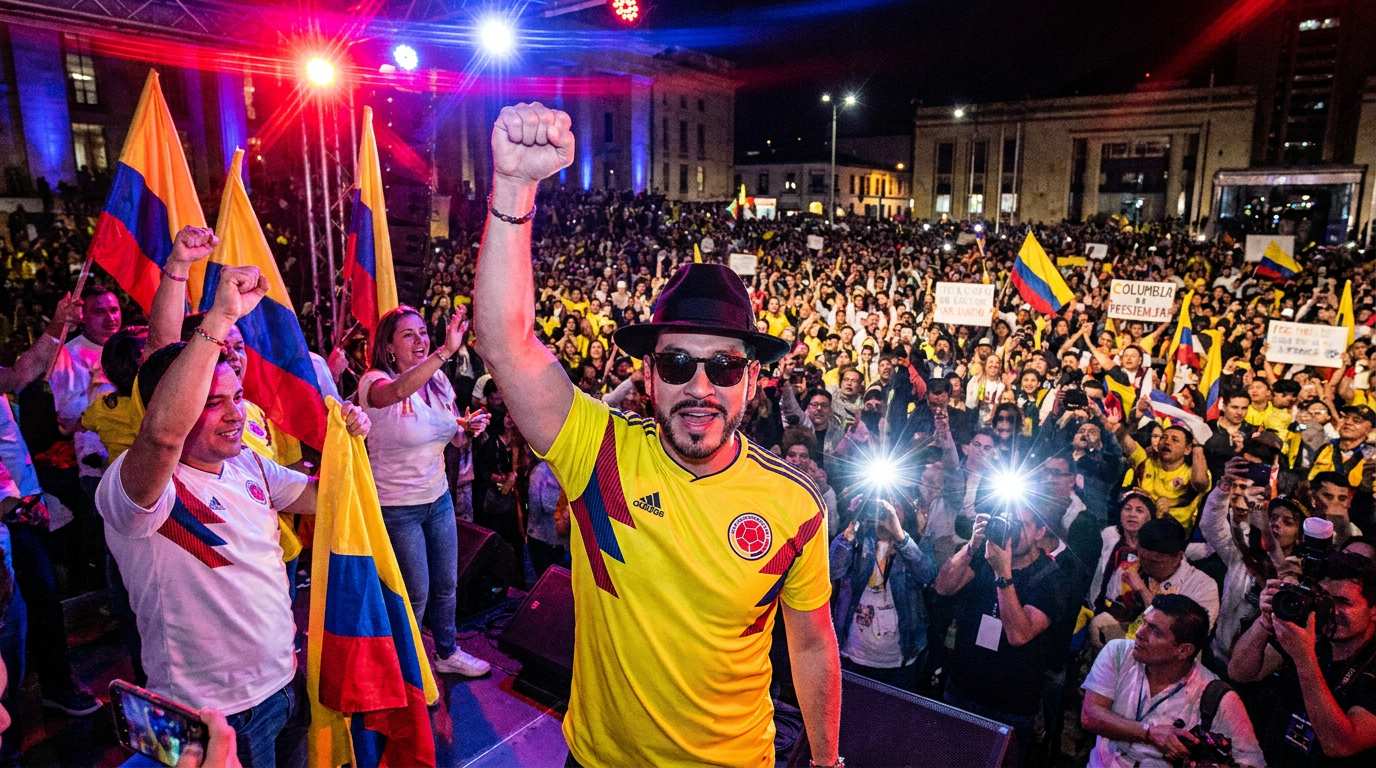
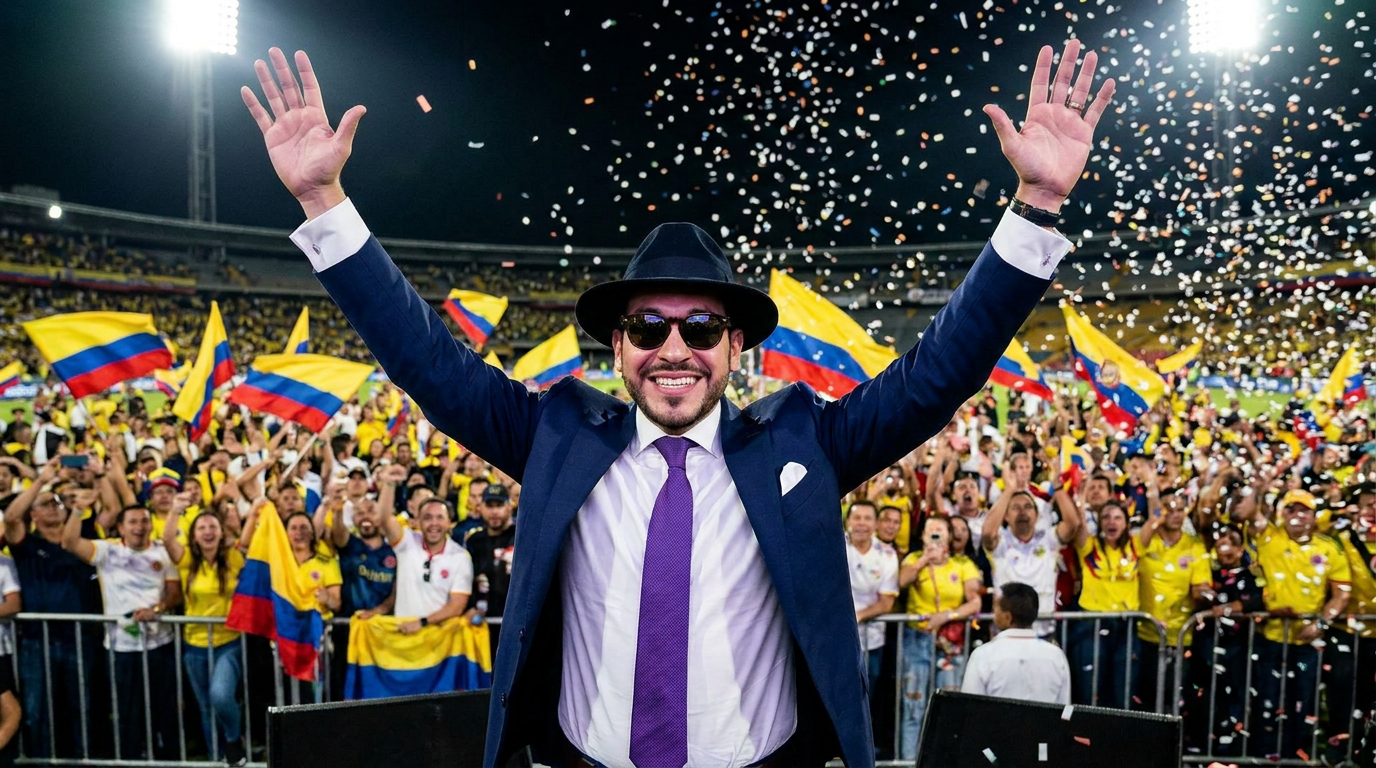
Abelardo de la Espriella, a flamboyant criminal defense lawyer with no prior political experience, has narrowly won Colombia's presidential runoff. Running on an uncompromising hardline security platform, the far-right candidate defeated left-wing Senator Iván Cepeda in a razor-thin contest on Sunday, securing approximately 49.65% of the vote to Cepeda's 48.70%.[1][6]
The victory marks a sharp political whiplash for the South American nation, ending the four-year tenure of Colombia's first and only leftist president, Gustavo Petro. De la Espriella's win aligns Colombia with a broader regional resurgence of right-wing populism, following similar electoral shifts in Argentina, El Salvador, and elsewhere across Latin America.[1][2]

Nicknamed "The Tiger," De la Espriella built his insurgent campaign on a "law and order" platform that resonated with voters exhausted by rising violence. He capitalized on widespread public frustration with the perceived failures of Petro's "Total Peace" initiative, a controversial policy that sought to negotiate ceasefires with armed cartels and rebel groups rather than confront them militarily.[3][4]
De la Espriella has promised a radical departure from the current administration's approach. His security proposals include building ten privately run mega-prisons, ending all peace dialogues with armed factions, and authorizing the military to shoot down suspected drug-trafficking aircraft—a tactic that human rights organizations warn could lead to extrajudicial killings.[3][5]
His opponent, Iván Cepeda, is a veteran human rights activist whose father was assassinated by right-wing paramilitaries in 1994. Cepeda ran as the heir to Petro's Historic Pact coalition, arguing that military crackdowns have historically fueled Colombia's bloodshed. He advocated instead for agrarian reform, the expansion of social welfare programs, and continued dialogue to address the deep-rooted inequality driving the conflict.[1][4]
His opponent, Iván Cepeda, is a veteran human rights activist whose father was assassinated by right-wing paramilitaries in 1994.
The runoff was marked by high tension, with outgoing President Petro preemptively sowing doubts about the electoral process. Without providing evidence, Petro alleged irregularities in the preliminary vote count released by the National Civil Registry, claiming that forms were being uploaded without the required signatures of election jurors.[1][4]

Despite the president's claims, international observers and the National Civil Registry reported that the election proceeded transparently and without major incidents. The rapid reporting of preliminary results—less than two hours after polls closed—was cited by monitoring groups as proof of the technical strength and integrity of Colombia's electoral system.[6]
Beyond security, the election presented voters with a stark economic choice. De la Espriella has vowed to slash the size of the state bureaucracy by up to 40%, lower corporate taxes, and aggressively boost Colombia's oil and gas sector. This marks a direct reversal of Petro's environmental policies, which included a moratorium on new fossil fuel exploration.[2][3]
The incoming administration is also expected to dramatically realign Colombia's international posture. De la Espriella, who received a public endorsement from U.S. President Donald Trump, has stated he intends to closely subordinate Bogota's foreign policy to Washington, particularly regarding anti-narcotics operations.[2][5]

In another sharp diplomatic reversal, De la Espriella has pledged to restore ties with Israel, which Petro severed in protest of the war in Gaza. The president-elect has even announced intentions to move the Colombian embassy to Jerusalem, breaking with the country's traditional diplomatic stance on the Israeli-Palestinian conflict.[1][3]
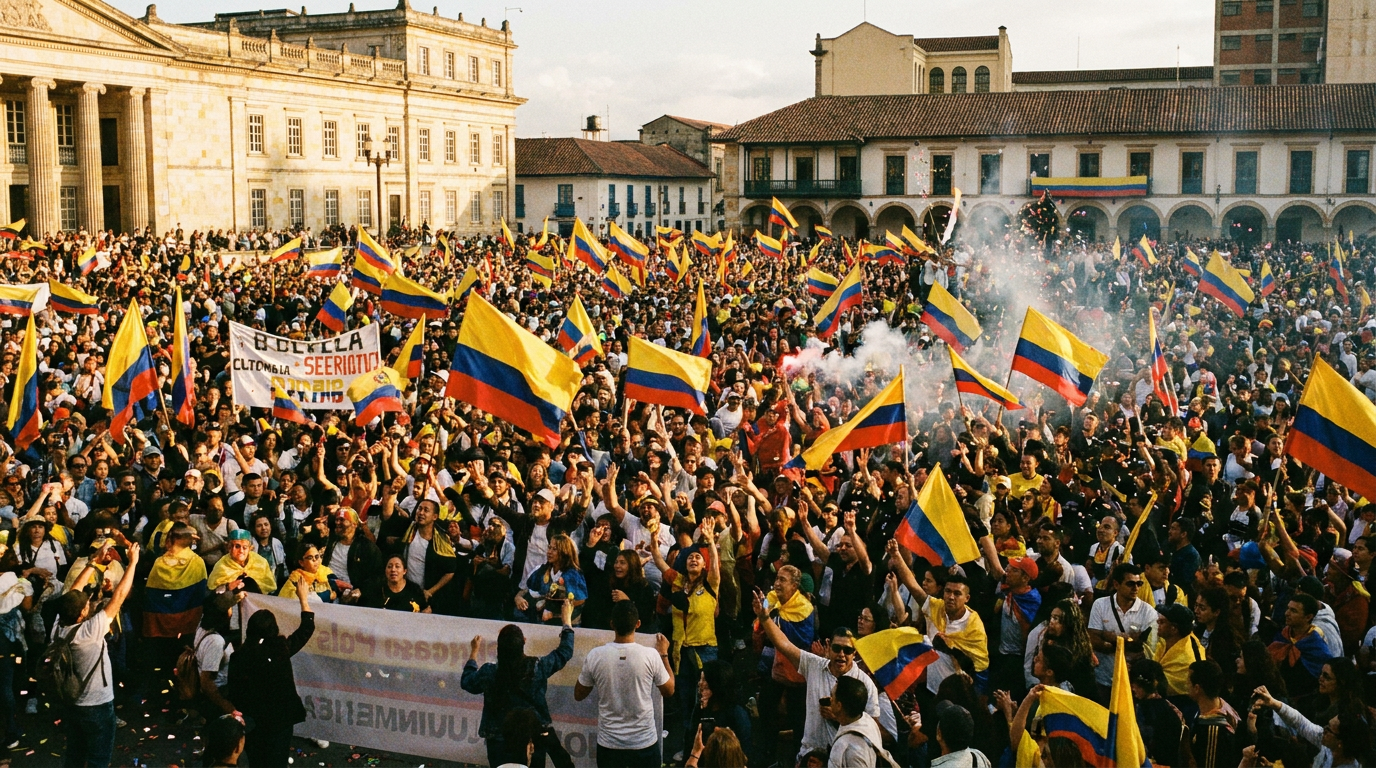
Despite his victory, De la Espriella inherits a deeply fractured country. The margin of less than one percentage point—roughly 250,000 votes out of more than 25 million cast—underscores the intense polarization of the electorate. His "Defenders of the Homeland" movement lacks a majority in Congress, meaning he will need to forge complex alliances with traditional conservative parties to pass legislation.[1][6]
As the transition period begins ahead of the August 7 inauguration, attention turns to De la Espriella's cabinet appointments. Political analysts are watching closely to see whether the populist firebrand will moderate his rhetoric to govern a split nation, or immediately push forward with his most controversial security and economic overhauls.[2][3]
How we got here
May 31, 2026
The first round of voting concludes with De la Espriella capturing 43.7% and Cepeda 40.9%, triggering a runoff.
June 21, 2026
Colombians vote in the runoff election, resulting in a narrow victory for De la Espriella.
August 7, 2026
Scheduled inauguration day for Colombia's new president.
Viewpoints in depth
Security and Market Advocates
Supporters of De la Espriella argue that an iron-fisted approach is necessary to save Colombia from rising cartel violence.
This camp views the outgoing administration's 'Total Peace' policy as a naive failure that only emboldened armed groups and drug traffickers. They argue that Colombia requires a heavy-handed military response, strict prison sentences, and a zero-tolerance policy for criminal organizations. Economically, they believe that slashing bureaucracy and revitalizing the oil and gas sector are essential steps to restore investor confidence and drive national growth.
Progressive Reformers
Supporters of Iván Cepeda warn that returning to a militarized security strategy will only result in more bloodshed and human rights abuses.
This perspective, rooted in Colombia's decades-long internal conflict, argues that military crackdowns have historically failed to dismantle cartels and have instead led to extrajudicial killings and the displacement of rural communities. They maintain that true peace requires addressing the root causes of violence—namely, extreme poverty and land inequality—through agrarian reform, social welfare expansion, and negotiated settlements with armed actors.
International Observers
Electoral monitors emphasize the resilience and transparency of Colombia's democratic institutions.
Despite preemptive allegations of fraud from political leaders on the left, independent observers and the National Civil Registry praised the election's execution. They highlight the rapid, transparent counting of ballots and the lack of major violent incidents on election day as proof that Colombia's electoral machinery remains robust, even in a climate of extreme political polarization.
What we don't know
- Whether De la Espriella will follow through on his most extreme security proposals, such as shooting down suspected drug planes.
- How the new administration will manage a divided Congress where it lacks a governing majority.
- Whether outgoing President Gustavo Petro's political movement will formally challenge the election results in court.
Key terms
- Historic Pact
- A left-wing political coalition in Colombia, led by outgoing President Gustavo Petro, focused on social reforms and negotiated peace.
- Total Peace
- The Petro administration's flagship policy aimed at negotiating ceasefires and demobilization agreements with various illegal armed groups and drug cartels.
- Defenders of the Homeland
- The independent, far-right political movement that backed Abelardo de la Espriella's presidential campaign.
Frequently asked
Why didn't Gustavo Petro run for re-election?
Colombian presidents are constitutionally barred from seeking a second term in office.
What has De la Espriella promised regarding security?
He has pledged to end peace talks with armed groups, build privately run mega-prisons, and authorize lethal force against suspected drug trafficking planes and boats.
How did the United States factor into the election?
U.S. President Donald Trump publicly endorsed De la Espriella, who in turn promised to closely align Colombia's foreign policy with Washington.
Sources
Source coverage
6 outlets
3 viewpoints surfaced






[1]The GuardianProgressive Reformers
Far-right millionaire Abelardo de la Espriella wins Colombia’s presidential runoff
Read on The Guardian →[2]The New York TimesSecurity and Market Advocates
Abelardo De La Espriella, Trump-Backed Rightist, Headed for Win in Colombia
Read on The New York Times →[3]Al JazeeraProgressive Reformers
Colombia's rightward shift? Inside de la Espriella's election bid
Read on Al Jazeera →[4]PBS NewsHourElectoral Monitors
Colombians vote in presidential runoff between progressive and conservative outsider
Read on PBS NewsHour →[5]The Washington PostSecurity and Market Advocates
Abelardo de la Espriella, an ostentatious criminal defense lawyer endorsed by the president, is the front-runner in Colombia's election Sunday
Read on The Washington Post →[6]XinhuaElectoral Monitors
Abelardo De la Espriella wins Colombia's presidential runoff: preliminary results
Read on Xinhua →
Every angle. Every day.
Get news politics stories with full source coverage and perspective breakdowns delivered to your inbox.