
Right-Wing Outsider Abelardo de la Espriella Wins Colombia's Presidential Election
Millionaire lawyer Abelardo de la Espriella secured a narrow victory in Colombia's presidential runoff, marking a sharp rightward shift for the nation. His leftist opponent, Iván Cepeda, has refused to concede, citing alleged voting irregularities.
By Factlen Editorial Team
- Hardline Security Advocates
- Voters and politicians who believe a militarized approach is the only way to defeat Colombia's armed groups and cartels.
- Progressive Coalition
- Supporters of the outgoing administration who prioritize negotiated peace and social reforms, fearing a return to state violence.
- International Observers
- Analysts viewing the election as part of a broader Latin American trend of anti-incumbent, right-wing populism.
What's not represented
- · Rural communities directly affected by the armed conflict who will bear the brunt of a return to military confrontation.
- · Indigenous and Afro-Colombian groups who heavily supported the Petro administration's social policies.
Why this matters
Colombia is a critical U.S. ally and a bellwether for Latin American politics. De la Espriella's victory signals a regional rejection of left-wing incumbents and promises a drastic, militarized shift in how Colombia handles its decades-long internal armed conflict and drug trafficking.
Key points
- Far-right lawyer Abelardo de la Espriella won Colombia's presidential runoff with 49.7% of the vote.
- Left-wing candidate Iván Cepeda secured 48.7% and has refused to concede, alleging irregularities.
- De la Espriella campaigned on an 'iron fist' security platform, promising to abandon current peace negotiations with armed groups.
- The president-elect received an endorsement from Donald Trump and pledged closer ties with the U.S.
- The incoming administration plans to shrink the size of the Colombian state by 40%.
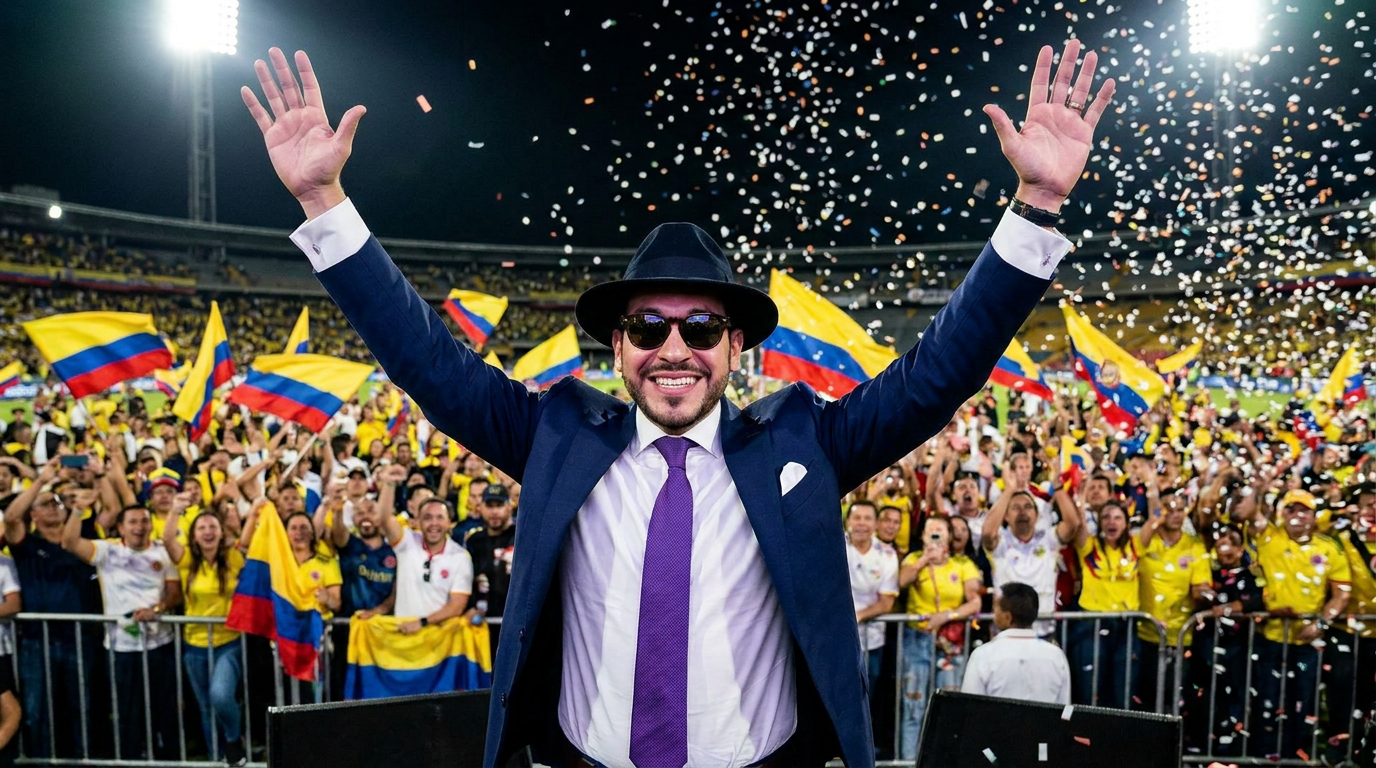
Abelardo de la Espriella, a millionaire criminal defense lawyer with no prior political experience, has won Colombia's presidential runoff election. Running as a self-styled outsider, he defeated left-wing senator Iván Cepeda in a deeply polarized contest that will sharply pivot the nation's political trajectory back to the right.[1][2]
The preliminary vote tally revealed a razor-thin margin. With nearly all ballots counted, De la Espriella secured roughly 49.7 percent of the vote compared to Cepeda's 48.7 percent—a difference of fewer than 250,000 votes out of more than 25 million cast.[1][5][7]

The results immediately sparked a political standoff. Cepeda, backed by outgoing left-wing President Gustavo Petro, refused to concede on Sunday night. Citing unspecified irregularities, Cepeda announced that his legal team would challenge the results at 33,000 polling stations across the country, promising to recognize the outcome only after a full official scrutiny process is completed.[1][3]
President Petro echoed these doubts, claiming without evidence that foreign actors had attempted to manipulate the election and demanding a strict protection of the vote. The refusal to accept the preliminary results sets the stage for a tense transition period leading up to the August 7 inauguration.[3][5]
De la Espriella's victory represents a dramatic rebuke of Petro's administration. The president-elect built his campaign on a hardline "iron fist" approach to security, promising to abandon Petro's "total peace" strategy—which sought negotiated settlements with various armed groups and drug cartels. Instead, De la Espriella has vowed to return to full-scale military confrontation, pledging to capture or kill major organized crime leaders within his first three months in office.[1][3]

De la Espriella's victory represents a dramatic rebuke of Petro's administration.
Beyond security, the incoming administration plans sweeping economic changes. De la Espriella's vice president, economist José Manuel Restrepo, has outlined a proposal to shrink the size of the Colombian state by 40 percent, appealing to voters frustrated by economic stagnation and government inefficiency.[1][5]
The election was heavily shadowed by international politics, particularly the influence of the United States. De la Espriella received a high-profile endorsement from former U.S. President Donald Trump. During his victory address, De la Espriella announced he had already spoken with Trump, emphasizing that a close alliance with the U.S. is essential to solving Colombia's security and economic crises.[1][2][4]
Petro had previously condemned Trump's endorsement as an act of foreign interference, accusing Washington of prioritizing ideological alignment over cooperative anti-drug missions. The ideological clash highlights the starkly different visions the two Colombian factions hold regarding international diplomacy.[3]
De la Espriella's background has been a major point of contention. Born in Bogotá and raised on the Caribbean coast, he rose to prominence defending leaders of right-wing paramilitary groups—private militias originally formed by landowners to combat left-wing guerrillas. Cepeda had even filed complaints with the International Criminal Court accusing De la Espriella of maintaining ties to these paramilitary organizations, allegations the president-elect has vehemently denied.[1][3][5]
The outcome in Colombia is part of a broader geopolitical realignment across Latin America. De la Espriella joins a growing wave of right-wing, anti-establishment leaders who have recently swept to power in the region, following the electoral successes of figures like Nayib Bukele in El Salvador, José Antonio Kast in Chile, and Nasry Asfura in Honduras.[1][4]

This regional trend reflects a widespread voter fatigue with traditional political establishments and left-wing incumbents who have struggled to contain rising crime rates and economic instability. By adopting populist messaging and prioritizing aggressive security measures, these leaders have successfully tapped into public anxieties.[4][5]
As Colombia braces for the official certification of the vote, the immediate focus turns to whether the transition of power will remain peaceful. With both sides warning of potential violence and the electorate split almost exactly in half, the coming weeks will test the resilience of Colombia's democratic institutions.[3][4]
How we got here
May 31, 2026
De la Espriella and Cepeda emerge as the top two candidates in the first round of voting, eliminating 11 other contenders.
June 21, 2026
Colombians vote in the presidential runoff, with De la Espriella securing a narrow victory in the preliminary count.
June 21, 2026
Iván Cepeda and outgoing President Gustavo Petro refuse to concede, announcing legal challenges to the results.
August 7, 2026
Scheduled inauguration day for the new President of Colombia.
Viewpoints in depth
De la Espriella's Supporters
Advocates for a militarized approach to security and a sharp reduction in state bureaucracy.
Supporters of the president-elect argue that four years of left-wing governance under Gustavo Petro allowed criminal organizations to regroup under the guise of 'total peace' negotiations. They view De la Espriella's 'iron fist' platform not as a threat to democracy, but as a necessary restoration of order. This camp also strongly favors his proposed 40% reduction in the size of the state, arguing that bloated government spending has stifled economic growth, and they welcome his push for a tighter alliance with the United States to combat drug trafficking.
Cepeda and the Historic Pact
Defenders of Petro's progressive agenda who fear a return to state-sponsored violence.
The left-wing coalition views De la Espriella's victory with deep alarm, pointing to his history of defending right-wing paramilitary leaders. They argue that his promise of full-scale military confrontation will plunge Colombia back into the bloodiest days of its internal conflict, disproportionately harming rural and marginalized communities. Furthermore, they are contesting the election's legitimacy, alleging that foreign interference and voting irregularities engineered a narrow defeat for their candidate, Iván Cepeda.
Regional Analysts
Observers tracking the broader shift toward right-wing populism in Latin America.
Political scientists note that De la Espriella's win is less about a sudden ideological shift in Colombia and more about a regional anti-incumbent wave. Across Latin America, voters frustrated by economic stagnation and rising crime are rejecting traditional parties in favor of self-styled 'outsiders' who promise immediate, heavy-handed solutions. Analysts warn that while this rhetoric wins elections, it often leads to severe polarization and tests the limits of democratic institutions when these leaders attempt to bypass legislative checks and balances.
What we don't know
- Whether the official scrutiny of the 33,000 challenged polling stations will alter the final vote count or trigger widespread protests.
- How De la Espriella will implement his aggressive security policies without sparking a renewed, full-scale civil conflict.
- The exact nature of the 'irregularities' alleged by Cepeda's campaign, as no concrete evidence has yet been presented.
Key terms
- Total Peace
- Outgoing President Gustavo Petro's policy of attempting to negotiate disarmament and peace settlements with all of Colombia's various armed groups and drug cartels simultaneously.
- Paramilitaries
- Illegal, right-wing private armies originally formed by wealthy landowners in Colombia to fight left-wing guerrilla groups, often responsible for severe human rights abuses.
- Historic Pact
- The left-wing political coalition in Colombia that brought Gustavo Petro to power in 2022 and backed Iván Cepeda in the 2026 election.
Frequently asked
Why did Iván Cepeda refuse to concede?
Cepeda and his allies allege that there were voting irregularities and foreign interference. They are demanding a full official scrutiny of 33,000 polling stations before recognizing the result.
What is Abelardo de la Espriella's background?
He is a millionaire criminal defense lawyer who has never held public office. He gained prominence representing high-profile clients, including leaders of right-wing paramilitary groups.
How will this affect U.S.-Colombia relations?
De la Espriella has promised a very close alliance with the United States, particularly in combating organized crime, and has touted his endorsement from Donald Trump.
Sources
Source coverage
7 outlets
3 viewpoints surfaced







[1]The GuardianProgressive Coalition
Far-right millionaire Abelardo de la Espriella wins Colombia’s presidential runoff
Read on The Guardian →[2]The New York TimesInternational Observers
Abelardo De La Espriella, Trump-Backed Rightist, Headed for Win in Colombia
Read on The New York Times →[3]CBS NewsProgressive Coalition
Colombians vote in consequential presidential runoff: 'Two very extreme sides'
Read on CBS News →[4]The Washington PostHardline Security Advocates
A pro-Trump wave has swept Latin America. Colombia appears to be next.
Read on The Washington Post →[5]InfobaeHardline Security Advocates
Abelardo de la Espriella es el nuevo presidente de Colombia para el periodo 2026-2030: esta es su historia
Read on Infobae →[6]Americas Society / Council of the AmericasInternational Observers
Poll Tracker: Colombia's 2026 Presidential Election
Read on Americas Society / Council of the Americas →[7]WikipediaInternational Observers
2026 Colombian presidential election
Read on Wikipedia →


Every angle. Every day.
Get news politics stories with full source coverage and perspective breakdowns delivered to your inbox.