
Midway Through 2026, the NWSL is Shattering Attendance and Valuation Records
Driven by expansion teams in Denver and Boston, the National Women's Soccer League has reached unprecedented heights in 2026, boasting a $200 million average franchise valuation and crowds exceeding 60,000.
By Factlen Editorial Team
- League Executives & Owners
- Focusing on enterprise value, infrastructure investment, and sustainable expansion.
- Supporters & Fan Groups
- Prioritizing local community building, matchday experience, and accessibility.
- Players & Sporting Directors
- Focused on global competitiveness, player agency, and on-field quality.
What's not represented
- · European club executives facing increased competition for talent
- · Local municipalities negotiating stadium deals for future expansion teams
Why this matters
The explosive financial and cultural growth of the NWSL proves that women's sports are no longer a niche investment, but a premium asset class capable of filling NFL stadiums and commanding nine-figure valuations.
Key points
- The NWSL shattered its all-time attendance record in March 2026 when 63,004 fans attended Denver Summit FC's inaugural home match.
- Forbes estimates the average league franchise is now worth $200 million, a 49% increase from 2025.
- Angel City FC remains the league's most valuable club at $340 million, followed closely by the Kansas City Current.
- The league's new 'high impact player rule' is allowing American clubs to successfully compete with European teams for top global talent.
- Expansion continues rapidly, with Columbus, Ohio, awarded the 18th franchise to begin play in 2028.
As the 2026 National Women's Soccer League season crosses its midway point, the narrative surrounding the sport has fundamentally shifted. The league is no longer simply growing; it is undergoing a massive commercial and cultural paradigm shift that is rewriting the business of sports in North America. For years, advocates of women's sports argued for equal investment based on untapped potential and a moral imperative. Today, that potential has materialized into an undeniable, record-shattering reality. The NWSL has transformed into one of the fastest-growing professional sports properties in the world, commanding the attention of major broadcasters, institutional investors, and millions of fans who are turning out in unprecedented numbers.
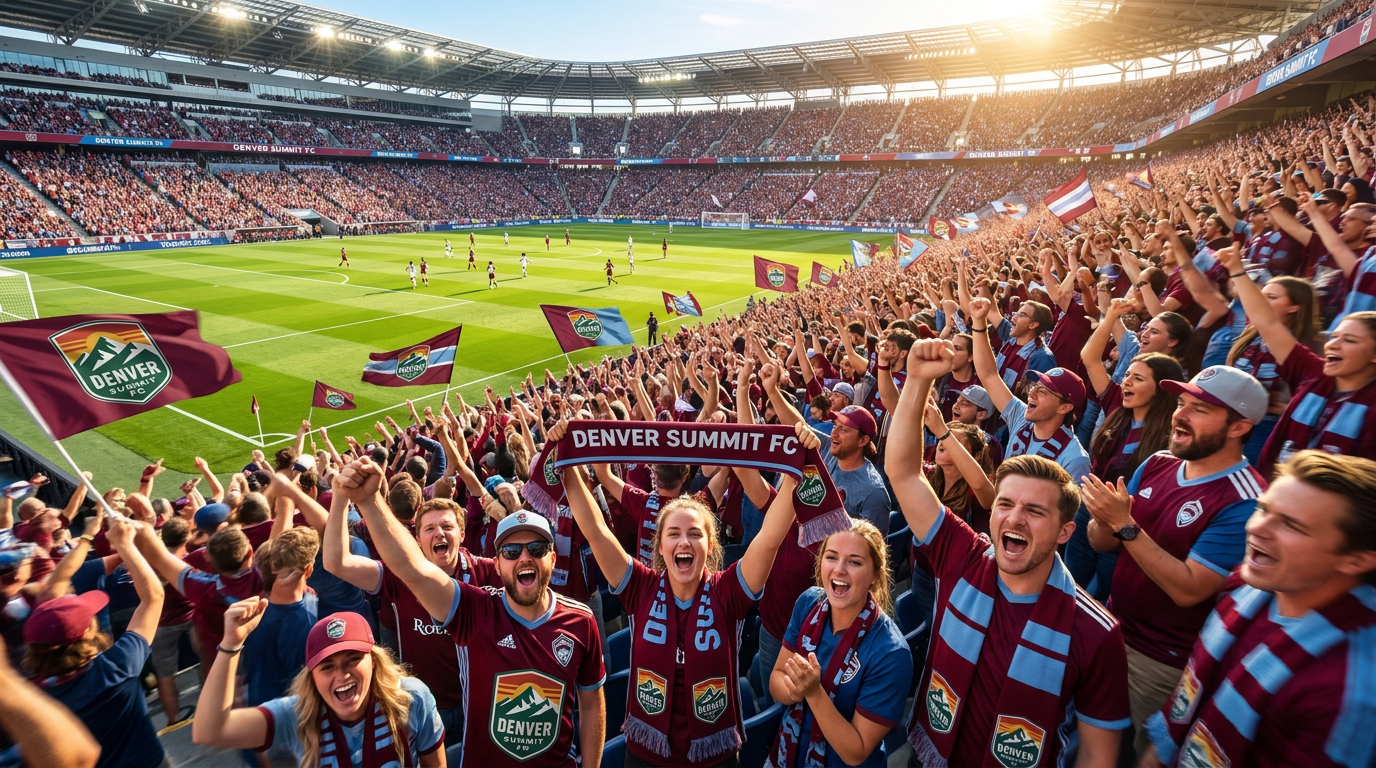
The defining moment of this new era arrived on March 28 in Colorado. Denver Summit FC, one of the league's two highly anticipated 2026 expansion franchises, hosted the Washington Spirit for their inaugural home match. The city had spent over a year building momentum through a grassroots, fan-led movement that eventually secured the massive capital required to launch the team. When the gates finally opened, the response from the local community exceeded even the most optimistic internal projections.
The match drew an astonishing 63,004 fans to Empower Field at Mile High, creating a vibrant sea of supporters in the crisp Denver spring air. It wasn't just a modest sellout of a restricted lower bowl; it was a full-stadium takeover that completely shattered the previous league attendance record by a staggering margin of more than 20,000 tickets. The previous benchmark, set by Bay FC during their 2025 inaugural season at Oracle Park, stood at just over 40,000. Denver's massive turnout proved a crucial point to the broader sports industry: in the right market, backed by serious institutional investment and professional marketing, women's club soccer can easily fill the largest NFL venues in the country.[2][5]
Fans began lining up at dawn, pressing against metal barricades just to watch the players arrive at the stadium hours before kickoff. For a league that spent its early, precarious years fighting for visibility in suburban college stadiums with aluminum bleachers, the visual of an NFL venue packed to the rafters signaled a permanent arrival. Supporters who had followed the sport for decades wept in the stands, overwhelmed by the sheer scale of the event and the realization that their long-held belief in the sport's viability had been spectacularly vindicated.[5]
Denver's record was the crown jewel of a historic opening weekend that set the tone for the entire 2026 campaign. Across eight matches, the NWSL drew a combined 129,202 fans, averaging over 16,150 attendees per game. Both figures established new all-time highs for an opening weekend, proving that the demand was not isolated to a single expansion city, but rather a league-wide phenomenon sweeping across multiple distinct markets.[3]

Seven of those eight opening matches exceeded the 10,000-fan mark, showcasing a newfound consistency in ticket sales. In Massachusetts, the Boston Legacy—the league's other 2026 debutant—drew 30,207 fans for their inaugural match. That figure set a separate, standalone record for the largest crowd ever to witness a club's first-ever game in NWSL history, further cementing the success of the league's latest round of expansion.[3]
This attendance boom is not an accident of scheduling, nor is it a fleeting post-World Cup bump that will fade as the summer wears on. It is the direct result of deliberate, aggressive capitalization by ownership groups who finally view women's soccer as a premium, appreciating asset rather than a charitable endeavor. These owners are deploying sophisticated marketing apparatuses, investing in premium matchday experiences, and treating their clubs with the exact same commercial rigor applied to legacy men's sports franchises.[7]
The financial metrics backing this surge are staggering, reflecting a complete recalibration of the league's enterprise value. According to Forbes' 2026 valuations released in April, the average NWSL franchise is now worth an estimated $200 million. This represents a seismic shift from just five years ago, when teams were routinely changing hands for single-digit millions and the league's financial stability was a constant source of anxiety.[1]
That $200 million average figure represents a massive 49 percent year-over-year increase from 2025. Crucially, the floor of the league has risen just as dramatically as the ceiling. The lowest-valued teams in the NWSL now sit at an estimated $140 million, which is exactly double their valuations from the previous year. This rising tide indicates that the league's revenue-sharing mechanisms, national broadcast deals, and centralized sponsorships are successfully lifting all boats.[1]
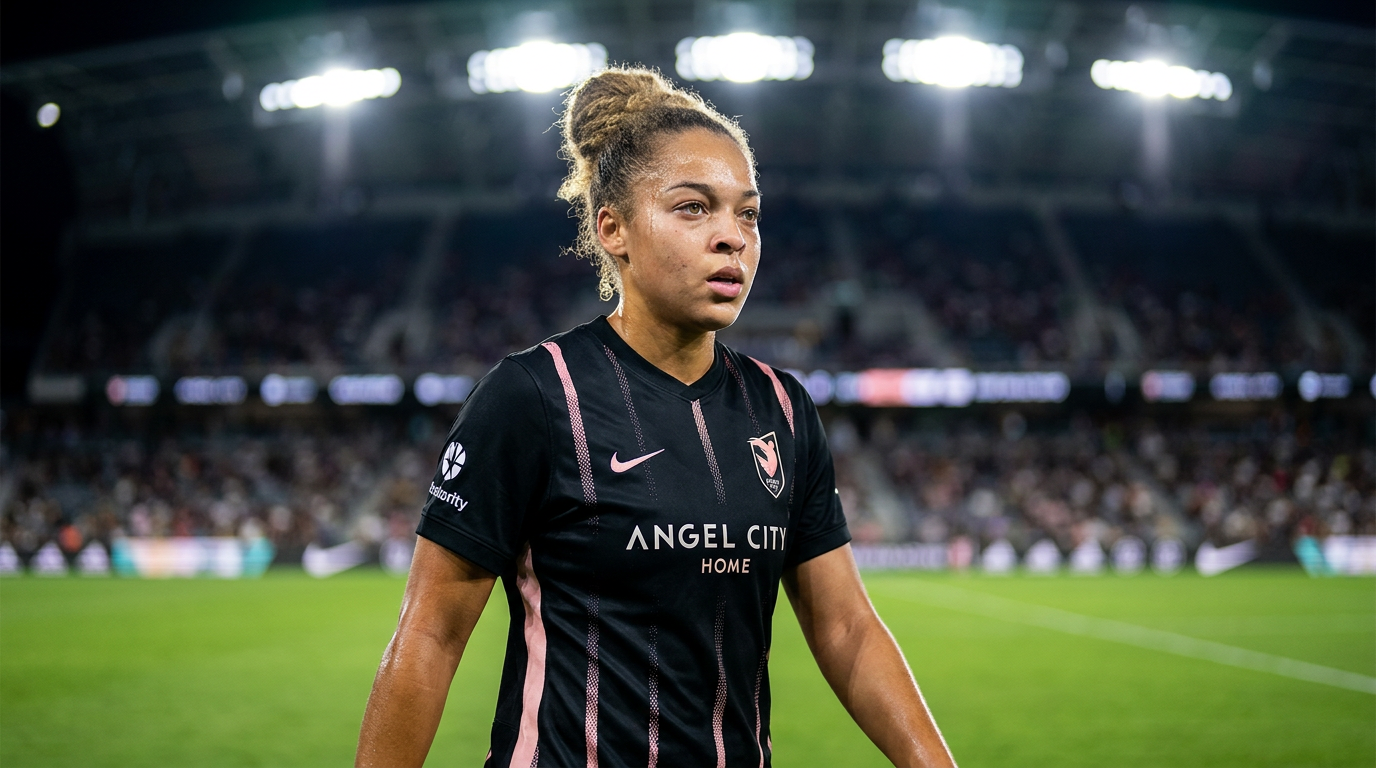
At the top of the financial table, the numbers rival those of established legacy sports franchises. Angel City FC, the Los Angeles-based club backed by a star-studded ownership group, remains the league's most valuable entity at an estimated $340 million. They are closely followed by the Kansas City Current, whose groundbreaking infrastructure investments have pushed their valuation to an impressive $325 million.[1]

The wealth is no longer concentrated in just one or two flagship markets. Four other clubs—Bay FC, the San Diego Wave, the Washington Spirit, and the Portland Thorns—have all crossed the $200 million valuation threshold in 2026. This depth of highly valued franchises provides the league with a robust financial foundation, insulating it from the localized economic shocks that plagued earlier iterations of women's professional soccer in the United States.[1]
The wealth is no longer concentrated in just one or two flagship markets.
The cost of entry into this exclusive club has scaled accordingly. The Denver Summit ownership group paid a reported $110 million expansion fee just to secure the rights to the league's 16th franchise. When combined with the capital required to build out training facilities, hire elite sporting staff, and market the team, the total initial investment for a new NWSL club now easily exceeds $150 million.[2]
This massive influx of capital is fundamentally changing the physical infrastructure of the sport. Teams are no longer willing to serve as secondary tenants in aging collegiate facilities with poor sightlines and inadequate locker rooms. Instead, they are either building their own fortresses or negotiating highly favorable leases to take over top-tier MLS and NFL stadiums, ensuring that the matchday experience matches the premium nature of the product on the pitch.
The Kansas City Current's CPKC Stadium, which opened as the first purpose-built stadium for a women's professional sports team, proved the viability of this model. Now, clubs across the league are racing to catch up, investing heavily in dedicated training facilities, advanced sports science departments, and premium hospitality suites that drive vital non-ticket revenue.

The cultural impact of these investments is palpable in the stands. "This is a huge milestone for women's sports to prove that we want more women's sports," noted one fan during the Denver record-breaker. That sentiment captures the ethos of a highly engaged, rapidly expanding demographic that views purchasing tickets and merchandise not just as entertainment, but as an active investment in gender equity and community building.[2]
Unsurprisingly, the league's expansion map continues to grow to meet this insatiable demand. In April, Commissioner Jessica Berman announced that Columbus, Ohio, had been awarded the 18th franchise, set to begin play in 2028. The deliberate, methodical pacing of this expansion ensures that new ownership groups are fully vetted and adequately capitalized before they ever field a team.[1]
But the NWSL's ambition extends far beyond domestic dominance. The league is currently locked in a fierce, high-stakes global arms race for talent, competing directly with heavily funded European giants like Barcelona, Chelsea, and Lyon. For years, the allure of the UEFA Women's Champions League and massive European budgets threatened to drain the NWSL of its top tier of international stars.
To maintain its competitive edge, the NWSL has implemented aggressive new roster mechanisms, most notably the "high impact player rule." This critical salary cap exception allows clubs to offer globally competitive wages that far exceed the standard league maximums, ensuring that generational American talents and marquee international stars remain stateside during the prime years of their careers.[1]
The 2026 summer transfer window has vividly reflected this aggressive posturing. Clubs across the league are flexing their financial muscle, with teams like the Chicago Stars securing major international signings and locking down European Champions League winners to lucrative multi-year deals. The one-way exodus of talent to Europe has been halted, replaced by a dynamic, two-way global market.[4]

Simultaneously, the league is investing in its future through sweeping structural reforms, including the total abolition of the college draft—a move finalized in the latest collective bargaining agreement. By eliminating the draft, players now have unprecedented agency to negotiate their own contracts and choose where they begin their professional careers, aligning the NWSL with global soccer standards and making it a more attractive destination for young talent.[6]
The macroeconomic environment heavily supports this aggressive growth strategy. Deloitte recently projected that global revenues in elite women's sports will surpass $3 billion in 2026, with soccer driving a massive, disproportionate share of that commercial pie. The NWSL is perfectly positioned to capture this revenue, leveraging its status as the most competitive top-to-bottom league in the world.[1]
Corporate sponsors and broadcasters are finally recognizing the unique value proposition of the NWSL audience. The fanbase is young, digitally native, highly educated, and fiercely loyal to brands that authentically support their teams. This demographic goldmine is driving record sponsorship deals and forcing traditional media networks to rethink how they program and promote women's sports.
As the 2026 season crosses its midway point and teams jockey for playoff positioning, the overarching narrative has shifted completely. The existential questions that haunted the league's first decade—whether it could survive, whether anyone would watch, whether it could pay a living wage—have been definitively answered. The only question remaining is exactly how high the ceiling truly is.[7]
With a highly anticipated championship match slated to be staged at Audi Field in Washington, D.C., this November, the league is pacing toward its most lucrative and widely viewed conclusion in history. The on-field product has never been better, the stadiums have never been fuller, and the financial foundation has never been stronger.[3]
For the veteran players who built the league in its precarious early days, playing for meager salaries in front of sparse crowds, the current landscape is almost unrecognizable. And for the new generation stepping onto the pitch in front of 60,000 roaring fans, 2026 will be remembered as the definitive year that women's club soccer permanently altered the American sports landscape, taking its rightful place alongside the biggest leagues in the world.[7]
How we got here
March 2024
The Kansas City Current open CPKC Stadium, the first purpose-built stadium for a women's professional sports team.
January 2025
Denver is awarded the 16th NWSL franchise for a record reported expansion fee of $110 million.
March 16, 2026
The NWSL sets an opening weekend attendance record, drawing 129,202 fans across eight matches.
March 28, 2026
Denver Summit FC shatters the single-game attendance record, drawing 63,004 fans to Empower Field at Mile High.
April 2026
Forbes reports the average NWSL franchise valuation has reached $200 million, a 49% year-over-year increase.
Viewpoints in depth
League Executives & Owners
Focusing on enterprise value, infrastructure, and sustainable expansion.
For the ownership groups pouring hundreds of millions into the NWSL, 2026 represents the validation of a long-term thesis. Executives point to the $200 million average franchise valuation and the $110 million expansion fees as proof that women's soccer is no longer a charitable endeavor or a niche product, but a premium sports asset. Their primary focus has shifted from mere survival to scaling infrastructure—building dedicated stadiums, securing lucrative media rights deals, and ensuring the league's financial mechanisms can support international ambitions.
Supporters & Fan Groups
Prioritizing local community building, matchday experience, and accessibility.
For the fans filling NFL stadiums, the 2026 season is an emotional triumph. Supporter groups emphasize that the record-breaking crowds in Denver and Boston are the result of years of grassroots organizing and community demand. However, as valuations skyrocket and teams move into larger, more expensive venues, some fan advocates express cautious optimism. They want to ensure that the sport remains accessible to the communities that championed it during its leaner years, even as ticket demand and premium seating options increase.
Players & Sporting Directors
Focused on global competitiveness, player agency, and on-field quality.
From the sporting side, the narrative is entirely about talent acquisition and player welfare. The abolition of the college draft and the introduction of the high-impact player rule have fundamentally changed how rosters are built. Sporting directors are thrilled to have the financial ammunition to compete with European giants like Chelsea and Barcelona for top international stars. Meanwhile, players celebrate their newfound agency, negotiating multi-year guaranteed contracts and demanding world-class training facilities that match the league's soaring revenues.
What we don't know
- How the influx of massive stadium crowds will impact average ticket prices and accessibility for long-time grassroots fans.
- Whether European leagues will introduce new financial mechanisms to counter the NWSL's aggressive talent acquisition strategies.
- Which city will be awarded the 17th franchise to join alongside Columbus in the 2028 expansion wave.
Key terms
- Expansion Fee
- A sum of money paid by a new ownership group to the league in order to establish a new franchise, which reached a reported $110 million for Denver in 2026.
- High Impact Player Rule
- A salary cap exception in the NWSL designed to allow teams to offer globally competitive wages to marquee international and domestic stars.
- Purpose-Built Stadium
- A sports venue designed and constructed specifically for a particular team or sport, such as the Kansas City Current's CPKC Stadium.
Frequently asked
What is the NWSL single-game attendance record?
The current record is 63,004, set on March 28, 2026, when the expansion Denver Summit FC hosted the Washington Spirit at Empower Field at Mile High.
How much is an NWSL team worth in 2026?
According to Forbes, the average NWSL franchise is valued at $200 million in 2026, with Angel City FC leading the league at an estimated $340 million.
How many teams are currently in the NWSL?
The league features 16 teams for the 2026 season, following the addition of Denver Summit FC and Boston Legacy FC. An 18th team in Columbus, Ohio, is slated to join in 2028.
What is the 'high impact player rule'?
It is a roster mechanism that allows NWSL clubs to pay certain star players salaries that exceed the standard salary cap, helping the league compete globally for top talent.
Sources
Source coverage
7 outlets
3 viewpoints surfaced







[1]ForbesLeague Executives & Owners
Forbes NWSL Valuations 2026 List: Most Valuable Women's Soccer Teams
Read on Forbes →[2]The GuardianSupporters & Fan Groups
Denver Summit smash NWSL attendance record with 63,004 fans at Mile High Stadium
Read on The Guardian →[3]NWSL OfficialLeague Executives & Owners
NWSL Sets Opening Weekend Attendance Record to Kick Off 2026 Season
Read on NWSL Official →[4]The EqualizerPlayers & Sporting Directors
NWSL Transfer Tracker: NWSL Summer Window (2026)
Read on The Equalizer →[5]The Colorado SunSupporters & Fan Groups
Denver Summit FC smashes NWSL attendance record in first home match
Read on The Colorado Sun →[6]WikipediaLeague Executives & Owners
National Women's Soccer League
Read on Wikipedia →[7]Factlen Editorial TeamPlayers & Sporting Directors
Synthesis by Factlen editorial team
Read on Factlen Editorial Team →
More in sports
See all 7 stories →NBA Finals
New York Knicks End 53-Year Drought, Defeat Spurs to Win 2026 NBA Championship
8 sources
Sports Biomechanics
How Markerless Motion Capture and AI Are Extending Athlete Careers
7 sources

Snowboard Tech
The 1620 Era: How Women's Snowboarding Shattered the Spin Barrier
5 sources

US Cricket
How Major League Cricket's 2026 Season is Reshaping the American Sports Landscape
6 sources
Every angle. Every day.
Get sports stories with full source coverage and perspective breakdowns delivered to your inbox.