
Why Science is Rebranding Creatine as a Brain Health Supplement
Long known as a muscle-building staple, creatine monohydrate is emerging in 2026 as a potent, low-cost tool for cognitive longevity, memory support, and brain energy.
By Factlen Editorial Team
- Cognitive Aging Researchers
- Scientists focused on neuroprotection view creatine as a vital tool for maintaining brain energy metabolism in older adults.
- Sports Nutritionists
- Performance experts highlight creatine's proven safety record and its ability to combat acute mental fatigue.
- Clinical Skeptics
- Cautious medical professionals emphasize that creatine's cognitive benefits are modest and highly dependent on baseline levels.
What's not represented
- · Regulatory Agencies
- · Dietary Supplement Manufacturers
Why this matters
With cognitive decline and mental fatigue affecting millions, finding safe, accessible ways to support brain health is a major public health priority. Creatine offers a heavily researched, low-cost intervention that targets the root of cellular energy loss.
Key points
- Recent 2026 studies highlight creatine monohydrate's ability to support memory, processing speed, and overall brain health.
- The brain burns 20% of the body's energy, and creatine helps rapidly regenerate ATP to meet this demand.
- Older adults, vegans, and sleep-deprived individuals see the most significant cognitive improvements from supplementation.
- Because of the blood-brain barrier, cognitive benefits often require higher doses (5-10g) than muscle-building protocols.
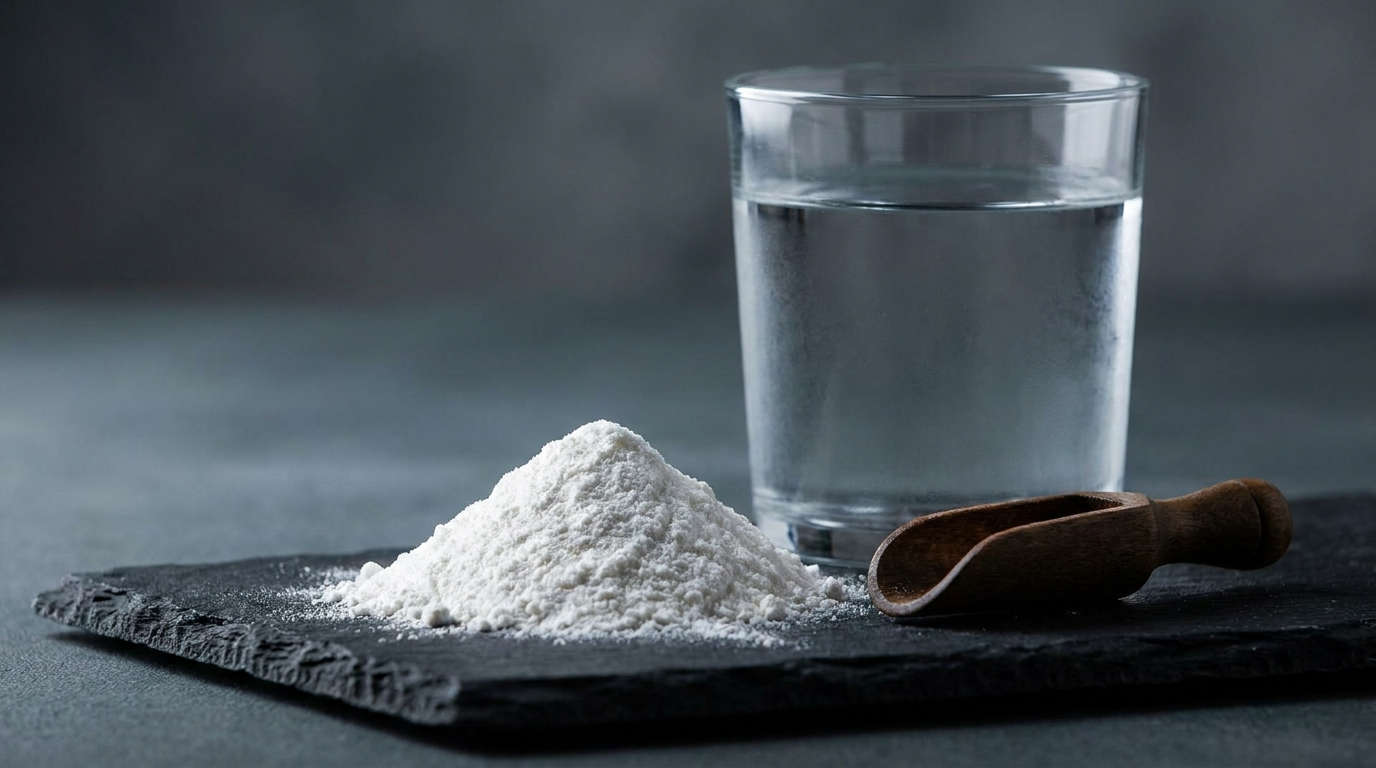
For decades, a white, tasteless powder known as creatine monohydrate has been relegated to the gym locker room. Associated almost exclusively with bodybuilders and sprinters, it is the most heavily researched sports supplement on the market, proven to safely increase muscle power and endurance. But in 2026, the scientific consensus is undergoing a radical shift. Researchers are increasingly viewing creatine not just as a tool for physical performance, but as a potent, low-cost intervention for cognitive longevity and brain health.[6]
The rebranding is being driven by a wave of new clinical trials, systematic reviews, and advanced brain-imaging studies published over the last year. These findings suggest that the same biological mechanism that allows a weightlifter to push out one more repetition can also help an aging brain recall a name, or allow a sleep-deprived professional to maintain focus. As the medical community searches for accessible ways to combat age-related cognitive decline and mental fatigue, this widely available supplement is moving from the weight room to the wellness cabinet.[2][6]
To understand why creatine affects the brain, it helps to look at human energy consumption. Despite accounting for only about 2 percent of total body weight, the human brain is a metabolic furnace, burning roughly 20 percent of the body's resting energy. Every thought, memory retrieval, and moment of focus requires a massive amount of cellular fuel, which the body supplies in the form of a molecule called adenosine triphosphate, or ATP.[3][4]
When neurons fire, they rapidly deplete their local ATP stores. This is where creatine steps in. Inside the body, creatine binds with a phosphate molecule to become phosphocreatine. When a cell runs out of ATP, phosphocreatine swoops in to donate its phosphate group, instantly regenerating the ATP and keeping the cellular machinery running. For years, sports scientists focused on how this process delayed muscle fatigue. Now, neurologists are mapping how it delays mental fatigue.[2][6]

A major milestone in this shift arrived in early 2026 with a comprehensive systematic review published in the journal Nutrition Reviews. Researchers analyzed the effects of creatine supplementation specifically on older adults. They found that in over 80 percent of the included studies, participants who took creatine showed a positive relationship with cognitive function, particularly in the domains of short-term memory and attention.[1]
The aging brain is particularly vulnerable to energy deficits. As humans grow older, the mitochondria—the power plants of the cells—become less efficient, and the brain struggles to utilize creatine effectively. This chronic energy starvation is thought to be a contributing factor to age-related cognitive decline. By supplementing with creatine, older adults appear to provide their brains with a surplus energy reservoir, effectively buffering against this metabolic slowdown.[1][3]
But the benefits are not limited to the elderly. A parallel track of research is investigating how creatine performs under acute cognitive stress, such as severe sleep deprivation or extreme physical exhaustion. A 2025 umbrella review of 23 randomized controlled trials, alongside new 2026 data, demonstrated that creatine supplementation significantly improved processing speed and memory in healthy adults who were subjected to total sleep loss.[5]
A parallel track of research is investigating how creatine performs under acute cognitive stress, such as severe sleep deprivation or extreme physical exhaustion.
In these high-stress scenarios, the brain's energy demands skyrocket while its supply lines are compromised. Researchers have found that a large, acute dose of creatine can partially reverse the cognitive deficits caused by a night of missed sleep, keeping individuals alert and functioning. Some researchers even utilize the supplement to counter the brain fog associated with international jet lag, treating it as a metabolic shield against exhaustion.[3][4]
Translating these findings into practical advice, however, reveals a crucial difference between muscle and brain physiology. Skeletal muscle absorbs creatine relatively easily, which is why a standard dose of 3 to 5 grams per day is sufficient for athletic purposes. The brain, protected by the highly selective blood-brain barrier, is far more resistant to taking up creatine from the bloodstream.[1][4]

Because of this barrier, the doses required to achieve cognitive benefits are often higher than those used for fitness. Current clinical trials targeting brain health frequently utilize daily doses of 5 to 10 grams, and sometimes up to 20 grams during acute stress phases. Advanced magnetic resonance spectroscopy imaging in 2026 has confirmed that these higher doses can successfully increase brain phosphocreatine levels by 10 to 15 percent, correlating directly with improved performance on memory tests.[5][6]
The magnitude of these benefits also depends heavily on a person's baseline creatine levels. Because dietary creatine is found almost exclusively in meat and fish, vegetarians and vegans naturally possess lower tissue stores of the compound. Consequently, when plant-based eaters begin supplementing, they often experience a much more pronounced improvement in memory and processing speed compared to heavy meat-eaters, whose cellular reservoirs are already near capacity.[2][6]
Women may also experience distinct cognitive benefits. Research highlighted in a 2026 handbook on creatine kinetics notes that women typically have lower baseline muscle and brain creatine stores than men. Furthermore, hormonal fluctuations during menstruation, pregnancy, and menopause can alter how the body synthesizes and transports creatine, making supplementation a potentially valuable tool for managing the brain fog and fatigue often associated with these transitions.[2][6]

Beyond everyday memory and fatigue, the medical community is cautiously exploring creatine's potential as a therapeutic agent for serious neurological conditions. Because diseases like Alzheimer's and Parkinson's are characterized by profound cellular energy dysfunction, researchers are testing whether boosting brain ATP could slow disease progression. While early pilot studies have shown small signals of symptom improvement, experts stress that creatine is not a cure, and large-scale clinical trials are still required to confirm any neuroprotective effects.[2][3]
Despite its stellar safety profile—honed over thirty years of intense scrutiny in the sports world—creatine is not a magic limitless pill. The cognitive improvements it offers are measurable but modest, acting more as a supportive foundation for brain health than an instant stimulant like caffeine. Health professionals generally advise that individuals with pre-existing kidney conditions consult a doctor before starting high-dose regimens, and note that new users may experience mild, temporary water retention.[4][6]
Ultimately, the 2026 research landscape paints a picture of a supplement that has been fundamentally misunderstood by the general public. Creatine monohydrate is not merely a shortcut to larger biceps; it is a fundamental component of human cellular bioenergetics. As the science of brain metabolism continues to mature, this humble powder is poised to become a staple of cognitive longevity, offering a safe, evidence-based way to keep the mind energized in an increasingly demanding world.[2][6]
How we got here
1990s
Creatine monohydrate gains mainstream popularity as a sports supplement following the 1992 Olympics.
Early 2010s
Researchers begin observing that vegetarians taking creatine show unexpected improvements in memory and intelligence tests.
2022–2024
Meta-analyses confirm that creatine significantly enhances memory in older adults and mitigates the effects of sleep deprivation.
2026
Advanced brain imaging studies and comprehensive systematic reviews solidify creatine's role as a targeted cognitive and neuroprotective supplement.
Viewpoints in depth
Cognitive Aging Researchers
Scientists focused on neuroprotection view creatine as a vital tool for maintaining brain energy metabolism in older adults.
This camp emphasizes that cognitive decline is fundamentally an energy problem. As mitochondria become less efficient with age, the brain struggles to meet its high metabolic demands, leading to memory loss and fatigue. Researchers in this space point to advanced imaging studies showing that creatine supplementation physically increases brain phosphocreatine levels, providing a buffer against this age-related energy starvation. They advocate for viewing creatine as a long-term neuroprotective strategy rather than a quick fix.
Sports Nutritionists
Performance experts highlight creatine's proven safety record and its ability to combat acute mental fatigue.
Having utilized creatine for decades to enhance physical performance, sports nutritionists are now applying the same principles to cognitive endurance. They focus on the supplement's ability to maintain focus and processing speed under extreme stress, such as sleep deprivation, high altitudes, or intense professional demands. This group often advocates for higher dosing protocols (5-10 grams daily) to overcome the blood-brain barrier, drawing on extensive safety data from athletic populations to reassure new users.
Clinical Skeptics
Cautious medical professionals emphasize that creatine's cognitive benefits are modest and highly dependent on baseline levels.
While acknowledging the safety of creatine, clinical skeptics warn against treating it as a 'limitless' pill for healthy, well-rested young adults. They point out that the most significant cognitive improvements are observed in individuals who are either deficient in creatine (such as vegans) or under severe metabolic stress (such as the sleep-deprived or elderly). For a healthy omnivore with a normal sleep schedule, this camp argues that the cognitive boost from creatine may be negligible, and they caution against overhyping early pilot data regarding diseases like Alzheimer's.
What we don't know
- Whether long-term, high-dose creatine supplementation can definitively slow the progression of neurodegenerative diseases like Alzheimer's.
- The exact mechanism by which hormonal changes in women affect creatine synthesis and transport in the brain.
- The optimal dosing protocol to maximize brain uptake while minimizing gastrointestinal discomfort or water retention.
Key terms
- Adenosine Triphosphate (ATP)
- The primary molecule used by cells to store and transfer energy, essential for both muscle contraction and brain function.
- Phosphocreatine
- A stored form of creatine in the body that rapidly donates a phosphate molecule to regenerate depleted ATP.
- Blood-Brain Barrier
- A highly selective semipermeable border that prevents circulating blood from freely crossing into the brain, making it harder for some supplements to enter.
- Mitochondria
- The structures within cells responsible for generating most of the chemical energy needed to power biochemical reactions.
Frequently asked
Does creatine cause weight gain?
Creatine can cause a slight increase in weight initially, typically 1 to 3 pounds, due to water being drawn into the muscle cells. This is harmless water weight, not fat, and often stabilizes after the first week of use.
How much creatine should I take for brain health?
While 3 to 5 grams daily is standard for muscle growth, many cognitive studies use 5 to 10 grams per day to help the compound cross the blood-brain barrier effectively.
Do I need to do a 'loading phase'?
A loading phase (taking 20 grams a day for 5-7 days) saturates cells faster, but it is not strictly necessary. Taking a steady 5 grams daily will achieve the same cellular saturation over 3 to 4 weeks.
Is creatine safe for my kidneys?
Extensive research over 30 years has shown that creatine is safe for healthy kidneys. However, individuals with pre-existing kidney disease should consult a doctor before supplementing.
Sources
Source coverage
6 outlets
3 viewpoints surfaced






[1]Nutrition ReviewsCognitive Aging Researchers
Creatine and Cognition in Aging: A Systematic Review of Evidence in Older Adults
Read on Nutrition Reviews →[2]ScienceDailyClinical Skeptics
Scientists reveal creatine's hidden power beyond muscle gains
Read on ScienceDaily →[3]TimeCognitive Aging Researchers
Creatine for Brain Power: What the Science Says
Read on Time →[4]OutsideSports Nutritionists
Can Creatine Help You Think More Clearly Under Stress?
Read on Outside →[5]MaxFitSports Nutritionists
Creatine for the Brain: 2026 Research Update on Cognition and Mood
Read on MaxFit →[6]Factlen Editorial TeamClinical Skeptics
Synthesis by Factlen editorial team
Read on Factlen Editorial Team →

More in health
See all 6 stories →Gut-Brain Axis
The Gut-Brain Axis: How Psychobiotics and Nutrition Shape Mental Health
6 sources
Paternal Health
How Fatherhood Physically Rewires the Brain
7 sources

Chrononutrition
Chrononutrition: How Aligning Meal Times With Your Circadian Rhythm Optimizes Metabolic Health
6 sources

Muscle & Aging
The Longevity Biomarker Hiding in Plain Sight: The Evidence for Muscle Mass and Strength
7 sources

Every angle. Every day.
Get health stories with full source coverage and perspective breakdowns delivered to your inbox.