
The Rise of 'Slow Dating': How Singles Are Beating App Fatigue in 2026
Exhausted by endless swiping and algorithmic matchmaking, singles are embracing 'slow dating,' run clubs, and professional matchmakers to find intentional, real-world connections.
By Factlen Editorial Team
- Intentional Matchmakers
- Professionals and platforms arguing that curated, values-based introductions are the necessary antidote to algorithmic choice overload.
- Analog Community Builders
- Advocates for returning to in-person, shared-interest environments like run clubs to foster organic, low-pressure connections.
- Psychological Experts
- Therapists analyzing the mental health benefits of slow dating, while warning that it must involve genuine emotional progression.
What's not represented
- · App developers attempting to redesign algorithms for intentionality
- · Individuals who still find success and prefer the efficiency of traditional dating apps
Why this matters
As dating app burnout reaches a cultural tipping point, this shift toward analog and intentional dating is reshaping how people build relationships. By prioritizing emotional safety, shared values, and community over instant gratification, singles are finding healthier, more sustainable ways to connect.
Key points
- Dating app fatigue has driven singles to seek offline, intentional ways to meet partners.
- Run clubs have emerged as a primary social space, replacing bars and apps for many young adults.
- Slow dating prioritizes emotional depth and shared values over immediate physical chemistry.
- Professional matchmaking is seeing a resurgence as daters look for curated, high-intent introductions.
- Therapists note slow dating helps build secure attachments, provided it isn't used to mask commitment-phobia.
It is a familiar modern ritual: It is 11:47 p.m., your thumb is sore, and you have just "met" forty people without actually meeting anyone. The matches pile up, the conversations stall after three messages, and the process of finding human connection feels increasingly like a second job. This is the reality of swipe culture working exactly as designed. But in 2026, a massive cultural shift is underway. Singles across the globe are hitting a wall with algorithmic romance, sparking a widespread movement away from screens and toward intentional, analog connection.[8]
The exhaustion has a clinical name: dating app fatigue. Psychologists point to "choice overload"—a phenomenon where an infinite feed of options causes users to commit to none of them, second-guess the ones they do pick, and treat real humans like browser tabs. The apps are highly efficient at generating volume, but volume is precisely what exhausts the human brain. Repeated micro-rejections and the pressure to perform for an algorithm have left nearly half of American adults describing online dating as frustrating rather than enjoyable.[6][8]
In response, a new framework has emerged as the defining relationship trend of 2026: "slow dating." Rather than a vow of seriousness that drains the fun out of romance, slow dating is a deliberate deceleration of the app-era tempo. It means dating one person at a time, prioritizing deep conversations over rapid physical escalation, and refusing to waste evenings on connections that lack genuine alignment.[5][7]

At the core of the slow dating movement is a reevaluation of "the spark." For years, daters have been conditioned to expect immediate, electric chemistry on a first date. Today, many are realizing that this sudden rush is often just anxiety in disguise. Slow dating allows attraction to simmer and grow based on shared values, personality, and consistency. Giving someone a second or third chance, even if the first date lacked fireworks, is becoming standard practice as singles look for a slow burn rather than a flash in the pan.[7]
This deceleration is also changing how affection is expressed. Grand, performative gestures are being replaced by "micro-mance"—small, consistent behaviors that build intimacy over time. Recent data shows that 86% of singles now view sharing a specific meme, sending a thoughtful playlist, or remembering how someone takes their coffee as highly meaningful romantic signals. These low-pressure interactions validate the slow burn, proving that lasting connection is built in the daily back-and-forth.[7]
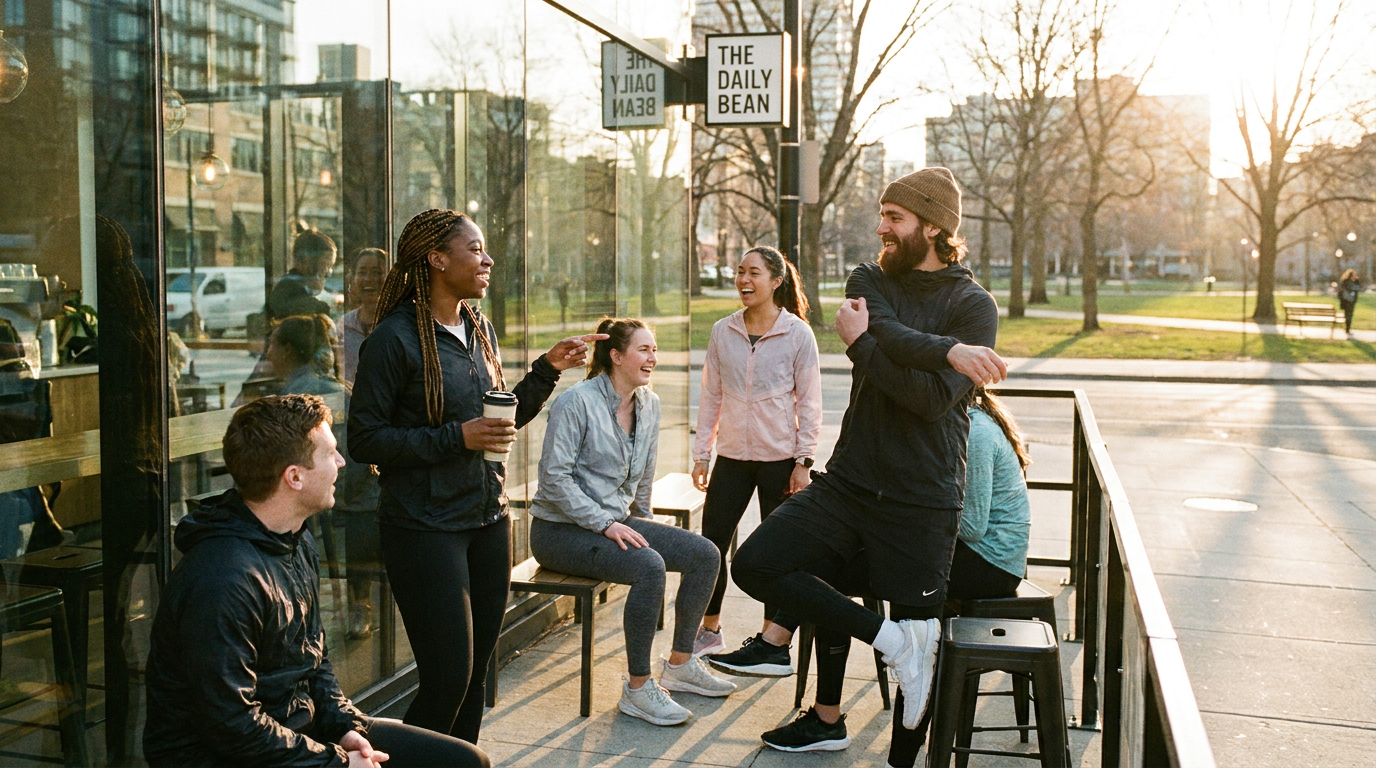
But perhaps the most visible manifestation of the analog dating reset is happening offline, often at 6:00 a.m. in a coffee shop parking lot. Run clubs have exploded in popularity, quietly becoming the hottest place to meet someone in 2026. Replacing dimly lit bars and endless swiping, these fitness communities offer a space where younger adults are reshaping how they socialize, date, and stay healthy all at once.[2][3]
The numbers behind this shift are staggering. Strava data reveals a 59% growth in run club participation over the last two years, while research indicates that 72% of Gen Z runners join these groups specifically to meet new people. Mentions of "running" and "parkrun" in dating app bios have doubled, signaling that even those still online are desperately looking for offline, shared-interest connections.[1][3]
Run clubs succeed where apps fail because they remove the performative pressure of a traditional date. Participants bond over shared effort, and because everyone is already in activewear, the anxiety of first-date wardrobe decisions vanishes. There is no ghosting, no curated bios, and no awkward silences across a dinner table. You show up, you run, you chat, and you see familiar faces week after week, allowing natural chemistry to develop at its own pace.[1][2]

Run clubs succeed where apps fail because they remove the performative pressure of a traditional date.
Beyond the romance, these analog spaces offer crucial mental health and community benefits. For many women, female-focused running groups provide safety in numbers and a supportive environment free from the harassment sometimes experienced when running alone. The focus on community first and romance second creates a healthier foundation for any relationship that does eventually blossom on the track.[3]
For those who prefer a more direct route to a relationship without the endless swiping, professional matchmaking is experiencing a major renaissance. Services that pair clients based on deep psychological profiling and shared life goals are seeing record demand. After decades of being viewed as a niche or old-fashioned service, matchmaking is now celebrated as the ultimate form of intentional dating.[4]
Modern matchmakers take the time to understand emotional readiness, communication styles, and long-term vision—nuances that an algorithm simply cannot parse. By introducing clients to carefully vetted matches who align with their core values, these services protect daters' time and emotional energy. The focus shifts entirely from quantity to quality, ensuring that when a first date does happen, the foundational compatibility is already established.[4][8]

Psychologists and cognitive behavioral therapists are largely applauding the slow dating and analog trends. Research on attachment formation suggests that couples who spend more time in deep conversation before physical escalation report significantly higher relationship satisfaction in their first year. For individuals recovering from app burnout, or those with anxious attachment styles prone to spiraling, the deliberate pacing of slow dating provides much-needed emotional safety.[6]
However, mental health professionals also offer a note of caution. While slow dating is genuinely healing for many, it can sometimes be weaponized as a polite label for avoidance or commitment-phobia. Therapists warn that if the slowness applies to emotional vulnerability as well as physical intimacy, it may not be slow dating at all—it might just be stalling.[6]

To ensure the process remains healthy, experts recommend a simple three-month check-in: daters should ask themselves if they are emotionally closer to their partner than they were three months prior. The goal of slow dating is to decelerate the physical progression while actually accelerating emotional depth through earlier vulnerability and real conversations about values, histories, and dreams.[6]
Ultimately, the dating landscape of 2026 is defined by a collective exhale. Singles are reclaiming their time, setting rigid boundaries to protect their peace, and refusing to treat human connection like a numbers game. Whether it is through a curated matchmaking introduction, a shared sunrise run, or simply taking the time to truly know someone, the future of romance is looking decidedly more intentional.[4][7][8]
How we got here
2022-2023
Post-pandemic dating app boom leads to a surge in high-volume swiping and casual dating.
2024-2025
Dating app fatigue becomes a documented psychological phenomenon as users report burnout and choice overload.
Early 2026
Run clubs and offline community groups see massive surges in attendance as singles seek analog connections.
Mid 2026
'Slow dating' and 'soft dating' become the dominant relationship trends, emphasizing emotional pacing and intentionality.
Viewpoints in depth
Analog Community Builders
Advocates for returning to in-person, shared-interest environments to foster organic connections.
This perspective argues that the fundamental architecture of dating apps is flawed because it gamifies human connection. By shifting the focus to shared activities—like run clubs, volunteer groups, or local classes—daters remove the performative pressure of a one-on-one date. Proponents highlight that these environments foster genuine community first, meaning that even if a romantic connection isn't made, participants still walk away with improved mental health, fitness, and a broader social network.
Intentional Matchmakers
Professionals arguing that curated, values-based introductions are the necessary antidote to algorithmic choice overload.
Matchmakers and intentional dating platforms contend that singles don't need more options; they need better filters. They argue that algorithms optimize for engagement rather than long-term compatibility. By employing human intuition and rigorous vetting for emotional readiness and shared life goals, this camp believes dating can be transformed from an exhausting numbers game into a highly efficient, respectful process that protects a client's time and emotional bandwidth.
Psychological Experts
Therapists analyzing the mental health benefits of slow dating, while warning of its potential pitfalls.
Mental health professionals view the slow dating trend as a largely positive corrective to the anxiety-inducing pace of swipe culture. They note that taking time to build emotional intimacy helps regulate the nervous system, particularly for those with anxious attachment styles. However, they caution that 'slow' must not become synonymous with 'stagnant.' Therapists emphasize that healthy slow dating requires active vulnerability and deepening conversations, warning that some individuals may co-opt the trend as a socially acceptable way to avoid commitment.
What we don't know
- Whether dating app companies will successfully pivot their business models to accommodate the demand for slower, more intentional connections.
- If the run club dating boom will sustain its momentum or eventually face the same social fatigue as the bar scene.
Key terms
- Slow Dating
- A dating approach that prioritizes emotional depth, shared values, and intentional pacing over rapid physical escalation and high-volume swiping.
- Choice Overload
- A psychological phenomenon where having too many options (like an endless feed of dating profiles) leads to decision paralysis and decreased satisfaction with any choice made.
- Micro-mance
- The practice of showing affection through small, consistent, everyday gestures rather than grand, occasional romantic displays.
- Soft Dating
- Dating without the immediate pressure to define the relationship or reach specific milestones, focusing instead on presence and curiosity.
Frequently asked
What is dating app fatigue?
Dating app fatigue is the emotional exhaustion caused by endless swiping, choice overload, and repetitive, superficial conversations that rarely lead to meaningful real-world connections.
What does 'slow dating' actually mean?
Slow dating is the practice of taking time to build an emotional connection before rushing into physical intimacy or commitment. It focuses on deeper conversations, shared values, and dating one person at a time.
Why are run clubs so popular for dating?
Run clubs offer a low-pressure, consistent environment where people can meet organically over a shared activity. They eliminate the need for performative dressing up and allow natural chemistry to develop without the pressure of a formal date.
What is 'micro-mance'?
Micro-mance refers to small, consistent gestures of affection—like sharing an inside joke, sending a meme, or remembering a coffee order—that build intimacy over time, rather than relying on grand romantic displays.
Sources
Source coverage
8 outlets
3 viewpoints surfaced








[1]Miami HeraldAnalog Community Builders
Why Run Clubs Are Replacing Dating Apps
Read on Miami Herald →[2]Kansas City StarAnalog Community Builders
Forget the bar. Forget the apps. The hottest place to meet someone in 2026
Read on Kansas City Star →[3]TechRoundAnalog Community Builders
Run Clubs and the 'Analogue Dating' Reset
Read on TechRound →[4]It's Just LunchIntentional Matchmakers
Why More Singles Are Returning to Matchmaking After Dating App Fatigue
Read on It's Just Lunch →[5]Star MagazineIntentional Matchmakers
Slow dating poised to become the biggest dating trend of 2026
Read on Star Magazine →[6]Psychologie et SérénitéPsychological Experts
Soft dating and slow dating emerged in 2026 as deliberate reactions to app burnout
Read on Psychologie et Sérénité →[7]FODMAP EverydayIntentional Matchmakers
12 reasons why 'slow dating' is the 2026 trend
Read on FODMAP Everyday →[8]TenrIntentional Matchmakers
Swipe culture is designed to keep you swiping... intentional dating flips the model
Read on Tenr →
Every angle. Every day.
Get lifestyle stories with full source coverage and perspective breakdowns delivered to your inbox.