
U.S. and Iran Open Ceasefire Talks in Switzerland as Strait of Hormuz Closure Halts Shipping
Vice President JD Vance has opened high-stakes negotiations with Iranian officials in Switzerland, even as President Trump threatens military action over Tehran's blockade of the Strait of Hormuz.
By Factlen Editorial Team
- U.S. Diplomatic & Security Establishment
- Focuses on securing global shipping lanes, preventing a wider regional war, and utilizing a mix of diplomatic engagement and military deterrence.
- Iranian State Interests
- Views the Hormuz blockade as necessary leverage to force the unfreezing of billions in state assets and retaliate against regional adversaries.
- Global Energy & Trade Sectors
- Primarily concerned with the severe economic fallout, spiking oil prices, and the paralysis of international supply chains caused by the standoff.
What's not represented
- · Allied European Nations
- · Commercial Shipping Companies
Why this matters
The Strait of Hormuz is the world's most critical oil chokepoint, handling roughly 20% of global petroleum consumption. A prolonged closure threatens to spike global energy prices, disrupt international supply chains, and trigger a broader military conflict in the Middle East.
Key points
- U.S. Vice President JD Vance and Iranian officials have opened ceasefire negotiations in Switzerland.
- President Trump simultaneously threatened military action if Iran does not reopen the Strait of Hormuz.
- Iran closed the critical waterway in retaliation for Israeli strikes in southern Lebanon.
- The blockade has stalled dozens of commercial ships and caused global oil prices to spike.
- A major sticking point in the talks is the fate of billions of dollars in frozen Iranian assets.
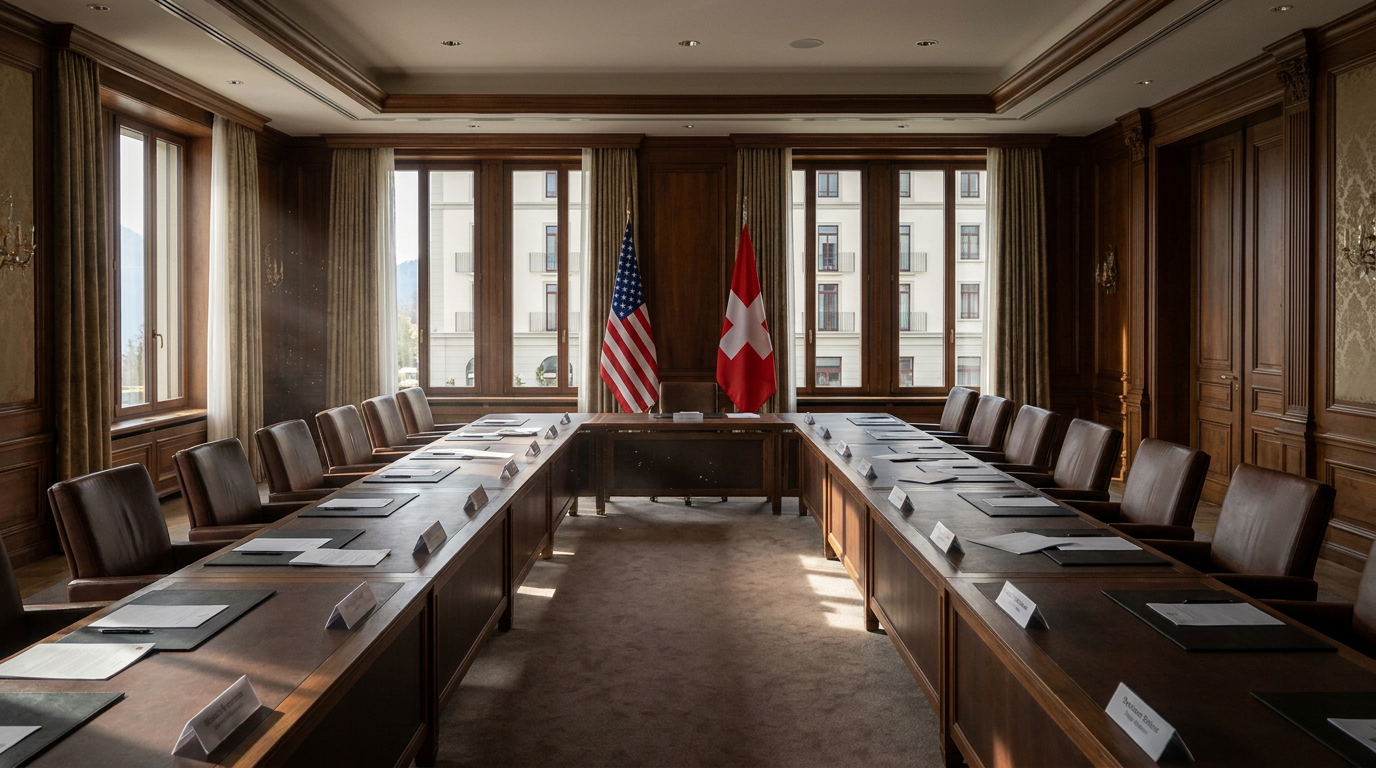
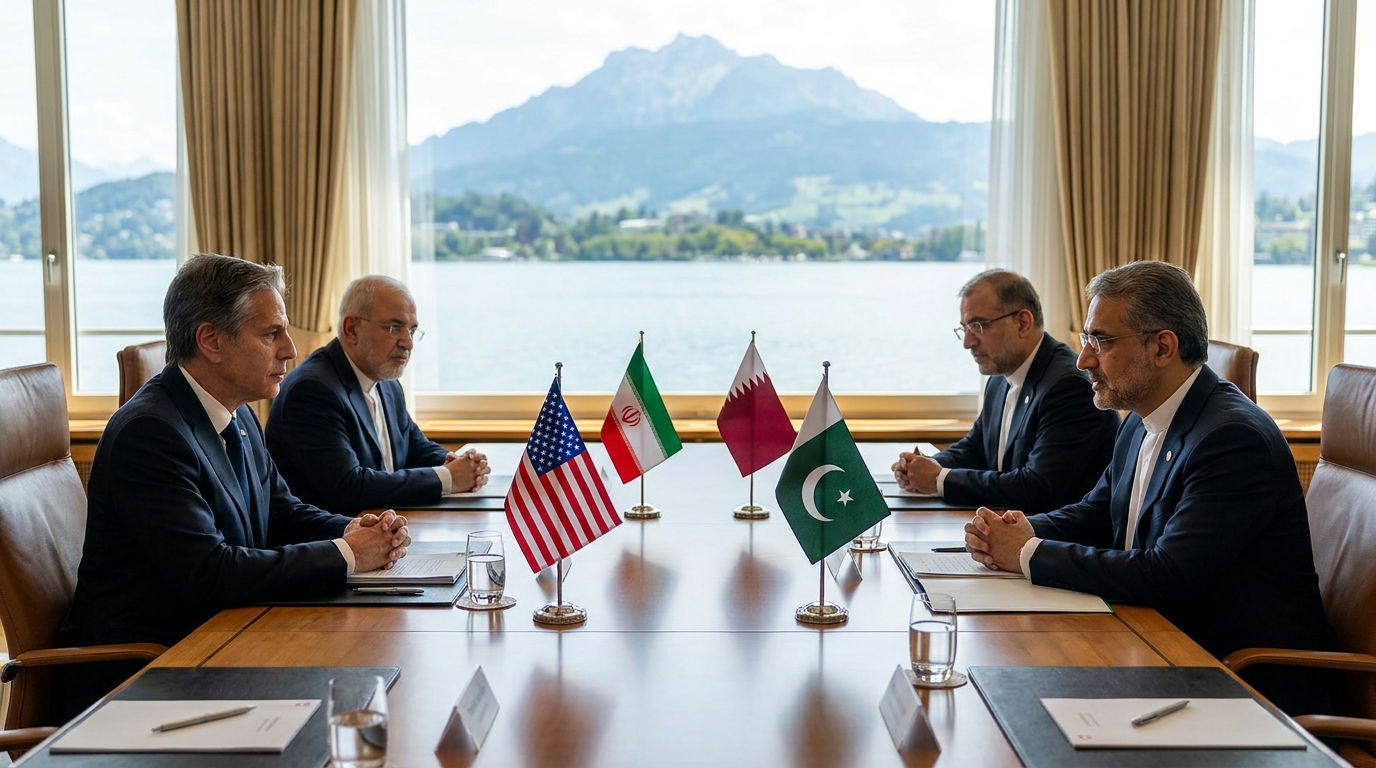
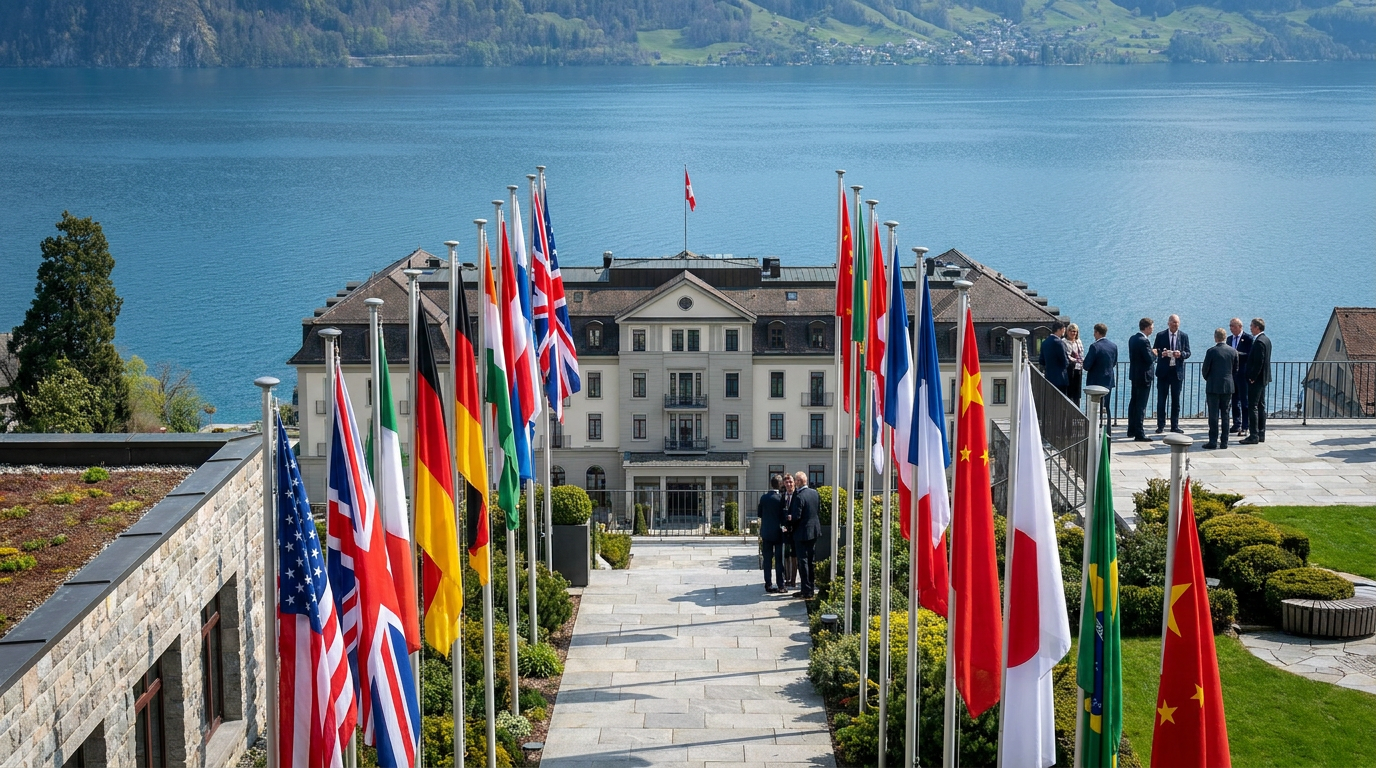
High-stakes diplomatic negotiations have officially opened in Bürgenstock, Switzerland, where U.S. Vice President JD Vance is meeting with Iranian officials in an attempt to forge a fragile ceasefire framework. The talks represent the most direct engagement between Washington and Tehran in years, aiming to de-escalate a rapidly deteriorating security situation in the Middle East. According to initial reports from the summit, the first day of closed-door meetings concluded with a tone described by negotiators as "tense but constructive." The primary objective for the U.S. delegation is to secure the reopening of critical maritime trade routes and prevent a broader regional war, while Iranian officials are seeking sanctions relief and the unfreezing of billions in state assets.[3][6]
The diplomatic push in Switzerland is unfolding against a backdrop of severe military threats emanating from the White House. Even as Vice President Vance cited progress in turning over a "new leaf" with Tehran, President Donald Trump issued a stark warning from Washington, threatening to resume direct military attacks on Iran. Trump declared that Iran "won't have a country" if it continues to blockade the Strait of Hormuz, a critical maritime chokepoint. This stark contrast in messaging—combining Vance's diplomatic overtures with Trump's aggressive military ultimatums—has created a complex dual-track dynamic that is overshadowing the negotiations and leaving international observers uncertain about the administration's ultimate red lines.[1][6]
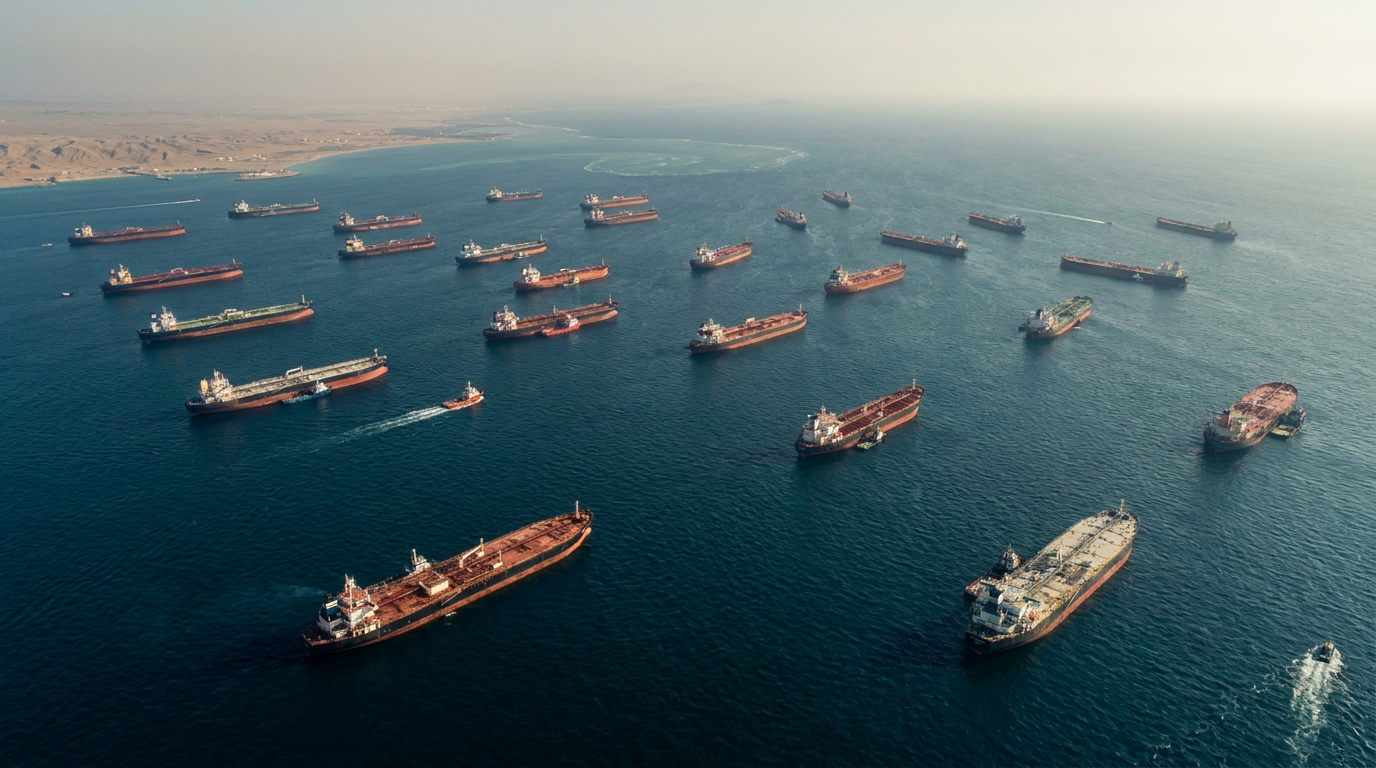
The immediate catalyst for the emergency talks is Tehran's unprecedented decision to shut down all commercial shipping traffic through the Strait of Hormuz. Iranian authorities announced the closure over the weekend, framing the blockade as a direct retaliation for ongoing Israeli military strikes in southern Lebanon. Ship tracking data has already shown a sharp and immediate fall in transits through the waterway, with dozens of massive oil tankers and cargo vessels dropping anchor in the Gulf of Oman and the Persian Gulf, waiting for the geopolitical standoff to resolve. The blockade effectively severs one of the most vital arteries of the global economy.[1][4]

The economic fallout from the closure has been swift and severe. Global energy markets reacted immediately to the disruption, with Brent crude prices spiking past $92 per barrel as traders priced in the risk of a prolonged supply shock. Roughly 20% of the world's total petroleum consumption passes through the 21-mile-wide strait, making it the single most important oil transit chokepoint on the planet. Energy analysts warn that if the blockade extends beyond a few days, the resulting supply constraints could trigger a cascading effect on global inflation, driving up the cost of gasoline, manufacturing, and transportation worldwide.[4][5]
The economic fallout from the closure has been swift and severe.
Inside the negotiating rooms in Switzerland, the talks face significant structural hurdles. A major point of contention threatening to derail the fragile peace framework is the status of billions of dollars in frozen Iranian funds. Foreign policy experts warn that determining who controls these potentially unfrozen assets is the first major test of the summit. The U.S. administration faces intense domestic pressure to ensure that any released funds are strictly monitored and cannot be diverted to fund regional proxy groups, while Tehran insists on unconditional access to its sovereign wealth as a prerequisite for reopening the strait.[2][7]

Iranian state media has reinforced this hardline stance, demanding the immediate release of frozen assets as a non-negotiable condition for de-escalation. The Iranian delegation in Switzerland is reportedly leveraging the economic pain caused by the Hormuz closure to extract maximum concessions from the U.S. and its European allies. By tying the fate of global energy markets to their demands for sanctions relief, Tehran is attempting to force Washington into a corner, calculating that the threat of a global recession will outweigh the political costs of unfreezing the funds.[4][7]
The U.S. strategy appears to be a calculated gamble, utilizing Vance's diplomatic presence to keep Tehran at the table while Trump's threats serve as a deterrent against further escalation. However, critics of the administration's approach argue that this "good cop, bad cop" routine risks severe miscalculation. If Iranian leadership perceives Trump's threats as an imminent precursor to military action, they may choose to preemptively escalate their blockade or target U.S. military assets in the region, rather than yielding at the negotiating table.[1][6]
Commercial shipping companies are caught in the crossfire, facing impossible choices as the standoff continues. Major freight operators have ordered their vessels to hold position outside the strait, racking up millions of dollars in daily delays and insurance premiums. Rerouting ships around the Cape of Good Hope is not a viable alternative for vessels originating inside the Persian Gulf, leaving a significant portion of the world's energy fleet effectively trapped until a diplomatic breakthrough is achieved or a military escort corridor is established.[4][5]

As the talks in Bürgenstock enter their second day, the window for a peaceful resolution is narrowing. The longer the Strait of Hormuz remains closed, the higher the pressure mounts on the U.S. and its allies to intervene militarily to secure the freedom of navigation. Both sides remain locked in a high-stakes game of brinkmanship, with the stability of the global economy and the prospect of a devastating regional war hanging in the balance.[3][5]
How we got here
Recent Weeks
Israeli military strikes intensify in southern Lebanon.
Saturday
Iran announces the closure of the Strait of Hormuz to commercial shipping.
Sunday
Global oil prices spike as ship tracking data confirms a halt in transits.
Monday
U.S. and Iranian delegations begin closed-door talks in Switzerland.
Viewpoints in depth
U.S. Administration Strategy
Washington is deploying a dual-track approach of diplomatic engagement and military threats.
The U.S. approach relies heavily on a 'good cop, bad cop' dynamic. By sending Vice President Vance to Switzerland, the administration is signaling a willingness to negotiate a diplomatic off-ramp and address the issue of frozen assets. However, President Trump's aggressive rhetoric from Washington is designed to establish a hard deterrent, making it clear that a prolonged blockade of global energy supplies will be met with overwhelming military force. This strategy aims to force Tehran to the table while maintaining maximum pressure.
Iranian Leadership Calculus
Tehran is utilizing its control over the Strait of Hormuz to extract economic concessions.
For Iranian officials, the closure of the Strait of Hormuz is the ultimate geopolitical trump card. By choking off 20% of the world's oil supply, Tehran ensures that its demands cannot be ignored by the international community. The Iranian delegation is explicitly tying the reopening of the waterway to the release of billions in frozen state assets and relief from crippling economic sanctions. They calculate that the threat of a global economic recession will ultimately force the U.S. and its allies to capitulate on the financial demands.
Global Energy Markets
Traders and analysts are bracing for severe economic disruptions if the standoff continues.
The energy sector views the situation with extreme alarm. The Strait of Hormuz has no viable alternative for the massive volume of oil that flows out of the Persian Gulf. Energy analysts note that even a short-term closure forces shipping companies to incur massive delays and insurance costs, which are immediately passed on to consumers. If the diplomatic talks in Switzerland fail and the blockade extends into weeks, markets are pricing in the likelihood of crude oil crossing the $100 per barrel threshold, which could trigger widespread inflation and stall global economic growth.
What we don't know
- Whether the U.S. administration is willing to unfreeze Iranian assets as a condition for reopening the strait.
- How long commercial shipping companies can sustain the delays before rerouting or canceling shipments entirely.
- At what point President Trump would authorize direct military action to break the blockade.
Key terms
- Strait of Hormuz
- A narrow, strategically vital waterway between the Persian Gulf and the Gulf of Oman through which roughly a fifth of the world's oil consumption passes.
- Frozen Assets
- Billions of dollars in Iranian state funds held in foreign banks that have been blocked from access by international sanctions.
- Brent Crude
- A major trading classification of sweet light crude oil that serves as a major benchmark price for purchases of oil worldwide.
Frequently asked
Why did Iran close the Strait of Hormuz?
Tehran announced the closure as a retaliation for ongoing Israeli military strikes in southern Lebanon, using the critical waterway as geopolitical leverage.
What is at stake in the Switzerland talks?
The talks aim to establish a ceasefire framework, reopen the Strait of Hormuz to commercial shipping, and address the status of billions of dollars in frozen Iranian assets.
How does this affect global gas prices?
Because roughly 20% of the world's oil passes through the strait, the blockade has already caused crude oil prices to spike, which typically leads to higher gasoline prices for consumers worldwide.
What is the U.S. threatening to do?
President Trump has threatened to resume direct military attacks on Iran if the country continues to blockade the strait, warning that Iran 'won't have a country' if it persists.
Sources
Source coverage
7 outlets
3 viewpoints surfaced






[1]The GuardianU.S. Diplomatic & Security Establishment
Trump news at a glance: President threatens to restart attacks on Iran even as Vance cites progress in talks
Read on The Guardian →[2]Fox NewsU.S. Diplomatic & Security Establishment
Major dispute to threaten Trump's Iran deal over billions in frozen Tehran funds: expert
Read on Fox News →[3]Al JazeeraIranian State Interests
US and Iran meet for 'tense' but 'constructive' ceasefire talks
Read on Al Jazeera →Shipping stalls in Strait of Hormuz after Iran declares key waterway shut
Read on Al Jazeera →[5]ReutersGlobal Energy & Trade Sectors
Oil spikes as Hormuz shipping halts amid US-Iran talks
Read on Reuters →[6]New York TimesU.S. Diplomatic & Security Establishment
Vance Seeks Diplomatic Breakthrough With Iran as Trump Threatens Military Action
Read on New York Times →[7]Tehran TimesIranian State Interests
Iran demands release of frozen assets as talks open in Switzerland
Read on Tehran Times →

More in news politics
See all 10 stories →Strait of Hormuz
US and Iran Open Direct Peace Talks in Switzerland Amid Renewed Strait of Hormuz Blockade
7 sources
Public Health Guidelines
Fact Check: Do 'Weekend Warrior' Workouts Actually Provide the Same Benefits as Daily Exercise?
7 sources

Strait of Hormuz
Global Shipping Halts in Strait of Hormuz as U.S. and Iran Open High-Stakes Peace Talks
8 sources
Strait of Hormuz
US and Iran Reach Preliminary Agreements in Switzerland Despite Threats and Strait Closure
7 sources
Every angle. Every day.
Get news politics stories with full source coverage and perspective breakdowns delivered to your inbox.