
How the WNBA Transformed Into a Billion-Dollar Juggernaut Over 30 Seasons
Thirty seasons after its gritty inaugural game, the WNBA has transformed into a highly profitable enterprise driven by a three-point revolution and explosive viewership growth. A look inside the tactical and economic shifts that turned a survival-mode experiment into a cultural mainstay.
By Factlen Editorial Team
- League Executives & Owners
- Ownership groups view the recent financial metrics as validation of their long-term investment in women's sports.
- Basketball Tacticians
- Coaches and analysts emphasize how the deeper three-point line and pace-and-space era have elevated the product.
- Sports Marketers & Analysts
- Industry experts focus on the shift from cause-based support to personality-driven fandom and micro-moments.
- Players & Union Representatives
- Athletes are focused on ensuring the revenue boom translates into tangible quality-of-life improvements.
What's not represented
- · Legacy fans who preferred the physical, post-oriented style of the late 1990s.
- · Local broadcast networks losing exclusive rights to national streaming platforms.
Why this matters
The WNBA's transformation from a struggling startup to a billion-dollar cultural juggernaut proves that investing in women's sports is a highly lucrative business. For fans and athletes alike, this financial and tactical evolution guarantees a higher quality product, better compensation, and unprecedented accessibility for the next generation.
Key points
- The WNBA is celebrating its 30th season, marked by a dramatic evolution in both gameplay and business metrics since 1997.
- On-court tactics have shifted heavily toward perimeter shooting, with three-point attempt rates climbing from under 20% to over 33%.
- Franchise valuations have skyrocketed, averaging $427 million in 2026, driven by massive viewership growth and a new $2.2 billion media deal.
- Fan engagement has transitioned from cause-based support to personality-driven fandom, attracting a new wave of corporate sponsors.
- Players are leveraging this financial boom to negotiate for higher salaries and better travel accommodations in upcoming collective bargaining.
The June 21, 2026 matchup between the Los Angeles Sparks and New York Liberty was more than a regular-season game; it was a 30-season anniversary of the WNBA's inaugural tip-off. Nneka Ogwumike sealed the emotional night with a buzzer-beating three-pointer to lift the Sparks, providing a cinematic finish to a milestone evening.[1]
The poetic finish stood in stark contrast to the league's very first game on June 21, 1997, played by the same two franchises at the Great Western Forum. That inaugural contest was a gritty, low-scoring affair that the Liberty won 67-57, characterized by nervous energy and a heavy reliance on interior play.[2]
In 1997, the pressure on the pioneers was immense. Players like Lisa Leslie and Rebecca Lobo felt the burden of carrying a nascent league on their shoulders, with Leslie even attempting—and missing—a dunk just to prove a point to skeptics who doubted the athleticism of the women's game.[2]
Thirty seasons later, the WNBA no longer has to prove its right to exist. The league has transformed from a survival-mode experiment into one of the fastest-growing properties in global sports, driven by a tactical revolution on the court and an economic explosion off it.[8]
The most obvious on-court evolution is the geometry of the game. When the WNBA launched, the three-point attempt rate hovered below 20 percent, mirroring the post-heavy, mid-range style of 1990s basketball where centers dominated the offensive flow.[4]
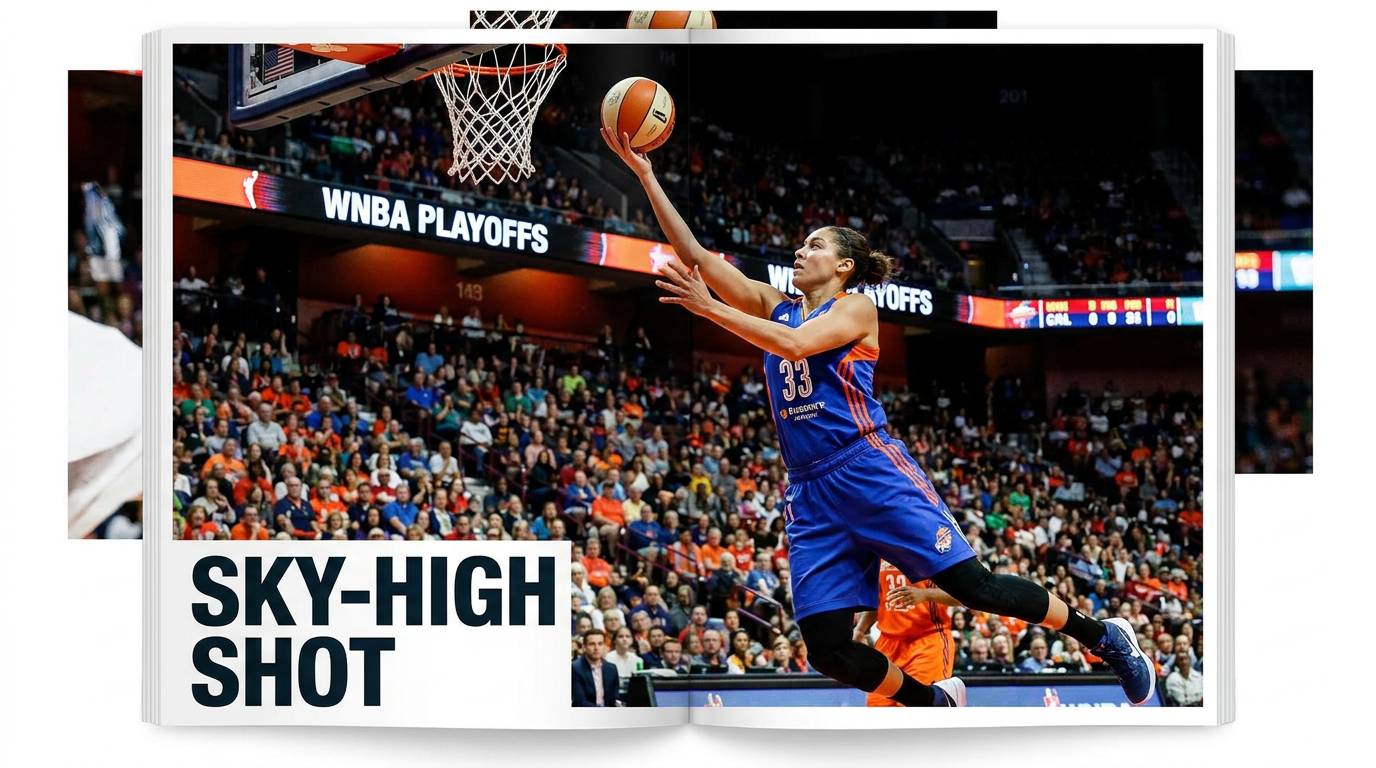
Today, the WNBA is in the midst of a perimeter revolution. Teams now shoot three-pointers on more than 33 percent of their field goal attempts, fundamentally stretching defenses and prioritizing floor spacing over traditional post-ups.[4]

This shift occurred despite the league actually moving the three-point line further away. In 2013, the WNBA extended the arc to 22 feet, 1.75 inches to match FIBA international standards, moving away from the shorter NCAA women's distance.[8]
Rather than deterring shooters, the deeper line eventually opened up the floor. Centers and forwards who previously lived in the paint have developed perimeter strokes, making the modern WNBA faster, more efficient, and highly dependent on multi-positional athletes who can shoot from anywhere.[4]
Rather than deterring shooters, the deeper line eventually opened up the floor.
As the product on the floor became more dynamic, the audience followed. After a viewership lull in the early 2010s, the league has seen explosive growth in the 2020s, culminating in record-breaking engagement metrics across all platforms.[5]
Nielsen data from recent seasons shows that WNBA games are consistently averaging well over one million viewers across national broadcasts, with total viewership hours jumping by double-digit percentages year-over-year.[6]
This surge in eyeballs translates directly to franchise values. According to 2026 financial analyses, the average WNBA franchise valuation has skyrocketed to $427 million, representing a staggering 59 percent increase in just one year.[3]

The Golden State Valkyries, one of the league's newest expansion teams, are reportedly valued at $850 million before even playing a full season—a figure that dwarfs the valuations of many established global soccer clubs and legacy sports franchises.[3]
A massive catalyst for this financial security is the league's new 11-year, $2.2 billion media rights deal that begins in the 2026 season. The agreement with major networks guarantees unprecedented visibility and a massive influx of shared revenue.[5]
But the WNBA's growth isn't just about broadcast contracts; it represents a fundamental shift in sports consumer behavior. Industry analysts note that the league has successfully transitioned its audience from passive "support" to active "fandom."[7]
Early in its history, much of the WNBA's attendance was driven by a sense of duty—supporting women's sports as a social cause. Today, fans are deeply invested in the players as cultural icons, following their pre-game fashion, off-court podcasts, and intense rivalries.[7]

This micro-moment engagement on social media has attracted a new wave of corporate sponsors. Brands ranging from high-fashion labels to tech giants are eager to align with athletes who command highly engaged, younger demographics.[7]
Despite the booming revenues, the league faces complex growing pains. A redesigned collective bargaining agreement is on the horizon, and players are pushing for a larger share of the pie, including higher base salaries and standard professional amenities like full-time charter flights.[3][8]
Expansion also presents a test of the league's talent pool. With new franchises in the Bay Area, Toronto, and Portland entering the fray, the WNBA must ensure that the quality of play remains elite while distributing its stars across more markets.[5]
How we got here
June 1997
The WNBA tips off its inaugural season with eight original franchises, featuring a gritty, mid-range style of play.
2013 Season
The league extends the three-point line to match FIBA international standards, fundamentally changing court spacing.
2018 Season
The WNBA's 'three-point revolution' begins in earnest, with attempt rates spiking above 28 percent.
July 2024
The league finalizes a landmark 11-year, $2.2 billion media rights deal to broadcast games across major networks.
June 2026
The WNBA celebrates its 30th season, with average franchise valuations surging to $427 million.
Viewpoints in depth
League Executives & Owners
Ownership groups view the recent financial metrics as validation of their long-term investment in women's sports.
For decades, WNBA owners operated franchises that hovered near the break-even point or operated at a loss, subsidized by NBA counterparts. Today, executives point to the $2.2 billion media rights deal and the $427 million average franchise valuation as proof that the league is a standalone economic powerhouse. They argue that expansion into markets like Toronto and the Bay Area will further cement the league's footprint, transforming it into a global media property.
Basketball Tacticians
Coaches and analysts emphasize how the deeper three-point line and pace-and-space era have elevated the product.
Basketball purists argue that the WNBA has never featured a better on-court product. By moving the three-point line to the FIBA standard, the league inadvertently created better floor spacing. Tacticians note that modern WNBA centers are now required to shoot from the perimeter and facilitate from the high post, creating a fluid, positionless style of basketball that is highly appealing to modern sports consumers.
Players & Union Representatives
Athletes are focused on ensuring the revenue boom translates into tangible quality-of-life improvements.
While players celebrate the league's soaring valuations, union representatives are quick to point out the disparity between franchise worth and player compensation. As the league prepares for a new collective bargaining agreement, the players' camp is prioritizing a larger percentage of basketball-related income, higher base salaries, and standard professional amenities like full-time charter flights and upgraded practice facilities.
What we don't know
- How the upcoming collective bargaining negotiations will alter the revenue split between owners and players.
- Whether the rapid influx of expansion teams will dilute the on-court talent pool in the short term.
- How the integration of new media partners will impact local broadcast accessibility for fans.
Key terms
- 3-Point Attempt Rate (3PAr)
- The percentage of a team's total field goal attempts that are taken from beyond the three-point line.
- Collective Bargaining Agreement (CBA)
- A contract negotiated between the league's players union and ownership that dictates salaries, benefits, and working conditions.
- FIBA Standard
- The international rules of basketball established by the International Basketball Federation, which dictate court dimensions like the three-point line distance.
- Franchise Valuation
- The estimated total financial worth of a sports team, factoring in revenue, media rights, and brand equity.
Frequently asked
When was the first WNBA game played?
The inaugural WNBA game took place on June 21, 1997, between the Los Angeles Sparks and the New York Liberty at the Great Western Forum.
How much is a WNBA franchise worth today?
As of 2026, the average WNBA franchise is valued at $427 million, with expansion teams like the Golden State Valkyries valued as high as $850 million.
Why did the WNBA change its three-point line?
In 2013, the league extended the three-point line to 22 feet, 1.75 inches to match the FIBA international standard, moving away from the shorter NCAA women's distance to improve floor spacing.
What is the new WNBA media rights deal?
The league recently secured an 11-year media rights agreement worth approximately $2.2 billion, beginning in the 2026 season.
Sources
Source coverage
8 outlets
4 viewpoints surfaced








[1]ESPNPlayers & Union Representatives
Ogwumike's shot lifts Sparks on 'emotional' night
Read on ESPN →[2]CBS SportsPlayers & Union Representatives
Looking back at that inaugural game and the coverage around it
Read on CBS Sports →[3]SporticoLeague Executives & Owners
WNBA Valuations Jump 59% to $427 Million Average
Read on Sportico →[4]The LeadBasketball Tacticians
The WNBA's 3-Point Revolution
Read on The Lead →[5]Sports Business JournalLeague Executives & Owners
WNBA Viewership and Media Rights Growth
Read on Sports Business Journal →[6]NielsenSports Marketers & Analysts
WNBA Viewership Insights 2025-2026
Read on Nielsen →[7]OperativeSports Marketers & Analysts
From Support to Fandom: The WNBA's Growth
Read on Operative →[8]Factlen Editorial TeamPlayers & Union Representatives
Synthesis by Factlen editorial team
Read on Factlen Editorial Team →

Every angle. Every day.
Get sports stories with full source coverage and perspective breakdowns delivered to your inbox.