
How Sodium-Ion Batteries Are Rewriting the Economics of Electric Vehicles in 2026
Mass production of sodium-ion batteries has officially begun, offering a cheaper, cold-resistant, and highly abundant alternative to lithium that promises to democratize electric vehicle ownership.
By Factlen Editorial Team
- Battery Manufacturers
- View sodium-ion as the key to capturing the mass market by drastically lowering production costs and securing supply chains.
- Resource Analysts
- Emphasize the geopolitical advantages of shifting away from scarce lithium toward universally abundant sodium.
- Automotive Engineers
- Praise the technology's safety and cold-weather performance, while acknowledging its current weight and density limitations for long-range travel.
- Grid Storage Operators
- See sodium-ion as the ultimate low-cost, highly stable solution for storing massive amounts of renewable energy on the power grid.
What's not represented
- · Lithium Mining Executives
- · Copper Suppliers
Why this matters
Lithium scarcity and high costs have long kept electric vehicles out of reach for middle- and lower-income buyers. By replacing rare lithium with universally abundant sodium, automakers can drastically lower the sticker price of EVs while eliminating the severe winter range anxiety that plagues current models.
Key points
- Sodium-ion batteries are entering mass production in 2026, powering the first wave of affordable passenger EVs.
- Sodium is 1,000 times more abundant than lithium, drastically lowering battery production costs.
- The technology solves winter EV issues, retaining up to 90% of its capacity in sub-zero temperatures.
- While energy density is lower than premium lithium cells, it has reached parity with standard LFP batteries.
- Sodium-ion chemistry is inherently safer and highly resistant to thermal runaway fires.
- Automakers will likely use a dual strategy: sodium for affordable city cars, lithium for long-range premium vehicles.
For the past decade, the electric vehicle revolution has been entirely dependent on a single, highly contested element: lithium. But in 2026, the automotive industry is undergoing a fundamental chemistry shift. Sodium-ion batteries, once dismissed as a heavy and inefficient laboratory curiosity, have officially entered mass production. This year marks the arrival of the first large-scale passenger EVs powered by sodium, a milestone that the Massachusetts Institute of Technology's Technology Review recently named one of the ten revolutionary breakthroughs of the year.[3][8]
The catalyst for this shift is simple economics and supply chain security. Lithium is relatively scarce, expensive to mine, and subject to intense geopolitical bottlenecks. In contrast, sodium is roughly one thousand times more abundant than lithium. It can be cheaply extracted from rock salt or even seawater, making it universally accessible and immune to the supply shocks that have historically plagued battery manufacturing. By eliminating lithium entirely, automakers are unlocking a pathway to truly affordable, mass-market electric mobility.[3][7]
To understand why this is a breakthrough, it helps to look at how these batteries actually work. Both lithium-ion and sodium-ion batteries operate on the same basic "rocking chair" principle. During charging and discharging, ions shuttle back and forth between the battery's anode (the negative electrode) and cathode (the positive electrode) through a liquid electrolyte. The movement of these ions stores and releases electrical energy. The critical difference is the carrier: sodium-ion batteries use sodium ions (Na+) instead of lithium ions (Li+).[7]

This simple elemental swap triggers a cascade of manufacturing advantages. Because sodium does not easily alloy with aluminum at the anode's electrical potentials, battery makers can use cheap aluminum foil for the current collectors instead of the expensive copper required in lithium-ion cells. This substitution alone yields significant cost and weight savings on the factory floor. Overall, industry analysts estimate that sodium-ion batteries are between 30 and 40 percent cheaper to produce than equivalent lithium iron phosphate (LFP) batteries.[4][6]
However, sodium ions come with a distinct physical drawback: they are larger and heavier than lithium ions. For years, this meant sodium-ion batteries suffered from poor "energy density"—the amount of energy they could store per kilogram of weight. Early prototypes were too bulky to fit inside a standard car chassis without severely compromising the vehicle's driving range. Premium lithium-ion batteries, such as nickel manganese cobalt (NMC) cells, can achieve energy densities of 250 to 300 watt-hours per kilogram (Wh/kg), making them ideal for long-range luxury EVs.[4][7]
That density gap is now closing rapidly. In early 2026, CATL—the world's largest battery manufacturer—began commercial deployment of its "Naxtra" sodium-ion platform. These cells have achieved an energy density of 175 Wh/kg, placing them nearly on par with the standard LFP batteries that currently power millions of entry-level EVs globally. Meanwhile, the research division of Beijing Automotive Group (BAIC) has validated a mass-production prototype exceeding 170 Wh/kg. These advancements have pushed sodium from a theoretical concept into a viable commercial product.[1][3]

The first vehicle to prove this viability on public roads is the Changan Nevo A06, a passenger sedan developed in partnership with CATL that is rolling into dealerships by mid-2026. It is expected to become the world's first mass-produced passenger EV powered entirely by sodium-ion cells. With a targeted range of roughly 400 to 500 kilometers on a single charge, the vehicle demonstrates that sodium can meet the daily commuting needs of the average driver without the premium price tag of a lithium-based pack.[1][2][3]
It is expected to become the world's first mass-produced passenger EV powered entirely by sodium-ion cells.
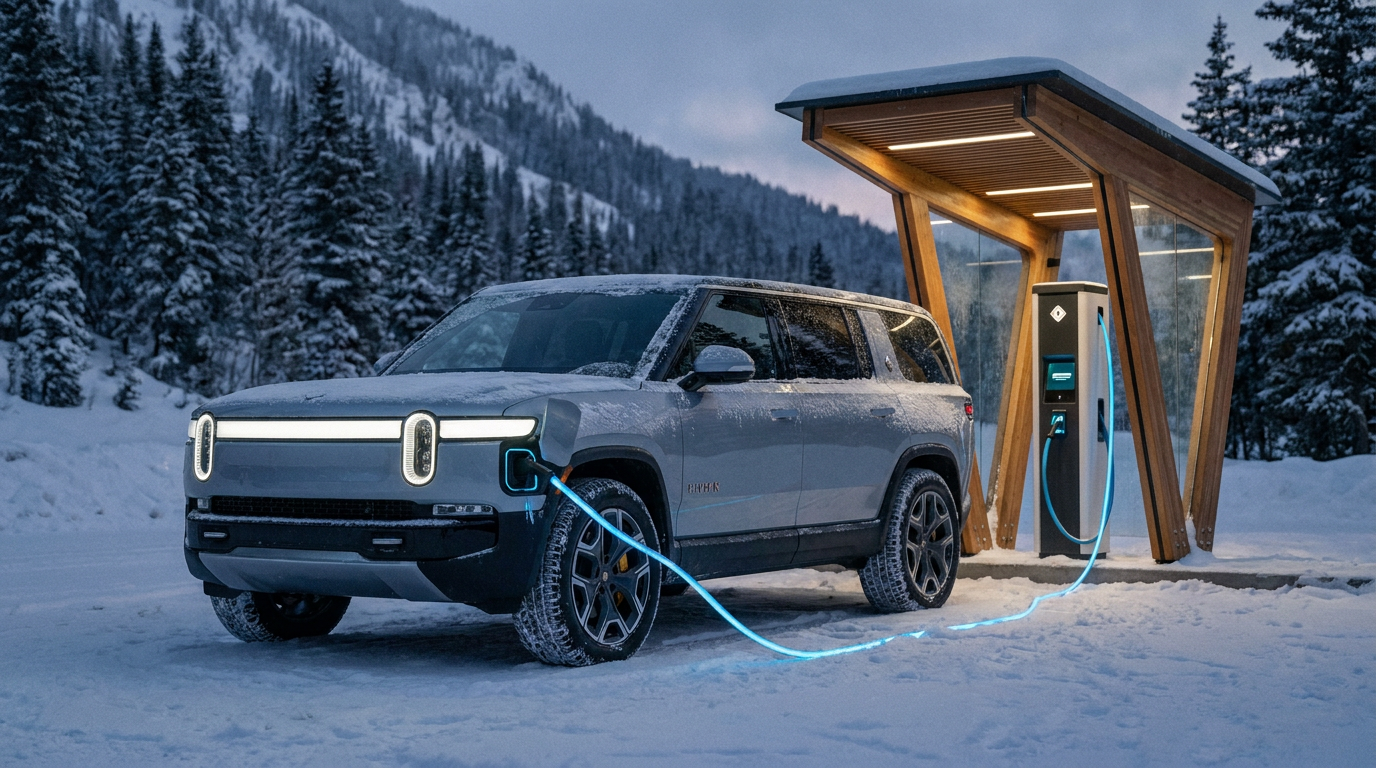
Beyond cost, sodium-ion technology solves one of the most frustrating pain points for EV owners: winter weather degradation. Traditional lithium-ion batteries become sluggish in freezing temperatures, often losing 20 to 30 percent of their range and charging at a fraction of their normal speed. Sodium-ion cells, however, boast extraordinary thermal stability. CATL's new batteries retain up to 90 percent of their total capacity at temperatures as low as -20°C, and can safely operate down to -40°C. For drivers in Northern Europe, Canada, and the American Midwest, this cold-weather resilience is a game-changer.[1][4][8]
Charging speeds are also seeing a dramatic improvement. Because sodium ions transfer efficiently through the electrolyte, they can accept high-voltage direct current much faster than many lithium counterparts. BAIC's recent prototypes have demonstrated "4C" ultra-fast charging capabilities, allowing the battery to go from a near-empty state to an 80 percent charge in approximately 11 minutes. This performance rivals the refueling time of a traditional gasoline car and beats the charging speeds of many premium smartphones.[3][5]

Safety is another major factor driving adoption. Lithium-ion batteries, particularly high-density NMC cells, carry a well-documented risk of thermal runaway—an uncontrollable chain reaction that can lead to severe battery fires if the pack is punctured or overheats. Sodium-ion chemistry is inherently more stable. It is highly resistant to thermal runaway, reducing the need for heavy, complex liquid cooling systems within the vehicle. This intrinsic safety makes the technology highly attractive not just for cars, but for densely packed urban environments.[7][8]
The industrial scale-up of this technology is staggering. Global shipments of sodium-ion batteries reached 9 gigawatt-hours (GWh) in 2025, representing a 150 percent year-over-year growth. By early 2026, market trackers had identified over 370 GWh of announced global cell production capacity. China is currently dominating this transition, holding more than 60 percent of the global market share and over 95 percent of the installed capacity slated for the end of the decade. Major players like BYD are already building massive 30-GWh production facilities dedicated entirely to sodium.[3][5]
Despite these massive investments, sodium is not expected to kill lithium. Instead, analysts predict a "dual chemistry" future. Automakers will likely reserve high-density lithium-ion and emerging solid-state batteries for premium, long-range trucks and luxury sedans. Sodium-ion will dominate the bottom half of the market: affordable city cars, urban delivery vans, and entry-level commuter vehicles where price and durability matter more than a 600-mile range.[2][6][8]

The technology's biggest impact may ultimately lie outside the automotive sector entirely. Currently, nearly 80 percent of the sodium-ion market is dedicated to stationary energy storage. As the world builds more solar and wind farms, utility companies desperately need cheap, safe, and massive batteries to store renewable energy for when the sun sets or the wind dies down. Because weight and size do not matter for grid storage, sodium-ion is the perfect candidate to replace lithium in these multi-megawatt installations.[5]
Challenges do remain. The larger physical size of sodium ions causes more volume expansion inside the battery's electrodes during each charge cycle. Over time, this microscopic swelling and contracting can cause structural fatigue, meaning early sodium-ion batteries may have a shorter overall lifespan—measured in total charge cycles—than the most durable lithium variants. Manufacturers are actively tweaking cathode materials to mitigate this wear, with BYD recently claiming its third-generation sodium cells can endure up to 10,000 cycles.[2][5]
As 2026 unfolds, the arrival of sodium-ion vehicles represents a critical maturation of the electric vehicle industry. By decoupling battery production from the constraints of rare-earth mining and geopolitical supply chains, manufacturers are finally building the foundation for sustainable, global electrification. The era of the $15,000 electric car, capable of surviving a harsh winter and charging in ten minutes, is no longer a distant promise—it is rolling off the assembly line today.[1][3][8]
How we got here
Early 2020s
Lithium prices spike, prompting battery manufacturers to accelerate research into alternative chemistries like sodium.
2024–2025
Sodium-ion technology achieves critical energy density milestones in laboratory settings, matching early LFP capabilities.
February 2026
CATL and Changan Automobile unveil the Changan Nevo A06, the world's first mass-production passenger EV with a sodium-ion pack.
Mid 2026
The first large-scale commercial deliveries of sodium-ion powered vehicles begin arriving at dealerships.
Viewpoints in depth
Battery Manufacturers
View sodium-ion as the key to capturing the mass market by drastically lowering production costs and securing supply chains.
For giants like CATL and BYD, the push into sodium-ion is a strategic maneuver to insulate themselves from volatile lithium prices and capture the massive, untapped market of budget-conscious consumers. By utilizing materials that can be sourced locally and abundantly, these manufacturers can build massive gigafactories without worrying about international mining bottlenecks. They argue that while lithium will remain the gold standard for high-performance vehicles, sodium is the only viable path to putting a billion affordable EVs on the road globally.
Resource Analysts
Emphasize the geopolitical advantages of shifting away from scarce lithium toward universally abundant sodium.
Supply chain experts and resource analysts view the sodium breakthrough through the lens of national security and trade economics. Lithium extraction is heavily concentrated in a few regions, such as South America and Australia, with processing dominated by China. Sodium, however, can be harvested from seawater or rock salt anywhere in the world. Analysts point out that this democratization of raw materials prevents any single nation from monopolizing the future of energy storage, stabilizing prices and reducing the risk of trade embargoes crippling the automotive sector.
Automotive Engineers
Praise the technology's safety and cold-weather performance, while acknowledging its current weight and density limitations for long-range travel.
From an engineering perspective, sodium-ion presents a fascinating set of trade-offs. Engineers celebrate the chemistry's thermal stability, which allows them to strip out heavy, expensive cooling systems that lithium batteries require to prevent fires. They also highlight the remarkable cold-weather performance, which solves the engineering headache of winter range loss. However, they caution that the larger atomic size of sodium means these packs will always be heavier and bulkier than lithium equivalents, restricting their use to urban commuters and ruling them out for heavy-duty towing or cross-country road trips.
Grid Storage Operators
See sodium-ion as the ultimate low-cost, highly stable solution for storing massive amounts of renewable energy on the power grid.
While the automotive world focuses on cars, utility operators see sodium-ion as the holy grail for the electrical grid. When building a stationary battery farm to store solar or wind power, the physical weight and size of the battery are irrelevant—cost and safety are the only metrics that matter. Grid operators argue that sodium-ion's cheap production costs, combined with its resistance to thermal runaway, make it the perfect technology to replace lithium in multi-megawatt installations, freeing up the limited lithium supply strictly for mobile applications.
What we don't know
- How quickly Western automakers will adopt sodium-ion technology, given that Chinese manufacturers currently hold a near-monopoly on production capacity.
- Whether the long-term cycle life of sodium-ion cells will degrade faster than lithium equivalents after years of daily fast-charging.
- If a sudden crash in global lithium prices could temporarily slow the economic incentive to transition to sodium.
Key terms
- Energy Density
- The amount of energy a battery can store relative to its weight, usually measured in watt-hours per kilogram (Wh/kg). Higher density means more driving range without adding extra weight.
- Thermal Runaway
- A dangerous chain reaction within a battery where overheating causes further temperature increases, potentially leading to a fire or explosion.
- Cathode and Anode
- The two main electrical terminals inside a battery. Ions flow between the anode (negative) and cathode (positive) to store and release electricity.
- LFP (Lithium Iron Phosphate)
- A popular, lower-cost type of lithium-ion battery currently used in many standard-range electric vehicles, which sodium-ion technology is now competing against.
- 4C Charging
- An ultra-fast charging standard indicating that a battery can be fully charged in roughly 15 minutes or less, handling a current four times its total capacity rating.
Frequently asked
Will a sodium-ion EV have less range than a lithium-ion EV?
Currently, yes. Because sodium ions are heavier, the batteries have a lower energy density, meaning they store less power per pound. They are best suited for urban commuting ranges of 200 to 300 miles, rather than 400+ mile luxury vehicles.
Are sodium-ion batteries safer than lithium-ion?
Yes. Sodium-ion chemistry is highly thermally stable, meaning it is much less prone to overheating or triggering the dangerous thermal runaway fires sometimes associated with lithium-ion batteries.
Can I charge a sodium-ion car in the winter?
Yes, and they perform exceptionally well in the cold. Unlike lithium batteries that lose significant range and charging speed in freezing weather, sodium-ion cells retain up to 90% of their capacity at temperatures as low as -20°C.
Why are they cheaper to make?
Sodium is roughly 1,000 times more abundant than lithium and can be extracted from seawater. Additionally, sodium-ion batteries can use cheap aluminum foil for their internal components instead of the expensive copper required by lithium cells.
Sources
Source coverage
8 outlets
4 viewpoints surfaced








[1]EV Tech NewsBattery Manufacturers
The global electric vehicle industry is entering a major new phase in 2026 as CATL officially begins commercial deployment
Read on EV Tech News →[2]EleportAutomotive Engineers
Sodium-Ion batteries go mainstream
Read on Eleport →[3]Latam MobilityAutomotive Engineers
The future of electric mobility is being redefined by a technology that promises to democratize access
Read on Latam Mobility →[4]EV CentralBattery Manufacturers
The world's largest battery producer, CATL, has announced it is pushing ahead with plans to mass-produce within 2026
Read on EV Central →[5]Battery-Tech NetworkGrid Storage Operators
Sodium-Ion's Commercial Footprint in 2026
Read on Battery-Tech Network →[6]CRU GroupResource Analysts
Na-ion battery technology benefits from no lithium or copper content
Read on CRU Group →[7]BizFortuneResource Analysts
Why the Shift from Lithium to Sodium?
Read on BizFortune →[8]PowerloadGrid Storage Operators
Sodium-ion batteries: an unstoppable industrial reality in 2026
Read on Powerload →
Every angle. Every day.
Get automotive stories with full source coverage and perspective breakdowns delivered to your inbox.