
US and Iran Agree to 60-Day Roadmap for Final Peace Deal Following Tense Switzerland Summit
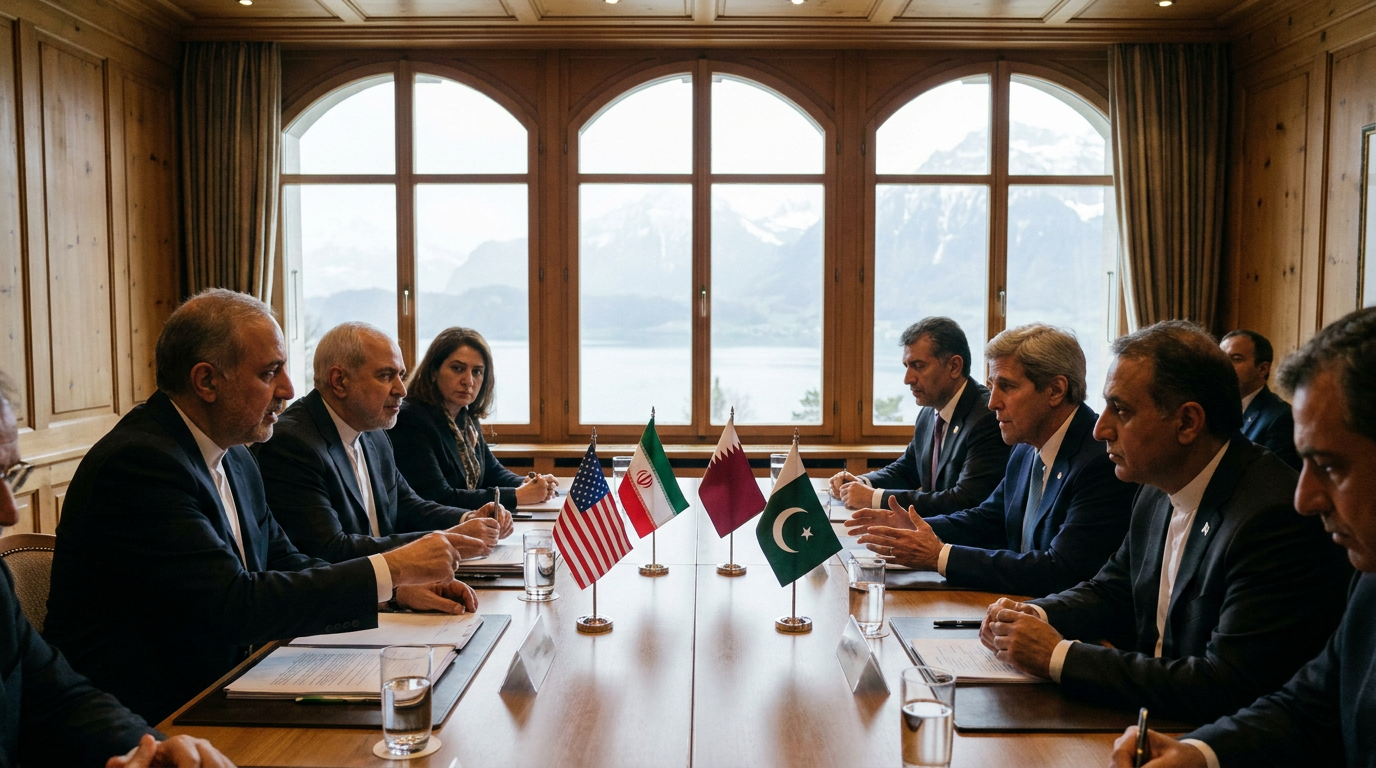
Following a rocky start marked by walkouts and threats from President Trump, US and Iranian delegations in Switzerland have agreed to a roadmap aimed at finalizing a peace agreement within 60 days. Mediated by Qatar and Pakistan, the initial talks established a de-confliction cell for Lebanon and a communication line to secure the Strait of Hormuz.
By Factlen Editorial Team
- Mediators & Neutral Observers
- Focuses on the procedural success of keeping both sides at the table and establishing practical de-confliction mechanisms.
- The US Administration
- Argues the interim deal successfully halted a costly war and reopened vital shipping lanes while maintaining maximum leverage.
- The Iranian Government
- Views the negotiations as a necessary step to secure sanctions relief and unfreeze assets while demanding respect for its regional sovereignty.
- US Bipartisan Critics
- Fears the administration is granting premature concessions without securing binding limits on Iran's nuclear program or proxy networks.
What's not represented
- · Israeli government officials, who are deeply affected by the Lebanon de-confliction efforts but are not party to the talks.
- · Lebanese civilians caught in the crossfire of the proxy conflict.
Why this matters
A finalized peace deal would officially end months of direct military confrontation between Washington and Tehran, stabilizing global energy markets by securing the Strait of Hormuz and potentially halting the escalating proxy war in Lebanon. Failure to reach a permanent agreement within the 60-day window risks a devastating regional war and a renewed spike in global oil prices.
Key points
- US and Iranian officials agreed to a 60-day roadmap to finalize a peace treaty.
- A de-confliction cell was established to halt military operations in Lebanon.
- A direct communication line will manage commercial shipping in the Strait of Hormuz.
- The Iranian delegation temporarily walked out after President Trump posted threats online.
- Technical working groups will remain in Switzerland to negotiate nuclear and sanction details.
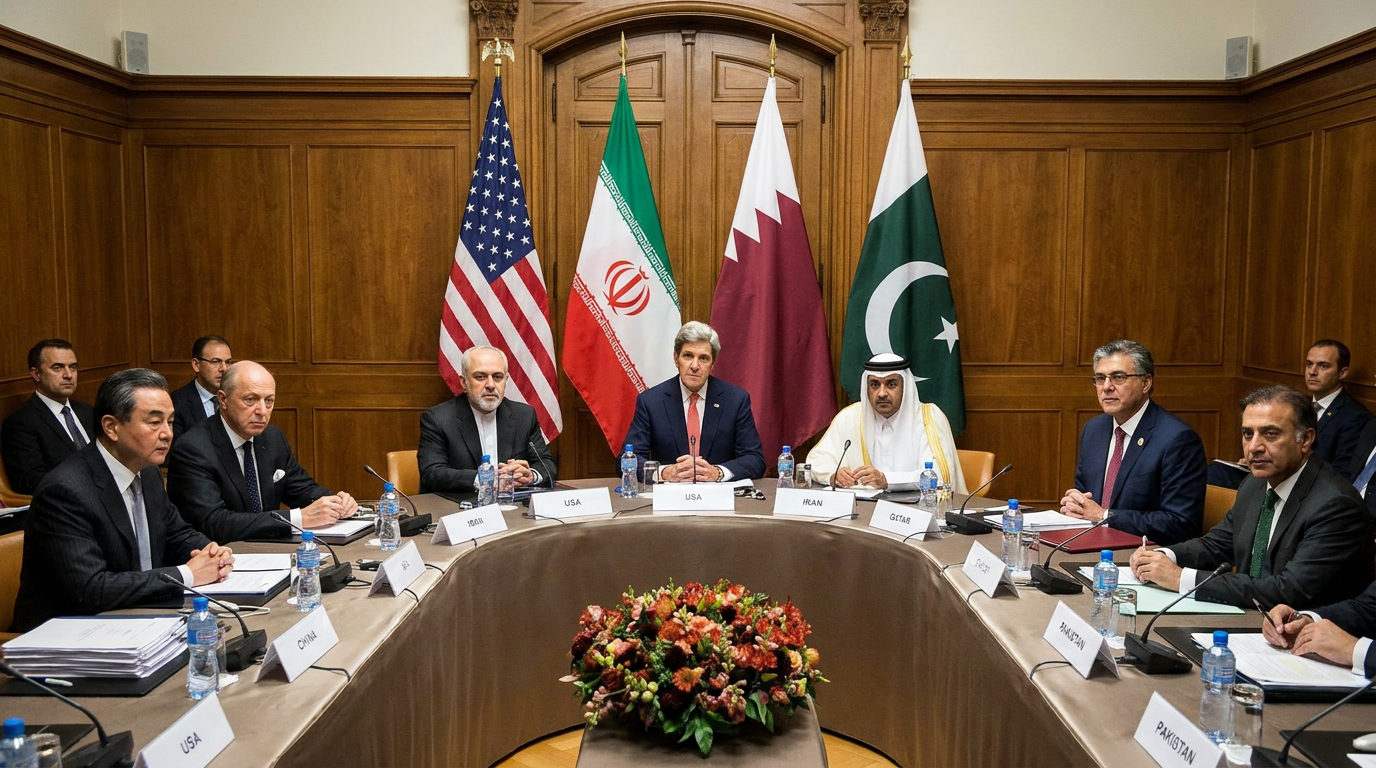
US and Iranian delegations concluded their first round of high-level peace talks in Switzerland on Monday, agreeing to a roadmap that aims to finalize a permanent peace deal within 60 days. The talks, mediated by Qatar and Pakistan at the Bürgenstock resort, mark the first direct diplomatic engagement since the signing of a preliminary ceasefire memorandum last week.[1][2][4][5]
According to a joint statement from the Qatari and Pakistani mediators, the two sides established a High-Level Committee to provide political oversight for ongoing technical negotiations. The immediate outcomes include the creation of a "de-confliction cell" to halt military operations in Lebanon, where fighting between Israel and Hezbollah has threatened to derail the wider peace process.[1][3][4]
Additionally, Washington and Tehran agreed to set up a direct "communication line" to ensure the safe passage of commercial vessels through the Strait of Hormuz. The vital waterway, which handles a significant portion of the world's oil supply, was heavily militarized and effectively closed by Iran during the peak of the recent conflict, sending global energy markets into turmoil.[3][4][5][6]

The diplomatic breakthrough almost collapsed before it began. Just as talks were getting underway on Sunday, US President Donald Trump posted a series of aggressive messages on his Truth Social platform, threatening to resume bombing campaigns if Iran did not immediately rein in its proxy forces in Lebanon. Trump warned Iranian officials that they "won't have a country" if they attempt to close the Strait of Hormuz again.[1][7]
In response to the threats, the Iranian delegation, led by Parliament Speaker Mohammad Bagher Ghalibaf and Foreign Minister Abbas Araghchi, temporarily walked out of the negotiating room. The crisis was averted only through frantic shuttle diplomacy by Qatari and Pakistani officials, who managed to keep the dialogue alive.[1][4][7]
The crisis was averted only through frantic shuttle diplomacy by Qatari and Pakistani officials, who managed to keep the dialogue alive.
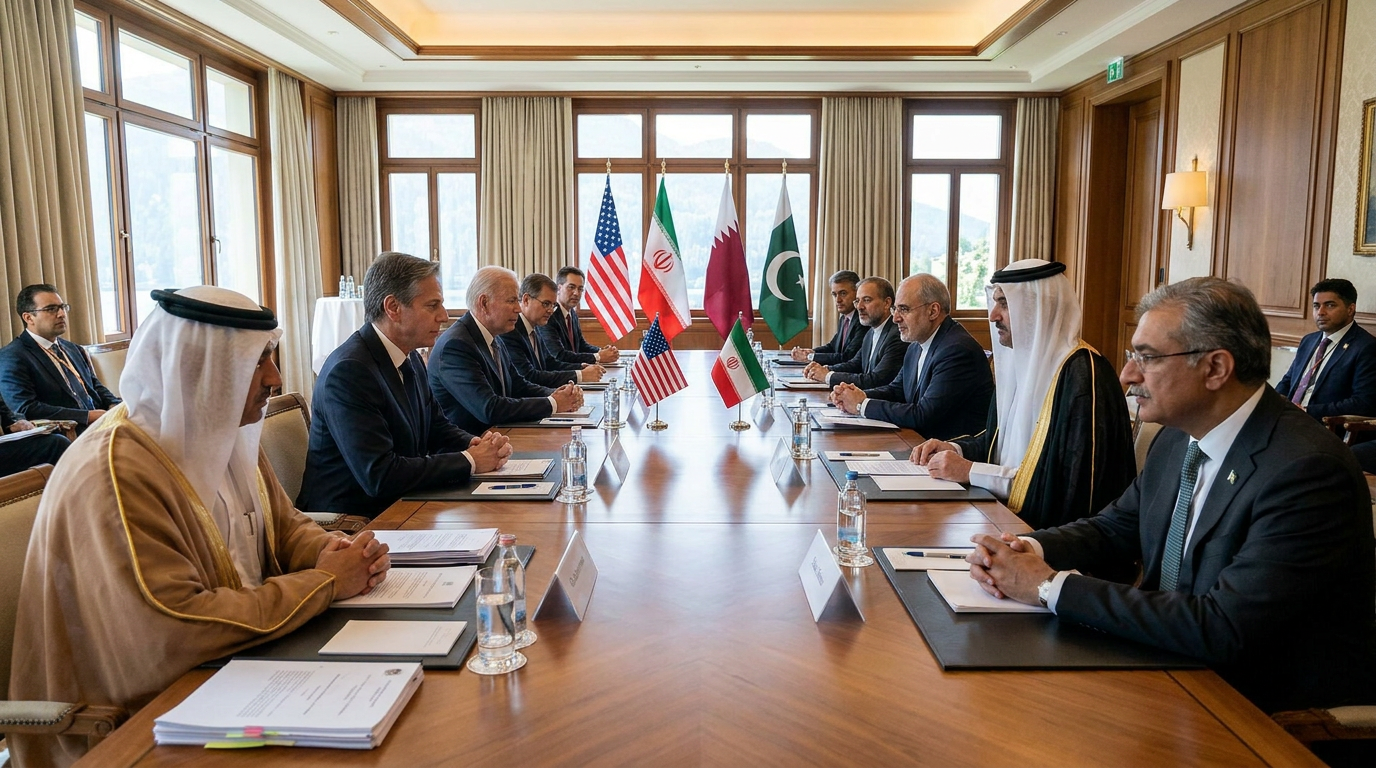
The mediators eventually brought both sides back to the table for a 100-minute direct session. The US delegation, led by Vice President JD Vance, reportedly focused the discussions on securing international inspections of Iran's nuclear sites and solidifying the Lebanon ceasefire.[3][5][7]

The interim agreement and the ongoing talks have faced fierce bipartisan criticism back in Washington. Several prominent lawmakers have accused the Trump administration of granting too many upfront concessions, including the potential unfreezing of Iranian assets and waivers for oil exports, before securing binding commitments on Iran's nuclear program or its ballistic missile capabilities.[6][7]
Despite the rocky start, Iranian Foreign Minister Araghchi hailed the summit's "encouraging progress," while VP Vance emphasized the administration's desire to turn over a "new leaf" in bilateral relations.[1][7]
Lower-level technical working groups will remain in Switzerland throughout the week to hammer out the granular details of sanctions relief, nuclear monitoring, and dispute resolution. The teams are now racing against the 60-day clock to cement a lasting peace before the fragile ceasefire expires.[2][3][4][5]

The stakes for the international community could not be higher. European allies, who have watched the escalating conflict with growing alarm, have signaled their readiness to support the peace framework by lifting their own parallel sanctions if Iran fully complies with the final treaty.[5]
For now, the fragile detente holds. Commercial shipping companies are cautiously beginning to route vessels back through the Strait of Hormuz, testing the durability of the new communication line. Whether the 60-day roadmap leads to a historic diplomatic breakthrough or merely serves as a brief pause in a devastating regional war will depend entirely on the technical negotiations unfolding behind closed doors in Switzerland.[1][4][5][6]
How we got here
Mid-2026
Direct military confrontation escalates between the US and Iran, leading to the closure of the Strait of Hormuz.
June 14-17, 2026
The US and Iran sign a preliminary memorandum of understanding, establishing a 60-day ceasefire.
June 21, 2026
First round of high-level peace talks begins in Switzerland, briefly interrupted by an Iranian walkout over US threats.
June 22, 2026
Mediators announce a formal roadmap and the creation of working groups to finalize the treaty within 60 days.
Viewpoints in depth
The Trump Administration's View
Washington argues the interim deal successfully halted a costly war while maintaining maximum leverage.
US officials, led by President Trump and Vice President Vance, frame the 60-day ceasefire as a decisive victory that reopened the Strait of Hormuz without sacrificing American leverage. The administration maintains that the threat of overwhelming military force remains on the table if Iran violates the terms or fails to rein in its proxy forces in Lebanon. By engaging in direct talks, the US aims to secure unprecedented international inspections of Iranian nuclear sites while keeping the broader sanctions architecture intact until a final, comprehensive treaty is signed.
Iran's View
Tehran views the negotiations as a necessary step to secure sanctions relief while demanding respect for its regional sovereignty.
For the Iranian delegation, the primary objective of the Switzerland talks is to translate the preliminary ceasefire into tangible economic relief. Iranian officials are pushing for the unfreezing of billions in overseas assets and the issuance of waivers for oil and petrochemical exports. However, Tehran remains deeply suspicious of Washington's intentions, viewing President Trump's social media threats as evidence of American unreliability. Iranian negotiators insist that any concessions on their nuclear program must be met with immediate and verifiable sanctions relief.
Bipartisan US Critics
Lawmakers fear the administration is granting premature concessions without securing binding limits on Iran's capabilities.
A vocal coalition of Democratic and Republican lawmakers has expressed deep skepticism about the emerging peace framework. Critics argue that the administration's willingness to lift certain sanctions and unfreeze assets upfront rewards Tehran for its aggressive military posture. They warn that the 60-day roadmap defers the most difficult issues—namely, Iran's ballistic missile program and its support for regional militias—leaving the US with diminished leverage when negotiating the final terms of the treaty.
What we don't know
- Whether the de-confliction cell can successfully halt the ongoing clashes between Israel and Hezbollah in Lebanon.
- Exactly which US sanctions will be lifted and how much of Iran's frozen assets will be released if a final deal is reached.
- How the final agreement will address Iran's nuclear enrichment program, which was sidelined in the initial ceasefire memorandum.
Key terms
- Strait of Hormuz
- A narrow, strategically vital waterway between the Persian Gulf and the Gulf of Oman through which a significant portion of the world's oil passes.
- De-confliction cell
- A dedicated communication and coordination mechanism designed to prevent accidental military clashes between opposing forces in a shared area.
- Memorandum of Understanding (MoU)
- A preliminary, non-binding agreement outlining the broad terms of a deal before a formal treaty is finalized.
Frequently asked
Why did the Iranian delegation walk out?
The delegation temporarily left the negotiating table in protest after US President Donald Trump posted messages on social media threatening to resume bombing campaigns against Iran.
Who is mediating the talks?
Qatar and Pakistan are serving as the primary mediators, facilitating communication and hosting the diplomatic framework in Switzerland.
What happens if a deal isn't reached in 60 days?
The preliminary ceasefire expires, raising the risk of renewed military conflict, the reimposition of blockades, and further disruptions to global shipping.
Sources
Source coverage
7 outlets
4 viewpoints surfaced






[1]The GuardianMediators & Neutral Observers
Iran hails ‘progress’ as first day of talks with US conclude after shaky start
Read on The Guardian →[2]Al JazeeraThe Iranian Government
‘Encouraging progress’ made as first round US-Iran talks end
Read on Al Jazeera →[3]ABS-CBNMediators & Neutral Observers
Iran, US agree on roadmap to final deal within 60 days—mediators
Read on ABS-CBN →[4]The HinduMediators & Neutral Observers
Key points from the first round of Iran-U.S. talks
Read on The Hindu →[5]TIMEThe US Administration
Trump and Iranian Official Sign Agreement to Stop Fighting, Reopen Strait of Hormuz
Read on TIME →[6]CBS NewsUS Bipartisan Critics
Trump formally signs U.S.-Iran deal as questions linger about nuclear program, missiles
Read on CBS News →[7]Fox NewsThe US Administration
US, Iran set for new talks; Trump threatens US tolls in Hormuz if deal not reached in 60 days
Read on Fox News →

Every angle. Every day.
Get news politics stories with full source coverage and perspective breakdowns delivered to your inbox.