
US and Iran Agree to 60-Day Roadmap in Switzerland Peace Talks
Mediators Qatar and Pakistan announced the creation of a high-level committee and de-confliction cells to finalize a permanent peace treaty between Washington and Tehran.
By Factlen Editorial Team
- U.S. Administration & Mediators
- Focused on locking in a permanent end to hostilities, securing global shipping lanes, and curbing Iran's nuclear program.
- Iranian Leadership
- Prioritizes immediate sanctions relief, unfreezing of assets, and maintaining the right to civilian nuclear enrichment.
- Regional Security Observers
- Skeptical of Iran's proxy network and highly concerned about the enforcement of nuclear and regional security provisions.
- Iranian Opposition & Diaspora
- Critical of the diplomatic deal for ignoring internal human rights abuses and legitimizing the current regime.
What's not represented
- · Lebanese civilian leadership
- · European Union diplomats
Why this matters
These negotiations represent the most concrete mechanism yet to permanently end the recent Middle East war. The success or failure of this 60-day roadmap will directly dictate global energy prices, regional stability, and the likelihood of further U.S. military involvement in the region.
Key points
- The U.S. and Iran agreed to a 60-day roadmap to finalize a permanent peace treaty.
- A high-level committee and technical subgroups will negotiate nuclear limits and sanctions relief.
- A 'de-confliction cell' was established to halt ongoing clashes in Lebanon.
- A direct communication line was opened to ensure safe passage through the Strait of Hormuz.
- Talks were nearly derailed by social media threats from U.S. President Donald Trump.
- Iran claims it has already secured waivers for oil exports and the release of frozen assets.
The U.S. and Iran have formally agreed to a 60-day roadmap aimed at finalizing a comprehensive peace agreement, marking a critical juncture in efforts to end the recent Middle East conflict.[1][2]
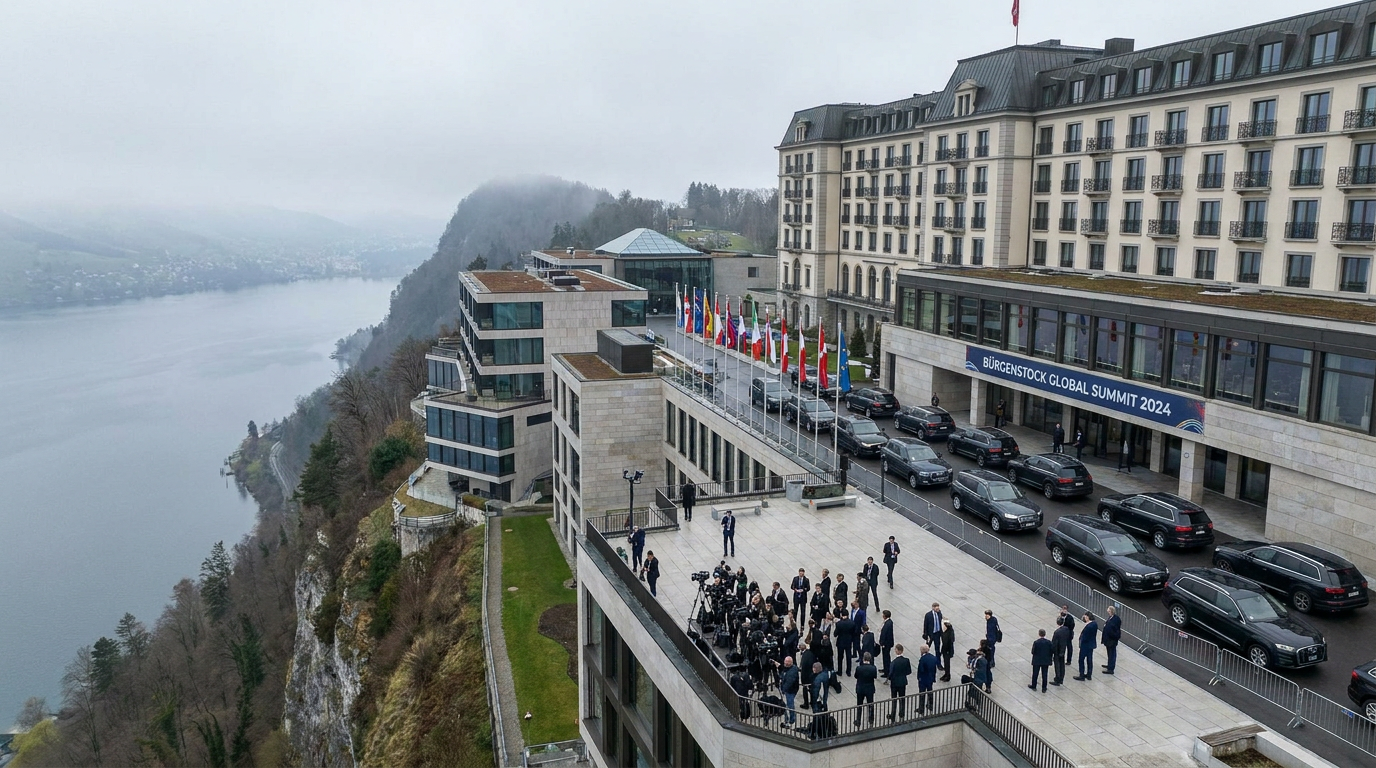
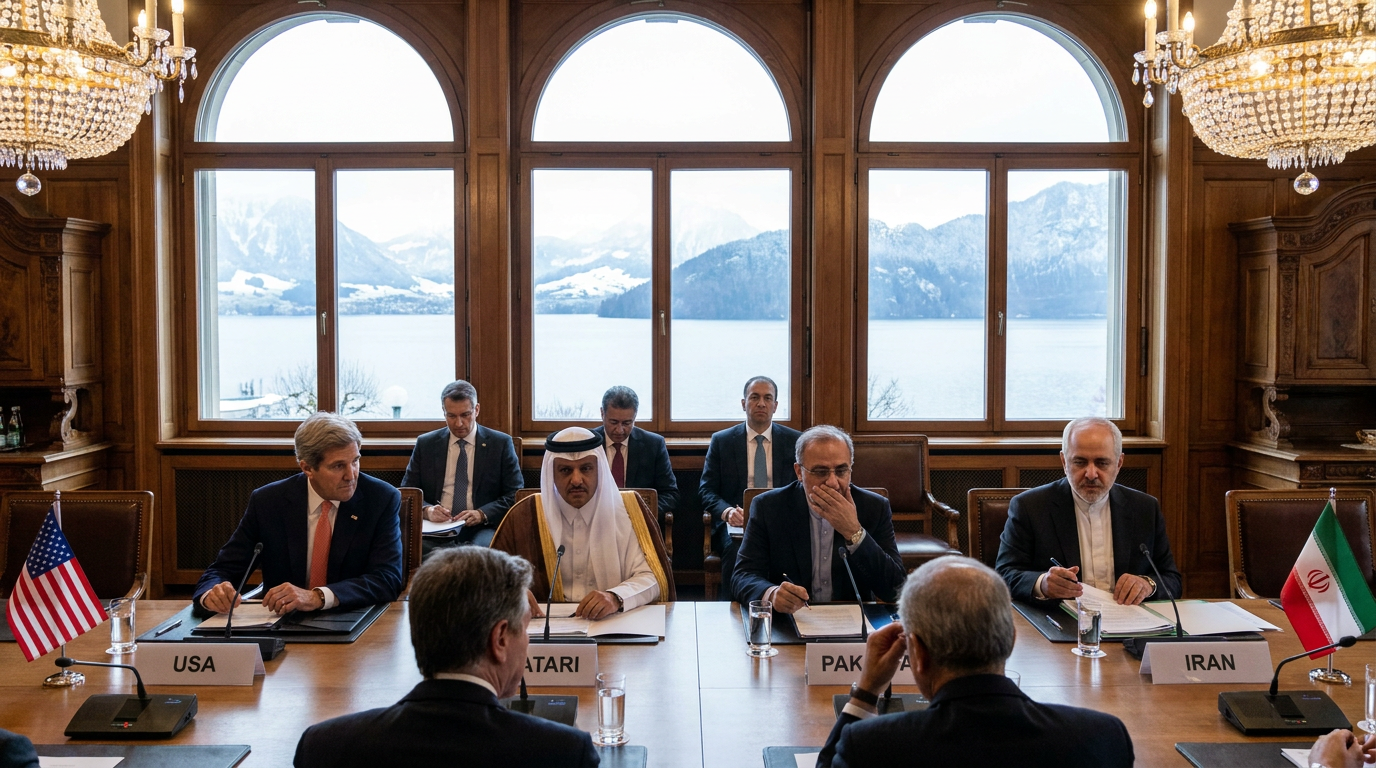
Following high-level negotiations at the Bürgenstock resort in Switzerland, mediators from Qatar and Pakistan announced "encouraging progress" on Monday. The talks, led by U.S. Vice President JD Vance and Iranian Parliament Speaker Mohammad Bagher Ghalibaf, build upon a preliminary Memorandum of Understanding signed last week.[1][5][6][8]
The diplomatic breakthrough establishes a formal mechanism to translate the fragile ceasefire into a permanent treaty. A newly formed high-level committee will provide political oversight, while specialized technical subgroups will spend the coming weeks negotiating the thorniest issues: nuclear enrichment limits, sanctions relief, and regional proxy conflicts.[6][8]

However, the path to a final deal remains highly volatile. The first day of talks was nearly derailed by public threats from U.S. President Donald Trump, who warned on social media that the U.S. would strike Iran "very hard again" if it did not rein in its "highly paid proxies in Lebanon."[1][4]
Trump's comments prompted the Iranian delegation to temporarily refuse direct engagement, forcing Qatari and Pakistani diplomats to shuttle messages between separate rooms. Despite the diplomatic friction, U.S. officials confirmed that the Iranian team remained at the venue and committed to the process.[1][3][4]
The most immediate test of the 60-day roadmap is the situation in Lebanon, where clashes between Israel and the Iran-backed militant group Hezbollah have threatened to unravel the broader peace effort.[1][5]
To address this, the negotiators established a dedicated "de-confliction cell" involving Lebanese authorities. Iranian Foreign Minister Abbas Araghchi described this mechanism as the "first real test" of the agreement, emphasizing that an end to Israeli military operations in southern Lebanon is a prerequisite for further Iranian concessions.[1][5][6]
To address this, the negotiators established a dedicated "de-confliction cell" involving Lebanese authorities.
A second major operational mechanism established in Switzerland is a direct communication line designed to secure the Strait of Hormuz. The strategic waterway, through which a significant portion of the world's oil flows, has been a flashpoint for military posturing.[2][6]

Over the weekend, Iranian military officials had threatened to reinstate a blockade of the strait in protest of continued Israeli strikes in Lebanon. The new communication channel aims to prevent miscalculations and ensure the safe passage of commercial vessels, a move that immediately helped calm global oil markets, with Brent crude prices easing following the announcement.[1][4][7]
On the economic front, Tehran claims to have already secured substantial concessions. Araghchi stated that Iran has obtained waivers allowing for oil and petrochemical exports, the release of certain frozen assets, and the initiation of a major reconstruction plan.[5][7]
The U.S. administration has not publicly detailed the exact scope of the sanctions relief, but the preliminary agreement signed last week explicitly paves the way for Iran to access billions of dollars in frozen funds in exchange for military de-escalation.[4]

The most complex hurdle remaining is Iran's nuclear program. The U.S. delegation, which includes special envoy Steve Witkoff and Jared Kushner, is pushing to lock Tehran into strict, verifiable limits on uranium enrichment.[1][4]
Iranian President Masoud Pezeshkian has reiterated that while Iran has "no intention of building a bomb," the country will not relinquish its sovereign right to enrich uranium for civilian purposes. Iranian state television reported that nuclear specifics were intentionally kept off the table during the first day of talks, deferring the issue to the technical subgroups.[3][5]
Regional allies are watching the negotiations with deep apprehension. Israeli officials and regional security observers remain skeptical that any diplomatic agreement will effectively dismantle Iran's network of proxy militias, which they view as an existential threat.[3]

Meanwhile, Iranian opposition groups and diaspora commentators have criticized the diplomatic framework for focusing exclusively on regional security and nuclear issues while ignoring the Iranian government's internal human rights record. Critics argue that the non-interference clause in the agreement effectively abandons the Iranian people to the regime's domestic policies.[7]
As technical talks continue throughout the week in Lucerne, the 60-day clock is ticking. The success of the roadmap hinges on whether the newly established de-confliction cells can hold the line in Lebanon and the Strait of Hormuz long enough for diplomats to bridge the massive gap on nuclear enrichment.[1][2][6][8]
How we got here
April 2026
An initial fragile ceasefire is agreed upon between the U.S. and Iran.
Last week
U.S. President Donald Trump and Iranian President Masoud Pezeshkian sign a preliminary Memorandum of Understanding to end the war.
June 21, 2026
High-level delegations arrive at the Bürgenstock resort in Switzerland to begin formal negotiations.
June 22, 2026
Mediators announce a 60-day roadmap and the creation of de-confliction cells for Lebanon and the Strait of Hormuz.
Viewpoints in depth
U.S. Administration's View
The primary goal is to lock Iran into verifiable nuclear limits and secure global shipping.
U.S. negotiators view the 60-day roadmap as a necessary mechanism to transition from a fragile ceasefire to a permanent, verifiable treaty. The administration's priority is to establish strict limits on Iran's uranium enrichment capabilities while ensuring that the Strait of Hormuz remains open to commercial shipping. U.S. officials emphasize that sanctions relief is contingent upon Iran reining in its regional proxy network, particularly Hezbollah in Lebanon.
Iranian Leadership's View
The focus is on immediate economic relief while defending the right to civilian nuclear enrichment.
For Tehran, the negotiations are primarily a vehicle to lift crippling economic sanctions and unfreeze billions of dollars in overseas assets. Iranian officials publicly claim they have already secured major concessions, including oil export waivers. However, the leadership maintains a hard line on its nuclear program, insisting that while it does not seek a weapon, it will never surrender its sovereign right to enrich uranium for civilian purposes.
Regional Security Observers
Deep skepticism remains regarding Iran's willingness to dismantle its proxy network.
Allies in the region, particularly Israel, view the diplomatic framework with profound apprehension. Security analysts argue that the agreement may provide Iran with a financial windfall without fundamentally dismantling the militant groups that threaten regional stability. They point to the ongoing clashes in Lebanon as evidence that Iran either cannot or will not fully control its proxy forces.
Iranian Opposition & Diaspora
The agreement is criticized for ignoring the Iranian government's domestic human rights abuses.
Exiled opposition groups and diaspora commentators argue that the U.S.-Iran negotiations legitimize a repressive regime. They are particularly critical of the non-interference clauses embedded in the preliminary agreements, which they view as the international community abandoning the Iranian people to the government's harsh domestic policies in exchange for regional security.
What we don't know
- Whether the newly formed de-confliction cell can successfully halt the ongoing clashes between Israel and Hezbollah in Lebanon.
- The exact verifiable limits the U.S. will demand regarding Iran's uranium enrichment program.
- How regional allies, particularly Israel, will respond if a final deal leaves Iran's proxy network largely intact.
Key terms
- De-confliction cell
- A dedicated communication and coordination group designed to prevent accidental military clashes between opposing forces in a shared area.
- Strait of Hormuz
- A highly strategic waterway between the Persian Gulf and the Gulf of Oman, through which roughly 20% of the world's global oil consumption passes.
- Uranium enrichment
- The process of increasing the percentage of Uranium-235 to create fuel for nuclear power plants or, at much higher levels, material for nuclear weapons.
- Sanctions waivers
- Official exemptions granted by the U.S. government allowing certain countries or entities to purchase Iranian oil without facing financial penalties.
Frequently asked
What is the 60-day roadmap?
It is a structured timeline agreed upon by the U.S. and Iran to negotiate the final technical details of a permanent peace treaty, overseen by a high-level committee.
Why did the Iranian delegation threaten to walk out?
The delegation temporarily halted direct talks in response to a social media post by U.S. President Donald Trump threatening to strike Iran if it did not stop its proxies in Lebanon.
What is happening in Lebanon?
Despite a preliminary ceasefire, clashes between Israel and the Iran-backed group Hezbollah have continued, threatening to derail the broader U.S.-Iran peace agreement.
What did Iran get in return for negotiating?
Iranian officials claim they have secured U.S. waivers to export oil and petrochemicals, as well as the release of billions of dollars in frozen assets.
Sources
Source coverage
8 outlets
4 viewpoints surfaced








[1]The GuardianIranian Leadership
Iran hails ‘progress’ as first day of talks with US conclude after shaky start
Read on The Guardian →[2]Al JazeeraIranian Leadership
US and Iranian officials conclude day of high-level negotiations in Switzerland
Read on Al Jazeera →[3]Times of IsraelRegional Security Observers
Conflicting reports from US, Iranian sources on progress in Switzerland talks
Read on Times of Israel →[4]PBSU.S. Administration & Mediators
Trump threats shake up US-Iran talks in Switzerland on deal's details
Read on PBS →[5]EuractivIranian Leadership
Iran and US agree to set up communications lines, mediators say
Read on Euractiv →[6]Channel News AsiaU.S. Administration & Mediators
US and Iran conclude high-level talks in Switzerland, mediators say
Read on Channel News Asia →[7]Iran InternationalIranian Opposition & Diaspora
Oil slips as signs of progress in US-Iran talks calm markets
Read on Iran International →[8]Yeni SafakU.S. Administration & Mediators
Qatar and Pakistan announce encouraging progress in US-Iran mediation efforts
Read on Yeni Safak →
More in news politics
See all 8 stories →Middle East Peace
US and Iran Establish 60-Day Roadmap and De-confliction Mechanisms in Swiss Peace Talks
8 sources
US-Iran Relations
US and Iran Agree to 60-Day Roadmap for Final Peace Deal Following Tense Switzerland Summit
7 sources
US-Iran Diplomacy
US and Iran Agree to 60-Day Peace Roadmap Following High-Level Swiss Summit
7 sources
US-Iran Diplomacy
US and Iran Agree to 60-Day Roadmap for Final Deal Following Switzerland Talks
8 sources
Every angle. Every day.
Get news politics stories with full source coverage and perspective breakdowns delivered to your inbox.