
US and Iran Agree to 60-Day Roadmap for Final Deal Following Switzerland Talks
Following high-level talks mediated by Qatar and Pakistan, the US and Iran have established a 60-day timeline to negotiate a final peace agreement. The roadmap includes immediate mechanisms to halt fighting in Lebanon and secure commercial shipping in the Strait of Hormuz.
By Factlen Editorial Team
- US Negotiators
- Prioritizes locking Iran into verifiable nuclear limits and securing global maritime trade routes.
- Iranian Negotiators
- Emphasizes immediate economic relief and the cessation of regional military operations.
- Regional Mediators
- Focuses on maintaining open communication channels to prevent a wider Middle Eastern war.
- Israeli Officials
- Remains skeptical of the bilateral agreement and prioritizes the neutralization of border threats.
What's not represented
- · Lebanese Government
- · European Union Diplomats
Why this matters
A finalized US-Iran deal would fundamentally reshape Middle Eastern security, potentially ending the immediate threat of a wider regional war. For the global economy, the agreement stabilizes energy markets by ensuring the Strait of Hormuz remains open to commercial oil tankers.
Key points
- The US and Iran have agreed to a 60-day roadmap to negotiate a final peace deal, mediated by Qatar and Pakistan.
- A 'de-confliction cell' has been established to halt military operations in Lebanon.
- The two nations opened a direct communication line to ensure commercial shipping can safely navigate the Strait of Hormuz.
- Iranian negotiators claim they have secured draft wording for temporary sanctions waivers on oil exports.
- The US is demanding verifiable rollbacks of Iran's nuclear infrastructure, including the dilution of highly enriched uranium.
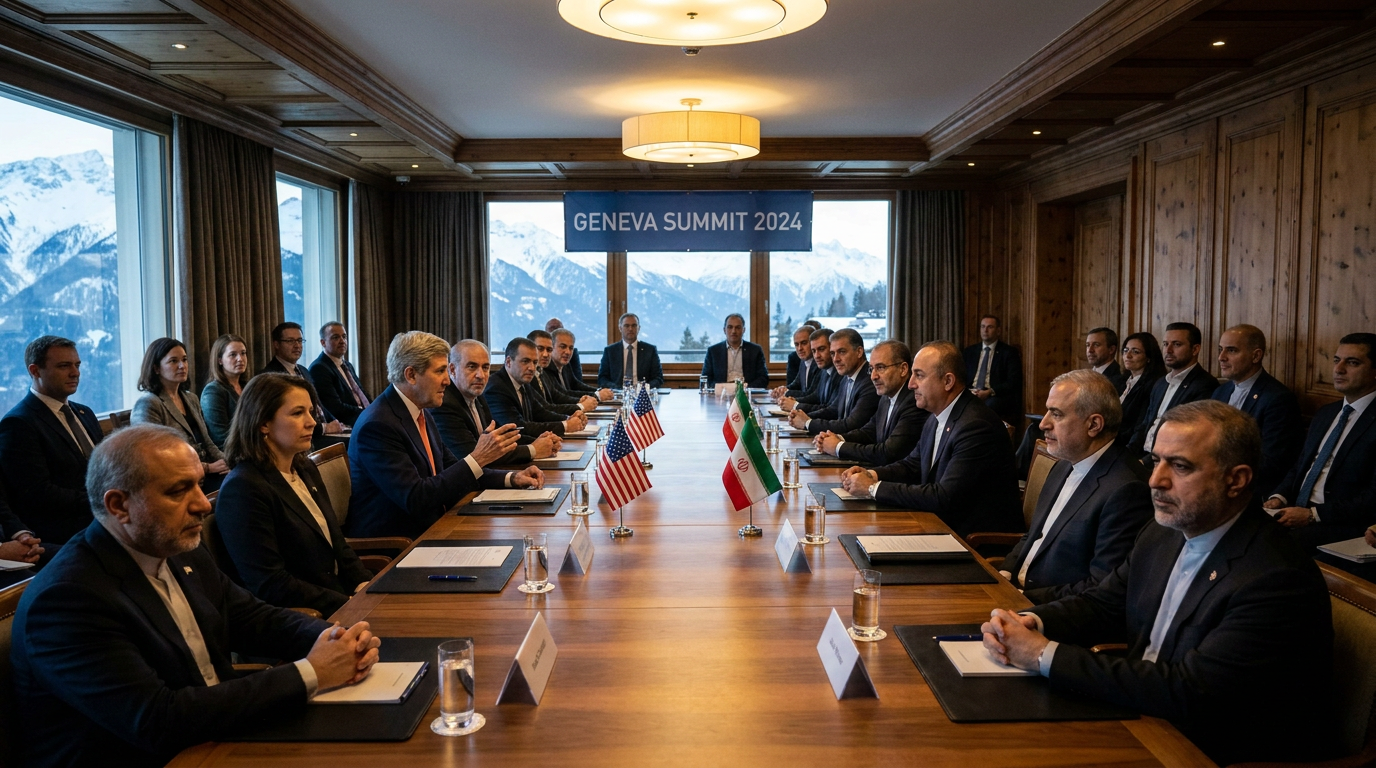
The United States and Iran have formally agreed to a 60-day roadmap aimed at securing a final, comprehensive peace deal, marking a significant diplomatic breakthrough after months of escalating regional conflict. The agreement, brokered by Qatar and Pakistan during high-level talks at the Bürgenstock luxury resort in Switzerland, establishes a strict timeline to resolve decades of hostility and stabilize the Middle East. The summit brought together top officials from all four nations, signaling a serious commitment to transitioning from military confrontation to structured diplomatic negotiations.[1][5]
The summit concluded with the creation of a High-Level Committee designed to provide continuous political oversight over the fragile truce. This governing body will receive regular reports from lead negotiators and supervise specialized working groups tasked with untangling the most contentious issues between Washington and Tehran. These technical groups will focus on the specifics of Iran's nuclear program, the labyrinth of US economic sanctions, and dispute resolution mechanisms designed to ensure both sides adhere to the preliminary framework established earlier this month.[5][6]
The immediate focus of the 60-day roadmap is preventing the resumption of active hostilities across multiple regional flashpoints. To that end, the parties authorized the creation of a dedicated "de-confliction cell" specifically focused on the ongoing crisis in Lebanon. Facilitated directly by the Qatari and Pakistani mediators, this cell is designed to coordinate with the Lebanese government to monitor the situation on the ground and ensure the strict termination of military operations between Israeli forces and Hezbollah militants.[2][3]
A parallel mechanism was established to secure the global economy's most critical energy artery, which had been repeatedly threatened during the recent conflict. Negotiators agreed to open a direct "communication line" to manage maritime traffic through the Strait of Hormuz. This dedicated hotline aims to prevent military miscalculations, avoid accidental clashes, and guarantee the safe passage of commercial vessels. By establishing this direct link, the mediators hope to stabilize a vital strategic choke point that handles roughly a fifth of the world's daily oil consumption and heavily influences global energy markets.[4][6]

The diplomatic progress achieved in Switzerland did not come easily, with the first day of talks nearly collapsing before they could generate any momentum. The Iranian delegation, led by Foreign Minister Abbas Araghchi and Parliament Speaker Mohammad Bagher Ghalibaf, briefly walked out of the negotiations in protest during the opening sessions. The sudden departure underscored the deep-seated mistrust between the two adversaries and highlighted how easily external rhetoric could derail the fragile mediation efforts taking place inside the resort.[2][7]
The walkout was directly triggered by social media posts from US President Donald Trump, who threatened to strike Iran "harder" than before if the talks failed and suggested the United States might unilaterally impose tolls on ships transiting the Strait of Hormuz. Iranian officials fiercely condemned the remarks as a blatant violation of the preliminary Islamabad Memorandum of Understanding, demanding a retraction and a recommitment to the agreed-upon framework before they would consider returning to the negotiating table.[3][6]
Intense shuttle diplomacy by Qatari Prime Minister Sheikh Mohammed bin Abdulrahman al-Thani and Pakistani Prime Minister Shehbaz Sharif ultimately salvaged the high-stakes session from total collapse. The mediators spent hours ferrying messages between the US delegation—which included Vice President JD Vance, Jared Kushner, and Steve Witkoff—and their Iranian counterparts in separate rooms. By compartmentalizing the inflammatory public rhetoric from the private, pragmatic negotiations, the Qatari and Pakistani officials managed to cool tempers and coax both delegations back into direct talks to finalize the roadmap.[1][5]
For Tehran, the primary incentive to remain at the negotiating table despite the political friction is the prospect of immediate economic resuscitation. Iranian negotiators claim they have already secured draft wording for temporary sanctions waivers covering the country's vital oil and petroleum derivatives. If implemented, these waivers would allow Iran to sell its crude freely on the open global market and begin the process of repatriating billions of dollars in frozen overseas assets that have crippled the domestic economy.[2][8]

For Tehran, the primary incentive to remain at the negotiating table despite the political friction is the prospect of immediate economic resuscitation.
In exchange for this sweeping economic relief, the US delegation is demanding concrete, verifiable rollbacks of Iran's sprawling nuclear infrastructure. The core American objective during the 60-day window is forcing Tehran to dilute its existing stockpile of highly enriched uranium, moving it further away from weapons-grade purity. Western intelligence agencies believe this sensitive material is currently housed in heavily fortified subterranean facilities that were explicitly targeted during recent US military strikes, making its neutralization a non-negotiable priority for the American negotiators in Switzerland.[7]
The long-term status of Iran's nuclear program remains the most complex and volatile variable in the 60-day roadmap. While the temporary moratorium on advanced uranium enrichment serves as a necessary prerequisite for the current ceasefire, the two sides remain fundamentally divided over Iran's sovereign right to maintain domestic enrichment capabilities in the future. Bridging the gap between America's demand for total nuclear containment and Iran's insistence on a civilian nuclear program will define the success or failure of the upcoming technical talks.[6][7]
The ultimate success of the 60-day roadmap also hinges heavily on regional actors who were not present in the negotiating room in Switzerland. Neither Israel nor the Hezbollah militant group is a signatory to the US-Iran memorandum of understanding, meaning the newly formed de-confliction cell faces an immediate and severe stress test in southern Lebanon. The ability of the mediators to enforce a cessation of hostilities on the ground will serve as the first real metric of the agreement's viability.[2][4]
The Israeli government has consistently maintained that the bilateral US-Iran diplomatic track will not dictate its national security posture or military operations. Prime Minister Benjamin Netanyahu has publicly vowed to keep Israeli defense forces operating in southern Lebanon until the military threat from Hezbollah is permanently dismantled. This uncompromising stance threatens to unravel the broader regional ceasefire, as Iranian officials have indicated that their cooperation on nuclear issues is contingent upon an end to Israeli strikes against their regional allies.[2][4]
Despite the inherent fragility of the diplomatic framework and the myriad ways it could collapse, global financial markets reacted with cautious optimism to the news out of Switzerland. Brent crude prices slipped by 0.4 percent to settle near $80.17 a barrel, while US crude and global stock futures also stabilized. The market movement reflects a collective exhale from energy traders and corporate investors who had heavily priced in the risk of a prolonged, catastrophic closure of the Strait of Hormuz.[8]

With the high-level political commitments now established, the diplomatic focus immediately shifts to granular, highly complex technical negotiations. Lower-level working groups comprised of nuclear scientists, sanctions experts, and military liaisons will remain at the Bürgenstock resort for the rest of the week. Their mandate is to translate the broad political roadmap into enforceable, step-by-step protocols for sanctions relief, nuclear facility inspections, and maritime security coordination. These technical teams must build the actual architecture of the deal before the political leaders return to sign a final document.[5][6]
The 60-day clock is now officially ticking, placing immense pressure on all parties to maintain momentum and avoid provocative actions. If the technical teams can successfully bridge the remaining ideological and strategic gaps, the roadmap could culminate in a historic realignment of Middle Eastern security and a lasting peace agreement. However, if the talks stall, or if regional violence in Lebanon flares up beyond the mediators' control, the Middle East faces the immediate prospect of renewed, intensified military confrontation and the definitive collapse of this crucial diplomatic channel.[3][7]
How we got here
April 2025
The US and Iran begin a series of initial negotiations aimed at reaching a nuclear peace agreement.
June 2025
A 60-day deadline for an agreement expires, leading to military strikes and the outbreak of a broader regional conflict.
June 17, 2026
The US and Iran sign the Islamabad Memorandum of Understanding, establishing a preliminary framework for a ceasefire.
June 21, 2026
High-level delegations meet in Switzerland, agreeing to a formal 60-day roadmap to finalize the peace deal.
Viewpoints in depth
US Diplomatic Focus
Prioritizes locking Iran into verifiable nuclear limits and securing global maritime trade routes.
From the American perspective, the 60-day roadmap is a mechanism to force concrete rollbacks of Iran's nuclear infrastructure. US negotiators are focused on ensuring Tehran dilutes its highly enriched uranium stockpiles and guarantees the unhindered flow of commercial shipping through the Strait of Hormuz. The US maintains leverage through the explicit threat of renewed military strikes and the potential imposition of maritime tolls if diplomacy fails.
Iranian Diplomatic Focus
Emphasizes immediate economic relief and the cessation of regional military operations.
Iranian leadership views the negotiations primarily as an avenue to resuscitate its heavily sanctioned economy. Tehran's negotiators are focused on securing immediate waivers for oil exports and the unfreezing of billions in overseas assets. Furthermore, Iran insists that the broader nuclear discussions are contingent upon the US successfully pressuring Israel to halt its military operations in Lebanon.
Regional Mediators' View
Focuses on maintaining open communication channels to prevent a wider Middle Eastern war.
Qatar and Pakistan, acting as the primary brokers, are focused on the mechanics of de-escalation. Their priority is keeping both sides at the table despite inflammatory public rhetoric. By establishing technical mechanisms like the Lebanon de-confliction cell and the Strait of Hormuz communication line, the mediators aim to compartmentalize the conflict and prevent isolated incidents from derailing the broader peace process.
Israeli Security Focus
Remains skeptical of the bilateral agreement and prioritizes the neutralization of border threats.
The Israeli security establishment views the US-Iran roadmap with deep skepticism, noting that Israel is not bound by the memorandum. Israeli officials maintain that diplomatic agreements in Switzerland will not alter their military objectives in southern Lebanon. They insist that Israeli forces will not withdraw until the military infrastructure of Hezbollah is permanently dismantled, regardless of the 60-day timeline.
What we don't know
- Whether Israel will agree to halt its military operations in southern Lebanon, as it is not a signatory to the US-Iran memorandum.
- How the US and Iran will resolve their fundamental disagreement over Tehran's long-term right to enrich uranium.
- Whether the temporary sanctions waivers will be sufficient to satisfy Iran's demands for economic relief if technical talks stall.
Key terms
- Strait of Hormuz
- A narrow, strategically vital waterway between the Persian Gulf and the Gulf of Oman through which roughly a fifth of the world's oil consumption passes.
- Highly Enriched Uranium
- Uranium that has been processed to increase the concentration of the U-235 isotope, bringing it closer to the purity required for nuclear weapons.
- De-confliction Cell
- A dedicated communication and coordination mechanism established to prevent accidental military clashes and monitor adherence to a ceasefire.
- Islamabad Memorandum of Understanding
- The preliminary framework agreement reached between the US and Iran that set the stage for the current 60-day negotiation period.
Frequently asked
What is the 60-day roadmap?
It is a strict timeline agreed upon by the US and Iran to negotiate a final, comprehensive peace deal, overseen by a newly established High-Level Committee.
How does this affect the war in Lebanon?
The agreement creates a 'de-confliction cell' facilitated by Qatar and Pakistan to coordinate with the Lebanese government and halt military operations between Israel and Hezbollah.
Will the Strait of Hormuz remain open?
Yes, the US and Iran agreed to establish a direct communication line to prevent incidents and ensure the safe passage of commercial vessels through the strait.
What happens to Iran's nuclear program?
The US is demanding that Iran dilute its stockpile of highly enriched uranium, though the long-term status of Iran's domestic enrichment capabilities remains a major sticking point.
Sources
Source coverage
8 outlets
4 viewpoints surfaced






[1]Al JazeeraRegional Mediators
‘Encouraging progress’ made as first round US-Iran talks end
Read on Al Jazeera →[2]The GuardianIranian Negotiators
Iran hails ‘progress’ as first day of talks with US conclude after shaky start
Read on The Guardian →[3]Fox NewsUS Negotiators
US, Iran agree 60-day 'roadmap' toward final deal in diplomatic breakthrough
Read on Fox News →[4]Times of IsraelIsraeli Officials
Iran, US agree roadmap to final deal within 60 days: Qatar, Pakistan mediators
Read on Times of Israel →[5]Anadolu AgencyRegional Mediators
Qatar, Pakistan announce 'encouraging progress' in US-Iran talks at Switzerland summit
Read on Anadolu Agency →[6]Channel News AsiaIsraeli Officials
US and Iran conclude high-level talks in Switzerland, mediators say
Read on Channel News Asia →[7]CTV NewsUS Negotiators
Sharp words are exchanged over Iran's nuclear program
Read on CTV News →[8]Iran InternationalIranian Negotiators
Oil slips as signs of progress in US-Iran talks calm markets
Read on Iran International →

More in news politics
See all 5 stories →Middle East Diplomacy
US and Iran Agree to 60-Day Roadmap in Swiss Talks Despite Tense Opening
6 sources
Middle East Peace
US and Iran Establish 60-Day Roadmap and De-confliction Mechanisms in Swiss Peace Talks
8 sources
US-Iran Relations
US and Iran Agree to 60-Day Roadmap for Final Peace Deal Following Tense Switzerland Summit
7 sources
Every angle. Every day.
Get news politics stories with full source coverage and perspective breakdowns delivered to your inbox.