
The Rise of 'Coolcationing': How Climate Change is Redrawing the Summer Travel Map
As extreme heatwaves make traditional Mediterranean summers increasingly uncomfortable, travelers are flocking to cooler northern destinations like Scandinavia and Scotland in a structural shift dubbed 'coolcationing'.
By Factlen Editorial Team
- Climate-Conscious Travelers
- Travelers prioritizing thermal comfort, outdoor recreation, and sustainable practices over traditional beach holidays.
- Nordic Destination Managers
- Local tourism boards and businesses welcoming the economic boom while urgently trying to manage the environmental strain of overtourism.
- Tourism Researchers
- Academics analyzing the coolcation as a permanent, structural adaptation to global climate change rather than a passing fad.
What's not represented
- · Local residents of northern European towns facing sudden summer crowding and rising prices.
- · Hospitality workers in southern Europe whose peak earning season is shifting or shrinking.
Why this matters
The traditional summer holiday is undergoing a permanent geographic shift. Understanding this trend helps travelers plan more comfortable, sustainable vacations while avoiding the rising costs and health risks of peak-summer heatwaves in southern Europe.
Key points
- Travelers are increasingly choosing northern destinations like Scandinavia to escape extreme summer heat.
- Booking platforms report a 312% increase in Nordic summer travel between 2024 and 2026.
- The trend is driven by record-breaking heatwaves in southern Europe that topped 44°C (111°F).
- Nordic tourism boards are welcoming the economic boost but face new challenges with overtourism.
- Southern European destinations are adapting by heavily promoting spring and autumn 'shoulder season' travel.
The traditional summer holiday—baking on a Mediterranean beach—is losing its universal appeal. For decades, the ultimate July getaway meant securing a sun lounger in Spain, Italy, or Greece. But as global temperatures climb, that dream is increasingly fraught with heat stress, crowded coastlines, and health warnings.[7]
Enter the "coolcation." A portmanteau of "cool" and "vacation," the term describes a deliberate shift away from sweltering southern hotspots toward higher latitudes and higher elevations. What began as a clever travel industry buzzword just a few years ago has rapidly materialized into a structural shift in global tourism.[2]
The catalyst for this migration is undeniable climate data. The summers of 2024 and 2025 broke heat records across southern Europe, with temperatures regularly topping 44 degrees Celsius (111 degrees Fahrenheit) in peak tourist zones. For many families, a "cool" summer destination is no longer a novelty or a niche adventure; it has become a practical necessity to ensure a comfortable and safe holiday.[2][5]
Consumer behavior is reflecting this new reality at a staggering pace. According to a recent survey by the European Travel Commission, 28 percent of European travelers now actively seek out destinations with milder temperatures to avoid extreme heat. This shift is especially pronounced among residents of countries that have borne the brunt of recent heatwaves, such as Spain, Italy, and France.[1][3]

Airline booking data provides a stark visualization of the trend. Scandinavian Airlines (SAS) reported that travel from Southern Europe to Scandinavia surged dramatically for the summer seasons. Searches for flights from Rome to Gothenburg soared by an astonishing 507 percent, while interest in travel from Bologna to Stockholm jumped 412 percent.[3]
The broader booking ecosystem echoes these airline statistics. Booking platforms have tracked a 312 percent rise in Nordic summer bookings between 2024 and 2026. Destinations that were once considered off-the-beaten-path for summer leisure—such as Norway, Iceland, Finland, Sweden, and Denmark—are now mainstream alternatives to the Mediterranean.[5]
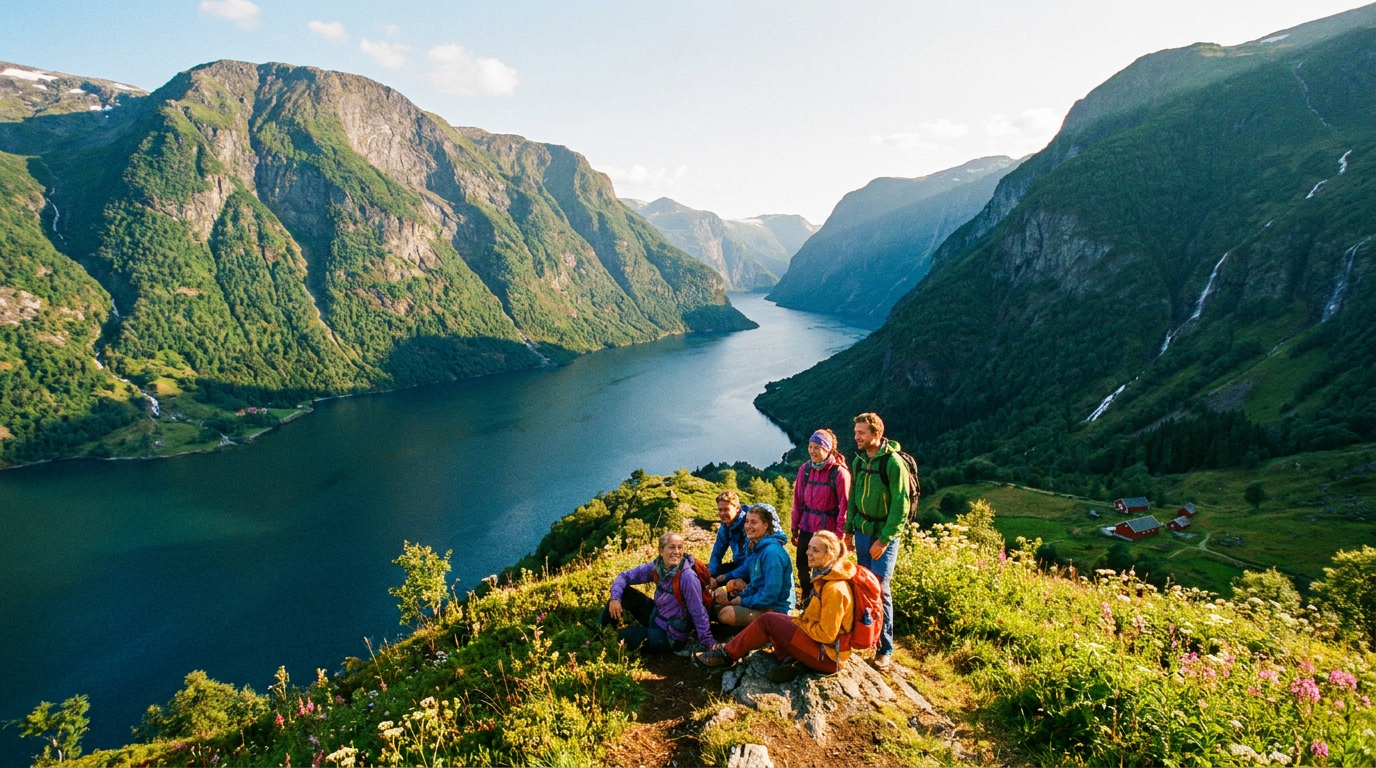
The appeal of a coolcation extends far beyond mere thermal comfort. Travelers are discovering that a mild, 20-degree Celsius (68-degree Fahrenheit) summer day beside a glacier-fed fjord offers an experience that a scorching, overcrowded beach simply cannot match. The trend swaps mega-resorts for mountain cabins, and beach clubs for glacier hikes and pristine forests.[1][5]
The appeal of a coolcation extends far beyond mere thermal comfort.
Specific destinations are reaping the benefits of this geographic recalibration. Turku, one of Finland's oldest cities located on the southwest coast, has emerged as a prime coolcation spot, blending a thriving art and food scene with riverboat tours and water sports. Similarly, Finnish Lapland is successfully leveraging the trend to transform its tourism industry from a winter-only Northern Lights attraction into a robust year-round economy.[2][6]

Tourism researchers and academics note that this is not a passing fad, but a permanent adaptation to a warming world. The linguistic blending of the word "coolcation" mirrors a broader societal shift in how we conceptualize leisure and environmental responsibility. Destination Management Organizations (DMOs) in northern Europe are actively capitalizing on this, branding their regions as climate-conscious and sustainable havens.[4]
Indeed, the coolcation trend aligns neatly with the growing demand for sustainable travel. Nordic countries are global leaders in eco-conscious infrastructure, offering travelers the chance to minimize their environmental footprint while enjoying unspoiled natural landscapes. The emphasis is on slow travel, outdoor recreation, and authentic connection with local cultures.[7]
However, the rise of the coolcation is not without its paradoxes. The Arctic and sub-Arctic regions are actually warming faster than the global average. Glaciers are retreating, and even northern Norway has experienced uncharacteristic heatwaves. A coolcation is therefore a pursuit of relative comfort; travelers are seeking climates that are cooler than Rome or Seville, even if the North itself is undergoing profound ecological changes.[2]
This influx of summer visitors is also introducing the specter of overtourism to previously quiet northern enclaves. Popular hiking trails and remote fjord villages in Norway, such as Lofoten and Geiranger, are seeing visitor numbers that strain their capacity. Locals have raised concerns about traffic congestion, waste management, and the environmental impact of massive cruise ships navigating fragile waterways.[1]

Even urban centers in the North are feeling the pressure. The Arctic city of Tromsø, long famous for winter tourism, saw a 15 percent increase in tourist arrivals between 2023 and 2024, with numbers continuing to climb. Managing this growth sustainably is the primary challenge for Nordic tourism boards over the next decade.[1][4]
Meanwhile, traditional southern European destinations are not simply emptying out; they are adapting. To mitigate the economic impact of the mid-summer exodus, Mediterranean resorts are heavily promoting "shoulder season" travel. May, June, September, and October are becoming the new peak seasons for Spain, Italy, and Greece, offering the warm weather travelers desire without the dangerous extremes of August.[4][7]
The tourism industry is also diversifying its offerings in hotter climates, shifting focus toward cultural, wellness, or indoor experiences that are less reliant on favorable outdoor weather. This dual adaptation—northern countries managing a summer boom, and southern countries stretching their seasons—represents a fundamental rewiring of the European travel economy.[4][7]

How we got here
Summer 2023
The term 'coolcation' first emerges in mainstream travel media as a niche concept.
Summer 2024
Europe records its warmest year on record, prompting a noticeable shift in consumer travel searches.
Summer 2025
Heatwaves topping 44°C in southern Europe drive a massive surge in last-minute bookings to Scandinavia.
Early 2026
Booking data confirms a 312% multi-year rise in Nordic summer travel, cementing the coolcation as a structural industry shift.
Viewpoints in depth
Climate-Conscious Travelers
Prioritizing thermal comfort and sustainability over traditional beach holidays.
For this growing demographic, the traditional Mediterranean summer has lost its appeal due to the physical discomfort and health risks of extreme heat. These travelers are actively seeking out destinations that offer mild temperatures, usually around 20°C (68°F), where they can comfortably engage in outdoor activities. Furthermore, this group often aligns their travel choices with environmental values, favoring the eco-conscious infrastructure and slow-travel ethos heavily promoted by Nordic countries.
Nordic Destination Managers
Balancing the economic windfall of year-round tourism with the urgent need to prevent overtourism.
Tourism boards in Scandinavia and Iceland are thrilled by the influx of summer visitors, which helps transform their economies from winter-dependent models into robust year-round industries. However, local managers are acutely aware of the strain this places on fragile ecosystems. With popular spots like Norway's Lofoten Islands facing traffic congestion and waste management issues, these organizations are pivoting their strategies to promote lesser-known regions and enforce sustainable tourism caps.
Tourism Researchers
Analyzing the coolcation as a permanent, structural adaptation to global climate change.
Academics and industry analysts view the coolcation not as a passing social media trend, but as a fundamental rewiring of global mobility. Researchers point out that as global temperatures continue to rise, the geographic distribution of tourism revenue will permanently shift. They emphasize that traditional summer hotspots must urgently diversify their offerings—focusing on cultural or indoor tourism—while adapting to a new reality where spring and autumn serve as their primary peak seasons.
What we don't know
- Whether northern destinations can build infrastructure fast enough to handle the projected influx of summer tourists without damaging their fragile ecosystems.
- How the economic shift away from peak-summer Mediterranean travel will impact the long-term GDP of tourism-dependent southern European nations.
- To what extent the warming of the Arctic itself will eventually diminish the 'cooling' appeal of Scandinavia in the coming decades.
Key terms
- Coolcation
- A portmanteau of 'cool' and 'vacation,' referring to the growing trend of traveling to cooler climates during the summer to avoid extreme heat.
- Shoulder Season
- The travel period between peak and off-peak seasons, typically spring and autumn, which is becoming increasingly popular for Mediterranean holidays.
- Destination Management Organization (DMO)
- An official organization that promotes a location as an attractive travel destination and manages its long-term tourism strategy.
- Overtourism
- A situation where the number of tourists in a destination exceeds its environmental or infrastructural capacity, leading to negative impacts on locals and nature.
Frequently asked
What exactly is a coolcation?
A coolcation is a summer holiday taken in a cooler climate, such as Scandinavia or Scotland, specifically chosen to escape the extreme heat of traditional summer destinations.
Why are travelers avoiding the Mediterranean?
Record-breaking heatwaves in 2024 and 2025 brought temperatures above 44°C (111°F) to parts of Spain, Italy, and Greece, making peak-summer travel uncomfortable and raising health concerns.
Which countries are the most popular for coolcations?
Norway, Sweden, Finland, Iceland, and Denmark are leading the trend, alongside other temperate destinations like Scotland and Canada.
Will southern Europe lose its tourism industry?
No. Instead of losing tourists entirely, southern European destinations are seeing a shift toward 'shoulder season' travel, with spring and autumn becoming their new peak periods.
Sources
Source coverage
7 outlets
3 viewpoints surfaced






[1]ForbesNordic Destination Managers
The Coolcation Trend Is Heating Up, And The Numbers Prove It
Read on Forbes →[2]Life in NorwayNordic Destination Managers
The Coolcation Trend: Why Tourists Are Flocking North
Read on Life in Norway →[3]SAS GroupNordic Destination Managers
SAS Trends: Scandinavian Coolcation
Read on SAS Group →[4]ResearchGateTourism Researchers
From Alpine retreats to climate-conscious coolcation: reframing summer travel in Europe
Read on ResearchGate →[5]MobiMatterClimate-Conscious Travelers
Escaping the Heat - The Rise of the Coolcation
Read on MobiMatter →[6]Star-TelegramClimate-Conscious Travelers
Summer 2026 is shaping up to be the year travelers finally break from the script
Read on Star-Telegram →[7]Factlen Editorial TeamTourism Researchers
Synthesis by Factlen editorial team
Read on Factlen Editorial Team →

Every angle. Every day.
Get travel stories with full source coverage and perspective breakdowns delivered to your inbox.