
The Resurgence of the IndieWeb and the Rise of Digital Gardens
Frustrated by algorithmic feeds and the 'Dark Forest' of social media, a growing movement of internet users is reclaiming their digital sovereignty through personal websites, digital gardens, and the Cozy Web.
By Factlen Editorial Team
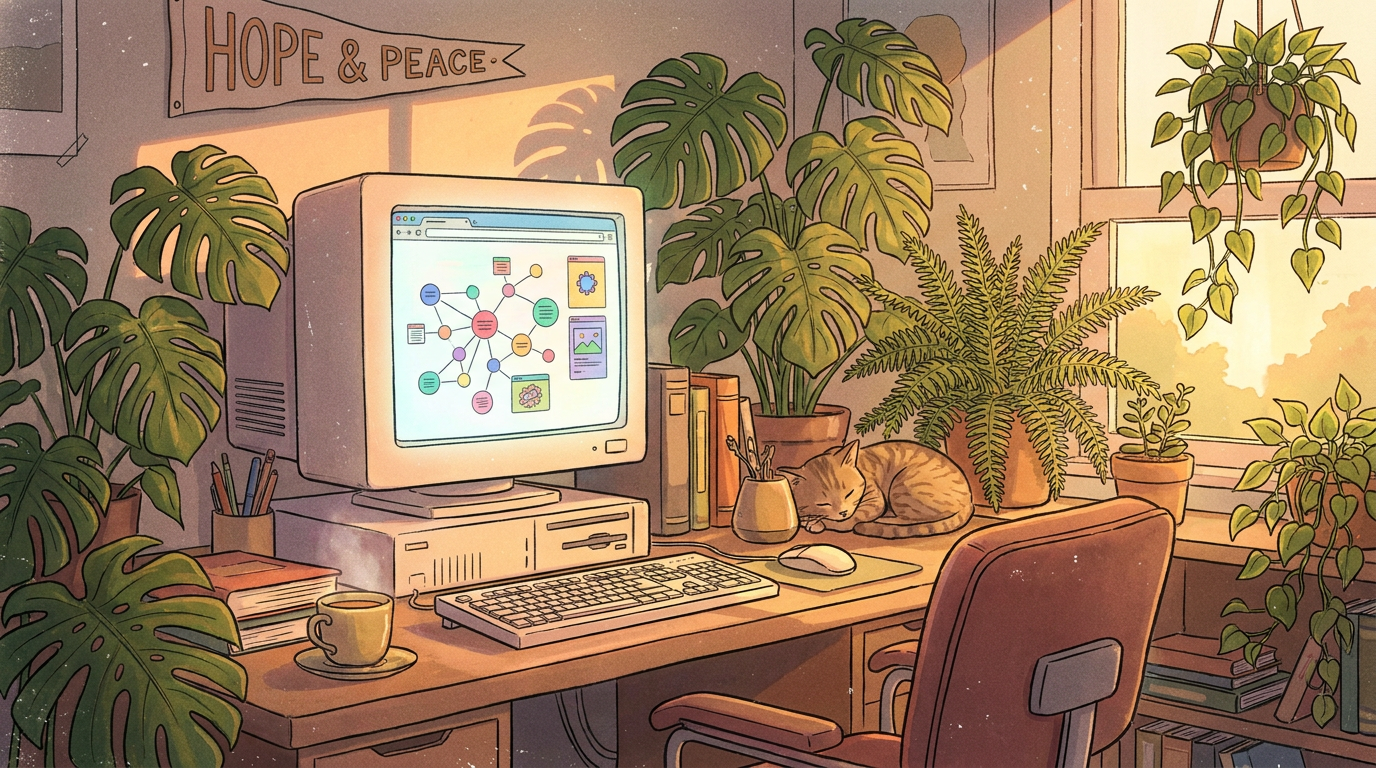
- IndieWeb Advocates
- Argue that users must own their domains and protocols to prevent corporate capture of digital identities.
- Digital Gardeners
- Value the internet as a space for slow, non-linear thinking and creative expression rather than chronological performance.
- Cozy Web Seekers
- Prioritize privacy, mental health, and intimate community over public broadcasting and algorithmic reach.
- Commercial Platform Defenders
- Maintain that centralized platforms are necessary for audience discovery, ease of use, and frictionless monetization.
What's not represented
- · Casual internet users who lack the technical literacy or time to maintain independent digital infrastructure.
- · Advertisers and marketers who rely on centralized data to reach targeted demographics.
Why this matters
As centralized social platforms become increasingly driven by algorithms, AI-generated content, and engagement bait, understanding how to build and navigate independent digital spaces empowers readers to take back control of their online identities and communities.
Key points
- Internet users are increasingly retreating from algorithmic social media into private, intimate spaces known as the 'Cozy Web.'
- The IndieWeb movement encourages users to own their domains and content rather than renting space from corporate platforms.
- The POSSE framework allows creators to publish on their own sites first, then syndicate to social media.
- Digital gardens offer a non-linear, pressure-free alternative to traditional chronological blogging.
- Vintage discovery tools like webrings and blogrolls are returning to help users navigate the decentralized web.
The modern internet often feels like a crowded, noisy room where algorithms prioritize outrage and engagement over genuine connection. For years, users have accepted this dynamic as the unavoidable cost of digital socialization. But a quiet, persistent rebellion has taken root across the web in 2026, driven by users who are exhausted by the performative demands of centralized platforms.[1][6]
Technologists and cultural critics have increasingly begun referring to the mainstream, public internet as a "Dark Forest"—a metaphor describing an environment where users feel constantly surveilled, tracked by advertisers, and hunted by trolls. In this hyper-visible landscape, expressing a nascent idea or sharing a personal moment carries the risk of algorithmic amplification and public scrutiny.[4]
In response, millions are retreating to what is known as the "Cozy Web." This encompasses private Discord servers, intimate group chats, gated forums, and encrypted messaging groups where people can interact without the pressure of public metrics. It is a digital third place, designed for human-scale interaction rather than viral broadcasting.[4][6]
Data supports this mass migration toward intimacy. Recent surveys indicate that 72 percent of Generation Z respondents are deeply concerned about their online privacy, prompting a generational exodus toward these smaller, encrypted digital spaces. By moving conversations underground, younger users are actively rejecting the influencer-driven culture of the previous decade.[4]

However, this cultural shift extends far beyond just hiding in group chats. A growing cohort of creators, writers, and everyday internet citizens are actively reclaiming their public digital identities through the "IndieWeb" movement. This decentralized philosophy argues that individuals should not be digital sharecroppers on corporate land.[5][6]
The IndieWeb is built on a simple, foundational premise: you should own your domain, control your content, and dictate your own digital architecture. Instead of renting space from a corporate landlord whose terms of service or algorithmic priorities could change overnight, IndieWeb advocates build permanent homes on the web.[5]
At the heart of this movement is a practical workflow known as POSSE, an acronym for "Publish on your Own Site, Syndicate Elsewhere." This principle flips the modern social media dynamic on its head, ensuring that the creator's website remains the canonical source of truth.[5]
Under the POSSE framework, a user posts an essay, a photograph, or a short status update to their personal website first. Automated tools then push that content out to social media platforms like X, Mastodon, or LinkedIn. If a platform shuts down or changes its algorithm, the creator loses nothing, because their archive lives safely on their own server.[5][6]

Under the POSSE framework, a user posts an essay, a photograph, or a short status update to their personal website first.
This desire for sovereignty is driving a boom in independent publishing infrastructure. Open-source platforms like Ghost, alongside static site generators like Eleventy, are seeing massive adoption as creators migrate away from locked-in newsletter platforms. These tools offer something algorithmic feeds cannot: permanence and complete creative control.[2]
By utilizing these independent tools, creators retain 100 percent of their revenue and own their subscriber lists outright. They are no longer subject to the design constraints or the content moderation controversies of a centralized host, allowing them to build bespoke digital environments.[2]
Alongside this technical shift is a profound stylistic one: the rise of the "Digital Garden." First conceptualized in 1998 by hypertext pioneer Mark Bernstein, the digital garden is a non-linear, continuously evolving personal website that defies the rigid structure of traditional blogging.[3]
Unlike a standard blog, which is strictly chronological and often polished for an audience, a digital garden is inherently exploratory. Notes are published as half-finished thoughts that grow, connect, and evolve over time, much like tending to actual plants. The architecture is driven by contextual links rather than publication dates.[1][3]

This approach deliberately removes the pressure of perfection. It invites readers to wander through interconnected ideas, following their curiosity from an essay on cognitive science to a recipe for bread, rather than passively scrolling a time-bound feed designed to maximize time-on-site.[1][3]
To solve the problem of discovery without a central algorithm, the IndieWeb is reviving vintage internet infrastructure. Webrings—networks of linked, independent sites—and curated blogrolls are making a major comeback, allowing communities to build trust networks and share traffic organically.[1][6]

Commercial platforms and their defenders argue that this decentralized approach sacrifices built-in audience growth and frictionless monetization. For many creators, the convenience of a centralized network, with its algorithmic recommendations and integrated payment systems, still outweighs the philosophical benefits of ownership.[6]
How we got here
1998
Hypertext pioneer Mark Bernstein publishes an essay introducing the concept of the 'hypertext garden.'
Early 2000s
The golden age of personal blogging, webrings, and chronological weblogs flourishes before social media consolidation.
2010s
The rise of centralized social media platforms causes personal websites to decline in favor of algorithmic feeds.
2020
The 'Digital Garden' concept experiences a major revival as users seek new ways to organize knowledge during pandemic lockdowns.
2024–2026
The IndieWeb movement surges as users flee algorithmic fatigue, platform policy changes, and AI-generated content.
Viewpoints in depth
IndieWeb Advocates
This camp believes that true digital freedom requires owning the underlying infrastructure of your online identity.
Proponents of the IndieWeb argue that the original promise of the internet was a decentralized network of peers, not a handful of walled gardens controlled by tech conglomerates. They emphasize the importance of open protocols and the POSSE framework, warning that building an audience on a rented platform leaves creators vulnerable to sudden algorithmic shifts, policy changes, or platform bankruptcy. For this group, the slight technical friction of self-hosting is a necessary price for absolute digital sovereignty.
Digital Gardeners
This perspective views the internet as a canvas for slow, evolving thought rather than rapid-fire performance.
Digital gardeners push back against the chronological tyranny of the feed. They argue that organizing thoughts by publication date forces ideas into a disposable format where yesterday's post is quickly forgotten. By structuring personal websites around interconnected concepts and allowing ideas to remain 'half-baked' while they grow, this camp believes the internet can return to being a space for deep intellectual exploration, creativity, and play, free from the pressure of engagement metrics.
Commercial Platform Defenders
This viewpoint maintains that centralized platforms are essential for audience growth and financial sustainability.
Critics of the IndieWeb movement point out that while owning your domain sounds ideal, it ignores the reality of how modern audiences discover content. Centralized platforms offer powerful recommendation algorithms, built-in network effects, and frictionless payment gateways that allow creators to actually make a living. From this perspective, retreating to independent websites and webrings risks obscurity, making it nearly impossible for new voices to break through without the amplification power of a major network.
What we don't know
- Whether the IndieWeb can ever achieve the mainstream scale necessary to genuinely threaten the dominance of centralized tech giants.
- How emerging AI search engines will index and surface non-linear digital gardens compared to traditional, SEO-optimized blogs.
- If the financial sustainability of independent creators will match the revenue potential previously offered by algorithmic discovery.
Key terms
- Digital Garden
- A personal website designed for evolving, non-linear ideas and interconnected notes rather than chronological posts.
- Cozy Web
- The private, intimate spaces of the internet, such as group chats and Discord servers, away from public scrutiny.
- Dark Forest
- A metaphor for the public internet, describing it as a hostile environment where users are constantly tracked by advertisers and trolls.
- POSSE
- An acronym for 'Publish (on your) Own Site, Syndicate Elsewhere,' a core philosophy of digital ownership.
- Webring
- A collection of independent websites linked together in a circular structure to help users discover new content organically.
Frequently asked
What is the difference between a blog and a digital garden?
A blog is chronological and often polished for an audience. A digital garden is non-linear, organized by topic, and contains evolving, half-finished thoughts that grow over time.
Do I need to know how to code to join the IndieWeb?
No. While some users build custom sites from scratch, platforms like Ghost, WordPress, and Micro.blog offer user-friendly ways to own your domain and content without writing code.
How do people find my website without an algorithm?
The IndieWeb relies on intentional discovery methods like RSS feeds, curated blogrolls, and webrings, as well as syndicating links to social media platforms to draw readers back to the main site.
Sources
Source coverage
6 outlets
4 viewpoints surfaced






[1]The Online ClarionDigital Gardeners
The Resurgence of Personal Websites
Read on The Online Clarion →[2]Ghost FoundationIndieWeb Advocates
Build your brand + control your content
Read on Ghost Foundation →[3]Maggie AppletonDigital Gardeners
A Brief History & Ethos of the Digital Garden
Read on Maggie Appleton →[4]Event AnywhereCozy Web Seekers
Gen Z and The Cozy Web
Read on Event Anywhere →[5]IndieWeb.orgIndieWeb Advocates
The IndieWeb Movement
Read on IndieWeb.org →[6]Factlen Editorial TeamCommercial Platform Defenders
Synthesis by Factlen editorial team
Read on Factlen Editorial Team →
Every angle. Every day.
Get culture stories with full source coverage and perspective breakdowns delivered to your inbox.