
The Rise of the 'Coolcation': How Climate Change is Redrawing the Summer Travel Map
As global temperatures break records, travelers are increasingly abandoning traditional Mediterranean beach holidays in favor of cooler, higher-latitude destinations.
By Factlen Editorial Team
- Climate-Adaptive Tourists
- Travelers prioritizing health, comfort, and active outdoor experiences over traditional beach lounging.
- Northern Destination Managers
- Tourism boards in cooler climates balancing the economic windfall with the need for sustainability.
- Traditional Hot-Weather Markets
- Southern European and tropical destinations adapting their models to a shifting climate calendar.
What's not represented
- · Local residents in newly popular northern towns
- · Airlines adjusting seasonal route networks
Why this matters
Understanding this shift helps travelers plan safer, more comfortable vacations while avoiding the health risks and overcrowding of extreme summer heatwaves. It also highlights a massive economic realignment in the global tourism industry that will dictate travel costs for years to come.
Key points
- Travelers are increasingly abandoning traditional hot-weather summer destinations in favor of cooler climates.
- Searches for 'coolcation' destinations have surged by 74% since the beginning of 2026.
- Scandinavia, Iceland, and the Baltics are the primary beneficiaries of this climate-driven shift.
- Traditional Mediterranean markets are adapting by heavily promoting shoulder-season travel in spring and autumn.
- The trend is driven by a combination of extreme heat avoidance, overtourism fatigue, and a desire for active nature experiences.
For decades, the ultimate summer vacation formula was simple: pack a swimsuit, head south, and bake on a crowded Mediterranean beach. But as global temperatures break records year after year, a massive recalibration is happening in the travel world. In the summer of 2026, the traditional sun-and-sand holiday is increasingly being traded for fjords, glaciers, and archipelagos.[1][2]
This shift is driven by a phenomenon the travel industry has dubbed "coolcationing." The term describes the deliberate choice to travel to higher latitudes or altitudes to escape extreme summer heat. Rather than enduring 40-degree Celsius (104-degree Fahrenheit) days in Greece, Italy, or Spain, tourists are heading north in search of crisp air, milder temperatures, and breezier climates.[1][7]
The catalyst for this migration is rooted in undeniable climate data. The global surface temperature has increased faster since 1970 than in any other 50-year period over the last two millennia, with recent years shattering historical heat records. For the tourism industry, climate change is no longer a future theoretical concern—it is actively altering consumer behavior and redrawing the map of global travel.[6][7]
The physical reality of extreme heat has made traditional sightseeing uncomfortable and, in some cases, dangerous. Recent summers have seen Athens force the closure of the Acropolis during peak afternoon hours, while city planners in Paris are actively preparing infrastructure for 50-degree Celsius (122-degree Fahrenheit) days. Facing searing heatwaves, some Italian beachfronts experienced up to a 25% drop in visitors during the peak months of June and July.[1]
Travelers are taking notice and adjusting their wallets accordingly. According to recent industry data, 74% of travelers now explicitly consider extreme weather risks when selecting both their destination and their travel dates. The desire to avoid sweltering conditions has pushed searches for coolcation destinations up by 74% year-over-year since the start of 2026.[2][3]

The primary beneficiaries of this climate-driven shift are the Nordic countries. Scandinavia—comprising Norway, Sweden, and Denmark—along with Finland and Iceland, are seeing unprecedented summer demand. These regions offer average summer temperatures hovering between 15 and 25 degrees Celsius, combined with nearly 24 hours of daylight, making them ideal for extended outdoor exploration.[2][5][7]
Flight searches to traditionally temperate European destinations are climbing rapidly. Iceland alone has seen an 85% year-over-year increase in flight searches for summer travel. Meanwhile, bookings for less-visited, cooler-climate nations like the Czech Republic and the Baltic states have surged by over 100% as tourists seek refuge from both the heat and the crowds of Western Europe.[1][2][4]
Flight searches to traditionally temperate European destinations are climbing rapidly.
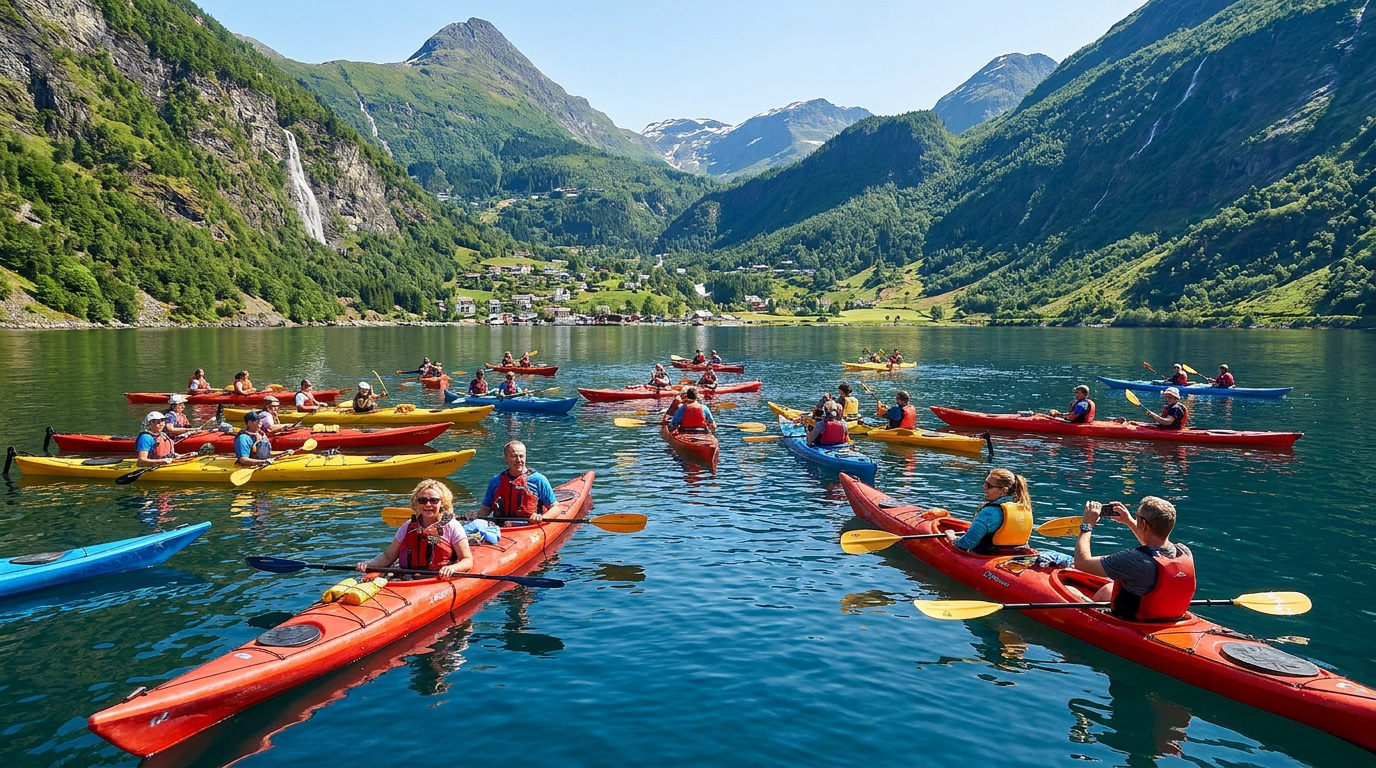
The appeal of the North extends beyond mere temperature control. Tourism boards are capitalizing on the influx by promoting unique, nature-immersed experiences that stand in stark contrast to crowded beach resorts. Visit Sweden, for instance, has actively marketed underground mine tours, moose safaris, and archipelago kayaking as refreshing alternatives to sun-lounging.[5]

This desire for space and nature is a crucial component of the coolcation trend. Modern travelers are increasingly prioritizing active wellness—such as cold-water swimming, glacier hiking, and forest bathing—over passive relaxation. Furthermore, 55% of European travelers now state that finding less crowded, off-the-beaten-track destinations is a primary priority when planning their holidays.[2][4][7]
The coolcation phenomenon is not limited to Europe. In Asia, travelers are similarly swapping tropical Southeast Asian resorts for higher altitudes and northern latitudes. Destinations such as Sapporo in northern Japan and the mountainous Yunnan province in China are gaining significant traction. Flight searches to Kunming, Yunnan's capital, which offers comfortable 23-degree Celsius summer averages, are up 44% year-over-year.[2]
However, this rapid influx of visitors presents a complex challenge for northern destinations: avoiding the very overtourism that travelers are fleeing. Iceland's leadership has previously noted that exponential tourism growth is a double-edged sword, placing immense pressure on delicate local ecosystems and infrastructure. Northern tourism boards are now racing to implement sustainable, low-density models to manage the boom without sacrificing their pristine environments.[5][7]
Meanwhile, traditional hot-weather markets are being forced to adapt to the loss of peak-summer dominance. The Mediterranean is not losing its overall appeal, but its peak season is fundamentally shifting. Destinations that once relied entirely on July and August are now pivoting their marketing strategies to promote the "shoulder seasons" of spring and autumn.[4][7]

This calendar recalibration is already visible in booking data. More travelers are deliberately delaying their vacations, with 22% of Europeans indicating plans to travel in September to take advantage of milder weather, fewer crowds, and better value. This flattening of the demand curve may ultimately benefit southern Europe by reducing the intense strain of mid-summer overtourism.[4][7]
The adaptation extends to high-altitude regions as well. Alpine ski resorts, facing increasingly unreliable winter snowfall, are transforming themselves into year-round destinations. By leaning into the coolcation trend, these mountain communities are successfully rebranding themselves as summer refuges, offering mountain biking, hiking, and wellness retreats in the crisp alpine air.[1][7]

As 2026 unfolds, it is clear that climate-adaptive travel is no longer a niche preference—it has become a mainstream necessity. The definition of the perfect summer holiday has evolved. For a growing segment of the global population, the ultimate luxury is no longer a tropical beach, but rather a cool, refreshing breeze and the space to breathe.[1][2][7]
How we got here
2006
Researchers first predict that climate change will eventually shift tourism patterns toward higher altitudes and latitudes.
2023
The hottest year on record globally triggers a noticeable drop in peak-summer visitors to several Mediterranean hotspots.
2024
The term 'coolcationing' begins appearing in luxury travel reports as a niche preference for avoiding heatwaves.
June 2026
Booking data confirms coolcationing has moved from a niche trend to mainstream behavior, with massive surges in Nordic travel.
Viewpoints in depth
Climate-Adaptive Tourists
Travelers prioritizing health, comfort, and active outdoor experiences over traditional beach lounging.
This demographic argues that spending thousands of dollars to endure 40-degree heat and massive crowds is no longer a vacation. They cite the health risks of extreme heat, especially for children and the elderly, and prefer destinations where they can comfortably hike, explore, and sleep without relying entirely on air conditioning. For these travelers, the focus has shifted from passive relaxation to active wellness.
Northern Destination Managers
Tourism boards in cooler climates balancing the economic windfall with the need for sustainability.
While thrilled with the surge in bookings, these officials are acutely aware of the risks of overtourism. They are actively steering visitors away from fragile capital cities and toward vast, under-visited rural areas—promoting activities like underground mine tours and remote archipelago kayaking to disperse the economic benefits and environmental impact. Their goal is to build a sustainable, high-value tourism model rather than a mass-market one.
Traditional Hot-Weather Markets
Southern European and tropical destinations adapting their models to a shifting climate calendar.
Rather than fighting the climate reality, these markets are restructuring their tourism economies. They are heavily promoting the "shoulder seasons" of spring and autumn, arguing that destinations like Greece and Italy are actually far more enjoyable when the extreme heat subsides. This flattening of the demand curve is seen by some local officials as a necessary correction to decades of mid-summer overtourism.
What we don't know
- Whether the shift to shoulder-season travel will fully offset the economic losses experienced by Mediterranean destinations during peak summer.
- How quickly northern infrastructure can scale to accommodate the massive influx of summer tourists without degrading the natural environment.
- If the coolcation trend will permanently alter school holiday calendars, which currently dictate peak summer travel for families.
Key terms
- Coolcationing
- The deliberate choice to vacation in destinations with milder, cooler climates to escape extreme summer heat.
- Shoulder season
- The travel periods between peak and off-peak seasons, typically spring and autumn, which are becoming more popular for Mediterranean travel.
- Overtourism
- The phenomenon where a destination receives more visitors than its infrastructure or environment can sustainably handle.
- Climate-adaptive travel
- Adjusting vacation plans, dates, and destinations in direct response to changing global weather patterns and extreme heat.
Frequently asked
What exactly is a coolcation?
A coolcation is a vacation taken in a destination known for its mild, comfortable temperatures—such as Scandinavia or Iceland—specifically chosen to avoid the extreme heat of traditional summer hotspots.
Why are people avoiding the Mediterranean in summer?
Increasingly severe heatwaves have made traditional sightseeing uncomfortable and sometimes dangerous, leading travelers to seek out cooler, safer environments.
Are traditional summer destinations losing all their tourists?
No. While peak mid-summer numbers are softening in some areas, these destinations are seeing a surge in "shoulder season" travel during the milder months of September and October.
What activities do people do on a coolcation?
Travelers typically focus on active, nature-based experiences like glacier hiking, kayaking, forest bathing, and wildlife safaris, taking advantage of the cooler air and long daylight hours.
Sources
Source coverage
7 outlets
3 viewpoints surfaced







[1]TimeClimate-Adaptive Tourists
How Climate Change is Reshaping Summer Travel
Read on Time →[2]TravelPulseClimate-Adaptive Tourists
Climate change is actively reshaping how and where people travel
Read on TravelPulse →[3]Booking.com ResearchClimate-Adaptive Tourists
Travel Predictions: The Rise of the Coolcation
Read on Booking.com Research →[4]European Travel CommissionTraditional Hot-Weather Markets
Monitoring Sentiment for Domestic and Intra-European Travel
Read on European Travel Commission →[5]Visit SwedenNorthern Destination Managers
Coolcation in Sweden: 14 ways to keep your holiday refreshing
Read on Visit Sweden →[6]Copernicus Climate Change ServiceTraditional Hot-Weather Markets
Global Surface Temperature Tracking
Read on Copernicus Climate Change Service →[7]Factlen Editorial TeamNorthern Destination Managers
Synthesis by Factlen editorial team
Read on Factlen Editorial Team →

Every angle. Every day.
Get travel stories with full source coverage and perspective breakdowns delivered to your inbox.