
Cold vs. Heat for Muscle Recovery: What the Science Actually Says
While ice baths remain popular for reducing immediate soreness, emerging research suggests heat therapy may be superior for long-term muscle growth.
By Factlen Editorial Team
- Hypertrophy Researchers
- Focuses on the cellular mechanisms of muscle growth, arguing that cold exposure blunts the mTOR pathway and should be avoided after lifting.
- Endurance & Team Athletes
- Prioritizes immediate pain relief and the rapid reduction of inflammation to prepare for the next day's competition.
- Contrast Therapy Proponents
- Advocates for alternating hot and cold temperatures to create a vascular pumping effect that maximizes recovery without sacrificing adaptation.
What's not represented
- · Female Athletes
- · Older Adults
Why this matters
Athletes and fitness enthusiasts often default to cold plunges after every workout to reduce soreness. However, understanding the distinct physiological effects of hot and cold therapy can prevent you from accidentally sabotaging your long-term muscle-building goals.
Key points
- Cold water immersion effectively reduces delayed onset muscle soreness (DOMS) but can blunt long-term muscle growth.
- Heat therapy increases blood flow and activates proteins that support muscle repair and hypertrophy.
- Contrast water therapy alternates hot and cold to create a vascular pump that flushes metabolic waste.
- Athletes should avoid ice baths immediately after resistance training to maximize strength and size gains.
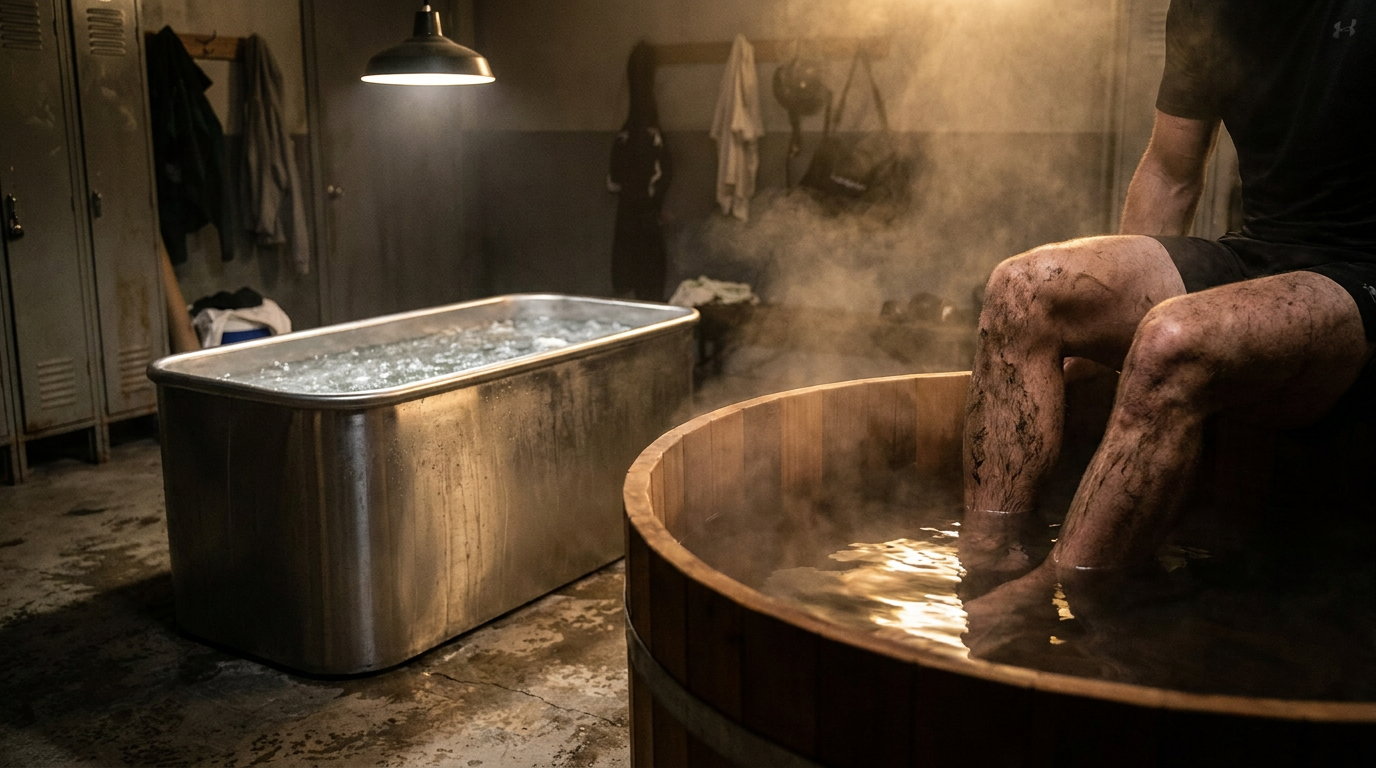
The modern athletic recovery landscape has been entirely hijacked by the cold plunge. From professional locker rooms to suburban garages, immersing oneself in near-freezing water has become the ultimate badge of dedication. Social media feeds are flooded with athletes chest-deep in ice, touting benefits that range from accelerated muscle repair to unbreakable mental fortitude. But as the popularity of cold water immersion has skyrocketed, sports scientists have begun to quietly sound an alarm. The prevailing wisdom—that colder is always better for recovery—is facing intense scrutiny from researchers who study how human tissue actually adapts to stress.[1]
To understand the debate, one must first look at the physiological mechanics of cold water immersion. When the human body is submerged in water temperatures ranging from 5°C to 15°C, it triggers a rapid survival response. The primary mechanism is profound vasoconstriction, a dramatic narrowing of the blood vessels in the extremities. This physiological shunting forces blood away from the limbs and toward the vital organs to preserve core temperature. In the context of athletic recovery, this vascular clamping acts as a biological tourniquet, aggressively limiting blood flow to the micro-tears in muscle tissue that occur during intense exercise.[4][6]
For decades, this localized restriction of blood flow was viewed as universally beneficial. By blunting the acute inflammatory response, cold water immersion effectively numbs the affected areas and reduces the accumulation of fluids that cause swelling. Network meta-analyses examining acute exercise-induced muscle damage consistently show that cold plunges are highly effective at reducing delayed onset muscle soreness (DOMS) in the critical 24 to 48 hours following a workout. For an athlete who needs to compete again the next day, such as a tennis player in a multi-day tournament, this immediate reduction in perceived pain and stiffness is an invaluable tool.[4][6]
However, a plot twist has emerged in the realm of strength and conditioning: the very mechanism that makes ice baths so effective at reducing soreness also makes them detrimental to long-term muscle growth. Inflammation is not inherently bad; in fact, the acute inflammatory response is the biological trigger that tells the body to repair and rebuild muscle tissue stronger than it was before. By artificially suppressing this response with near-freezing water, athletes are effectively short-circuiting their own adaptation process.[2][7]

Recent systematic reviews and meta-analyses have thrown cold water on the practice of plunging after resistance training. Studies demonstrate that immersing limbs in cold water immediately following a heavy lifting session significantly reduces the activity of satellite cells and blunts the mammalian target of rapamycin (mTOR) signaling pathway. The mTOR pathway is the central regulator of cell growth and protein synthesis. When cold exposure suppresses this pathway, the body fails to absorb the proteins vital for muscle hypertrophy, leading to measurable reductions in long-term strength and size gains compared to active recovery or rest.[2][7]
This revelation has led researchers to explore the opposite end of the thermometer: heat therapy. While sitting in a sauna or a hot bath might seem counterintuitive when muscles are already inflamed, the physiological response to heat offers a compelling alternative for athletes focused on hypertrophy. Exposure to localized or systemic heat triggers vasodilation, the widening of blood vessels. Instead of restricting blood flow, heat therapy opens the floodgates, driving oxygen-rich blood, amino acids, and vital nutrients directly into the damaged muscle tissues.[3]
The benefits of heat extend deep into the cellular level through the activation of Heat Shock Proteins (HSPs). These specialized molecules act as cellular first responders, patrolling the body to repair misfolded proteins and protect cells from oxidative stress. When muscle fibers sustain microscopic damage during a heavy squat or deadlift session, an upregulation of HSPs assists in repairing that specific damage. Research indicates that thermal stress acts as a supplementary stimulus that interacts with the mTOR pathway, effectively priming the muscle for protein synthesis and growth even while the body is at rest.[3]

The benefits of heat extend deep into the cellular level through the activation of Heat Shock Proteins (HSPs).
The anabolic potential of heat therapy is so potent that it is now being utilized in clinical rehabilitation settings. Studies published in the Journal of Applied Physiology have demonstrated that daily heat treatment can actually attenuate skeletal muscle atrophy during periods of limb immobilization. For individuals recovering from surgery or injury who cannot physically exercise, the passive application of heat stress maintains mitochondrial respiratory capacity and prevents the loss of key proteins, mimicking some of the cellular benefits of mild exercise without the mechanical strain.[3]
For athletes caught between the pain-relieving benefits of cold and the muscle-building benefits of heat, sports scientists frequently point to a middle ground: Contrast Water Therapy (CWT). This practice involves alternating between heat exposure—such as a sauna or hot tub—and cold water immersion in a single session. Tracing its roots back to ancient Roman bathhouses and Nordic traditions, contrast therapy has evolved from a cultural practice into a highly structured clinical protocol designed to maximize recovery without sacrificing adaptation.[1][5]
The efficacy of contrast therapy lies in its ability to manipulate the circulatory system through a mechanism often referred to as the vascular pump. By rapidly shifting the body between hot and cold environments, the blood vessels are forced into a cycle of dramatic vasodilation followed immediately by severe vasoconstriction. This rhythmic expanding and contracting acts like a physical pump within the circulatory system, accelerating the removal of metabolic waste products, such as lactic acid, while simultaneously driving fresh, nutrient-dense blood back into the muscle tissues.[5]
Meta-analyses examining post-exercise recovery have found that contrast techniques produce statistically significant improvements in managing muscle soreness compared to passive recovery alone. Notably, for team sports players recovering from the complex fatigue of a live game, contrast therapy frequently outperforms cold water immersion by itself. The data suggests that it is the dynamic combination of temperature extremes, rather than the isolated application of cold, that drives the most comprehensive recovery effects for athletes dealing with both mechanical damage and metabolic fatigue.[5]

Beyond the muscular system, temperature modalities exert a profound influence on the autonomic nervous system. The initial shock of cold water stimulates the sympathetic nervous system, triggering a massive release of norepinephrine that creates a feeling of intense alertness and energy. Conversely, heat exposure activates the parasympathetic nervous system, lowering cortisol levels and promoting deep relaxation. Contrast therapy forces the nervous system to rapidly toggle between these two states, which researchers believe helps reset autonomic balance and improves subsequent sleep architecture.[1]
As the science of temperature therapy matures, researchers are also beginning to address significant gaps in the literature, particularly regarding gender differences. Historically, the vast majority of recovery studies have predominantly involved male participants, despite well-documented differences in thermoregulation, body composition, and hormonal stress responses between men and women. Emerging trials evaluating cold and heat exposure in female athletes suggest that gender-specific protocols may be necessary to optimize recovery, as women often experience different rates of core temperature drop and vascular response.[1]
Ultimately, the debate between hot and cold is not about declaring a universal winner, but about precise timing and specific athletic goals. If the primary objective is immediate pain relief, reducing inflammation between tournament matches, or a psychological nervous system reset, cold water immersion remains a highly effective tool. However, athletes are now advised to separate their cold plunges from their resistance training sessions by at least several hours, or to relegate cold exposure to rest days, to avoid blunting the hypertrophic response.[1][2]
Conversely, if the goal is to build strength, increase muscle mass, or recover from a heavy lifting session, heat therapy is emerging as the superior choice. Applying heat within the critical hours after resistance training supports the cellular signaling required for muscle repair and growth. By understanding the distinct physiological pathways triggered by different temperatures, athletes can stop blindly following social media trends and start using thermal stress as a targeted instrument for specific biological outcomes.[3]

The era of the one-size-fits-all ice bath is coming to an end. As our understanding of exercise-induced muscle damage and cellular adaptation deepens, recovery protocols are becoming as nuanced as the training programs themselves. Whether an athlete chooses the numbing shock of the cold plunge, the anabolic warmth of the sauna, or the vascular pumping of contrast therapy, the science is clear: temperature is a powerful physiological lever, and knowing exactly when to pull it is the true key to optimal recovery.[1][7]
How we got here
Ancient Era
Roman bathhouses and Nordic traditions establish the foundational practices of alternating hot and cold water immersion.
Early 2000s
Cold water immersion becomes a ubiquitous post-game recovery protocol in professional sports locker rooms.
2015
Early studies begin to show that post-exercise cold exposure might blunt the hypertrophic response to resistance training.
2021
A major meta-analysis of 121 studies confirms that contrast therapy significantly outperforms passive rest for managing muscle soreness.
2025
Network meta-analyses clarify the distinct, opposing effects of heat and cold on the mTOR signaling pathway and long-term muscle growth.
Viewpoints in depth
Hypertrophy & Strength Researchers
Focuses on the cellular mechanisms of muscle growth, arguing that cold exposure blunts the mTOR pathway and should be avoided after lifting.
Researchers focused on muscle hypertrophy emphasize that inflammation is a necessary biological trigger for growth. When an athlete lifts heavy weights, they create micro-tears in the muscle tissue. The body's natural inflammatory response sends nutrients and satellite cells to repair these tears, making the muscle larger and stronger. By jumping into an ice bath immediately after a workout, athletes artificially suppress this inflammation through vasoconstriction. This blunts the mTOR signaling pathway, effectively short-circuiting the body's ability to synthesize new proteins and severely limiting long-term strength and size gains.
Endurance & Team Sport Athletes
Prioritizes immediate pain relief and the rapid reduction of inflammation to prepare for the next day's competition.
For athletes competing in multi-day tournaments, stage races, or back-to-back team sports, long-term muscle hypertrophy is often a secondary concern to immediate functional recovery. In these scenarios, the primary goal is to clear metabolic waste, reduce acute swelling, and numb the pain of delayed onset muscle soreness (DOMS) so the athlete can perform again within 24 hours. From this perspective, the potent anti-inflammatory effects of cold water immersion are highly beneficial, providing a critical physical and psychological reset that allows athletes to endure grueling, high-frequency competition schedules.
Contrast Therapy Proponents
Advocates for alternating hot and cold temperatures to create a vascular pumping effect that maximizes recovery without sacrificing adaptation.
Sports scientists and physical therapists increasingly advocate for contrast water therapy as the optimal middle ground. By alternating between the vasodilation of heat and the vasoconstriction of cold, contrast therapy creates a 'vascular pump' within the circulatory system. This rhythmic expanding and contracting flushes out lactic acid and metabolic waste far more effectively than passive rest, while still driving fresh, nutrient-dense blood into the muscles during the heat phases. Proponents argue this method delivers the pain-relieving benefits of cold exposure without entirely blunting the anabolic cellular signaling required for long-term adaptation.
What we don't know
- The exact optimal ratio of hot-to-cold time during contrast therapy for different types of athletes.
- How hormonal fluctuations during the menstrual cycle affect women's physiological responses to extreme temperature therapies.
- Whether the long-term mental resilience benefits of daily cold plunging outweigh the potential blunting of physical muscle hypertrophy.
Key terms
- Vasoconstriction
- The narrowing of blood vessels, typically in response to cold, which restricts blood flow to preserve core temperature.
- Vasodilation
- The widening of blood vessels, often triggered by heat, which increases blood flow and nutrient delivery to tissues.
- mTOR Pathway
- A central cellular signaling pathway that regulates cell growth, protein synthesis, and muscle hypertrophy.
- Heat Shock Proteins (HSPs)
- Cellular proteins produced in response to thermal stress that help repair misfolded proteins and protect against cellular damage.
- Delayed Onset Muscle Soreness (DOMS)
- The muscle pain and stiffness that typically peaks 24 to 48 hours after intense or unfamiliar exercise.
Frequently asked
Should I take an ice bath immediately after lifting weights?
No. Research shows that cold water immersion immediately after resistance training blunts the mTOR pathway and reduces long-term muscle growth. It is better to use heat or wait several hours.
When is the best time to use a cold plunge?
Cold plunges are most effective before a workout for a nervous system boost, or immediately after endurance training or team sports when rapid reduction of inflammation is the primary goal.
Does sitting in a sauna actually help build muscle?
Yes, indirectly. Heat therapy increases blood flow and activates Heat Shock Proteins, which interact with the mTOR pathway to prime the muscles for protein synthesis and repair.
What is contrast therapy?
Contrast therapy involves alternating between hot and cold environments in a single session. This creates a 'vascular pump' effect that flushes out metabolic waste and accelerates recovery.
Sources
Source coverage
7 outlets
3 viewpoints surfaced






[1]Factlen Editorial TeamContrast Therapy Proponents
Synthesis by Factlen editorial team
Read on Factlen Editorial Team →[2]National Institutes of Health (NIH)Hypertrophy Researchers
Throwing cold water on muscle growth: A systematic review with meta-analysis
Read on National Institutes of Health (NIH) →[3]Journal of Applied PhysiologyContrast Therapy Proponents
Local Heat Therapy to Accelerate Recovery After Exercise-Induced Muscle Damage
Read on Journal of Applied Physiology →[4]Frontiers in PhysiologyEndurance & Team Athletes
Impact of different doses of cold water immersion on recovery from acute exercise-induced muscle damage: a network meta-analysis
Read on Frontiers in Physiology →[5]Physical Therapy in SportContrast Therapy Proponents
Contrast water therapy and exercise-induced muscle damage: A systematic review and meta-analysis
Read on Physical Therapy in Sport →[6]Sports MedicineEndurance & Team Athletes
Can water temperature and immersion time influence the effect of cold water immersion on muscle soreness?
Read on Sports Medicine →Effect of Cryotherapy on Muscle Recovery and Inflammation Following a Bout of Damaging Exercise
Read on European Journal of Applied Physiology →
More in fitness
See all 5 stories →Recovery Science
The Science of NSDR: How 'Non-Sleep Deep Rest' Accelerates Athletic and Cognitive Recovery
6 sources

Biomechanics
The Science Behind Pilates: How It Actually Changes Your Body
7 sources

Fascia Science
The Science of Fascia: Why Training Connective Tissue is the New Frontier of Mobility
6 sources

Every angle. Every day.
Get fitness stories with full source coverage and perspective breakdowns delivered to your inbox.