
Europe's Sleeper Train Renaissance Accelerates With New Routes and Modern Fleets
Driven by climate mandates and a surge in passenger demand, Europe is rapidly expanding its overnight rail network in 2026. State operators and ambitious startups are deploying state-of-the-art trains to connect major capitals, challenging the dominance of short-haul aviation.
By Factlen Editorial Team
- Rail Operators & Analysts
- Focuses on expanding routes, modernizing comfort, and capturing consumer demand.
- Travel & Tourism Media
- Highlights the romance, convenience, and cost-benefit of slow travel versus budget airlines.
- Climate & Policy Advocates
- Views rail expansion as a vital tool for hitting EU climate targets and demands fairer taxation.
What's not represented
- · Budget airline executives defending the economic accessibility of low-cost aviation.
- · Local residents in transit towns affected by high-speed rail infrastructure construction.
Why this matters
As Europe aggressively pursues its climate targets, the revival of the sleeper train offers travelers a practical, sustainable alternative to short-haul flights. This expanding network not only reduces the carbon footprint of cross-border travel but fundamentally changes how people experience the continent, turning transit time into a seamless part of the journey.
Key points
- A continent-wide rail renaissance is accelerating in 2026, driven by climate goals and passenger demand for sustainable travel.
- Austrian operator ÖBB is rolling out 22 new-generation Nightjet trains featuring en-suite showers and innovative solo 'Mini Cabins.'
- Startup European Sleeper is expanding its cooperative-funded network, launching new routes like Paris-Berlin and Brussels-Milan.
- The EU is pushing infrastructure upgrades to slash travel times, though fragmented national systems and high track fees remain hurdles.
- While sleeper tickets often cost more upfront than budget flights, they combine transportation and a night's accommodation.
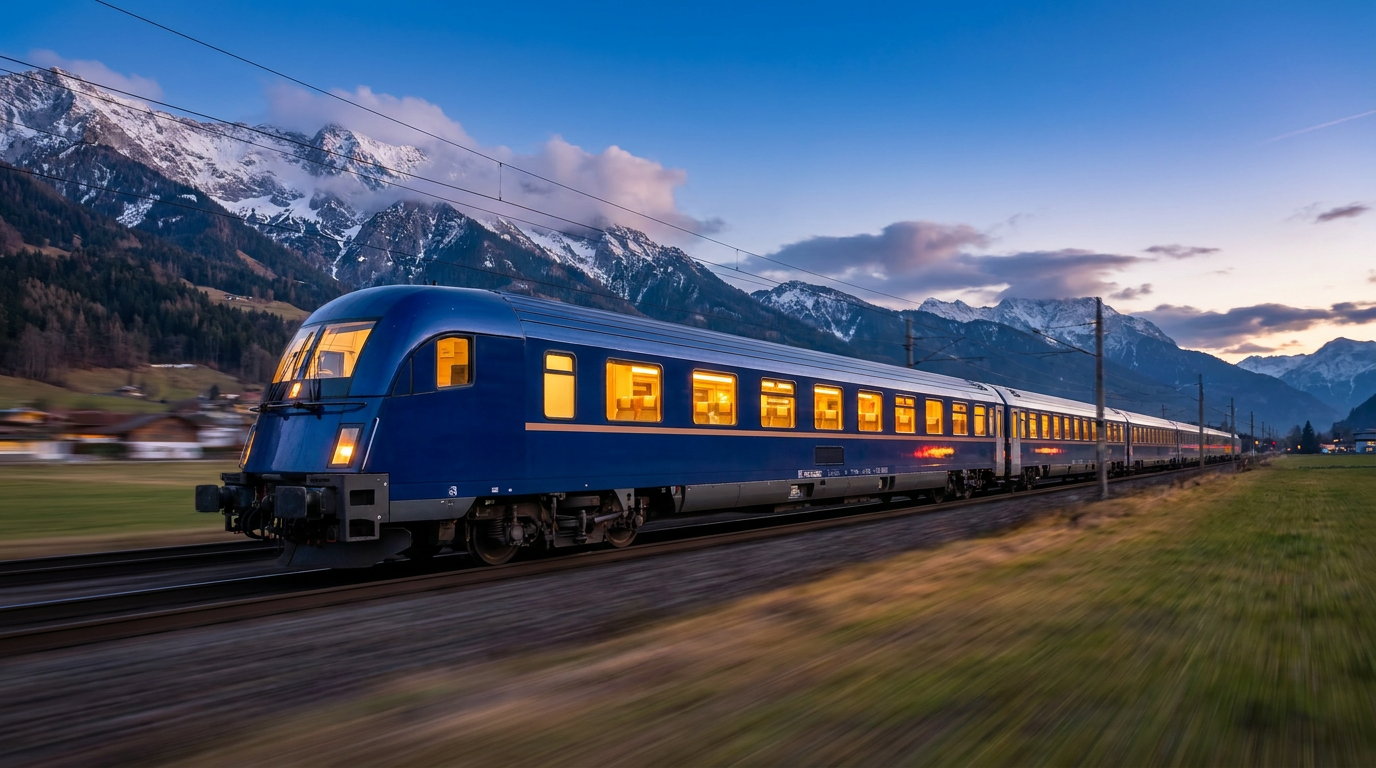
For decades, the European night train was widely considered a dying breed, a romantic but obsolete relic steadily being pushed off the tracks by the aggressive expansion of budget airlines and high-speed day trains. But a dramatic shift in travel culture, fueled by a growing awareness of aviation's climate impact and a renewed appreciation for "slow travel," has sparked a continent-wide rail renaissance. In 2026, this revival is moving from a niche novelty to a mainstream transportation network. Across Europe, new routes are launching, state-of-the-art rolling stock is entering service, and ambitious startups are challenging established state operators to connect capitals from the North Sea to the Mediterranean while passengers sleep.[2][3]
The vanguard of this resurgence is the Austrian federal railway operator, ÖBB, which took a massive gamble a decade ago by buying up discarded sleeper cars from other nations. Today, that gamble has evolved into the "Nightjet" network, which is currently deploying a fleet of 22 brand-new, custom-built trains manufactured by Siemens. These new-generation trains, which began their rollout in late 2023 and are rapidly expanding across the continent in 2026, represent a fundamental redesign of the overnight rail experience. They are engineered to address the historical pain points of sleeper travel, replacing cramped, outdated compartments with modern amenities that rival boutique hotels.[4]
The interior of the new Nightjet fleet reflects a deep understanding of modern passenger demographics. The traditional six-berth couchettes have been phased out in favor of more spacious four-berth options, while the premium sleeper cabins now feature en-suite toilets and private showers. Perhaps the most celebrated innovation is the introduction of "Mini Cabins"—compact, single-occupancy sleeping pods designed specifically for solo travelers who want privacy without paying for a full cabin. These pods, reminiscent of Japanese capsule hotels, come equipped with wireless charging, free Wi-Fi, and secure luggage storage, catering directly to a generation of digital nomads and budget-conscious solo adventurers.[3][4]

The deployment of these state-of-the-art trains is accelerating. In mid-June 2026, ÖBB and the Swiss Federal Railways (SBB) officially launched the new-generation Nightjet on the highly trafficked Zurich-to-Vienna route, marking a major upgrade for one of the most important transit corridors in the Alpine region. This follows the successful introduction of the new trains on the Zurich-Hamburg line, with additional upgrades planned for routes connecting Amsterdam and Berlin to Switzerland by the end of the year. Railway executives note that these specific routes were chosen because they connect major cultural and economic hubs where demand for sustainable, comfortable travel is surging.[1][4]
While ÖBB dominates the state-backed sector, the most disruptive force in the 2026 sleeper renaissance is European Sleeper, an independent Dutch-Belgian startup operating on a cooperative ownership model. Funded by a community of individual investors rather than government subsidies, European Sleeper has rapidly established itself as a formidable player. After successfully launching a route connecting Brussels and Amsterdam to Berlin and Prague, the company has embarked on an aggressive expansion strategy for 2026. In March, European Sleeper took over the vital Paris-to-Berlin night route, filling a gap left by the withdrawal of other operators and re-establishing a crucial link between the French and German capitals.[6][7]
Funded by a community of individual investors rather than government subsidies, European Sleeper has rapidly established itself as a formidable player.
The cooperative's ambitions extend far beyond Northern Europe. In September 2026, European Sleeper is scheduled to launch a highly anticipated north-south corridor connecting Brussels to Milan. This sprawling route will weave through the Netherlands, Germany, and Switzerland before crossing the Alps into Italy, effectively laying the groundwork for a comprehensive night-time rail network linking the Benelux region directly to the Mediterranean. By connecting cities like Antwerp, Rotterdam, and Munich along the way, the startup is proving that international night trains can serve as vital arteries for both tourism and business travel across multiple borders.[7]

The driving force behind this massive investment in rail infrastructure is the European Union's urgent climate mandate. Under the European Green Deal, the EU has set legally binding targets to achieve climate neutrality by 2050, a goal that is mathematically impossible without a drastic reduction in transport emissions. Currently, rail travel accounts for a mere eight percent of passenger transport within the EU, while short-haul aviation continues to generate a disproportionate share of greenhouse gases. Policy experts and environmental organizations argue that shifting passengers from planes to trains is one of the most effective, immediate levers available to policymakers.[5]
To facilitate this shift, the European Commission is pushing forward with the Trans-European Transport Network (TEN-T), a sweeping infrastructure initiative designed to seamlessly integrate the continent's fragmented national railways. The TEN-T project aims to slash travel times between major capitals by upgrading tracks to accommodate high-speed trains traveling up to 250 kilometers per hour. While the full high-speed network won't be completed until 2040, significant segments are expected to come online by 2030. This high-speed backbone will complement the sleeper network, allowing night trains to cover vastly greater distances during an eight-hour sleep cycle, potentially making routes like Paris to Rome or Warsaw to Tallinn viable overnight journeys.[2]
Despite the undeniable momentum, the European rail renaissance faces severe structural and economic headwinds. Operating an international train is a logistical labyrinth. Unlike airlines, which enjoy largely untaxed aviation fuel and free use of the sky, train operators must pay track access charges—essentially toll fees—to the national infrastructure manager of every country they cross. For a train traveling from Amsterdam to Venice, these fees accumulate rapidly, artificially inflating the cost of rail travel compared to heavily subsidized budget airlines. Climate advocates are aggressively lobbying the EU to revise these infrastructure charges and implement fairer taxation on aviation to level the playing field.[5]

Beyond economics, cross-border rail travel is plagued by a lack of technical and administrative coordination. Europe's railway network remains a patchwork of national systems with differing track gauges, signaling technologies, and safety regulations. A locomotive certified to run in Germany may not be legally permitted to enter France, requiring time-consuming locomotive swaps at the border. Furthermore, the absence of a unified European ticketing platform means passengers often struggle to book complex international journeys, a stark contrast to the frictionless experience of booking a multi-leg flight on a single airline website.[5][7]
The ultimate battleground for the sleeper train revival is price parity. A bed in a modern sleeper cabin frequently costs well over €100, a price point that can induce sticker shock for travelers accustomed to €30 promotional fares from Ryanair or EasyJet. However, rail advocates are quick to point out the hidden economics of night travel. A sleeper ticket effectively bundles transportation and accommodation into a single purchase, saving the passenger the cost of a hotel night while delivering them directly to the city center, eliminating expensive airport transfers. For younger travelers, the integration of sleeper trains into the Eurail and Interrail pass networks—requiring only a modest reservation fee—has made the experience highly accessible.[4][6]
As 2026 unfolds, the trajectory of European travel is clearly shifting. The romantic appeal of falling asleep in the snowy Alps and waking up to the Mediterranean sun is being matched by the pragmatic reality of modern amenities and climate responsibility. While bureaucratic hurdles and pricing disparities remain, the sheer volume of new routes, the influx of private investment, and the deployment of cutting-edge trains suggest that the night train is no longer a nostalgic novelty. It is rapidly becoming the backbone of a sustainable, interconnected Europe, proving that the journey itself can once again be as valuable as the destination.[1][3]
How we got here
2021
European Sleeper is founded as a cooperative to challenge state operators.
Dec 2023
ÖBB introduces the first of its 22 new-generation Nightjet trains on the Hamburg-Vienna route.
Mar 2026
European Sleeper takes over the vital Paris-to-Berlin overnight route.
Jun 2026
The new-generation Nightjet officially launches service between Zurich and Vienna.
Sep 2026
European Sleeper is scheduled to inaugurate its expansive Brussels-to-Milan corridor.
Viewpoints in depth
Rail Operators' View
Focusing on modernizing the fleet and expanding routes to capture surging consumer demand.
For state-backed giants like ÖBB and agile startups like European Sleeper, the current era represents a golden opportunity to reclaim market share from aviation. They argue that by heavily investing in modern amenities—such as en-suite bathrooms, Wi-Fi, and privacy pods—they can fundamentally rebrand the night train from a budget backpacker option to a premium, highly desirable travel experience. Their primary frustration lies with the fragmented regulatory environment and the high track access charges that artificially inflate their operating costs.
Climate Advocates' View
Viewing the rail renaissance as a mandatory shift to meet the EU's aggressive emission targets.
Environmental organizations and policy groups emphasize that the European Green Deal cannot succeed without a massive modal shift away from short-haul flights. They point out that rail currently accounts for only a single-digit percentage of passenger transport, representing a massive untapped potential for carbon reduction. These advocates are aggressively lobbying the European Commission to level the economic playing field by taxing aviation fuel and heavily subsidizing cross-border rail infrastructure to make trains the default choice for intra-European travel.
Budget Travelers' View
Balancing the desire for sustainable travel with the economic realities of high ticket prices.
While many travelers are eager to reduce their carbon footprint, consumer advocates note a persistent tension regarding price. A family of four booking a private sleeper compartment can easily spend several hundred euros, a stark contrast to the aggressive promotional fares offered by low-cost airlines. However, seasoned travelers counter this by factoring in the saved cost of a night's hotel stay and the convenience of arriving directly in a city center, arguing that the overall value proposition of the sleeper train is much stronger than the base ticket price suggests.
What we don't know
- Whether the EU will successfully mandate a unified cross-border ticketing platform to simplify bookings.
- How quickly national governments will act to reduce track access charges to make rail more price-competitive with aviation.
- If the supply of new sleeper carriages can scale fast enough to meet the surging consumer demand over the next decade.
Key terms
- Couchette
- A shared sleeping compartment on a train, traditionally featuring four to six fold-down bunks.
- Mini Cabin
- A compact, single-occupancy sleeping pod introduced on new Nightjet trains, offering privacy for solo travelers.
- TEN-T
- The Trans-European Transport Network, a massive EU infrastructure project aimed at seamlessly connecting the continent's railways and roads.
- Track Access Charges
- Toll fees that train operators must pay to national infrastructure managers for the right to run trains on their rails.
Frequently asked
Are sleeper trains cheaper than flying?
Upfront ticket prices are often higher than budget airline fares, but sleeper trains save passengers the cost of a hotel night and expensive airport transfers.
What is a Mini Cabin?
It is a new, single-occupancy sleeping pod on ÖBB's latest Nightjet trains, designed like a capsule hotel to give solo travelers privacy at a lower cost.
Can I use a Eurail pass on these trains?
Yes, Eurail and Interrail passes are valid on most sleeper networks, though passengers must pay an additional reservation fee for a seat or bed.
Why are international trains hard to book?
Europe lacks a unified ticketing platform, and fragmented national rail systems often require passengers to navigate multiple operators for a single cross-border trip.
Sources
Source coverage
7 outlets
3 viewpoints surfaced







[1]Railway PRORail Operators & Analysts
The new Nightjet begins service between Zurich and Vienna
Read on Railway PRO →[2]Time OutTravel & Tourism Media
Europe's rail renaissance is back, baby
Read on Time Out →[3]National GeographicTravel & Tourism Media
7 of the best European sleeper trains for 2026
Read on National Geographic →[4]The Man in Seat 61Rail Operators & Analysts
Nightjet, the New Generation
Read on The Man in Seat 61 →[5]European Climate Initiative (EUKI)Climate & Policy Advocates
Connecting Europe with a Rail Renaissance
Read on European Climate Initiative (EUKI) →[6]TravelPulseTravel & Tourism Media
European Sleeper Train Will Link Brussels with Dresden and Prague
Read on TravelPulse →[7]HourrailTravel & Tourism Media
Brussels-Milan European Sleeper night train: itinerary, timetable, fares
Read on Hourrail →
Every angle. Every day.
Get world stories with full source coverage and perspective breakdowns delivered to your inbox.