
US and Iran Conclude First Round of Peace Talks in Switzerland Amid Tensions Over Lebanon and Hormuz
Negotiators from Washington and Tehran reported "encouraging progress" after 18 hours of talks in Bürgenstock, despite early disruptions caused by threats from US President Donald Trump. The technical discussions aim to implement a 60-day ceasefire agreement, reopen the Strait of Hormuz, and address Iran's nuclear program.
By Factlen Editorial Team

- US Administration
- Seeks to lock Iran into a permanent nuclear agreement and ensure the free flow of oil through the Strait of Hormuz while projecting strength through military deterrence.
- Iranian Government
- Demands immediate sanctions relief, the unfreezing of assets, and an end to Israeli military operations in Lebanon before making concessions on its nuclear program.
- Israeli Government
- Views the US-Iran talks with deep skepticism, arguing that the agreement fails to address the immediate security threat posed by Hezbollah in Lebanon.
- Mediators
- Focused on de-escalating the conflict to stabilize the Middle East, protect global energy markets, and prevent a wider regional war.
What's not represented
- · Lebanese Government
- · European Union Diplomats
- · Global Shipping Companies
Why this matters
The success or failure of these talks will determine whether the four-month war between the US and Iran permanently ends. The outcome directly impacts global energy prices, the stability of the Middle East, and the trajectory of the ongoing conflict in Lebanon.
Key points
- US and Iranian delegations completed 18 hours of peace talks in Switzerland, mediated by Qatar and Pakistan.
- The talks aim to implement a 14-point memorandum of understanding to end the four-month US-Iran war.
- Negotiations had a tense start after US President Donald Trump threatened further strikes and tolls on the Strait of Hormuz.
- Iran demanded an end to Israeli military operations in Lebanon before discussing its nuclear program.
- US Central Command reported the Strait of Hormuz remains open despite Iranian threats to close it.
- Iran claimed to have secured temporary sanctions waivers for oil exports and the unfreezing of overseas assets.
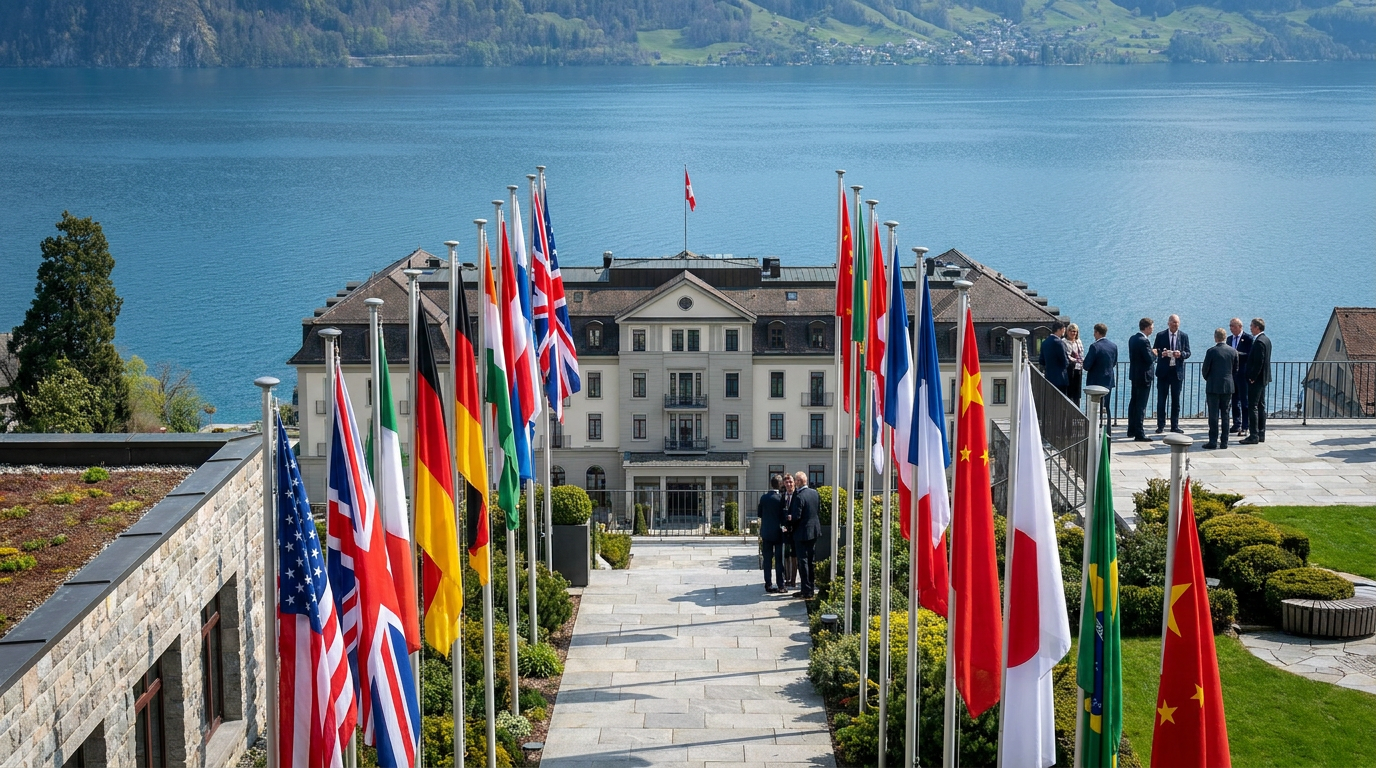
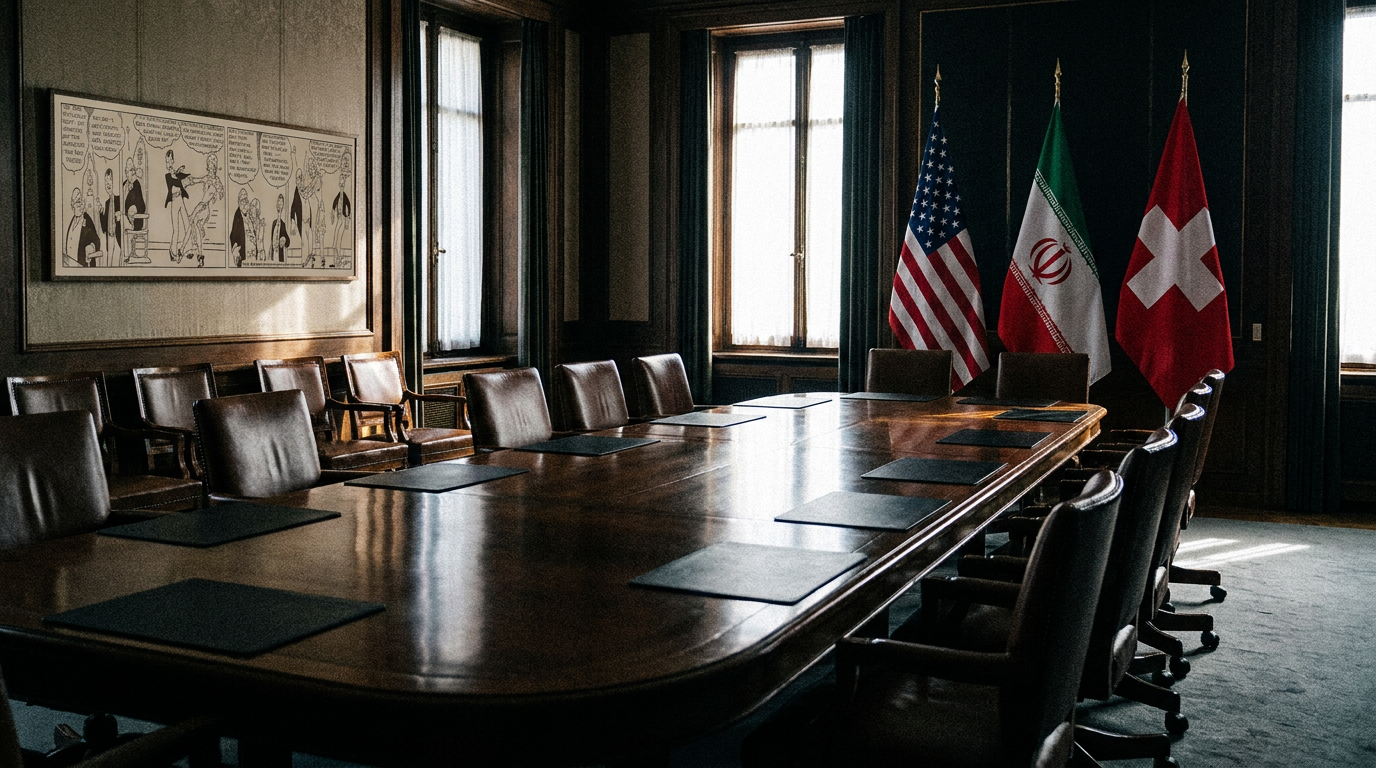
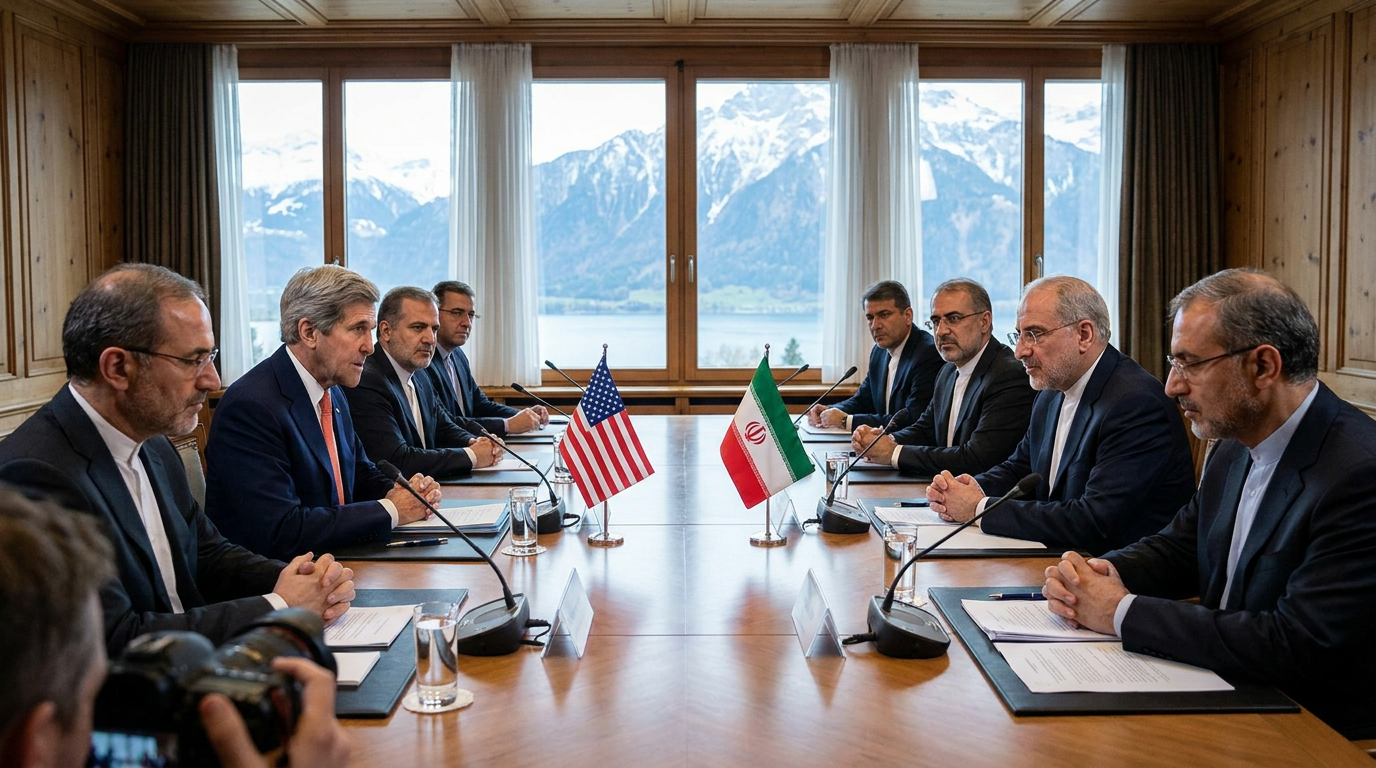
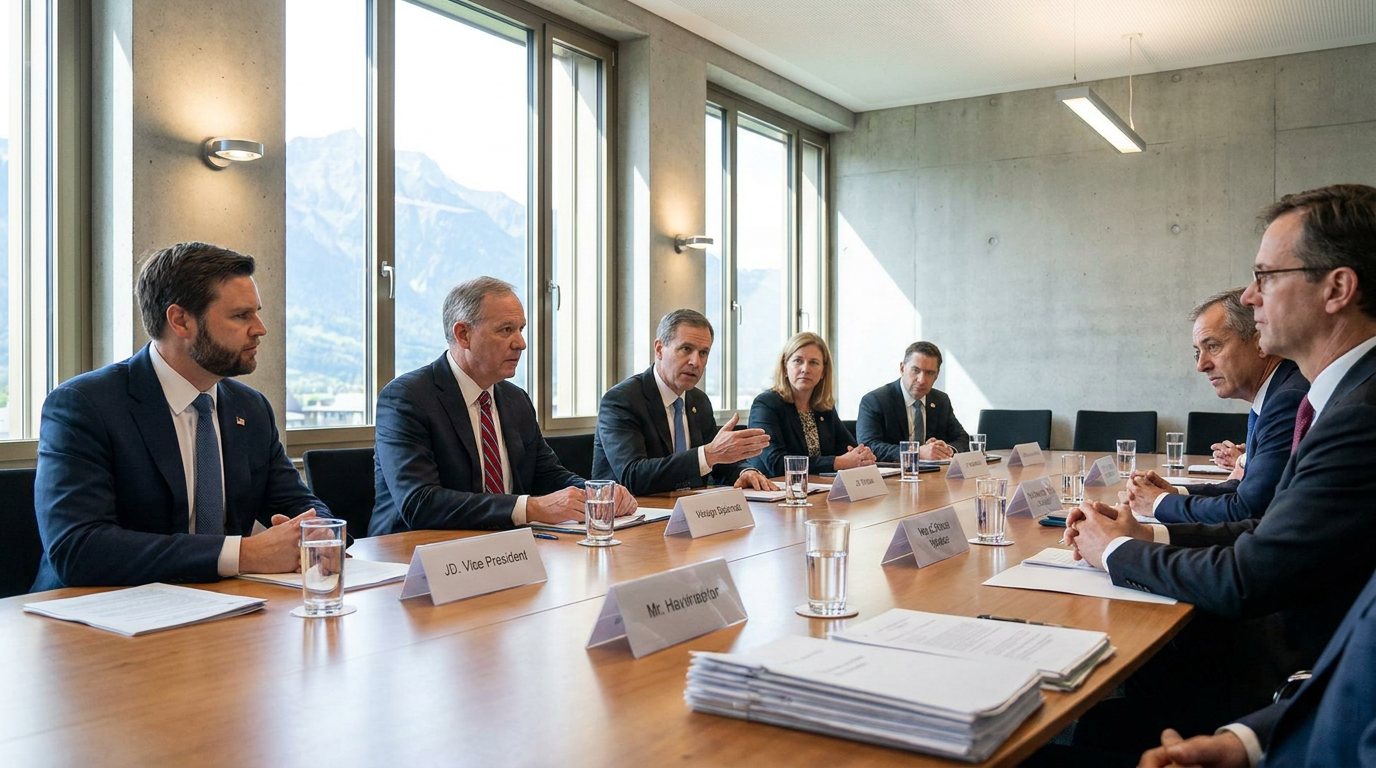
United States and Iranian delegations concluded their first round of face-to-face negotiations in Bürgenstock, Switzerland, early Monday morning, with mediators Qatar and Pakistan citing "encouraging progress" toward ending the four-month war. The 18-hour session aimed to implement the 14-point memorandum of understanding signed last week by US President Donald Trump and Iranian President Masoud Pezeshkian, which established a 60-day window to negotiate a permanent peace. The talks brought together a US delegation led by Vice President JD Vance, alongside presidential envoys Jared Kushner and Steve Witkoff, and an Iranian team headed by Parliament Speaker Mohammad Bagher Ghalibaf and Foreign Minister Abbas Araghchi.[1][4][6]
The high-stakes summit got off to a volatile start after Trump issued a series of aggressive threats from Washington. In social media posts and television interviews, the US president warned he would strike Iran again if it did not immediately stop its "highly paid proxies" in Lebanon from attacking Israel. Trump also threatened to impose US tolls on commercial vessels passing through the Strait of Hormuz if a final deal is not reached, claiming the fees would serve as payment for American "services rendered as the Guardian Angel" of the Middle East.[1][2][4][5]
The rhetoric infuriated the Iranian delegation, who briefly walked out of the negotiating room in protest, arguing that the threats violated the non-aggression pact enshrined in the interim agreement. Ghalibaf publicly warned the United States to be careful with its statements, declaring that Iran's armed forces were prepared to respond to any further aggression. Despite the friction, Vance attempted to set a conciliatory tone, asking the Iranian envoys if the two nations could "turn over a new leaf" and permanently change relations in the Middle East. The delegations eventually returned to the table in a quadrilateral format alongside Qatari Prime Minister Sheikh Mohammed bin Abdulrahman Al Thani and Pakistani Prime Minister Shehbaz Sharif.[2][3][4][5]

A primary flashpoint in the discussions was the ongoing conflict between Israel and Hezbollah in southern Lebanon. Iranian Foreign Ministry spokesperson Esmaeil Baghaei stated that Tehran would not enter negotiations on a final nuclear agreement until the US forced Israel to halt its military operations, citing the memorandum's requirement for a ceasefire on all fronts. Israel, which was not a party to the US-Iran agreement, has continued its strikes in Lebanon, arguing that it must defend its northern border from Hezbollah projectiles. To address the crisis, negotiators reportedly agreed to establish a "deconfliction cell" involving the US, Iran, and the Lebanese government, facilitated by Qatar and Pakistan, to monitor the fragile truce.[3][5][6][7][8]
A primary flashpoint in the discussions was the ongoing conflict between Israel and Hezbollah in southern Lebanon.
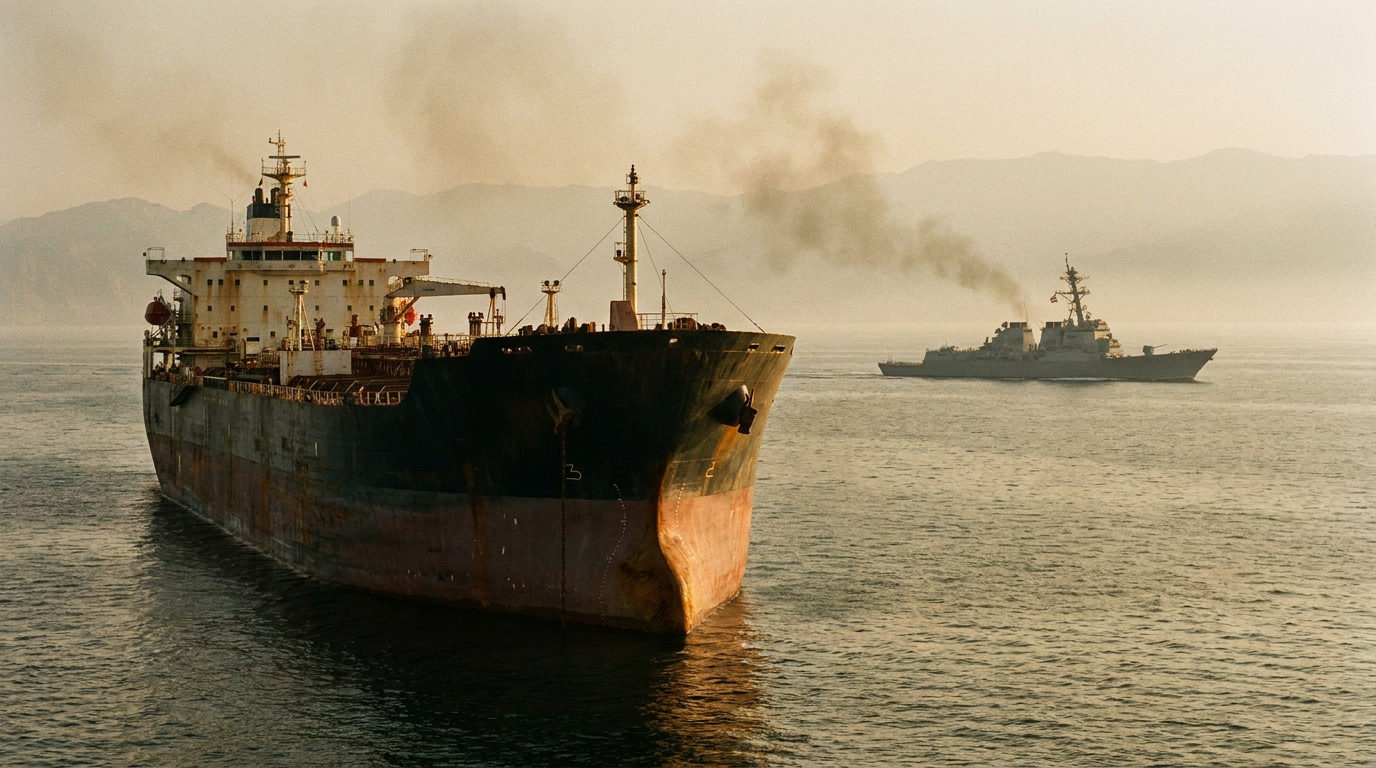
The status of the Strait of Hormuz also dominated the agenda. On Saturday, Iran's Islamic Revolutionary Guard Corps declared the vital energy chokepoint closed in retaliation for Israeli strikes in Lebanon. However, US Central Command disputed the claim, reporting that commercial shipping continued uninterrupted, with 55 vessels carrying over 17 million barrels of oil safely transiting the strait under American monitoring. Negotiators spent hours clarifying Iran's intentions for the waterway and discussing mechanisms to ensure it remains open to global trade.[1][2][3][5]

On the economic front, Iran pushed aggressively for the immediate implementation of sanctions relief and the release of billions of dollars in frozen assets held in overseas bank accounts. Following the talks, Araghchi claimed that Tehran had already secured significant economic benefits, including temporary US waivers allowing for the export of Iranian oil and petrochemicals. A draft agreement on the sanctions waivers was reportedly reached before the face-to-face meetings concluded, fulfilling a key Iranian precondition for opening discussions on its nuclear program.[2][4][6][8]
The interim deal, if fully realized, offers massive financial incentives for Tehran, including the establishment of a $300 billion reconstruction fund. In exchange, the US is demanding strict, verifiable limits on Iran's nuclear program, which Trump cited as a primary justification for launching the war in late February. While the initial talks focused heavily on immediate de-escalation in Lebanon and Hormuz, US diplomats described the discussions on the nuclear issue as "robust."[2][5]

The diplomatic breakthrough leaves Israel in a precarious position. Having fought alongside the US to degrade Iranian military infrastructure over the past four months, the Israeli government now finds itself sidelined as Washington and Tehran negotiate the region's future architecture. While the US-Iran memorandum demands an end to hostilities, Israeli Prime Minister Benjamin Netanyahu has vowed to maintain forces in southern Lebanon until the threat from Hezbollah is eliminated, setting up a potential collision course with the Trump administration's peace efforts.[4][7]
How we got here
Late February 2026
The US and Israel launch military strikes against Iran, starting a four-month war.
Mid-June 2026
US President Donald Trump and Iranian President Masoud Pezeshkian sign a 14-point memorandum of understanding to end the conflict.
June 20, 2026
Iran threatens to close the Strait of Hormuz, citing ongoing Israeli military operations in Lebanon.
June 21, 2026
US and Iranian delegations meet in Bürgenstock, Switzerland, for the first round of technical negotiations.
Viewpoints in depth
US Administration
Focuses on locking Iran into a permanent nuclear agreement and ensuring the free flow of oil.
The US delegation, led by Vice President JD Vance and presidential envoys, approached the talks with a dual strategy of diplomatic engagement and military deterrence. Washington's primary objective is to secure strict, verifiable limits on Iran's nuclear program, which was a central justification for the war. Concurrently, the administration is determined to keep the Strait of Hormuz open to stabilize global energy markets, utilizing the threat of military strikes and potential tolls to maintain leverage over Tehran.
Iranian Government
Prioritizes immediate economic relief and the cessation of Israeli military operations against its regional allies.
For Tehran, the negotiations are a critical opportunity to rescue its economy from crippling sanctions and unfreeze billions of dollars in overseas assets. Iranian negotiators have made it clear that any concessions regarding their nuclear program are contingent upon the US delivering on these economic promises. Furthermore, Iran is using its leverage over the Strait of Hormuz to pressure Washington into forcing Israel to halt its military campaign against Hezbollah in Lebanon, viewing the protection of its regional proxy network as a non-negotiable security interest.
Israeli Government
Views the bilateral US-Iran negotiations with deep skepticism and concern for its own security.
Sidelined from the talks in Switzerland, Israel is watching the diplomatic process with growing unease. The Israeli government argues that the US-Iran memorandum of understanding rewards Iranian aggression and fails to address the immediate, existential threat posed by Hezbollah on its northern border. Prime Minister Benjamin Netanyahu has maintained that Israel will not be bound by agreements it is not a party to, vowing to continue military operations in Lebanon until the security of Israeli citizens is guaranteed, regardless of Washington's diplomatic timeline.
What we don't know
- Whether the proposed 'deconfliction cell' will successfully halt the fighting between Israel and Hezbollah in Lebanon.
- If Iran will formally agree to verifiable limits on its nuclear program in exchange for the $300 billion reconstruction fund.
- How the US will enforce the reopening of the Strait of Hormuz if Iran attempts to physically block commercial vessels.
Key terms
- Strait of Hormuz
- A vital maritime chokepoint between the Persian Gulf and the Gulf of Oman, through which roughly a fifth of the world's oil supply passes.
- Memorandum of Understanding
- A formal agreement outlining the terms of an understanding, in this case, the 14-point framework signed by the US and Iran to end their conflict.
- Deconfliction cell
- A communication mechanism established between opposing forces or governments to prevent accidental clashes and monitor ceasefires.
Frequently asked
Why are the US and Iran negotiating?
The two nations are meeting to implement a 14-point memorandum of understanding aimed at permanently ending the four-month war that began in February 2026.
What is happening in the Strait of Hormuz?
Iran threatened to close the strait in response to Israeli strikes in Lebanon, but the US military reports that commercial shipping is continuing normally under American monitoring.
How does Israel view the talks?
Israel is not a party to the agreement and has expressed concern that the deal could limit its ability to defend against Hezbollah and Iran's nuclear program.
Sources
Source coverage
8 outlets
4 viewpoints surfaced








[1]BloombergMediators
US, Iran Meet in Switzerland as Fresh Trump Threat Angers Tehran
Read on Bloomberg →[2]The GuardianMediators
US-Iran talks expected to continue through the night despite Trump threats
Read on The Guardian →[3]Al JazeeraMediators
Lebanon to top the agenda as US and Iran to hold talks in Switzerland's Burgenstock
Read on Al Jazeera →[4]PBSUS Administration
High-level U.S.-Iran talks on their interim deal to end the war had a tense start Sunday
Read on PBS →[5]The Washington PostUS Administration
JD Vance holds peace talks with Iran as Trump threatens strikes over Hormuz
Read on The Washington Post →[6]Iran InternationalIranian Government
Qatar and Pakistan cite 'encouraging progress' after US-Iran talks
Read on Iran International →[7]The Times of IsraelIsraeli Government
As US and Iran talk peace in Switzerland, Israel is relegated to armchair quarterback
Read on The Times of Israel →[8]Anadolu AgencyIranian Government
Iran says Switzerland talks with US focus on ending war, easing sanctions, releasing frozen assets
Read on Anadolu Agency →
More in news politics
See all 10 stories →Middle East Diplomacy
U.S. and Iran Hold Ceasefire Talks in Switzerland as Tehran Closes Strait of Hormuz
8 sources
Strait of Hormuz
US, Iran Open Tense Peace Talks in Switzerland Amid Strait of Hormuz Closure Threats
8 sources
Strait of Hormuz
US and Iran Hold High-Stakes Talks in Switzerland as Strait of Hormuz Closure Halts Shipping
8 sources
Hormuz Crisis
US-Iran Peace Talks Stumble in Switzerland as Trump Issues Threats and Tehran Claims Hormuz Closure
9 sources
Every angle. Every day.
Get news politics stories with full source coverage and perspective breakdowns delivered to your inbox.