
How SpaceX's $1.75 Trillion IPO Is About to Trigger a Massive Wave of Automated Buying
Following its historic public debut, SpaceX is set to enter major stock indices, forcing trillions of dollars in passive funds to automatically purchase the stock regardless of its valuation.
By Factlen Editorial Team

- Passive Market Mechanics
- Focuses on the structural rules of index inclusion and the unavoidable math of forced buying.
- Retail Democratization
- Views index inclusion as a positive mechanism that distributes mega-cap wealth to everyday retirement accounts.
- Valuation Skeptics
- Warns that forced passive buying into a low-float stock with a 94x revenue multiple creates dangerous bubble dynamics.
What's not represented
- · SpaceX Employees holding locked-up shares
- · Active Fund Managers forced to benchmark against the new indices
Why this matters
Even if you didn't buy a single share of SpaceX during its IPO, you are likely about to own it. Understanding how index inclusion works is crucial for anyone with a 401(k) or pension, as trillions of dollars in retirement savings are about to be automatically reallocated to absorb the aerospace giant.
Key points
- SpaceX's $1.75 trillion IPO is triggering massive automated buying from passive index funds.
- Nasdaq amended its rules to allow SpaceX to enter the Nasdaq-100 after just 15 trading days.
- S&P Global refused to waive its 12-month seasoning requirement, blocking early S&P 500 entry.
- Only 4.3% of SpaceX shares are publicly tradable, creating a severe supply bottleneck.
- Millions of retail investors will soon passively own SpaceX through their 401(k) retirement accounts.
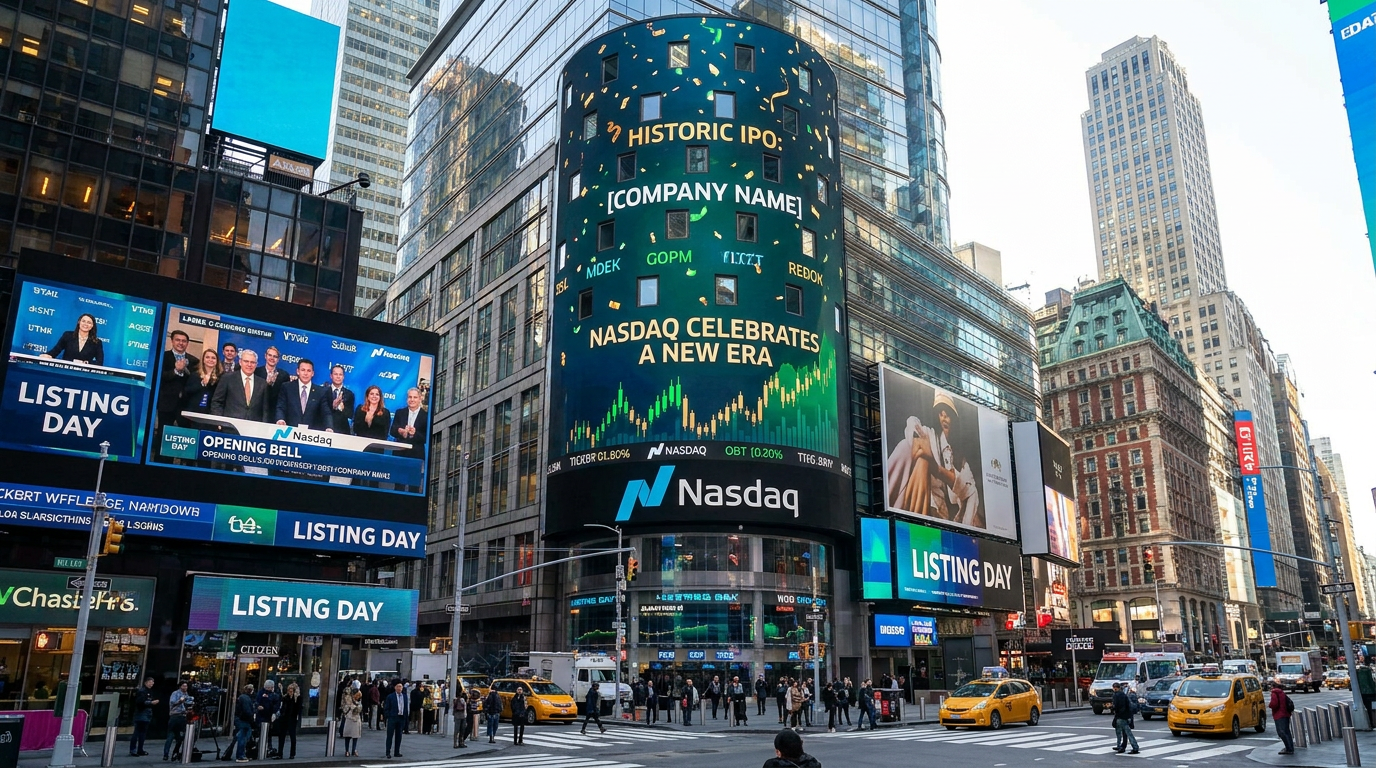
The June 12, 2026, initial public offering of SpaceX was a spectacle of historic proportions. Debuting on the Nasdaq at $135 per share, the aerospace giant instantly commanded a valuation of $1.75 trillion, making it the largest IPO in global history. But while the opening bell fanfare has faded and the initial retail trading frenzy has begun to cool, the most consequential financial event for the company—and for everyday investors—has yet to happen.[1][2]
Behind the scenes of the stock market, a massive, automated wave of capital is preparing to strike. This incoming surge is driven by a structural market mechanic known as index inclusion. When a company is added to major benchmark indices like the Nasdaq-100 or the Russell 1000, the trillions of dollars held in passive mutual funds and exchange-traded funds (ETFs) that track those indices are forced to buy the stock.[1][5]
For a company of SpaceX’s unprecedented size, this creates a unique mechanical shock. Analysts estimate that roughly $8.9 trillion in global assets are benchmarked to the major index providers. Because passive funds operate on autopilot, they do not care about a company's valuation, its revenue multiples, or the current news cycle; if a stock is added to their underlying index, they must purchase it to accurately reflect the market.[1][7]
Recognizing the sheer gravity of SpaceX’s market capitalization, some index providers have rewritten their rulebooks to accommodate the aerospace firm. On May 1, 2026, Nasdaq amended its methodology to allow qualifying mega-cap candidates to be reviewed for index inclusion after just 15 trading days. This significant reduction from the previous seasoning requirements paves the way for SpaceX to enter the technology-heavy Nasdaq-100 by early July.[3][5]

Similarly, FTSE Russell announced that SpaceX would be added to the Russell 1000 Index as part of its late-June reconstitution. These accelerated timelines mean that index funds will soon be mandated to absorb billions of dollars worth of SpaceX shares in a highly compressed timeframe, creating a powerful short-term technical setup for the stock.[1][5]
However, not all gatekeepers are bending to the gravity of Elon Musk’s enterprise. S&P Global, which manages the benchmark S&P 500, announced it would not alter its eligibility criteria to grant SpaceX early entry. The S&P 500 requires a minimum of 12 months of trading history, alongside strict financial viability and profitability metrics.[6]
However, not all gatekeepers are bending to the gravity of Elon Musk’s enterprise.
S&P Global’s refusal to waive its seasoning and investable weight factor rules effectively blocks SpaceX from the world's most tracked index until at least June 2027. This decision protects S&P 500 investors from the immediate volatility of a newly public stock, forcing SpaceX to prove its financial stability over a standard timeline before unlocking the largest pool of passive capital.[6][7]
The tension between these index providers highlights the central danger of the SpaceX IPO: the "float squeeze." While SpaceX is valued at nearly $2 trillion, the company only listed approximately 4.3% of its total outstanding shares for public trading. The vast majority of the equity remains locked up by insiders, employees, and early private investors.[1][5]

This creates a profound supply-and-demand imbalance. When the Nasdaq-100 and Russell 1000 index funds are forced to buy billions of dollars of SpaceX equity, they will be competing for a tiny sliver of tradable shares. Market strategists note that this combination of massive passive flows, high momentum, and an extremely limited float has the potential to drive the stock price significantly higher, detached from traditional fundamental analysis.[1][5]
Valuation experts are already raising alarms about this disconnect. At its IPO price, SpaceX was valued at roughly 94 times its projected 2025 revenue of $18.7 billion. Research firms have warned that the stock is significantly overvalued at these levels, cautioning that the current price assumes sustained, extreme long-term growth that departs from the earnings-based anchors governing most public companies.[4][5]
Yet, the mechanics of passive investing mean that millions of Americans will soon be buying at these valuations, whether they actively choose to or not. As SpaceX enters major indices, its shares will be distributed throughout the mutual funds and ETFs that comprise the bulk of American 401(k) retirement accounts.[3]

If an investor holds a standard fund tracking the Nasdaq-100, SpaceX will automatically become roughly 0.6% of their portfolio. While some critics have labeled the high-valuation IPO a risk to retail investors, others view this automated distribution as a triumph of modern market structure.[3]
The democratization of equity markets means that the wealth generated by the world's most valuable private-turned-public company is no longer restricted to venture capitalists and billionaires. Within weeks, millions of everyday people and thousands of institutions will own a piece of the aerospace giant's future.[3]
Looking ahead, the ultimate test for SpaceX’s stock will arrive in June 2027. At that point, the 366-day lock-up period for insider shares will expire, flooding the market with new supply just as the company potentially becomes eligible for the S&P 500. Until then, the stock's trajectory will be dictated less by rocket launches and more by the rigid, unavoidable math of index fund rebalancing.[5][7]
How we got here
May 1, 2026
Nasdaq amends its methodology to allow mega-cap companies to enter the Nasdaq-100 after just 15 trading days.
June 4, 2026
S&P Global reaffirms its index eligibility criteria, blocking SpaceX from early entry into the S&P 500.
June 12, 2026
SpaceX goes public on the Nasdaq at $135 per share, achieving a $1.75 trillion valuation.
Late June 2026
SpaceX is scheduled to be added to the Russell 1000 index.
Early July 2026
SpaceX is expected to meet the 15-day seasoning requirement for inclusion in the Nasdaq-100.
Viewpoints in depth
Passive Market Mechanics
The structural view that index inclusion is an unavoidable mathematical process.
From the perspective of market structure analysts, index inclusion is a purely mechanical event devoid of emotion or fundamental analysis. When a company reaches a $1.75 trillion valuation, indices that claim to represent the broader market or the technology sector become inaccurate if they exclude it. Therefore, rule changes like Nasdaq's 15-day fast track are seen as necessary adaptations to ensure ETFs and mutual funds accurately track the modern economy, even if it forces price-agnostic buying at high valuations.
Retail Democratization
The optimistic view that public listing distributes mega-cap wealth to everyday investors.
Proponents of this view argue that the SpaceX IPO corrects a long-standing flaw in modern capitalism, where the most explosive growth of tech giants was hoarded by private venture capitalists. By entering major indices, SpaceX's future growth is automatically distributed into the 401(k)s and pension funds of millions of ordinary Americans. In this light, index inclusion is the ultimate democratizing force, allowing retail investors to passively benefit from the space economy without needing to actively trade.
Valuation Skeptics
The cautionary view that forced buying into a low-float stock creates dangerous bubbles.
Financial skeptics and fundamental analysts warn that the combination of a 94x revenue multiple, a tiny 4.3% public float, and trillions of dollars in forced passive buying is a recipe for a market bubble. They argue that because index funds must buy regardless of price, the stock could become artificially inflated. When the 366-day insider lock-up expires and a flood of new shares hits the market, these skeptics fear that the artificially high price will collapse, leaving passive retail investors holding the bag.
What we don't know
- How the stock price will react when the 366-day insider lock-up expires and the public float dramatically expands.
- Whether S&P Global will face pressure from institutional investors to reverse its stance and allow SpaceX into the S&P 500 before June 2027.
- How much of the anticipated passive index buying has already been front-run by institutional hedge funds.
Key terms
- Index Inclusion
- The process by which a stock is added to a benchmark index, forcing funds that track that index to automatically buy the stock.
- Public Float
- The portion of a company's shares that are freely tradable by the public, excluding locked-up insider and employee shares.
- Passive Funds
- Investment vehicles, like index ETFs, that automatically buy a basket of stocks to match a specific market index rather than picking individual winners.
- Seasoning Requirement
- The minimum amount of time a newly public company must trade on the open market before it is eligible to join a major stock index.
Frequently asked
When will SpaceX be added to the S&P 500?
S&P Global has refused to waive its 12-month seasoning requirement, meaning SpaceX cannot enter the S&P 500 until at least June 2027.
Will I own SpaceX in my 401(k)?
Yes. If you hold broad market or technology index funds, your portfolio will automatically purchase SpaceX shares once the company enters those indices.
Why did Nasdaq change its index rules?
Nasdaq amended its methodology to allow mega-cap companies to enter the Nasdaq-100 after just 15 trading days, ensuring the index accurately reflects the market's largest players.
Sources
Source coverage
7 outlets
3 viewpoints surfaced







[1]MarketWatchRetail Democratization
The initial SpaceX frenzy is cooling off — but a new wave of cash is waiting to strike
Read on MarketWatch →[2]ForbesRetail Democratization
SpaceX Opened Trading At $150 On The Nasdaq Following Largest-Ever IPO
Read on Forbes →[3]The Washington PostRetail Democratization
The SpaceX IPO has a bright side. It points to what is working in American capitalism.
Read on The Washington Post →[4]MorningstarValuation Skeptics
As Morningstar launches research coverage of SpaceX, we think the company has been significantly overvalued
Read on Morningstar →[5]Finer Market PointsPassive Market Mechanics
SpaceX IPO index inclusion mechanics — Nasdaq-100 rule change forced passive buying
Read on Finer Market Points →[6]ReutersValuation Skeptics
S&P Global reaffirms index rules, effectively blocking early SpaceX entry
Read on Reuters →[7]Factlen Editorial TeamPassive Market Mechanics
Synthesis by Factlen editorial team
Read on Factlen Editorial Team →


Every angle. Every day.
Get finance stories with full source coverage and perspective breakdowns delivered to your inbox.