
How Small Language Models Are Putting AI Directly on Your Devices
A new generation of compact, highly efficient AI models is allowing users to run powerful artificial intelligence locally on their laptops and phones, guaranteeing privacy and zero latency.
By Factlen Editorial Team
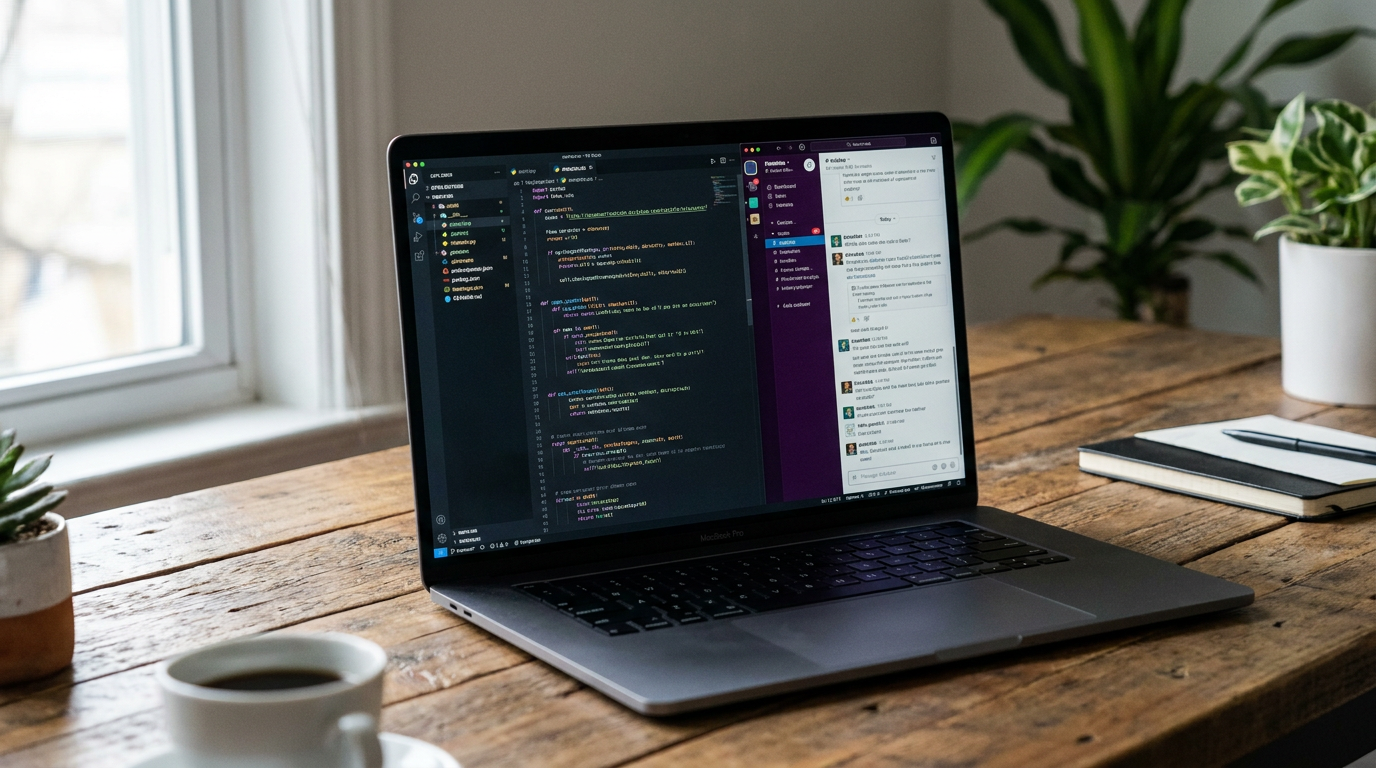
- Privacy Advocates
- Argue that local AI is essential for protecting user data from corporate surveillance.
- Enterprise IT Leaders
- View SLMs as a way to deploy AI securely while controlling runaway cloud costs.
- Open-Source Developers
- Champion SLMs as a democratizing force that prevents AI monopolies.
What's not represented
- · Hardware Manufacturers
- · Cloud Service Providers
Why this matters
By running AI locally on your own hardware, you can process sensitive documents, write code, and automate tasks without ever sending your private data to a corporate cloud server.
Key points
- Small Language Models (SLMs) range from 1 to 14 billion parameters, compared to cloud models with hundreds of billions.
- Techniques like knowledge distillation and quantization allow these models to run on standard laptops and smartphones.
- Local AI guarantees data privacy because prompts and documents never leave the user's device.
- Running models locally eliminates network latency, enabling real-time voice and coding assistants.
- Future devices will likely use hybrid routing, handling routine tasks locally and escalating complex queries to the cloud.
For the past three years, the artificial intelligence boom has been defined by scale. Massive data centers, thousands of specialized GPUs, and models with hundreds of billions of parameters have dominated the landscape. But in 2026, a quiet revolution is happening far away from the cloud. The most exciting frontier in AI is no longer about building the biggest model possible—it is about shrinking them down to fit in your pocket.[6]
Enter the Small Language Model (SLM). While frontier Large Language Models (LLMs) like GPT-4 operate with over a trillion parameters, SLMs typically range from 1 billion to 14 billion parameters. Despite their diminutive size, these compact models are now capable of reasoning, coding, and writing at levels that rival the massive cloud models of just a year or two ago.[2][5]
The shift is fundamentally changing how we interact with AI. Instead of sending every prompt to a remote server and waiting for a response, users are increasingly running SLMs entirely locally on their own laptops, smartphones, and edge devices. This on-device approach unlocks three major advantages that cloud-based models simply cannot match: absolute privacy, zero latency, and drastically reduced costs.[1][3]
To understand how a model can be both small and smart, it helps to look at how they are trained. The secret lies in a technique called "knowledge distillation." Instead of training a small model from scratch on the raw internet, researchers use a massive, highly capable LLM as a "teacher." The teacher model generates high-quality, perfectly structured examples, and the smaller "student" model learns directly from those refined outputs.[2][4]

This process allows the SLM to internalize complex reasoning patterns without needing the vast parameter count required to memorize the entire internet. Microsoft’s Phi family of models pioneered this "textbook quality" data approach, proving that a model with just 3.8 billion or 14 billion parameters could outperform much larger models on logic and math benchmarks.[2][5]
The second piece of the puzzle is "quantization." Parameters in a neural network are essentially mathematical weights, typically stored as high-precision 16-bit or 32-bit floating-point numbers. Quantization compresses these weights down to 8-bit or even 4-bit integers. While this slightly reduces the mathematical precision, it drastically shrinks the model's memory footprint.[2][3]
A 7-billion parameter model in full precision might require 14 gigabytes of Video RAM (VRAM) to run—putting it out of reach for most standard laptops. But quantized down to 4-bit, that same model fits comfortably into just 4 gigabytes of memory. This means it can run smoothly on a standard MacBook, a modern Windows laptop, or even a high-end smartphone.[2][5]

The most immediate benefit of local AI is privacy. When you use a cloud-based AI, your data—whether it is a proprietary codebase, a sensitive legal document, or a personal journal entry—must be transmitted over the internet to a third-party server. For regulated industries like healthcare and finance, this is often a dealbreaker, leading to strict corporate bans on public AI tools.[1][3]
For regulated industries like healthcare and finance, this is often a dealbreaker, leading to strict corporate bans on public AI tools.
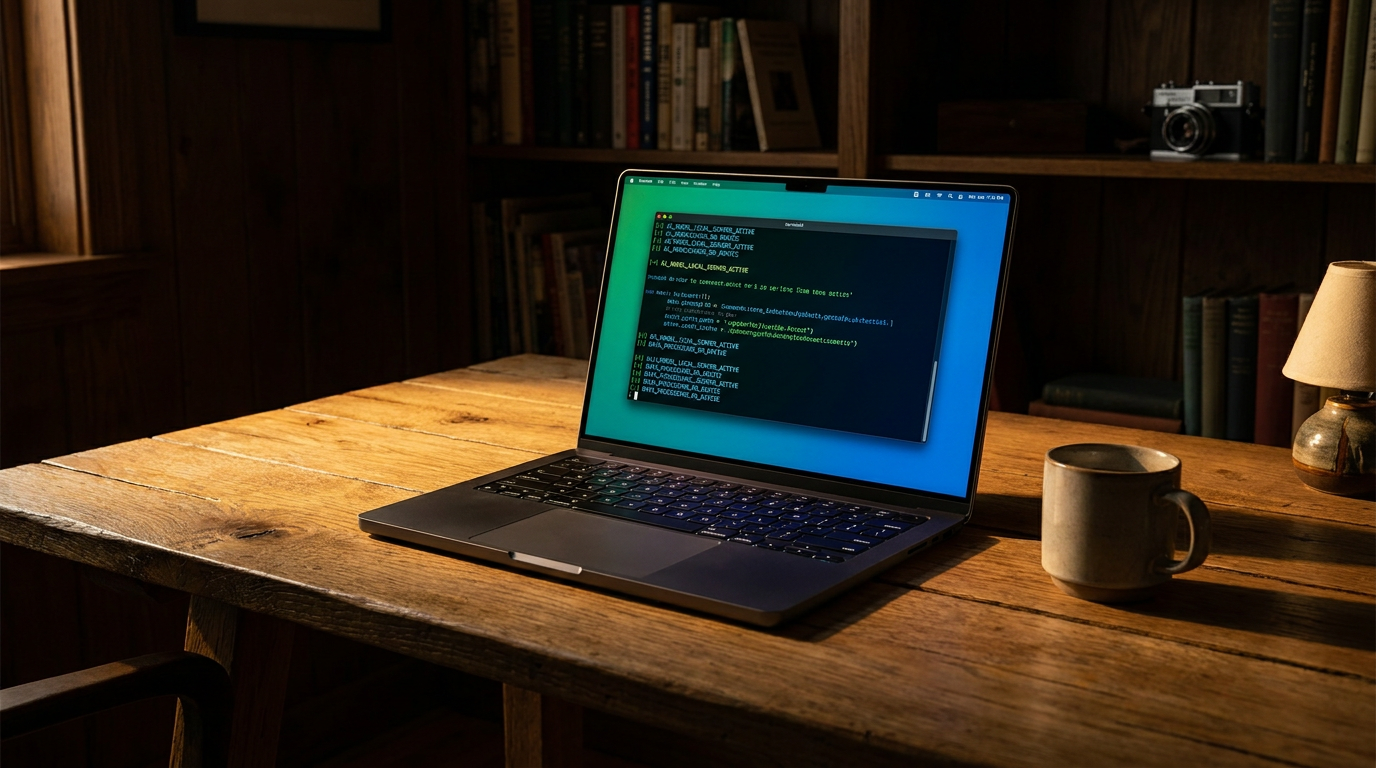
SLMs solve this problem entirely. Because the model runs directly on the device's own silicon, the data never leaves the user's machine. A doctor can use a local SLM to summarize patient notes, or a developer can use one to debug proprietary software, with zero risk of data leakage or compliance violations. The privacy is mathematically guaranteed by the architecture itself.[1][3]
Then there is the advantage of speed. Cloud models are inherently bottlenecked by network latency. Every time you hit "enter," your prompt travels to a data center, waits in a queue, processes, and streams back. Local SLMs eliminate this round-trip entirely. The inference happens directly on the device's Neural Processing Unit (NPU) or GPU, resulting in near-instantaneous responses.[1][3]
This zero-latency environment is crucial for real-time applications. Voice assistants that run locally can respond without the awkward pauses that plague cloud-based smart speakers. Coding assistants can suggest autocomplete lines as fast as you can type, and autonomous AI agents can execute multi-step workflows on your computer without waiting for server permissions.[2][4]

The economics of SLMs are equally compelling. Cloud API pricing for large models can run tens of thousands of dollars a month for enterprise applications handling high volumes of queries. Running an SLM locally costs nothing beyond the electricity required to power the device. This democratization makes it feasible for independent developers and small businesses to integrate AI into their products without facing ruinous server bills.[1][3][5]
The landscape of available models has exploded in 2026. Meta’s Llama 3.2 family includes highly capable 1B and 3B parameter models specifically designed for mobile devices. Google’s Gemma 3 offers lightweight variants optimized for edge computing, while Microsoft’s Phi-4 continues to push the boundaries of what a sub-15-billion parameter model can achieve in complex reasoning.[2][5]
Getting these models running has also become remarkably user-friendly. Just a few years ago, running a local AI required complex Python environments and deep technical knowledge. Today, open-source tools like Ollama and LM Studio allow anyone to download and run an SLM with a single click, providing a chat interface that looks and feels exactly like cloud-based alternatives.[3]
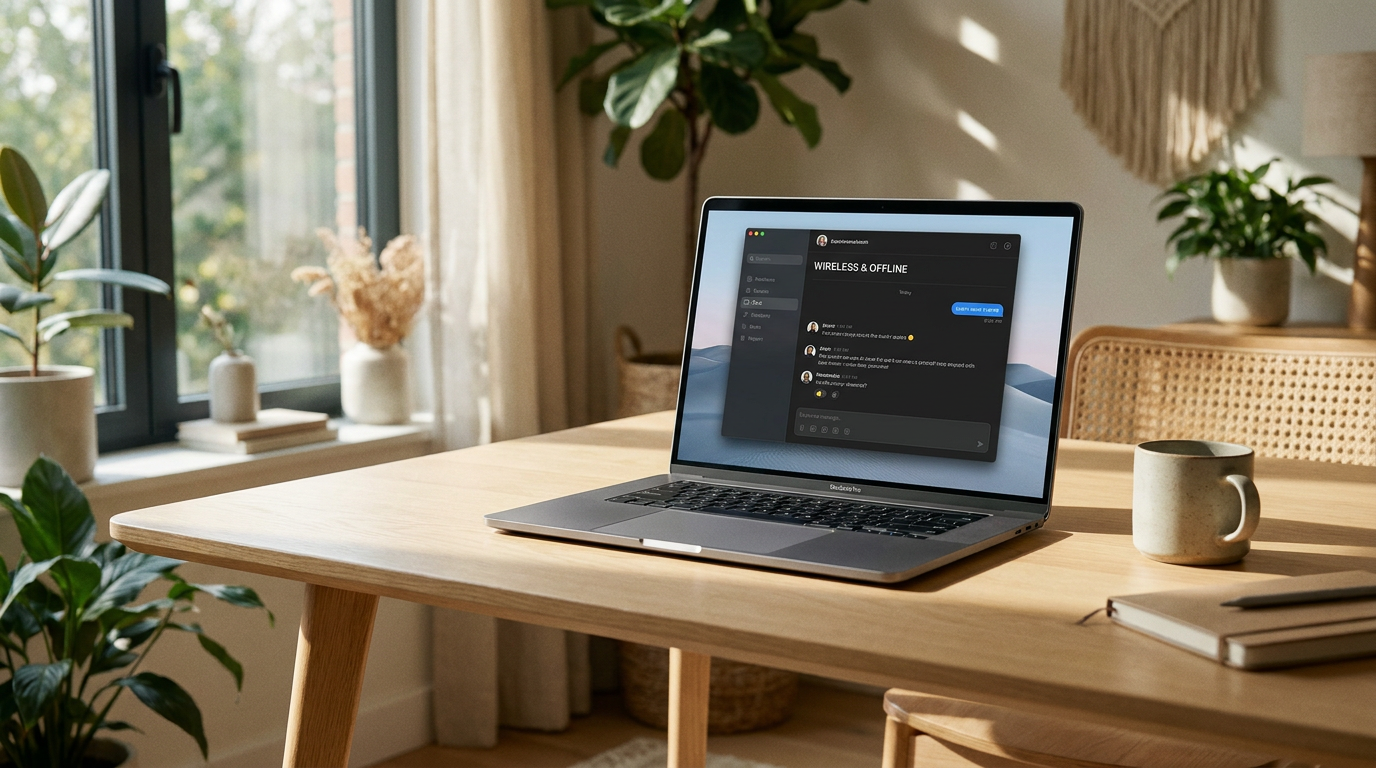
We are also seeing the rise of WebLLM, a technology that allows SLMs to run directly inside a standard web browser using WebGPU. This means users do not even need to install an application; they can simply navigate to a webpage and run a private, local AI entirely within their browser tab, utilizing their device's own graphics hardware.[2][5]
Looking ahead, the future of AI is not an "either/or" choice between massive cloud models and small local ones. Instead, the industry is moving toward a hybrid routing architecture. Your smartphone or laptop will act as an intelligent orchestrator. When you ask a simple question, draft an email, or summarize a local document, the on-device SLM will handle it instantly and privately.[2][4]

Only when you ask a highly complex question that requires vast world knowledge or advanced multi-step reasoning will the system seamlessly escalate the query to a massive cloud-based LLM. This hybrid approach offers the best of both worlds: the privacy, speed, and cost-efficiency of local AI for 90% of daily tasks, backed by the immense power of the cloud for the remaining 10%.[2][5]
By putting AI directly into the hands of users, Small Language Models are shifting the balance of power in the tech industry. They prove that you do not need a billion-dollar data center to harness the benefits of artificial intelligence. As these models continue to grow smarter and more efficient, the most powerful AI you use might just be the one running quietly on the device right in front of you.[1][6]
How we got here
2023
Massive cloud-based LLMs dominate the AI landscape, requiring vast data centers.
Early 2024
Open-source models like Llama 3 and Mistral prove that smaller parameter counts can yield strong performance.
Late 2024
Microsoft releases the Phi family, demonstrating the power of training small models on 'textbook quality' synthetic data.
2025
Tools like Ollama and LM Studio make running local AI accessible to non-technical users.
2026
SLMs become deeply integrated into mobile operating systems and enterprise workflows for privacy-first AI.
Viewpoints in depth
Privacy Advocates
Argue that local AI is essential for protecting user data from corporate surveillance.
For privacy advocates, the shift toward local SLMs is a critical defense against the data-harvesting practices of major tech companies. By processing data entirely on-device, users can benefit from AI without feeding their personal information, proprietary code, or sensitive documents into the training pipelines of cloud providers.
Enterprise IT Leaders
View SLMs as a way to deploy AI securely while controlling runaway cloud costs.
Corporate IT departments are embracing SLMs to solve the dual challenges of compliance and cost. Regulated industries like healthcare and finance cannot legally send patient or client data to public APIs. Local SLMs allow these organizations to deploy AI tools internally, ensuring data sovereignty while simultaneously eliminating the unpredictable, high-volume API costs associated with cloud models.
Open-Source Developers
Champion SLMs as a democratizing force that prevents AI monopolies.
The open-source community sees SLMs as the key to keeping AI accessible. If the only useful models require billion-dollar data centers to run, AI becomes an oligopoly controlled by a few tech giants. By optimizing highly capable models to run on consumer hardware, developers ensure that anyone with a standard laptop can build, modify, and deploy artificial intelligence.
What we don't know
- How quickly hardware manufacturers will increase baseline memory (RAM) in consumer laptops to accommodate larger local models.
- Whether future breakthroughs in model compression will allow even smaller models to achieve GPT-4 level reasoning.
Key terms
- Parameter
- A numerical value inside a neural network that the model adjusts during training to understand and generate language.
- Quantization
- A compression technique that reduces the mathematical precision of a model's weights so it takes up less memory.
- Knowledge Distillation
- A training method where a small 'student' model learns by studying the high-quality outputs of a massive 'teacher' model.
- Inference
- The process of a trained AI model generating a response or prediction based on a user's prompt.
- VRAM
- Video Random Access Memory, the specialized memory on a graphics card used to load and run AI models.
Frequently asked
Do I need an internet connection to use an SLM?
No. Once the model is downloaded to your device, it runs entirely offline, ensuring complete privacy and availability.
Can a small model write code as well as a large one?
While massive cloud models are still better at complex, multi-file software architecture, modern SLMs are highly capable at writing, debugging, and explaining individual functions and scripts.
What kind of computer do I need to run a local AI?
Thanks to quantization, many 3-billion to 8-billion parameter models can run smoothly on a standard modern laptop with 8GB to 16GB of RAM, especially Apple Silicon Macs or PCs with dedicated GPUs.
Sources
Source coverage
6 outlets
3 viewpoints surfaced





[1]Ruh AIEnterprise IT Leaders
Small Language Models (SLMs): The Efficient Future of AI in 2026
Read on Ruh AI →[2]CogitxOpen-Source Developers
Small Language Models (SLMs): Comprehensive Guide 2026
Read on Cogitx →[3]Machine Learning MasteryOpen-Source Developers
Introduction to Small Language Models: The Complete Guide for 2026
Read on Machine Learning Mastery →[4]BentoMLEnterprise IT Leaders
Small language models in production
Read on BentoML →[5]Local AI MasterOpen-Source Developers
What Are Small Language Models?
Read on Local AI Master →[6]Factlen Editorial TeamPrivacy Advocates
Synthesis by Factlen editorial team
Read on Factlen Editorial Team →
More in ai
See all 5 stories →

Every angle. Every day.
Get ai stories with full source coverage and perspective breakdowns delivered to your inbox.