
How the Open Social Web is Replacing the Walled Garden
Decentralized social media protocols have reached critical mass in 2026, allowing users to own their digital identities and communicate seamlessly across different platforms.
By Factlen Editorial Team
- Open Protocol Advocates
- Technologists pushing for total interoperability and data portability.
- Community Governance Proponents
- Users focused on localized moderation and escaping corporate control.
- Pragmatic Adopters
- Everyday users seeking a better algorithmic experience without technical hurdles.
What's not represented
- · Legacy social media executives defending the efficiency and safety of centralized platforms.
- · Advertisers navigating how to reach audiences across fragmented, community-governed servers.
Why this matters
By shifting from corporate-owned platforms to open protocols, users are regaining control over their digital identities, their social connections, and the algorithms that curate their daily information diets.
Key points
- Decentralized social media operates on open protocols rather than proprietary corporate servers, functioning more like email.
- The Fediverse, powered by the ActivityPub standard, allows thousands of independent communities to communicate globally.
- Bluesky's AT Protocol introduces portable identity, letting users move their accounts between apps without losing followers.
- Third-party bridging tools now allow seamless cross-communication between different decentralized networks.
- This architecture pushes content moderation to the community level, reducing reliance on centralized corporate trust and safety teams.
The era of the "walled garden" social network is facing its most significant structural challenge to date. For over a decade, internet users have largely accepted a rigid bargain: surrendering control of their personal data, their audience connections, and their algorithmic feeds to a single corporate entity in exchange for global connectivity.[7]
But in 2026, a fundamental architectural shift is reaching critical mass. Decentralized social media—often referred to collectively as the "open social web"—has matured from a niche technical experiment into a viable, user-friendly ecosystem serving tens of millions of people daily.[2][6]
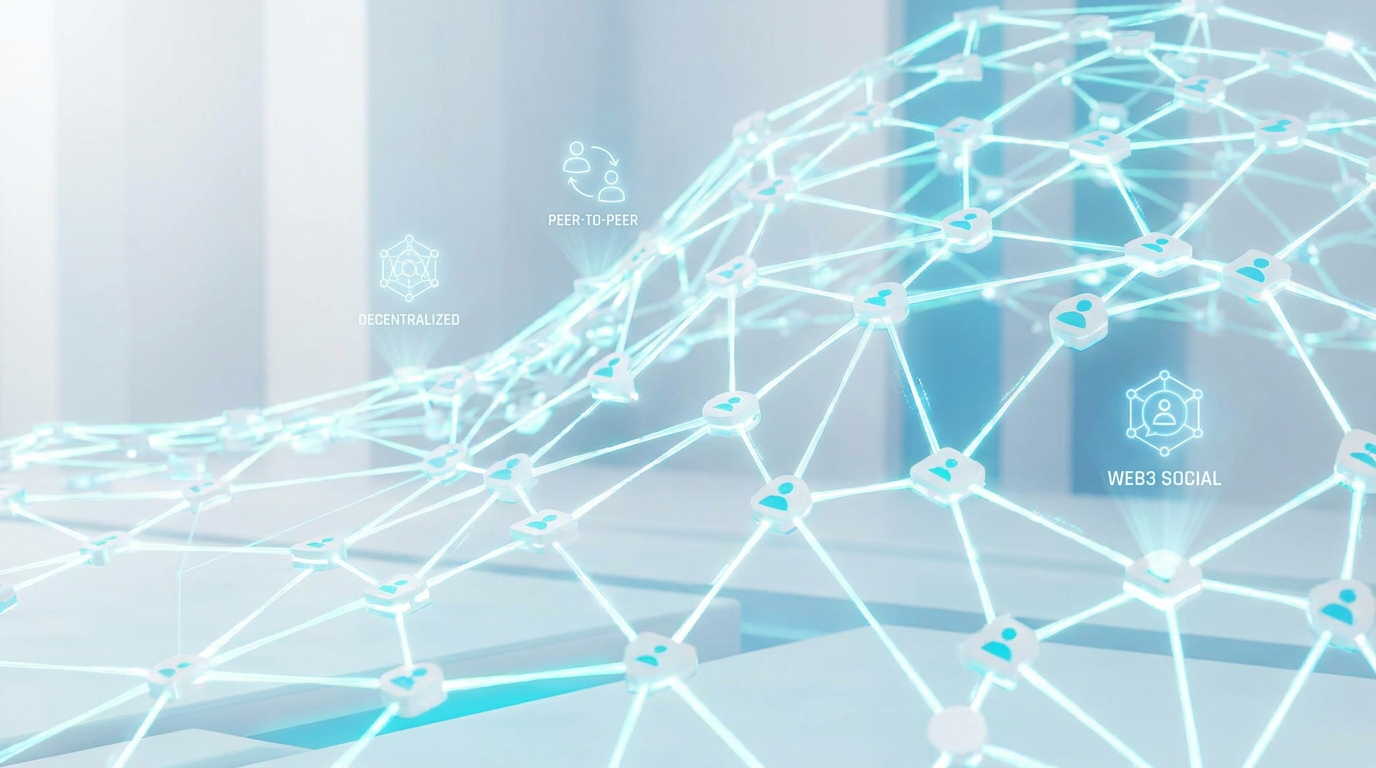
Unlike traditional platforms, where a single company owns the servers, the proprietary code, and the underlying social graph, decentralized networks operate on open protocols. This shift transforms social media from a proprietary corporate product into a shared public infrastructure, fundamentally altering the power dynamic between users and platforms.[2][3]
To understand the mechanism, technologists frequently point to how email functions. A Gmail user can seamlessly send a message to a Yahoo or Outlook user because all email providers agree on a common underlying protocol. Decentralized social media applies this exact logic to status updates, likes, and follows, ensuring that users are never locked into a single provider.[5]

The largest established ecosystem in this space is the "Fediverse," a collection of thousands of independent servers that communicate using a standard called ActivityPub. Mastodon, the most prominent Fediverse application, allows users to join specific, localized community servers while still interacting seamlessly with the broader global network.[2][4]
ActivityPub's momentum accelerated dramatically when Meta integrated the protocol into its Threads platform. By allowing its massive user base to opt into federated sharing, Meta validated the open-protocol model, proving that decentralized architecture could successfully scale to hundreds of millions of active users without collapsing.[6]
However, ActivityPub is not the only standard vying to define the open web. Bluesky, originally incubated as an internal project within Twitter, operates on its own distinct architecture known as the AT Protocol, which approaches decentralization from a slightly different philosophical angle.[4]
However, ActivityPub is not the only standard vying to define the open web.
The AT Protocol was designed from the ground up to prioritize "portable identity." In this system, a user's handle, their data, and their entire social graph are decoupled from the application interface itself. If a user dislikes how an app is moderating content or serving advertisements, they can unplug their entire identity and move it to a competing app without losing a single follower.[3][4]

Bluesky also introduced the concept of algorithmic choice, effectively unbundling the feed from the platform. Instead of a central authority dictating what a user sees through an opaque, engagement-optimized algorithm, users can subscribe to custom feeds built by third-party developers—ranging from chronological lists of specific topics to feeds that actively filter out political arguments.[4]
With two major protocols dominating the landscape, 2026 has become the year of the "bridge." Because ActivityPub and the AT Protocol speak different technical languages natively, independent developers have built sophisticated third-party bridging tools that translate data between the two ecosystems in real time.[1][4]
These bridges allow a user on Bluesky to follow, like, and reply to a user on Mastodon, effectively stitching the two distinct networks into a single, interoperable fabric. Major blogging platforms and content management systems have also integrated these protocols, allowing writers to publish once and distribute their work across the entire decentralized web.[1]
Beyond convenience, the implications for community governance are profound. On centralized platforms, a single trust and safety team must write and enforce rules for billions of people across vastly different cultures—a centralized task that inevitably alienates large segments of the user base.[2]

Decentralized networks push moderation to the edges of the network. Each server or instance sets its own community standards. If a server becomes a haven for harassment, other servers can simply "defederate" from it, cutting off communication and protecting their users without relying on a corporate overlord to intervene.[2][4]
This architecture also introduces the concept of "portable reputation." As users build trust and authority within specific communities, that reputation is tied to their cryptographic identity rather than a corporate database, allowing them to carry their earned credibility across different applications and services seamlessly.[3]
Challenges certainly remain, particularly regarding user onboarding. Explaining the difference between a protocol and a platform, or asking a new user to choose a server during sign-up, introduces a layer of friction that centralized applications avoid by design.[4]

Yet, the steady, compounding growth of these networks suggests that users are increasingly willing to navigate that initial friction in exchange for long-term autonomy. As the bridging tools become more seamless and the protocols more robust, the open social web is proving that the internet's original promise—a decentralized, user-owned network—is not just a theory, but a functioning reality.[7]
How we got here
2016
Mastodon launches, popularizing the concept of federated social media for general users.
2018
The W3C officially publishes ActivityPub as a recommended web standard for decentralized networking.
2023
Bluesky launches its beta using the custom AT Protocol, while Meta's Threads promises future ActivityPub integration.
2024
Threads begins rolling out ActivityPub federation, connecting its massive user base to the broader Fediverse.
2026
Bridging tools reach maturity, allowing seamless cross-communication between ActivityPub and AT Protocol networks.
Viewpoints in depth
Open Protocol Advocates
Technologists and digital rights groups pushing for total interoperability.
This camp views social media as a public utility that should function like email or the web itself. Organizations like the Electronic Frontier Foundation argue that users must have the right to leave a platform without abandoning their social connections. They prioritize the development of open standards, bridging tools, and data portability, arguing that corporate walled gardens inherently stifle innovation and exploit user data.
Community Governance Proponents
Users and server administrators focused on localized moderation and safety.
For this group, the primary benefit of decentralization is escaping the one-size-fits-all moderation policies of massive tech companies. They value the ability of individual servers to set strict, community-specific rules and to 'defederate' from bad actors. They often prefer the ActivityPub model, where server administrators hold the power to protect their specific communities from external harassment, ensuring a safer and more tailored social experience.
Pragmatic Adopters
Everyday users seeking a better algorithmic experience without technical hurdles.
This perspective represents the millions of users migrating from legacy platforms simply because they want a better product. They are less concerned with the ideological purity of protocols and more interested in features like chronological feeds, algorithmic choice, and lack of advertisements. For them, the success of the open social web depends entirely on hiding the technical complexity behind a seamless, intuitive user interface.
What we don't know
- It remains unclear if smaller decentralized servers can financially sustain the infrastructure costs of hosting millions of new users.
- The long-term regulatory response to decentralized moderation—where no single company can be subpoenaed or fined for user content—is still developing.
Key terms
- ActivityPub
- An open, decentralized social networking protocol established by the W3C, used by platforms like Mastodon and Threads.
- AT Protocol
- A decentralized networking architecture developed by Bluesky that emphasizes portable user identity and algorithmic choice.
- Fediverse
- A collection of thousands of independent social media servers that communicate with each other using shared protocols.
- Social Graph
- The digital map of a user's connections, followers, and relationships across a network.
- Interoperability
- The ability of different systems, platforms, or protocols to seamlessly exchange data and communicate with one another.
- Defederation
- The process by which one independent server blocks communication with another server, usually to protect its users from harassment or spam.
Frequently asked
Can Mastodon users talk to Bluesky users?
Natively, they use different protocols (ActivityPub and AT Protocol), but third-party bridging tools now allow users to seamlessly interact across both networks.
What happens if my decentralized server shuts down?
Because your identity is portable, you can migrate your account, data, and followers to a different server. The AT Protocol makes this nearly instantaneous, while ActivityPub requires a few manual steps.
Is Meta's Threads part of the open social web?
Yes. Threads has integrated ActivityPub support, allowing its users to opt-in to federated sharing, meaning their posts can be seen and replied to by users on Mastodon and other compatible platforms.
Sources
Source coverage
7 outlets
3 viewpoints surfaced







[1]Electronic Frontier Foundation (EFF)Open Protocol Advocates
How to Bridge Your Social Media Accounts Across the Open Web
Read on Electronic Frontier Foundation (EFF) →[2]Built InCommunity Governance Proponents
Decentralized Social Media, Explained
Read on Built In →[3]ChainUpCommunity Governance Proponents
Decentralized Social Media Definition and Architecture
Read on ChainUp →[4]FediviewPragmatic Adopters
Mastodon vs Bluesky: Comparing Decentralized Social Networks in 2026
Read on Fediview →[5]DataEthicsCommunity Governance Proponents
Why all new social media startups should use the same protocol
Read on DataEthics →[6]Timothy ChambersOpen Protocol Advocates
2026 Predictions for the Open Social Web
Read on Timothy Chambers →[7]Factlen Editorial TeamPragmatic Adopters
Synthesis by Factlen editorial team
Read on Factlen Editorial Team →
Every angle. Every day.
Get technology stories with full source coverage and perspective breakdowns delivered to your inbox.