
Anthropic Commits $150 Million to Embed AI Experts in U.S. Nonprofits
The AI research company is launching 'Claude Corps,' a fellowship program that will place 1,000 early-career tech workers inside 400 nonprofits to help them implement artificial intelligence.
By Logan Price
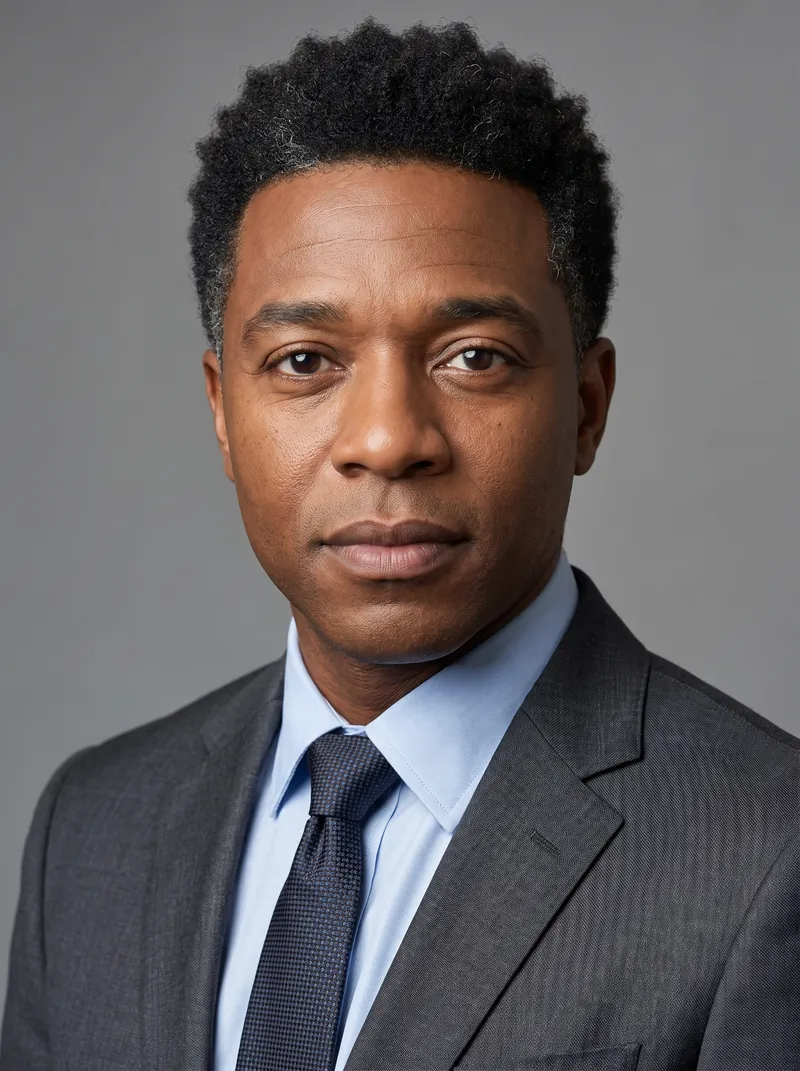
Artificial intelligence research firm Anthropic has announced a $150 million commitment to launch "Claude Corps," a national fellowship program designed to embed AI expertise directly into the nonprofit sector. The initiative aims to place 1,000 early-career tech workers inside up to 400 U.S.-based nonprofits over the next year, providing these organizations with the dedicated human capital needed to modernize their operations. Named after the company's flagship large language model, the program represents one of the largest philanthropic efforts to date aimed at democratizing access to generative AI.[1]
The launch of Claude Corps addresses a growing disparity in the technology landscape: while well-funded corporations are rapidly adopting AI to streamline workflows, resource-strapped nonprofits are struggling to keep pace. Industry observers note that the barrier to entry for charitable organizations is rarely a lack of software access, but rather an "implementation problem." Without dedicated staff who understand how to securely and effectively deploy AI tools, nonprofits often find themselves unable to translate raw technological capability into meaningful operational improvements.[2]
To bridge this gap, Anthropic is fully funding a 12-month, full-time, in-person fellowship for 1,000 young professionals. Each fellow will receive an $85,000 annual salary, comprehensive benefits, relocation assistance, and a dedicated budget for Claude API tokens. During their tenure, these workers will be tasked with building custom AI tools, automating data analysis, and streamlining administrative workflows so that host organizations can focus more resources on their core missions.[1]
The host organizations themselves will receive substantial support beyond the embedded talent. Anthropic is providing each participating nonprofit with a $10,000 implementation grant to cover the costs of integrating new systems, alongside free credits to utilize the Claude platform. This dual approach ensures that organizations have both the technical infrastructure and the financial runway to sustain their new AI capabilities long after the fellowship concludes.
The initiative is structured as a three-way partnership to ensure scalability and rigorous oversight. Anthropic is providing the initial $150 million in funding, overall strategic direction, and technical expertise regarding its models. CodePath, a national nonprofit known for providing collegiate computer science education to underrepresented students, will act as the official employer of record for the fellows and manage their ongoing training. Meanwhile, Social Finance, a registered investment advisor, will handle program evaluation and develop a long-term financial vehicle to expand the program in the future.[1]
A central pillar of the Claude Corps program is its focus on accessibility and workforce diversity. CodePath CEO Michael Ellison emphasized that the initiative is intentionally designed to be highly accessible, aiming to recruit a cohort that reflects a broad cross-section of the American population. By removing traditional barriers to entry, the program seeks to create new pathways into the tech industry for individuals who might otherwise be excluded from the AI boom.[2]
The application requirements reflect this inclusive philosophy. Prospective fellows must be at least 18 years old and have less than two years of full-time professional experience, but a college degree is explicitly not required. Instead, applicants must demonstrate their baseline technical competency by completing prerequisite courses in "AI Fluency" and "Claude 101" before applying. The selection process will focus heavily on a candidate's communication skills, practical problem-solving abilities, and motivation to tackle societal challenges.[1]
The timeline for the rollout is aggressive. Applications for the inaugural cohort of 100 fellows are open until mid-July, with the first group scheduled to begin their placements in October 2026. Subsequent cohorts are planned for January and August of 2027, scaling up the program's footprint across the country. Host organization applications are currently open on a rolling basis for all upcoming cohort start dates.[1]
Early interest from the nonprofit sector highlights the diverse applications of the technology. Organizations ranging from the Montgomery County Food Bank in Texas to the Reef Environmental Education Foundation in Florida are slated to participate. At the food bank, for instance, leadership anticipates using AI to improve distribution forecasting and better understand donor patterns, turning raw data into faster decisions for families facing food insecurity.
For Anthropic, the $150 million investment is part of a broader philosophy regarding corporate responsibility in the age of artificial intelligence. The company is structured as a public benefit corporation, a legal designation that requires it to balance financial returns with positive social impact. Anthropic President Daniela Amodei noted that the companies building transformative AI systems have a fundamental responsibility to ensure the technology's benefits are fully realized and widely shared across all strata of society.
The Claude Corps announcement arrives alongside a separate $200 million commitment from Anthropic to support an economic framework aimed at helping workers who may be displaced by AI automation. This parallel initiative will fund research into the societal disruptions caused by AI adoption, acknowledging that the rapid advancement of machine learning will inevitably reshape the labor market. Amodei stressed that understanding and mitigating these risks is just as critical as deploying the technology for social good.
Ultimately, Anthropic views the Claude Corps as a pilot program that could lay the groundwork for a much larger, systemic approach to managing economic transition. If successful, the fellowship could serve as a blueprint for how public and private entities can collaborate to widen the distribution of AI's benefits. As the technology continues to evolve, initiatives that pair human empathy with algorithmic efficiency may prove essential in ensuring that the AI revolution lifts the entire economy, rather than just its most profitable sectors.[1]
Key points
- Anthropic is launching a $150 million fellowship program called Claude Corps.
- The initiative will embed 1,000 early-career tech workers in 400 U.S. nonprofits for one year.
- Fellows receive an $85,000 salary, while nonprofits get a $10,000 grant and free AI credits.
- The program aims to solve the 'implementation gap' preventing nonprofits from adopting AI.
What we don’t know
- How effectively the AI tools built by fellows will be maintained by the nonprofits after the 12-month fellowship ends.
- Whether the program will eventually expand to include international non-governmental organizations.
- How the long-term financial vehicle being developed by Social Finance will sustain the program beyond the initial $150 million commitment.
How we got here
June 2026
Anthropic announces the $150 million Claude Corps initiative.
July 17, 2026
Application deadline for the inaugural cohort of 100 fellows.
October 2026
The first cohort of fellows begins their 12-month placements at host nonprofits.
January 2027
The second cohort of Claude Corps fellows is scheduled to deploy.
- AI Developers & Philanthropists
- Views the initiative as a necessary step to democratize AI access and fulfill the corporate responsibility of frontier labs.
- Nonprofit Sector Advocates
- Emphasizes that AI adoption in the charitable sector requires dedicated human talent, not just software licenses.
- Economic & Labor Observers
- Analyzes the program as an early model for managing workforce transition and economic disruption caused by automation.
Perspectives this story doesn't cover
- Smaller grassroots nonprofits
- International NGOs
Sources
Source coverage
2 outlets
3 viewpoints surfaced


- [1]ForbesEconomic & Labor Observers
Claude Traffic Surges As Anthropic Readies Blockbuster IPO
Read on Forbes → - [2]Inc.AI Developers & Philanthropists
$150 Million, 1,000 Fellows: Inside Anthropic's Plan to Bring AI to Nonprofits
Read on Inc. →

More in Artificial Intelligence
See all →Model Compression
How Per-Channel Outlier Scaling Protects AI Models From 4-Bit Accuracy Collapse
7 sources

AI Regulation
UK Adopts Lifecycle Regulation to Continuously Monitor AI Medical Devices Across NHS
5 sources

Orbital Computing
Google Launches First Project Suncatcher Satellite to Test In-Orbit AI Computing
5 sources

AI Safety
Senior OpenAI Safety Architect Resigns Over Rushed Model Deployment Culture
4 sources
Comments
Every angle. Every day.
Get Artificial Intelligence stories with full source coverage and perspective breakdowns, free every day.