
The Cow-Free Dairy Revolution: How Precision Fermentation is Rewriting the Rules of Milk
A new wave of food technology is programming microbes to brew bio-identical dairy proteins, promising the taste and texture of real cheese and milk with a fraction of the environmental footprint.
By Factlen Editorial Team
- Alternative Protein Developers
- Food-tech innovators focused on decoupling protein production from animal agriculture.
- Environmental & Sustainability Researchers
- Analysts evaluating the true ecological footprint of novel food technologies.
- Traditional Dairy Industry
- Legacy milk producers and agricultural advocates defending the nutritional and cultural value of real milk.
- Independent Analysts
- Editorial observers tracking the market viability and consumer acceptance of the technology.
What's not represented
- · Small-scale dairy farmers
- · Agricultural feed producers
Why this matters
Precision fermentation offers a scalable way to produce high-quality protein without the massive land and water requirements of animal agriculture. If successful, it could drastically reduce the climate impact of our food system while maintaining the culinary experiences consumers love.
Key points
- Precision fermentation uses programmed microorganisms to brew bio-identical dairy proteins without cows.
- The technology aims to solve the functional limitations of plant-based dairy, such as the inability of vegan cheese to stretch.
- Life Cycle Assessments show the process uses up to 90% less land and 96% less water than traditional animal agriculture.
- Major B2B partnerships are forming between food-tech startups and legacy dairy conglomerates to scale the ingredients globally.
- Consumer acceptance hinges on transparent, simple communication, with analogies like 'brewing beer' proving highly effective.
For years, the alternative dairy market has been trapped in a functional plateau. While environmentally conscious consumers have enthusiastically embraced oat, almond, and soy milks for their morning coffee, plant-based alternatives have consistently struggled to replicate the complex culinary magic of real dairy. Vegan cheeses often fail to deliver the iconic, gooey stretch of a traditional mozzarella, and plant-based milks frequently lack the robust foaming properties required by professional baristas. The fundamental issue is structural: plants simply do not produce the specific proteins that give cow's milk its unique physical characteristics.[8]
Enter precision fermentation. In 2026, this biotechnology is rapidly moving from Silicon Valley laboratories to commercial-scale food manufacturing, promising a "best of both worlds" solution. By programming microorganisms to brew dairy proteins that are molecularly identical to those produced by cows, food scientists are creating real milk and cheese entirely without animals. The resulting ingredients offer the exact taste, texture, and functional profile of traditional dairy, but with a fraction of the environmental footprint.[3][8]
The food industry is responding with massive capital and infrastructure investments. The precision fermentation dairy sector reached an estimated $2.4 billion in 2025 and is projected to surge past $18.6 billion over the next decade, growing at a staggering 20% compound annual growth rate. This influx of funding is driving the technology out of the niche vegan aisle and directly into the mainstream global food supply chain.[1]
How does this technology actually work? The process is frequently compared to the ancient art of brewing beer. But instead of using yeast to convert sugars into alcohol, scientists program the DNA of microorganisms—such as specific strains of yeast or fungi—with the exact genetic instructions required to produce bovine milk proteins. These engineered microbes act as microscopic "cell factories," dedicated entirely to synthesizing the target ingredient.[3][5]

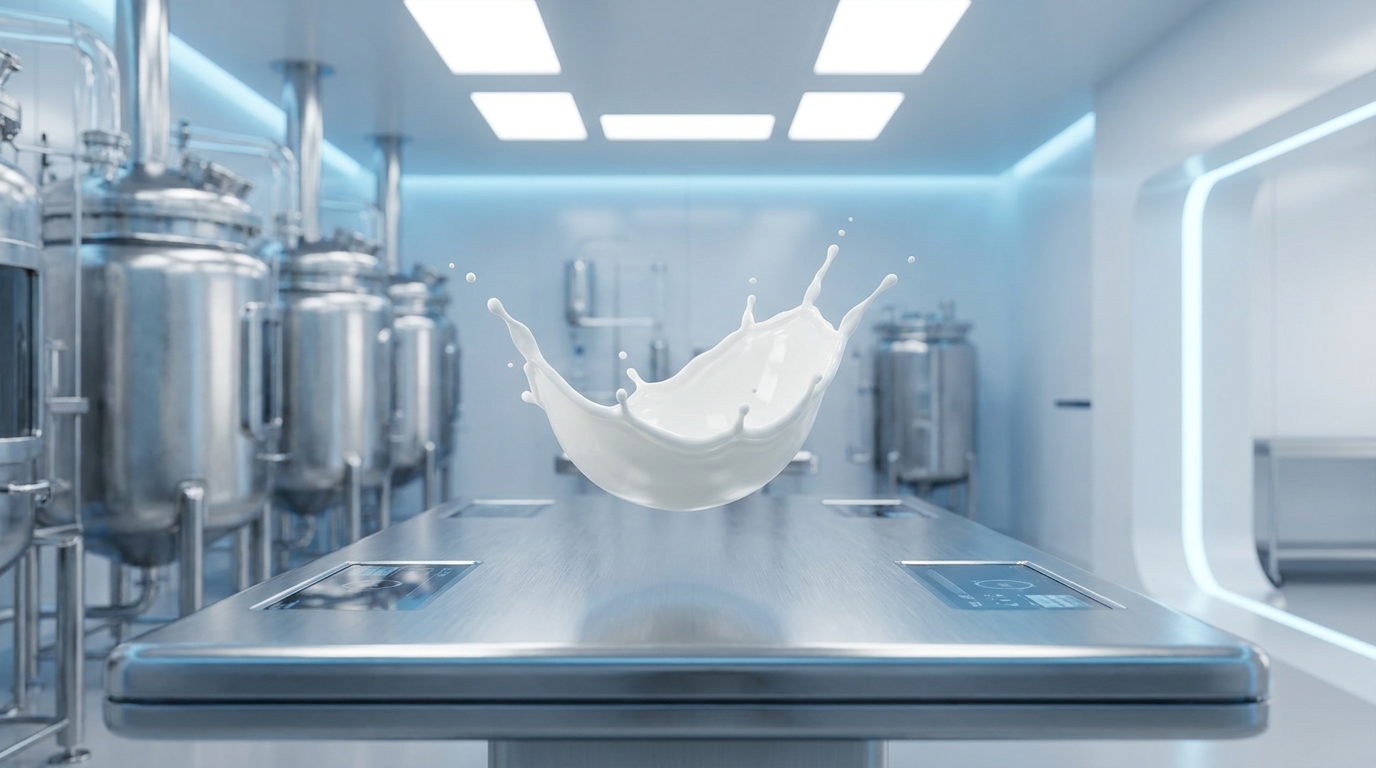
These cell factories are placed inside massive stainless-steel bioreactors and fed a steady diet of simple sugars, water, and essential nutrients. As the microorganisms ferment and multiply, they secrete the programmed dairy proteins into the surrounding liquid. Once the fermentation cycle is complete, the mixture undergoes rigorous downstream processing. The liquid is filtered and purified, separating the pure protein from the yeast cells. The final product is a bio-identical dairy protein powder that contains no genetically modified organisms, no lactose, and no cholesterol.[3][8]
The primary targets for these food-tech startups are whey and casein. Whey proteins, particularly beta-lactoglobulin, are relatively straightforward for microbes to express at scale. Beta-lactoglobulin is highly prized by food manufacturers for its exceptional gelling, foaming, and emulsification properties, making it an ideal ingredient for everything from premium ice creams and protein shakes to creamy yogurts.[2][7]
Casein, however, is widely considered the holy grail of the alternative dairy movement. Casein proteins form complex micelle structures that are directly responsible for the iconic melt, stretch, and chew of traditional cheese. Companies have recently achieved breakthroughs in producing microbial casein at scale, unlocking the massive global pizza and foodservice markets that plant-based alternatives have historically failed to capture.[2][7]
Casein, however, is widely considered the holy grail of the alternative dairy movement.
The environmental mathematics behind precision fermentation is the primary catalyst driving the trend. Traditional animal agriculture is profoundly resource-intensive; it utilizes roughly 83% of global agricultural land while contributing significantly to greenhouse gas emissions, deforestation, and freshwater depletion. As the global population expands, scaling conventional dairy to meet rising protein demands presents a severe ecological challenge.[4]
Independent Life Cycle Assessments (LCAs) suggest that precision fermentation could radically alter this environmental footprint. Recent studies indicate that fermentation-derived dairy proteins require up to 90% less land and 96% less water than conventional bovine milk production. Furthermore, the process can reduce greenhouse gas emissions by over 90%, offering a highly efficient mechanism for producing high-quality protein without the metabolic overhead of raising, feeding, and transporting a 1,500-pound animal.[4][6]

However, the process is not entirely without environmental costs, and sustainability researchers urge caution. Operating massive industrial bioreactors and running the complex downstream purification equipment requires substantial electricity. Environmental analysts emphasize that the true climate benefits of precision fermentation depend heavily on powering these manufacturing facilities with renewable energy. If the grid relies on fossil fuels, the carbon footprint of the fermentation process can quickly approach that of traditional agriculture.[6]
As the technology matures, 2026 is marking a decisive shift from direct-to-consumer novelty products toward massive Business-to-Business (B2B) ingredient partnerships. Rather than attempting to build new consumer brands from scratch, fermentation startups are increasingly acting as ingredient suppliers to the world's largest food conglomerates, integrating their animal-free proteins into existing, familiar product lines.[1][7]
This collaborative approach is bridging the gap between Silicon Valley and legacy agriculture. For example, the global dairy giant Fonterra recently co-founded the startup Vivici to commercialize fermentation-derived whey. Similarly, Leprino Foods—the world's largest producer of mozzarella cheese—has partnered with food-tech firms to scale animal-free casein using its massive existing infrastructure and distribution channels, which currently supply a vast portion of the global pizza market.[7]

Despite these technological and commercial triumphs, consumer communication remains a significant hurdle. A recent comprehensive study conducted across five major global markets revealed that consumer awareness of precision fermentation is still remarkably low. Shoppers are often skeptical of foods created in laboratories, and overly scientific terminology can easily alienate the average grocery buyer.[5]
The study found that nomenclature and framing are critical to widespread adoption. When the process is explained simply and transparently—such as being "similar to brewing beer"—consumer willingness to try the products jumps significantly. Acceptance is also notably higher when these novel proteins are incorporated into familiar composite foods, like baked goods or pasta, rather than being sold as standalone glasses of animal-free milk.[5]
The traditional dairy industry is watching this rapid evolution closely. While some legacy producers are actively investing in the technology to diversify their portfolios, others raise valid concerns about the nutritional complexity of the new products. Real cow's milk contains a highly complex matrix of fats, vitamins, and minerals that isolated fermentation proteins do not naturally replicate without deliberate fortification.[2][8]
The ultimate test for the precision fermentation industry will be achieving true price parity with conventional dairy. While the cost of downstream processing remains a significant financial hurdle, economies of scale, advanced bioreactor designs, and optimized microbial strains are steadily closing the gap. Industry analysts project that as production volumes increase, the cost of fermented proteins will inevitably fall below that of animal agriculture.[7][8]

If the current trajectory holds, precision fermentation could fundamentally rewrite the rules of the global food system. By decoupling a vital human nutrient from its historical environmental toll, this technology offers a rare, scalable solution to one of the 21st century's most pressing challenges: feeding a growing planet without destroying it in the process.[8]
How we got here
1980s
Precision fermentation is first utilized at scale to produce human insulin, revolutionizing diabetes treatment.
1990s
The cheese industry widely adopts fermentation-derived chymosin (rennet), replacing enzymes previously harvested from the stomachs of calves.
2020
Food-tech startup Perfect Day launches the world's first commercial animal-free whey protein, debuting in a line of premium ice creams.
2024
Major B2B partnerships form, with legacy dairy conglomerates like Fonterra and Leprino Foods investing in fermentation startups to scale production.
2026
Fermentation-derived casein reaches commercial viability, unlocking the massive global market for animal-free, stretching pizza cheese.
Viewpoints in depth
Alternative Protein Developers
Food-tech innovators focused on decoupling protein production from animal agriculture.
This camp views precision fermentation as an existential necessity for the global food system. They argue that plant-based alternatives have reached a functional ceiling, unable to replicate the complex chemistry of animal proteins. By utilizing microbial cell factories, developers believe they can provide consumers with the exact culinary experiences they demand—like melting cheese and foaming milk—while drastically slashing the land, water, and carbon requirements of traditional farming. Their primary focus is scaling bioreactor capacity to achieve price parity with conventional dairy.
Traditional Dairy Industry
Legacy milk producers and agricultural advocates defending the nutritional and cultural value of real milk.
Traditional dairy producers emphasize that milk is a highly complex, evolutionary matrix of fats, bioavailable vitamins, and minerals—not just a delivery mechanism for isolated whey or casein proteins. They express concern that fermentation-derived products are highly processed and require synthetic fortification to match the nutritional profile of cow's milk. Furthermore, this camp strongly advocates for strict labeling regulations, arguing that terms like 'milk' and 'cheese' should be legally reserved exclusively for products derived from lactating animals to prevent consumer deception.
Environmental & Sustainability Researchers
Analysts evaluating the true ecological footprint of novel food technologies.
Sustainability researchers acknowledge the massive potential of precision fermentation to free up global agricultural land and reduce freshwater depletion. However, they caution against viewing the technology as a silver bullet. They point out that industrial bioreactors are highly energy-intensive, and the microbes require vast quantities of agricultural sugars as feedstock. This camp argues that the true climate benefits of animal-free dairy will only be realized if the manufacturing facilities are powered entirely by renewable energy and if the sugar feedstocks are sourced without driving further deforestation.
What we don't know
- Whether precision fermentation can achieve true cost parity with heavily subsidized conventional dairy on a global scale.
- How regulatory bodies in different countries will ultimately restrict or allow the labeling of these products as 'milk' or 'cheese'.
- The long-term agricultural impact of shifting feedstock demand from animal feed to the massive quantities of sugar required to fuel industrial bioreactors.
Key terms
- Precision Fermentation
- A biotechnology process that programs microorganisms, such as yeast or fungi, to produce specific complex organic molecules like proteins or fats.
- Beta-lactoglobulin
- The primary whey protein found in cow's milk, highly valued by the food industry for its ability to gel, foam, and emulsify.
- Casein
- A family of complex milk proteins that form micelle structures, responsible for the unique melting and stretching characteristics of traditional cheese.
- Bioreactor
- A large, controlled stainless-steel vessel where engineered microorganisms are cultivated and fed to brew target proteins at an industrial scale.
- Downstream Processing
- The final manufacturing steps where the target protein is filtered, separated from the microorganisms, and purified into a clean ingredient.
Frequently asked
Is precision-fermented dairy considered vegan?
Yes. Because no animals are used in the production process, the products are entirely animal-free and suitable for vegans. However, because the proteins are molecularly identical to cow's milk, they are not safe for individuals with dairy allergies.
Does animal-free dairy contain lactose?
No. Precision fermentation is programmed to produce only specific proteins, such as whey or casein. It does not produce lactose (milk sugar) or cholesterol, making the final products naturally lactose-free.
Are these products genetically modified?
The microorganisms used as 'cell factories' are genetically engineered to produce the dairy proteins. However, the final product is highly purified; the yeast cells and their DNA are entirely filtered out, leaving only the pure protein.
Why not just drink plant-based milk?
While plant-based milks are popular, they often lack the specific functional properties of real dairy. Precision-fermented proteins are needed to create products that stretch like real mozzarella cheese or foam perfectly for professional coffee drinks.
Sources
Source coverage
8 outlets
4 viewpoints surfaced








[1]Fact.MRAlternative Protein Developers
Precision Fermentation Dairy Alternatives Market Forecast and Outlook
Read on Fact.MR →[2]DairyReporterTraditional Dairy Industry
Precision-fermentation start-ups are attracting new investment to speed up production of dairy-identical proteins
Read on DairyReporter →[3]National Institutes of HealthEnvironmental & Sustainability Researchers
Precision fermentation in food production: Sustainable, ethical, and healthier food alternatives
Read on National Institutes of Health →[4]MDPIEnvironmental & Sustainability Researchers
Environmental Impacts of Precision Fermentation for Food Proteins
Read on MDPI →[5]Good Food InstituteAlternative Protein Developers
The science of fermentation: Precision fermentation uses microbial hosts as cell factories
Read on Good Food Institute →[6]Green QueenEnvironmental & Sustainability Researchers
Perfect Day & Bon Vivant's precision fermentation LCAs reveal massive environmental savings
Read on Green Queen →[7]RethinkXAlternative Protein Developers
PF dairy hits the shelves: Commercialization and B2B partnerships
Read on RethinkX →[8]Factlen Editorial TeamIndependent Analysts
Synthesis by Factlen editorial team
Read on Factlen Editorial Team →

Every angle. Every day.
Get food drink stories with full source coverage and perspective breakdowns delivered to your inbox.