
European Parliament Passes AI Omnibus, Reshaping Enforcement Deadlines for High-Risk Systems
The European Union has approved simplification measures for the AI Act, delaying strict compliance for high-risk systems while locking in immediate bans on non-consensual deepfake applications.
By Factlen Editorial Team
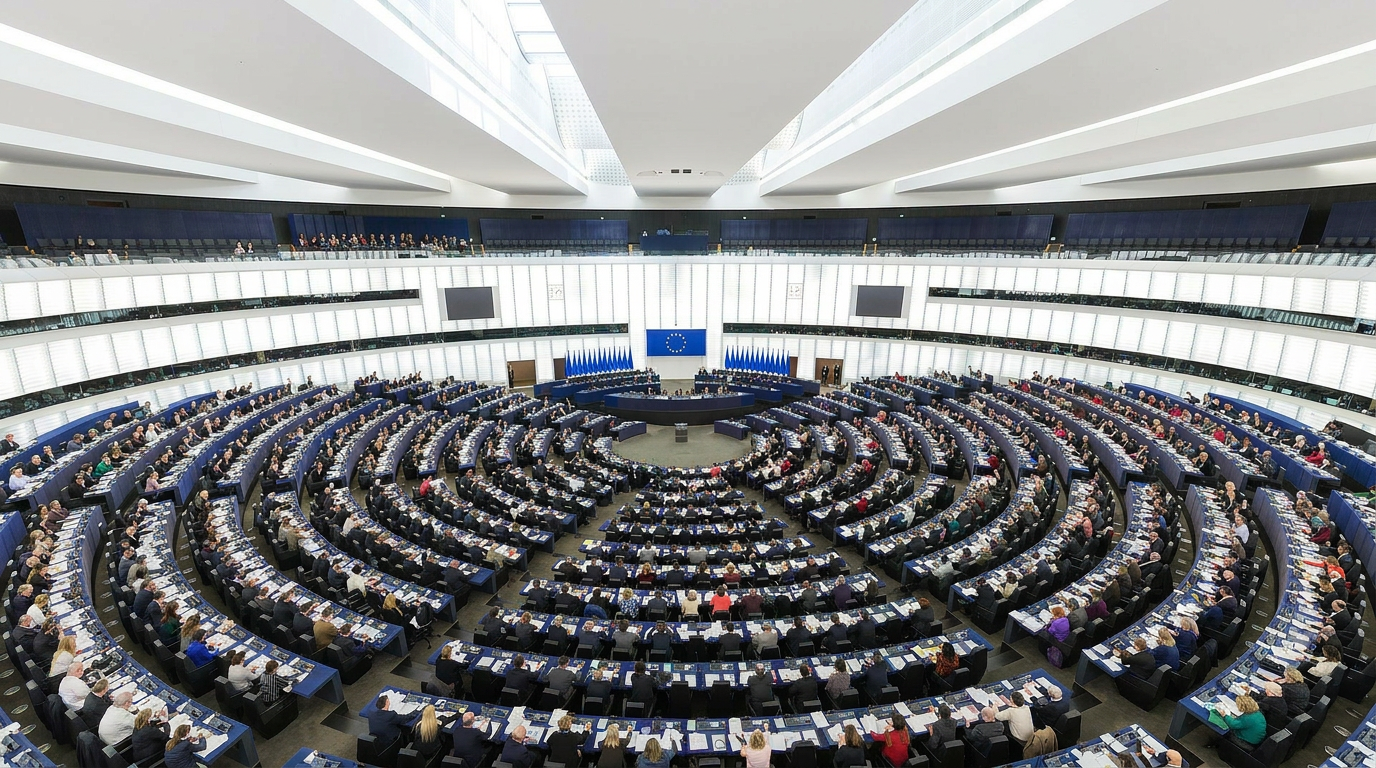
- European Regulators
- Prioritizes human-centric safeguards, fundamental rights, and the establishment of clear, enforceable market surveillance mechanisms.
- Enterprise Tech Providers
- Focuses on the engineering burden of compliance, data lineage requirements, and the operational relief provided by delayed high-risk deadlines.
- Digital Rights Advocates
- Advocates for immediate and strict enforcement of prohibitions against harmful AI applications, such as non-consensual deepfakes.
What's not represented
- · Open-source AI developers
- · Small-to-medium enterprise (SME) compliance officers
Why this matters
For global enterprises, the EU AI Act dictates the baseline architecture for artificial intelligence. The new timeline forces companies to immediately overhaul their data governance while providing a brief reprieve for deploying complex, high-risk systems.
Key points
- The European Parliament passed the AI Omnibus, adjusting enforcement timelines for the EU AI Act.
- Standalone high-risk AI systems now have until December 2027 to comply, while embedded systems have until August 2028.
- General-purpose AI models and broad transparency rules still face a strict August 2026 enforcement deadline.
- The legislation introduces an immediate, outright ban on AI 'nudifier' apps and CSAM generation tools.
The European Parliament's June 16, 2026, vote on the "AI Omnibus" fundamentally alters the enforcement trajectory of the world's first comprehensive artificial intelligence law. Passing with a decisive 423 to 57 majority, the legislative package introduces targeted simplification measures while preserving the regulation's risk-based architecture. The primary claim advanced by European regulators is that these amendments will reduce the regulatory burden on enterprises without compromising fundamental human rights. For global technology providers, this vote transforms a theoretical legal framework into a strict engineering timeline.[1][3]
The most robust evidence of regulatory relief lies in the adjusted deadlines for high-risk AI systems. Under the revised statutory timeline, obligations for standalone high-risk systems—such as those used in recruitment, education, and critical infrastructure—have been delayed to December 2, 2027. Furthermore, AI systems embedded as safety components within products already subject to EU sectoral legislation, such as medical devices or heavy machinery, will not face full enforcement until August 2, 2028.[1][2][3]
However, the evidentiary record strongly indicates that this is not a blanket delay for the technology sector. The foundational August 2, 2026, enforcement deadline remains entirely intact for general-purpose AI (GPAI) models and broad transparency requirements. Legal analysts emphasize that the majority of the AI Act's provisions will still take effect this summer, forcing enterprises to finalize their compliance architectures immediately.[4][6]

Alongside these timeline adjustments, the AI Omnibus expands the scope of immediate prohibitions. The legislation introduces an outright ban on "nudifier" applications and AI systems designed to generate child sexual abuse material (CSAM). The evidence shows that European lawmakers prioritized these bans to combat the proliferation of non-consensual deepfakes, which overwhelmingly target women and vulnerable populations.[1][3]
Crucially, the prohibition applies not only to the developers who create these systems but also to the individuals and organizations that deploy them within the European Union. This dual-liability model represents a strong evidentiary signal that the EU intends to police the entire AI supply chain, from foundational model training to end-user application.[3]
Where the evidence remains highly uncertain is in the practical classification of "high-risk" systems. The AI Omnibus explicitly aimed to eliminate overlapping obligations by clarifying that AI functionalities merely providing user assistance without creating safety risks will not automatically face high-risk classification. This was intended to provide legal certainty for software developers integrating basic AI tools.[1][3]
Conversely, draft guidelines published by the European Commission in May 2026 suggest a much wider regulatory net. Legal experts analyzing the draft note that the Article 6(3) filter mechanism—designed to exempt certain systems from the high-risk category—is being interpreted far more narrowly than many tech providers anticipated.[2]

Conversely, draft guidelines published by the European Commission in May 2026 suggest a much wider regulatory net.
This discrepancy between the Parliament's legislative intent for simplification and the Commission's expansive administrative guidelines creates a significant compliance gray area. The evidence suggests that businesses which previously assumed their embedded AI products were out of scope must now urgently revisit those assumptions before the 2026 deadlines.[2][4]
To meet the impending August 2026 baseline, enterprise architecture is undergoing a forced evolution. Industry analysis indicates that compliance is no longer a legal checkbox, but a foundational engineering requirement that dictates how data pipelines and model evaluations are built.[5][6]
Organizations must now demonstrate full data lineage tracking, proving exactly which datasets contributed to a model's output. The evidence pack shows that every layer of the AI architecture must prove accountability, explainability, and risk control, necessitating the implementation of human-in-the-loop checkpoints for workflows that impact safety or financial outcomes.[5][6]
Transparency obligations have also been slightly modified, though they remain a near-term hurdle. The requirement for AI-generated content to be clearly labeled in a machine-readable format has been delayed to December 2, 2026. This gives developers a brief, four-month window beyond the main August deadline to implement standardized watermarking protocols.[1][3]

At the member-state level, the evidence shows that the physical enforcement architecture is rapidly materializing. On June 17, 2026, Ireland published its Regulation of Artificial Intelligence Bill, establishing the AI Office of Ireland as an independent statutory body.[7]
This localized enforcement mechanism is critical, as the EU AI Act relies on a distributed model of national competent authorities. The Irish legislation empowers these authorities to receive complaints, conduct investigations, and impose severe administrative sanctions for non-compliance, utilizing existing frameworks like the Competition and Consumer Protection Commission.[7]
The establishment of these national offices indicates that the era of theoretical AI governance has ended. Enterprises operating within the EU must now prepare for active market surveillance and post-market monitoring systems, which require deployers to report serious incidents and malfunctioning directly to state authorities.[6][7]

Ultimately, the evidence reveals a regulatory landscape that is simultaneously offering targeted delays for complex, high-risk systems while aggressively locking down the foundational governance of general-purpose AI. For global enterprises, the August 2026 reality is a hard engineering deadline that will determine their operational survival in the European market.[4][5]
How we got here
Aug 2024
The EU AI Act officially entered into force, beginning the phased implementation timeline.
Feb 2025
Prohibited AI practices and AI literacy obligations began to apply across the European Union.
Aug 2025
Governance rules and General-Purpose AI (GPAI) model obligations took effect.
Jun 2026
The European Parliament passed the AI Omnibus, adjusting high-risk deadlines and banning nudifier apps.
Aug 2026
The main enforcement date for the majority of the AI Act's general provisions arrives.
Viewpoints in depth
European Regulators
Prioritizes human-centric safeguards, fundamental rights, and the establishment of clear, enforceable market surveillance mechanisms.
European lawmakers view the AI Omnibus as a necessary calibration of the world's first comprehensive AI law. By delaying the most complex high-risk requirements, regulators aim to give standard-setting bodies time to finalize technical frameworks, ensuring that when enforcement does begin, it is practical and effective. Simultaneously, the immediate ban on non-consensual deepfake applications underscores their commitment to protecting fundamental human rights above technological experimentation.
Enterprise Tech Providers
Focuses on the engineering burden of compliance, data lineage requirements, and the operational relief provided by delayed high-risk deadlines.
For the technology sector, the EU AI Act is less a legal document and more a strict architectural blueprint. Tech providers argue that the delayed deadlines for high-risk systems are essential, as the engineering required to prove data lineage and establish human-in-the-loop checkpoints is vastly more complex than regulators initially understood. However, they remain concerned that administrative guidelines may interpret exemptions too narrowly, inadvertently dragging low-risk software into the high-risk compliance regime.
Digital Rights Advocates
Advocates for immediate and strict enforcement of prohibitions against harmful AI applications, such as non-consensual deepfakes.
Digital rights groups celebrate the outright ban on nudifier applications and AI-generated CSAM as a critical victory for online safety. However, they express caution regarding the delayed enforcement timelines for high-risk systems used in law enforcement, border control, and employment. Their primary concern is that extending these deadlines to 2027 and 2028 leaves vulnerable populations exposed to algorithmic bias and automated decision-making without adequate legal recourse in the interim.
What we don't know
- How strictly national competent authorities will enforce the Article 6(3) filter mechanism for high-risk exemptions.
- Whether the delayed deadlines for high-risk systems will be sufficient for legacy industries to adapt their embedded AI.
- The exact technical standards that will be universally accepted for the machine-readable watermarking of AI-generated content by December 2026.
Key terms
- AI Omnibus
- A digital regulatory package passed by the European Parliament to simplify compliance obligations and adjust enforcement timelines for the EU AI Act.
- High-Risk AI System
- AI applications used in critical areas like employment, healthcare, education, and law enforcement, which are subject to strict conformity assessments.
- General-Purpose AI (GPAI)
- Highly capable AI models designed to perform a wide range of tasks, which face specific transparency and systemic risk evaluations.
- Data Lineage
- The ability to track and prove exactly which datasets were used to train or prompt an AI model, a key requirement for regulatory audits.
- Article 6(3) Filter Mechanism
- A provision in the EU AI Act designed to exempt certain AI systems from being classified as high-risk if they do not pose a significant threat to health, safety, or fundamental rights.
Frequently asked
What is the AI Omnibus?
A legislative package passed by the European Parliament in June 2026 that simplifies parts of the EU AI Act and adjusts enforcement deadlines for high-risk systems.
Are all AI regulations delayed in Europe?
No. While high-risk system deadlines were extended to 2027 and 2028, general-purpose AI rules and broad transparency requirements still take effect in August 2026.
What AI systems are now completely banned?
The Omnibus explicitly bans "nudifier" applications and AI systems designed to generate child sexual abuse material (CSAM).
How does this affect companies outside of Europe?
The EU AI Act applies to any provider or deployer whose AI system is placed on the EU market or whose outputs are used within the EU, regardless of where the company is headquartered.
Sources
Source coverage
7 outlets
3 viewpoints surfaced







[1]European ParliamentEuropean Regulators
AI Act: EP approves simplification measures and 'nudifier' app ban
Read on European Parliament →[2]Osborne ClarkeEnterprise Tech Providers
EU AI Act: Draft guidelines interpret the high-risk conformity assessment test broadly
Read on Osborne Clarke →[3]Kecos LegalEnterprise Tech Providers
European Parliament Approves Amendments to the EU AI Act
Read on Kecos Legal →[4]SovyEnterprise Tech Providers
EU AI Act Enforcement Date: Complete Timeline
Read on Sovy →[5]SombraEnterprise Tech Providers
AI Regulations as the New Architecture Layer
Read on Sombra →[6]SnowflakeEnterprise Tech Providers
EU AI Act: Deadlines and timeline
Read on Snowflake →[7]Department of Enterprise, Trade and EmploymentEuropean Regulators
Publication of the Regulation of Artificial Intelligence Bill 2026
Read on Department of Enterprise, Trade and Employment →

More in ai
See all 10 stories →Local AI
The Rise of Local AI: How Everyday Laptops Are Running Powerful Models Offline
7 sources

AI Governance
India's Supreme Court Finalizes Framework Banning AI from Judicial Decision-Making
7 sources

AI Agents
How AI Agents Are Moving Beyond Chatbots to Automate Complex Workflows
7 sources

Agentic AI
How Large Action Models Are Turning AI Into Autonomous Digital Teammates
6 sources

Every angle. Every day.
Get ai stories with full source coverage and perspective breakdowns delivered to your inbox.