
Trump Renews Call for Military in Chicago, Testing Limits of 2025 Supreme Court Ruling
Following a violent weekend in Chicago, President Trump has renewed demands to deploy the military to the city, pressuring Illinois Governor J.B. Pritzker to formally request federal troops under the Insurrection Act.
By Adel Khoury

Share this story
In short
- President Trump renewed calls for military deployment in Chicago following a weekend of violence.
- The President pressured Illinois Governor J.B. Pritzker to formally request the National Guard.
- A December 2025 Supreme Court ruling blocked the administration from deploying troops unilaterally.
Over the weekend, at least seven people were killed and dozens more injured in a string of shootings across Chicago, prompting a renewed and forceful demand from President Trump for military intervention. Taking to Truth Social on Sunday, the President publicly questioned why Illinois Governor J.B. Pritzker had not yet welcomed a federal deployment to quell the violence. The demand immediately reignited a high-stakes constitutional standoff over the limits of presidential power and the role of the military in domestic law enforcement.[1][4]
The weekend's bloodshed, which local authorities are still investigating, served as the immediate catalyst for the President's remarks. For the administration, the persistent urban violence is evidence that local and state leaders have lost control of the city's streets. By elevating a localized crime wave to a matter of national security, the White House is once again testing the boundaries of federal authority in jurisdictions governed by political opponents.[1][4]
This renewed pressure arrives just six months after a landmark Supreme Court ruling that severely curtailed the President's ability to unilaterally deploy the military on U.S. soil. The legal landscape surrounding domestic deployment was fundamentally altered last winter, setting the stage for the current friction between Washington and Springfield.[3][4]
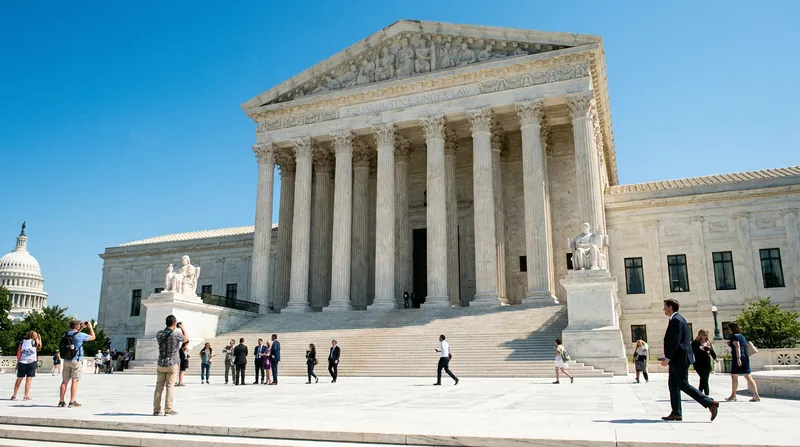
In December 2025, the Supreme Court ruled 6-3 that the administration's previous attempt to send the National Guard into Chicago violated the Posse Comitatus Act. That 1878 law serves as a foundational democratic safeguard, generally barring the federal military from participating in civilian law enforcement. The justices determined that the administration had failed to meet the stringent standard required to federalize Guard troops without explicit state consent.[2][3]
The ruling established a clear constitutional guardrail: under the Insurrection Act, the President cannot federalize and deploy troops to a state unless the state's governor formally requests assistance, or there is a total collapse of civil authority that makes ordinary judicial proceedings impossible. The Court's decision effectively blocked the White House's strategy of unilateral domestic deployment, forcing a change in tactics.
By publicly pressuring Governor Pritzker to welcome the troops, the President is now navigating the exact legal boundary set by the justices. Unable to sign an executive order forcing the deployment without triggering immediate judicial intervention, the administration has shifted its strategy from unilateral action to intense political leverage, attempting to force the state executive to make the formal request required by the Insurrection Act.[1][4]
Governor Pritzker has vehemently rejected the renewed demands, reiterating his stance that military forces are neither trained nor appropriate for neighborhood policing. State officials have accused the administration of using the city's tragedies for political theater, maintaining that the Chicago Police Department and state resources are fully capable of managing the situation without federal armed forces.[1][4]
The standoff in Illinois is part of a broader, multi-city friction over federal policing that has defined the administration's domestic policy over the past year. Similar clashes erupted over troop deployments in Los Angeles and Memphis in 2025, which ultimately triggered the wave of litigation that culminated in the Supreme Court's definitive ruling.[4]
Legal scholars and civil rights organizations warn that the administration's persistent focus on the Insurrection Act normalizes the idea of military intervention in civilian life. Even if current efforts are constrained by the courts, advocates argue that the constant threat of federalization creates a chilling effect on local governance and blurs the vital line between combat soldiers and community police officers.[2]
Meanwhile, proponents of the deployment argue that constitutional debates offer little comfort to residents living in high-crime areas. Supporters of the administration's push insist that the federal government has a moral obligation to intervene when local leaders fail to stem the bloodshed, viewing the Insurrection Act as a necessary tool of last resort to restore basic public safety.[4]
As the summer months typically bring a surge in urban violence, the political standoff between the White House and state capitols is expected to intensify. The coming weeks will test whether the Supreme Court's procedural guardrails will hold against sustained executive pressure, and whether state governors can withstand the national spotlight as they defend their sovereign authority over local policing.[4]
Key terms
- Posse Comitatus Act
- An 1878 federal law that generally prohibits the use of the U.S. military for domestic civilian law enforcement.
- Insurrection Act
- A federal law that outlines the specific, limited conditions under which the President can deploy military forces to address domestic civil unrest.
- National Guard
- State-based military forces that are normally under the control of state governors, but can be federalized by the President under specific legal conditions.
Reader questions
Can the President deploy the military without the governor's permission?
Generally, no. A December 2025 Supreme Court ruling affirmed that under the Posse Comitatus Act, the President cannot unilaterally deploy troops for domestic law enforcement unless there is a total collapse of civil authority.
What is the Insurrection Act?
It is a set of federal laws that provides specific exceptions to the Posse Comitatus Act, allowing the President to deploy military forces domestically, typically when requested by a state's governor or legislature.
Why is Trump pressuring Governor Pritzker?
Because the Supreme Court blocked unilateral federal deployment, the administration needs the state governor to formally request military assistance in order to legally send the National Guard into Chicago.
Where opinion splits
Federal Intervention Advocates
Argue that local leaders are failing to maintain order and that federal military presence is necessary to stop the violence.
Proponents of the deployment argue that constitutional debates offer little comfort to residents in high-crime areas. They insist that the federal government has a moral obligation to intervene when local leaders fail to stem the bloodshed, viewing the Insurrection Act as a necessary tool of last resort to restore public safety.
State Sovereignty Defenders
Emphasize that policing is a local and state responsibility, and that military deployment without state consent violates constitutional federalism.
State executives and federalism advocates argue that the Constitution deliberately divides power to prevent a centralized military police force. They maintain that local law enforcement, who are trained in community policing rather than combat, are the only appropriate authorities to handle urban crime, and view federal pressure as political theater.
Civil Liberties Organizations
Warn that using the military for domestic law enforcement threatens democratic norms and civil rights.
Legal scholars and civil rights groups point to the Posse Comitatus Act as a foundational safeguard of American democracy. They warn that the administration's persistent focus on the Insurrection Act normalizes the idea of military intervention in civilian life, creating a chilling effect on civil liberties and risking dangerous escalations during routine policing.
- State Sovereignty Defenders
- Emphasize that policing is a local and state responsibility, and that military deployment without state consent violates constitutional federalism.
- Civil Liberties Organizations
- Warn that using the military for domestic law enforcement threatens democratic norms and civil rights.
- Federal Intervention Advocates
- Argue that local leaders are failing to maintain order and that federal military presence is necessary to stop the violence.
- Neutral Legal Analysts
- Focus on the strict statutory requirements of the Posse Comitatus Act and the Insurrection Act.
Perspectives this story doesn't cover
- Chicago residents in affected neighborhoods
- Local Chicago Police Department leadership
Sources
Source coverage
4 outlets
4 viewpoints surfaced




- [1]The GuardianState Sovereignty Defenders
At least seven people killed in Chicago shootings as Trump renews military call
Read on The Guardian → - [2]Brennan Center for JusticeCivil Liberties Organizations
The Posse Comitatus Act Explained
Read on Brennan Center for Justice → - [3]Supreme Court of the United StatesNeutral Legal Analysts
Supreme Court limits unilateral domestic military deployment under Posse Comitatus
Read on Supreme Court of the United States → - [4]Factlen Editorial TeamNeutral Legal Analysts
Synthesis by Factlen editorial team
Read on Factlen Editorial Team →

More in News & Politics
See all →Data Privacy
New Mexico Judge Orders Meta to Pay $25 Billion Over Cambridge Analytica Privacy Violations
6 sources

Prison Healthcare
Supreme Court Rejects Trump Administration Bid to Restrict Transgender Inmate Medical Care
5 sources
Immigration Crackdown
State Department Cancels Over 300,000 Visas in Broad Trump Administration Immigration Crackdown
5 sources

Border Security
Trump Administration Asks Supreme Court to Lift Halt on Big Bend Border Wall
6 sources
Comments
Every angle. Every day.
Get News & Politics stories with full source coverage and perspective breakdowns, free every day.