
US and Iran Hold High-Stakes Nuclear Talks in Switzerland Amid Threats of Escalation
US and Iranian delegations met in Switzerland to negotiate a permanent nuclear agreement and secure the Strait of Hormuz, though the talks were temporarily disrupted by threats of military action from President Trump.
By Factlen Editorial Team
- US Administration
- Seeks to lock in a permanent nuclear agreement and secure global shipping lanes, utilizing a mix of diplomatic outreach and threats of overwhelming military force.
- Iranian Negotiators
- Demands immediate sanctions relief and an end to Israeli military operations in Lebanon as prerequisites for any concessions on their nuclear program.
- Israeli Government
- Views the negotiations with deep skepticism, arguing that military pressure is the only effective way to neutralize Iran's nuclear ambitions and regional proxies.
- International Mediators
- Focused on preventing regional escalation and keeping both sides at the negotiating table despite volatile rhetoric and ongoing proxy conflicts.
What's not represented
- · Lebanese civilians affected by the ongoing proxy conflict
- · European energy markets dependent on the Strait of Hormuz
Why this matters
A permanent US-Iran agreement would reshape Middle Eastern security, potentially ending decades of proxy warfare and lifting the constant threat of blockades on the Strait of Hormuz, which handles a fifth of the world's traded oil.
Key points
- US and Iranian delegations met in Switzerland to negotiate a permanent nuclear agreement.
- The talks aim to finalize details of a 60-day ceasefire memorandum signed last week.
- President Trump threatened to bomb Iran and take over the Strait of Hormuz if Hezbollah attacks continue.
- Iranian negotiators temporarily suspended direct talks in protest of the US president's threats.
- Mediators from Qatar and Pakistan helped facilitate a draft agreement on oil sanctions waivers.
- Israel remains outside the talks, vowing to continue military operations against Iranian proxies.
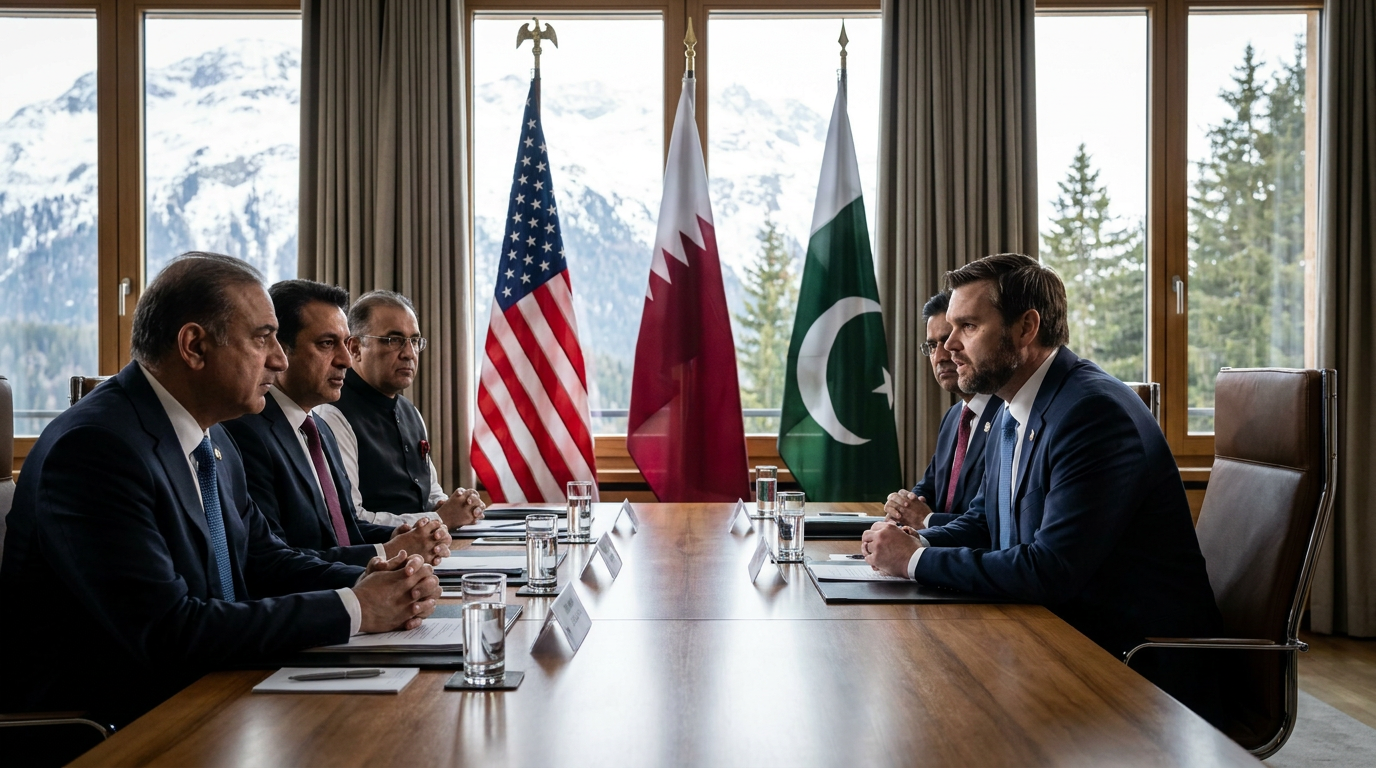
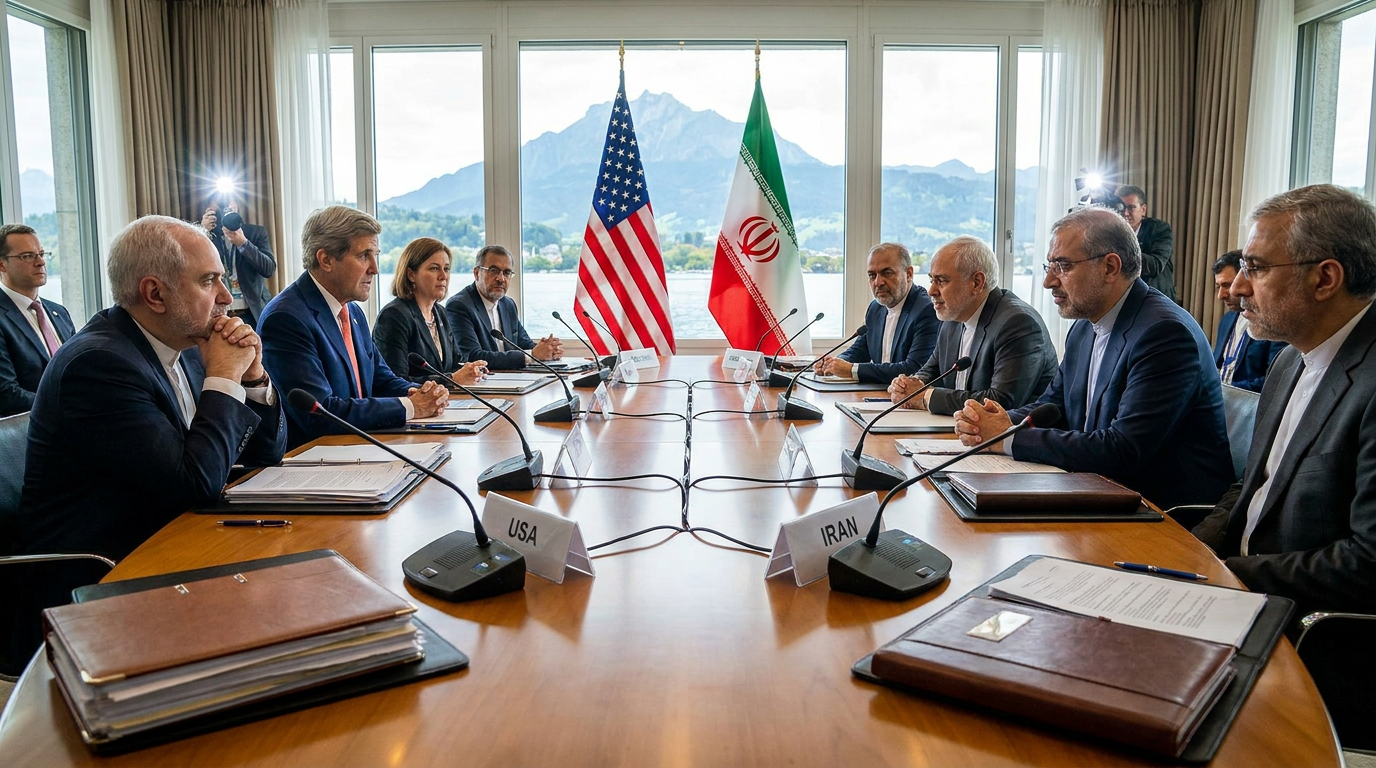
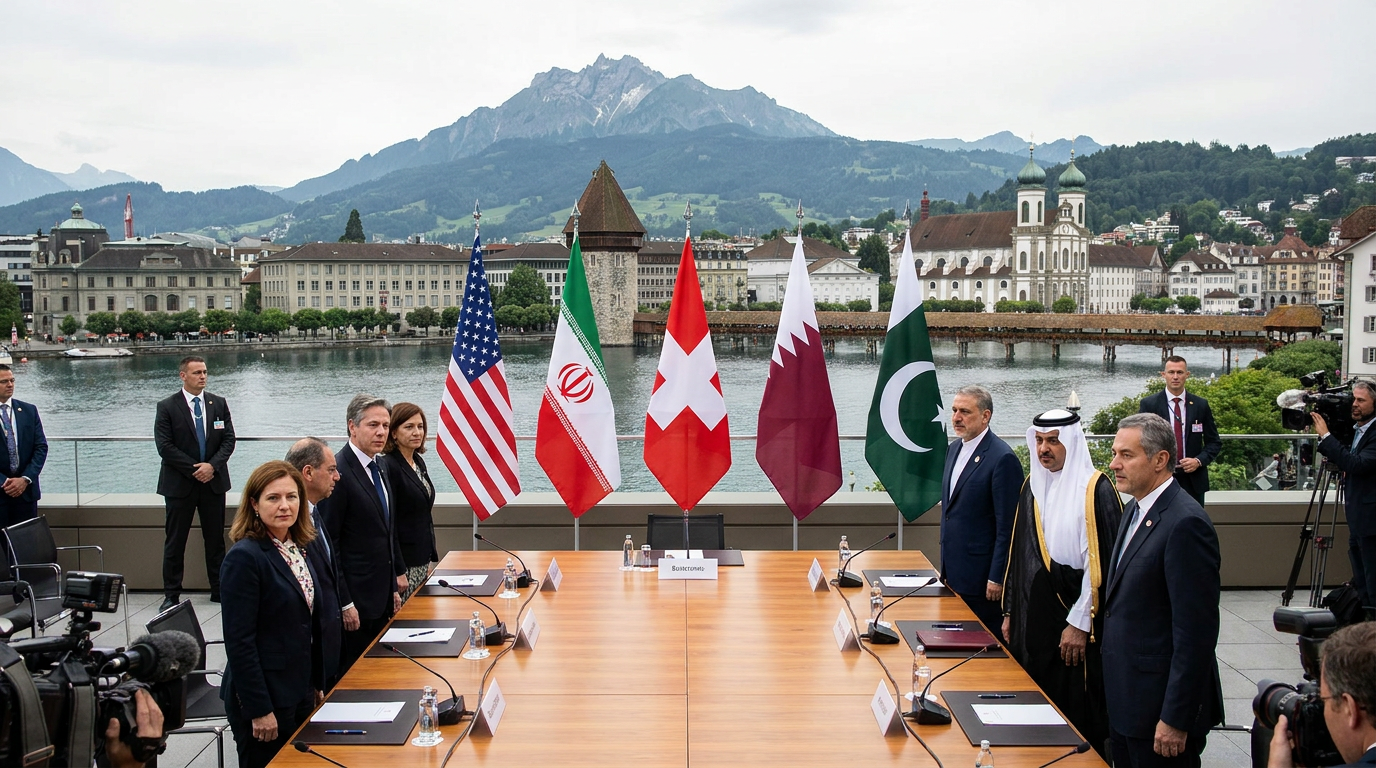
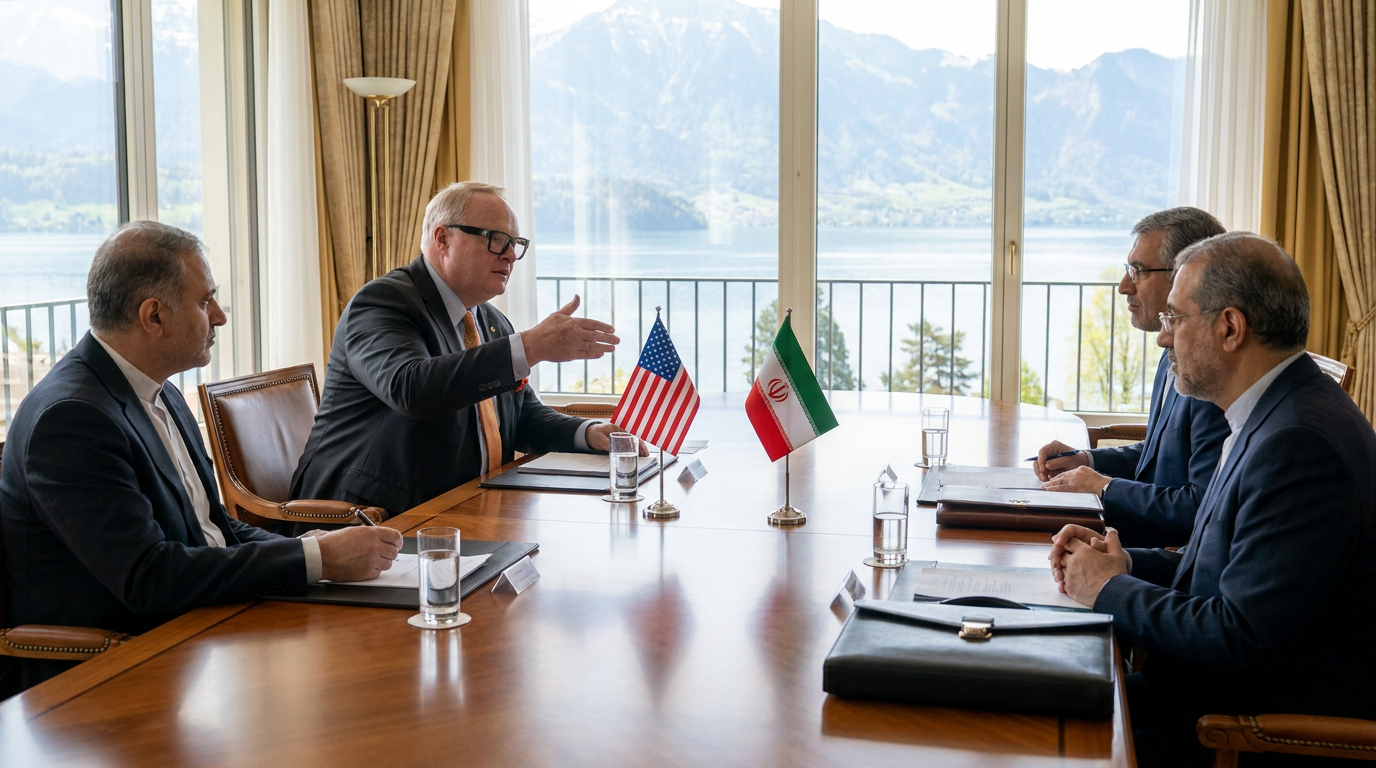
US and Iranian negotiators convened at the Bürgenstock resort in Switzerland on Sunday to hammer out the technical details of a permanent nuclear agreement and regional ceasefire. The high-stakes summit, led by US Vice President JD Vance and Iranian Parliament Speaker Mohammad Bagher Ghalibaf, marks the first direct, high-level engagement between the two nations since a preliminary memorandum of understanding was signed last week.[1][5]
The talks aim to capitalize on a 60-day window to resolve deeply entrenched disputes over Iran's nuclear program, unfreeze Iranian assets, and secure the permanent reopening of the Strait of Hormuz. Vance struck an optimistic tone upon arrival, telling mediators that the US is ready to "turn over a new leaf" and fundamentally transform its relationship with Tehran if Iranian leadership abandons its nuclear ambitions and regional proxy warfare.[1][3][6]
However, the diplomatic effort was nearly derailed by a barrage of aggressive rhetoric from US President Donald Trump. Posting on Truth Social and speaking to Fox News, Trump threatened to bomb Iran, take over the Strait of Hormuz, and even "kidnap" the Iranian negotiating team if Tehran did not immediately rein in Hezbollah forces in Lebanon. "If they don't, we'll hit Iran very hard again, just like we did last week, only harder," Trump warned.[2][3]

The threats prompted the Iranian delegation to temporarily suspend the direct talks in protest after roughly 80 minutes of discussions. Iranian officials filed a formal complaint with Qatari and Pakistani mediators, describing the US president's comments as unacceptable "bullying" that threatened their personal safety. Iran's chief negotiator, Ghalibaf, publicly dismissed the threats as a sign of US "desperation," but the delegation refused to appear on camera alongside the American team for the remainder of the afternoon.[1][2]
The threats prompted the Iranian delegation to temporarily suspend the direct talks in protest after roughly 80 minutes of discussions.
Despite the diplomatic rupture, the two sides continued to negotiate through a quadrilateral format facilitated by Qatari Prime Minister Sheikh Mohammed bin Abdulrahman Al-Thani and Pakistani Prime Minister Shehbaz Sharif. By Sunday evening, diplomats reported that the delegations had reached a draft agreement on how the US will issue waivers lifting sanctions on Iranian oil exports—a critical precondition for Tehran to open its civil nuclear file to international inspectors.[1][2][5]
A major sticking point remains the ongoing conflict in southern Lebanon. Iran has demanded that the US enforce the terms of the ceasefire memorandum, which calls for a halt to military operations on all fronts. Over the weekend, Israel launched a wave of airstrikes against Hezbollah targets in the Lebanese city of Nabatieh, prompting Iran's military to briefly announce a closure of the Strait of Hormuz in retaliation.[3][4][6]

Israel, which is not a party to the Swiss negotiations, has watched the proceedings with deep skepticism. Israeli Prime Minister Benjamin Netanyahu argued on Sunday that recent Israeli military operations have severely damaged Iran's nuclear infrastructure and created an opening to topple the Islamic Republic. Israeli officials have made it clear they do not consider themselves bound by any US-Iran agreement that leaves Hezbollah's subterranean military outposts or Iran's ballistic missile programs intact.[4][7]
As the talks stretch into Sunday night, US officials are working to keep the fragile diplomatic process alive. Vice President Vance downplayed the friction, noting that peace negotiations are "always a little bit messy," while Qatari mediators emphasized that the summit is merely the beginning of a long and complex technical negotiation.[1][2][5]
How we got here
Last Week
The US and Iran signed a preliminary memorandum of understanding establishing a 60-day ceasefire.
Saturday
Israel launched airstrikes in Lebanon, prompting Iran to briefly announce a closure of the Strait of Hormuz.
Sunday Morning
US and Iranian delegations began direct talks at the Bürgenstock resort in Switzerland.
Sunday Afternoon
President Trump posted threats against Iran, causing the Iranian delegation to temporarily suspend direct talks.
Sunday Evening
Talks resumed in a quadrilateral format, resulting in a draft agreement on oil sanctions waivers.
Viewpoints in depth
US Administration's View
Balancing diplomatic outreach with maximum pressure to secure a favorable nuclear deal.
The US approach relies on a stark 'good cop, bad cop' dynamic. Vice President JD Vance is leading the diplomatic effort on the ground, offering to 'turn over a new leaf' and fundamentally transform US-Iranian relations if Tehran abandons its nuclear ambitions. Simultaneously, President Trump is utilizing aggressive public threats—including warnings of military strikes and blockades—to maintain maximum pressure and ensure Iran does not use the 60-day negotiation window to stall or empower its regional proxies.
Iranian Negotiators' View
Demanding tangible economic relief and an end to regional hostilities before making nuclear concessions.
For Tehran, the primary goal of the Swiss summit is securing immediate sanctions relief, particularly waivers that would allow the resumption of oil exports and the unfreezing of overseas assets. Iranian officials view the US threats as unacceptable 'bullying' that violates the spirit of the recently signed ceasefire memorandum. Furthermore, Iran insists that any permanent agreement must include a US guarantee to halt Israeli military operations against Hezbollah in Lebanon, which Tehran views as a breach of the ceasefire.
Israeli Government's View
Deeply skeptical of the diplomatic process, favoring military action to neutralize Iranian threats.
Israel is not participating in the Swiss talks and views the US-Iran memorandum with profound concern. Israeli leadership, including Prime Minister Benjamin Netanyahu, argues that recent military operations have successfully degraded Iran's nuclear infrastructure and weakened its proxy networks. Israel maintains that it is not bound by any agreement reached in Switzerland and has vowed to continue its military campaigns in Lebanon and elsewhere to ensure its national security, regardless of the diplomatic outcome.
What we don't know
- Whether the draft agreement on oil sanctions waivers will be formally implemented by the US.
- How Israel's ongoing military operations in Lebanon will impact the 60-day negotiation window.
- If the Iranian delegation will agree to resume direct, face-to-face talks with the US team.
Key terms
- Strait of Hormuz
- A narrow, strategically vital waterway between the Persian Gulf and the Gulf of Oman through which roughly 20% of the world's traded oil passes.
- Memorandum of Understanding (MoU)
- A preliminary diplomatic agreement outlining the terms of a 60-day ceasefire and a framework for negotiating a permanent nuclear deal.
- Sanctions Waivers
- Exemptions granted by the US government that allow certain countries or entities to purchase Iranian oil without facing financial penalties.
Frequently asked
Why are the US and Iran meeting in Switzerland?
The two nations are negotiating the technical details of a permanent nuclear agreement and a regional ceasefire, following a preliminary 60-day memorandum of understanding signed last week.
Why did the Iranian delegation suspend the talks?
Iranian negotiators temporarily walked out in protest after US President Donald Trump posted threats on social media to bomb Iran and "kidnap" the negotiating team if Tehran did not stop its proxies in Lebanon.
Is Israel involved in the negotiations?
No. Israel is not a party to the talks and has expressed deep skepticism about the agreement, maintaining that it will continue military operations against Iranian proxies like Hezbollah.
Sources
Source coverage
7 outlets
4 viewpoints surfaced







[1]AxiosUS Administration
Inside U.S.-Iran talks in Switzerland
Read on Axios →[2]The GuardianIranian Negotiators
US president has threatened to bomb Iran and kidnap negotiating team
Read on The Guardian →[3]Washington PostUS Administration
Trump threatens Iran as Vance strikes optimistic tone in Switzerland
Read on Washington Post →[4]Times of IsraelIsraeli Government
As US, Iran open talks, Israel watches from sidelines
Read on Times of Israel →[5]Al JazeeraInternational Mediators
High level talks are now underway between the US and Iran in Switzerland
Read on Al Jazeera →[6]Fox NewsUS Administration
Iran latest: Vance arrives in Switzerland for high-stakes US talks
Read on Fox News →[7]Iran InternationalIsraeli Government
Netanyahu says Israeli strikes created opening to topple Iran's rulers
Read on Iran International →
Every angle. Every day.
Get news politics stories with full source coverage and perspective breakdowns delivered to your inbox.