
US and Iran Open High-Stakes Peace Talks in Switzerland as Trump Issues Fresh Threats
Vice President JD Vance and Iranian officials have begun direct negotiations to finalize a historic peace agreement, even as renewed tensions over the Strait of Hormuz and Lebanon threaten to derail the fragile ceasefire.
By Factlen Editorial Team
- US Negotiators
- Aiming to finalize a nuclear and regional security pact within the 60-day window while maintaining maximum pressure.
- Iranian Delegation
- Prioritizing immediate sanctions relief, unhindered oil exports, and a halt to Israeli strikes in Lebanon.
- US Domestic Critics
- Warning that upfront economic concessions empower Iran without dismantling its nuclear capabilities.
- Israeli Leadership
- Refusing to yield on military operations against Hezbollah and Iran's nuclear program regardless of US diplomacy.
What's not represented
- · European Union Diplomats
- · Global Shipping Companies
- · Lebanese Civilians
Why this matters
The outcome of these 60-day talks will determine whether the recent US-Iran war permanently ends, dictating global energy prices, the security of the Middle East, and the flow of international shipping through the Strait of Hormuz.
Key points
- US and Iranian delegations have opened direct peace talks in Switzerland to finalize a permanent ceasefire.
- The negotiations follow a brief US-Israel military conflict with Iran that spiked global oil prices.
- Iran is demanding immediate sanctions relief and an end to Israeli strikes in Lebanon.
- President Trump threatened military retaliation if Iran closes the Strait of Hormuz or fails to rein in Hezbollah.
- Bipartisan critics in the US argue the provisional deal gives up too much economic leverage upfront.
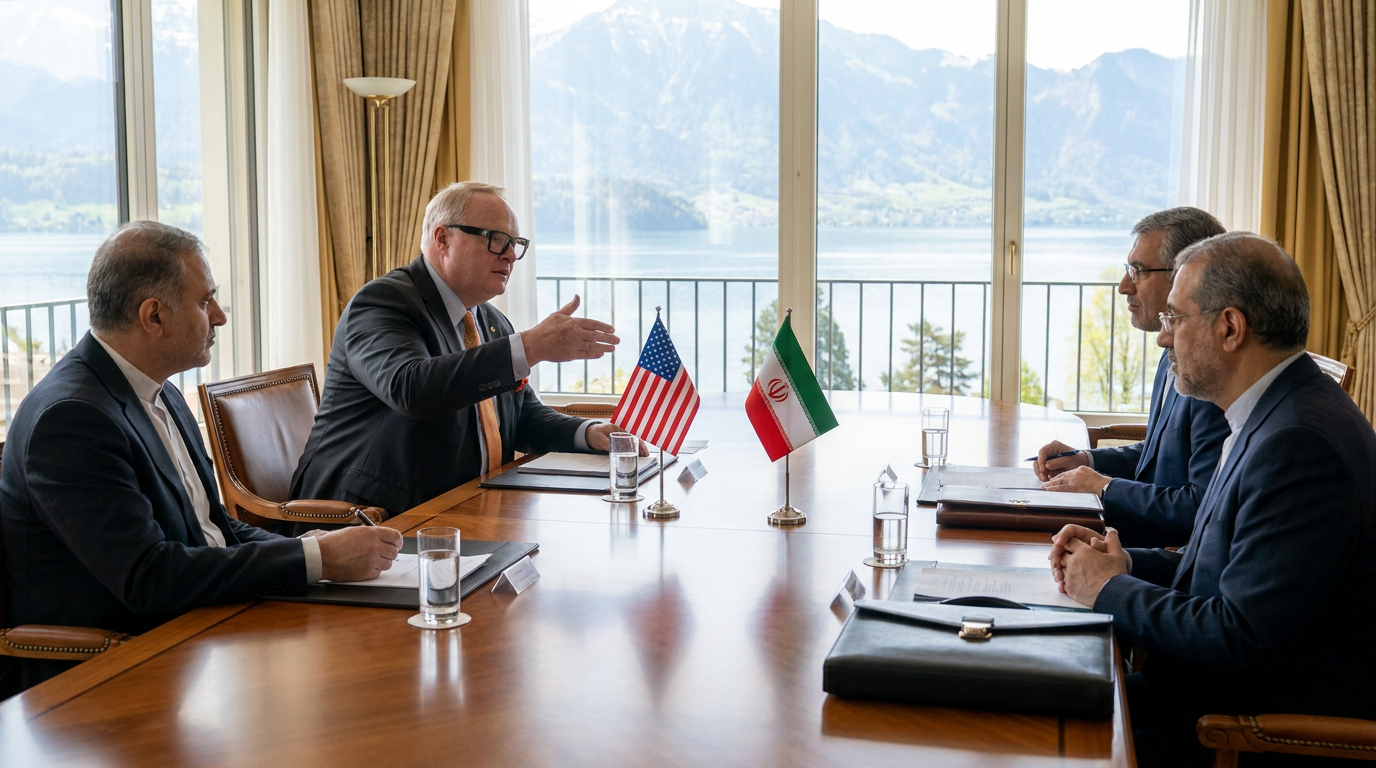
High-stakes direct negotiations between the United States and Iran have officially opened at the Bürgenstock resort in Switzerland, marking the start of a critical 60-day window to finalize a permanent peace agreement. Vice President JD Vance is leading the American delegation in face-to-face talks with Iranian officials, aiming to build upon the "Islamabad Memorandum" signed last week by President Donald Trump and Iranian President Masoud Pezeshkian.[1][5]
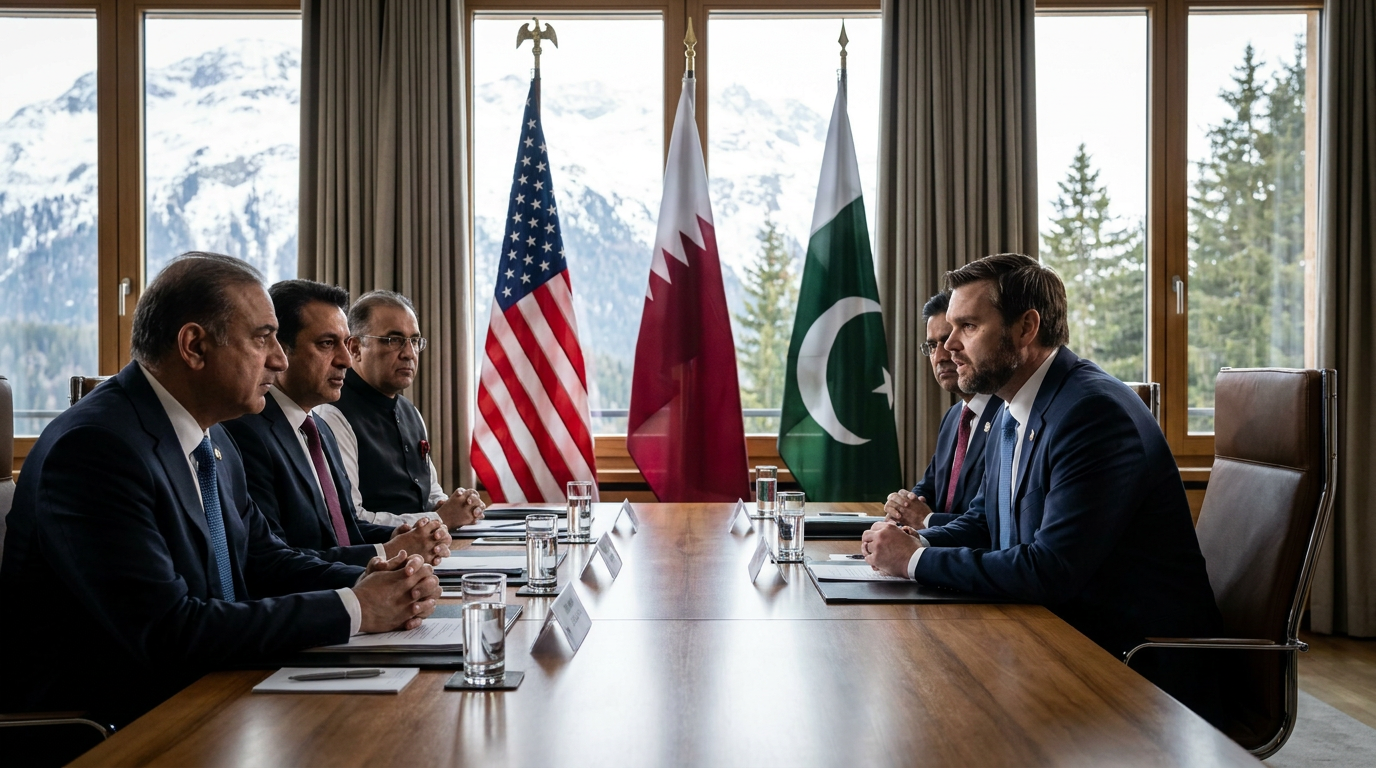
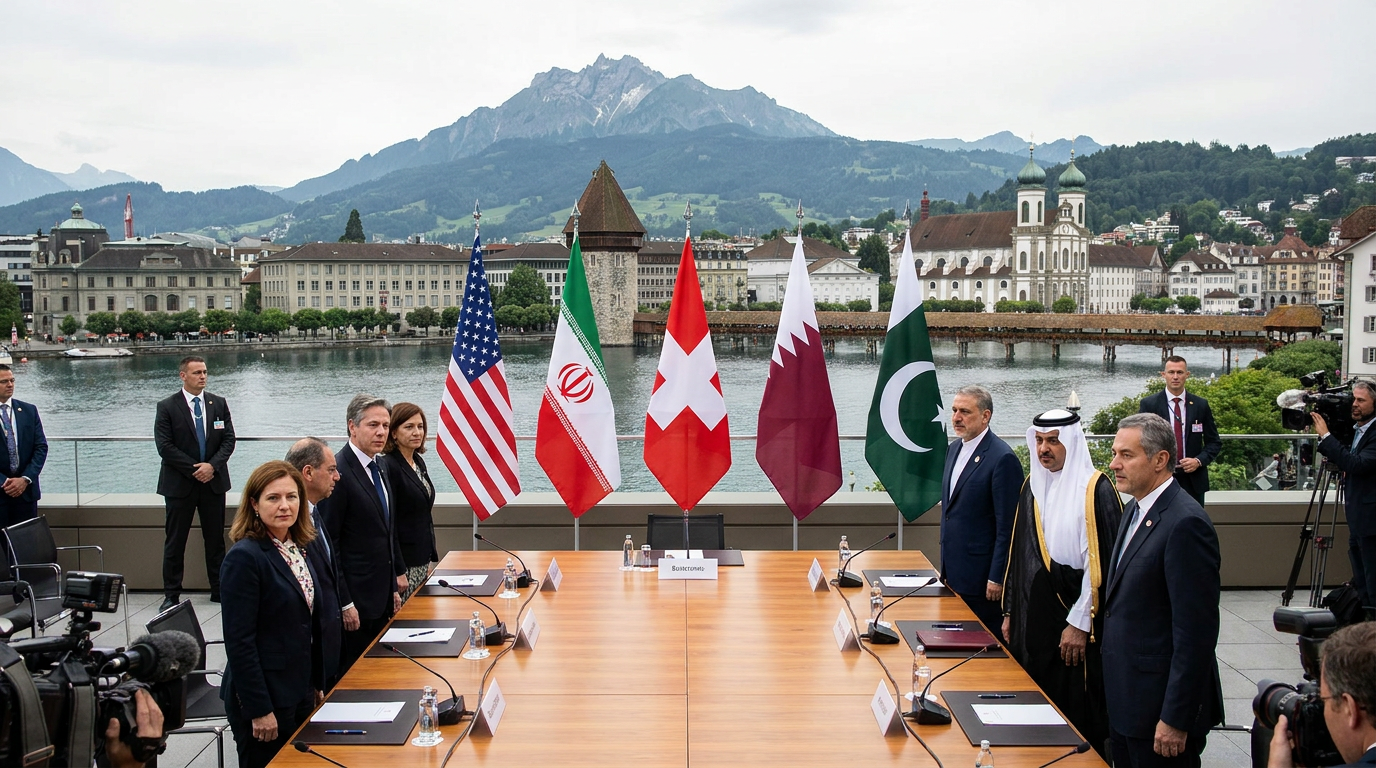
The talks are designed to formally end the recent United States and Israeli military conflict with Iran, a brief but intense war that rattled international markets and sent global oil prices soaring above $100 per barrel. Mediated heavily by Pakistan and Qatar, the Lake Lucerne Summit represents the most significant diplomatic engagement between Washington and Tehran in decades, bringing historic adversaries to the same table to negotiate a comprehensive security architecture.[3][6]
Iran has dispatched an unprecedented "whole-regime" delegation to Switzerland, signaling the sweeping economic stakes of the negotiations. Led by Parliament Speaker Mohammad Bagher Ghalibaf and Foreign Minister Abbas Araghchi, the Iranian team notably includes the governor of the Central Bank and the deputy oil minister. Experts note this composition underscores Tehran's primary objective: securing immediate sanctions relief, unfreezing billions in foreign assets, and restoring unimpeded oil exports to the global market.[2][6]

On the American side, the diplomatic messaging has been sharply bifurcated. In Switzerland, Vice President Vance struck an optimistic tone, telling reporters that the two nations have an opportunity to "turn over a new leaf" and that negotiators had already made "great progress" in the opening hours. Vance is joined by special envoys Steve Witkoff and Jared Kushner as they attempt to lock Iran into binding, verifiable limits on its nuclear program in exchange for the requested economic relief.[4][5]
However, President Trump has simultaneously issued severe threats from the United States, casting a shadow over the summit. Over the weekend, Trump took to social media and Fox News to warn that the US would "hit Iran very hard again... only harder" if Tehran did not rein in its proxy forces in Lebanon or if it attempted to restrict commercial shipping. "You close [the Strait of Hormuz] and you won't have a country," Trump reportedly told Iranian officials, maintaining a posture of maximum pressure even as his deputies negotiate.[1][5]
However, President Trump has simultaneously issued severe threats from the United States, casting a shadow over the summit.
Those threats reflect the fragile reality on the ground. Just days into the ceasefire, Iran's Islamic Revolutionary Guard Corps announced it was closing the strategic Strait of Hormuz—a waterway through which a fifth of the world's traded oil passes—in retaliation for ongoing Israeli military strikes against Hezbollah in Lebanon. While US energy officials noted that dozens of ships have still managed to transit the strait cautiously, the threat of a blockade remains a central flashpoint in the talks.[1][3]

The situation in Lebanon threatens to derail the broader detente. Iranian officials have explicitly stated that a comprehensive cessation of hostilities across all fronts, including Lebanon, is a prerequisite for any final nuclear agreement. Yet Israeli Prime Minister Benjamin Netanyahu signaled on Sunday that Israel's security policies will not be constrained by the Swiss negotiations, vowing to maintain military pressure on Hezbollah and reiterating that Israel will never allow Iran to acquire nuclear weapons.[3][7]
Back in Washington, the provisional agreement has ignited fierce bipartisan backlash. Senior Democrats, including former UN Ambassador Susan Rice, have lambasted the initial memorandum as a "horrific surrender," arguing that the Trump administration granted massive economic concessions upfront without securing a fully comprehensive nuclear deal. Critics argue that allowing Iran to sell oil freely before the final ink is dry removes Washington's primary leverage.[4]

Conservative hawks share those concerns. Republican Senator John Cornyn warned that unfreezing Iranian funds before dismantling their nuclear capability will simply allow Tehran to finance its ballistic missile programs and proxy networks. This intense domestic political pressure severely limits the Trump-Vance administration's maneuvering room as they attempt to finalize the treaty without appearing to capitulate to Iranian demands.[4]
As the 60-day clock ticks down, the mediators from Pakistan and Qatar face the monumental task of bridging the gap between Tehran's demand for immediate economic normalization and Washington's requirement for verifiable nuclear containment. With regional hostilities still simmering and domestic critics circling, the Bürgenstock talks represent a high-wire diplomatic act that will dictate the security architecture of the Middle East for years to come.[2][5][6]
How we got here
Feb 2026
The US and Israel engage in a brief but intense military conflict with Iran.
Jun 17, 2026
President Trump and Iranian President Pezeshkian sign the 'Islamabad Memorandum' to end hostilities.
Jun 20, 2026
Iran's IRGC announces the closure of the Strait of Hormuz in response to Israeli strikes in Lebanon.
Jun 21, 2026
Direct US-Iran negotiations begin in Switzerland to finalize a permanent deal within 60 days.
Viewpoints in depth
The US Administration
Seeking a historic diplomatic breakthrough while maintaining the threat of overwhelming military force.
The Trump-Vance administration is employing a 'good cop, bad cop' strategy. Vice President Vance is leading the on-the-ground diplomacy in Switzerland, emphasizing the opportunity to 'turn over a new leaf' and finalize a 60-day framework. Simultaneously, President Trump is using public platforms to threaten devastating military strikes if Iran disrupts global shipping or fails to control Hezbollah, attempting to maximize American leverage at the negotiating table.
The Iranian Government
Demanding immediate economic relief and an end to regional Israeli military operations.
Tehran views the 'Islamabad Memorandum' primarily as an economic lifeline. By sending a delegation heavy with central bank and oil officials, Iran is signaling that its compliance with nuclear limits is entirely contingent on the US unfreezing billions in assets and allowing unimpeded oil exports. Furthermore, Iranian negotiators insist that the ceasefire must apply to all regional fronts, viewing ongoing Israeli strikes in Lebanon as a violation of the spirit of the agreement.
US Bipartisan Critics
Arguing that the provisional deal surrenders vital leverage without securing permanent nuclear guarantees.
Hawks in both the Republican and Democratic parties are deeply skeptical of the framework. Critics like former Democratic official Susan Rice and Republican Senator John Cornyn argue that allowing Iran to sell oil and access frozen funds upfront removes the economic pressure needed to force a verifiable dismantling of its nuclear program. They fear the influx of cash will simply be diverted to fund proxy militias and ballistic missile development.
The Israeli Government
Maintaining absolute military freedom of action regardless of the diplomatic talks in Switzerland.
Israel is not a party to the Bürgenstock negotiations and has explicitly stated it will not be bound by them. Prime Minister Benjamin Netanyahu has vowed to maintain military pressure on Hezbollah in Lebanon to secure Israel's northern border, and reiterated that Israel will take whatever unilateral action is necessary to prevent Iran from acquiring a nuclear weapon, viewing the diplomatic track as insufficient for Israeli security.
What we don't know
- Whether Iran will fully enforce its threatened blockade of the Strait of Hormuz during the 60-day window.
- If Israel will agree to scale back operations in Lebanon to help secure the broader US-Iran deal.
- How the US Congress might attempt to block the unfreezing of Iranian assets if a final deal is reached.
Key terms
- Islamabad Memorandum
- The provisional ceasefire agreement signed in June 2026 by the US and Iran, mediated by Pakistan, to end military hostilities.
- Strait of Hormuz
- A narrow, strategically critical waterway between the Persian Gulf and the Gulf of Oman through which roughly 20% of the world's traded oil passes.
- Sanctions Relief
- The lifting of international economic penalties, allowing a country to resume normal global trade and access frozen financial assets.
Frequently asked
Why are the US and Iran meeting in Switzerland?
They are holding direct talks to finalize the details of a permanent peace agreement and nuclear pact following a recent military conflict.
Who is mediating the negotiations?
The talks are being heavily mediated by Pakistan and Qatar, with both nations' prime ministers present in Switzerland to facilitate the dialogue.
How long do they have to reach a deal?
The initial memorandum signed last week established a 60-day negotiating window to finalize the technical details of the agreement.
Why is the Strait of Hormuz involved?
Iran threatened to close the strait in response to Israeli strikes in Lebanon, prompting US threats of military retaliation to keep the vital oil shipping lane open.
Sources
Source coverage
7 outlets
4 viewpoints surfaced







[1]The Washington PostUS Negotiators
Trump threatens Iran over Hormuz as JD Vance holds peace talks
Read on The Washington Post →[2]Fox NewsIsraeli Leadership
Iran's unprecedented 'whole-regime' delegation at US deal talks signals one goal: expert
Read on Fox News →[3]Al JazeeraIranian Delegation
Lebanon to top the agenda as US and Iran to hold talks in Switzerland's Burgenstock
Read on Al Jazeera →[4]The GuardianUS Domestic Critics
Trump faces fresh bipartisan criticism on Iran deal as Vance hails peace talks
Read on The Guardian →[5]PBS NewsUS Negotiators
As Vance meets top Iranian officials in Switzerland, Trump threatens Tehran from afar
Read on PBS News →[6]IRNAIranian Delegation
Iranian delegation in Switzerland for negotiations with US
Read on IRNA →[7]Iran InternationalIsraeli Leadership
Netanyahu says Israel will not yield on Iran nuclear program, Hezbollah
Read on Iran International →
Every angle. Every day.
Get news politics stories with full source coverage and perspective breakdowns delivered to your inbox.