
Passkeys Hit 5 Billion Global Users as the Password Era Ends
The global transition to passwordless authentication has reached a critical milestone, with 5 billion passkeys now actively neutralizing phishing attacks worldwide.
By Factlen Editorial Team
- Consumer Security Advocates
- Argue that passkeys eliminate the cognitive burden of password management and protect vulnerable users from sophisticated phishing.
- Enterprise IT Leaders
- Focus on the operational reality: while passkeys are superior, untangling legacy systems and managing account recovery creates significant short-term friction.
- Cryptographers
- Emphasize the mathematical shift from shared secrets to public-key infrastructure, viewing passkeys as a fundamental architectural fix.
What's not represented
- · Small Business Owners
- · Elderly Internet Users
Why this matters
With AI-driven phishing attacks surging, traditional passwords can no longer protect your digital life. The global shift to passkeys mathematically eliminates credential theft, offering a rare cybersecurity upgrade that is both significantly safer and easier to use.
Key points
- An estimated 5 billion passkeys are now in active use globally, marking a critical tipping point in the transition away from passwords.
- Passkeys utilize public-key cryptography, meaning no shared secret is ever transmitted across the internet for hackers to steal.
- Consumer adoption is strong, with 75% of users having enabled at least one passkey on their personal accounts.
- Enterprise deployment lags significantly, with only 13% of organizations having rolled out passkeys at scale due to legacy technical debt.
- The rise of autonomous AI cyberattacks makes the adoption of phishing-resistant authentication an existential necessity for businesses.
For decades, the password has been the internet's original sin—a fragile shared secret responsible for the vast majority of global cybercrime. But in 2026, the cybersecurity industry crossed a threshold that signals the definitive end of the password era. According to the FIDO Alliance, an estimated 5 billion passkeys are now in active use worldwide. This milestone represents a fundamental architectural upgrade to global digital security, shifting the burden of protection away from human memory and onto cryptographic hardware.[1][5]
The urgency of this transition cannot be overstated. The proliferation of Generative AI has weaponized social engineering, leading to a 620% surge in highly personalized phishing attacks. Traditional defenses, including SMS-based two-factor authentication, are routinely bypassed by automated, AI-driven campaigns. In this hostile environment, relying on users to spot a perfectly forged login page is no longer a viable security strategy.[3][4][6]
The primary evidence for the effectiveness of passkeys lies in the underlying architecture of the FIDO2 standard, which mathematically neutralizes phishing and credential stuffing. Unlike passwords, which require a user to transmit a secret across the internet to a server, passkeys rely entirely on public-key cryptography.[1][6]
When a user registers a passkey, their device generates a unique cryptographic key pair. The public key is shared with the website, while the private key remains permanently locked inside the device's secure hardware enclave. Because the private key is never transmitted, there is nothing for a hacker to intercept in transit, and no database of passwords for them to steal from a compromised server.[1][7]

Furthermore, passkeys are cryptographically bound to the specific domain where they were created. If a user is tricked into clicking a link to a fraudulent website—even one that looks identical to their bank—the device's operating system will recognize the domain mismatch and refuse to authenticate. This mechanism effectively removes human error from the authentication equation.[1][7]
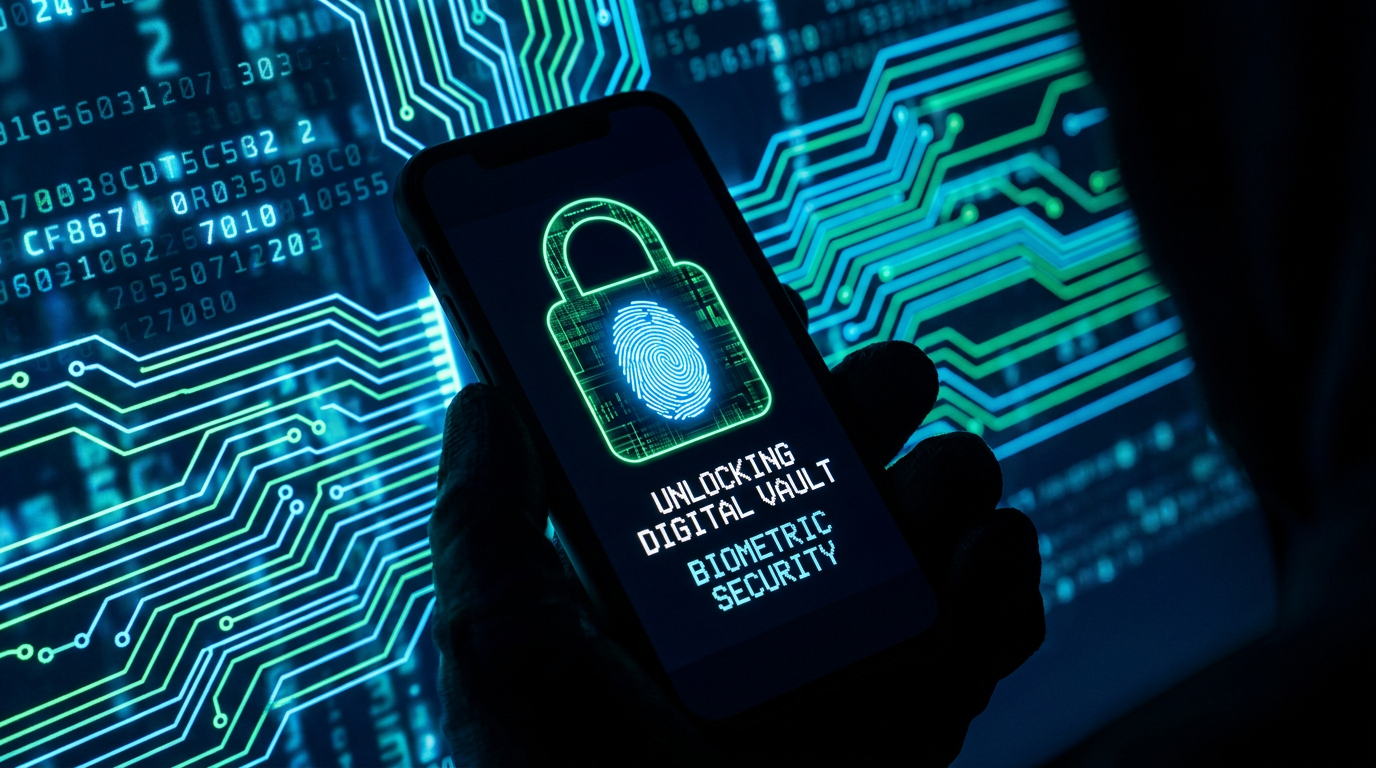
A common point of friction in public understanding is biometric privacy. Because passkeys are typically invoked via FaceID, Windows Hello, or a fingerprint scanner, many users assume their biometric data is being transmitted to the website. In reality, the biometric scan acts only as a local gatekeeper; it verifies the user's identity to the device, which then authorizes the use of the private key. The biometric data never leaves the hardware.[1][5][7]
The rollout of passkeys across major consumer ecosystems has been overwhelmingly successful, driven by coordinated support from Apple, Google, and Microsoft. Recent data indicates that 90% of internet users are now aware of passkeys, and 75% have enabled at least one on their personal accounts.[1]

The rollout of passkeys across major consumer ecosystems has been overwhelmingly successful, driven by coordinated support from Apple, Google, and Microsoft.
This rapid consumer uptake is largely due to the seamless user experience. Nearly half of all users (49%) report using passkeys regularly when the option is available, treating the login process exactly like unlocking their smartphone. By eliminating the cognitive load of remembering complex passwords, platforms are seeing higher login success rates and reduced cart abandonment.[1][7]
While consumers are rapidly abandoning passwords, the corporate world is experiencing a significant execution gap. A June 2026 report surveying enterprise IT leaders revealed that while 93% of organizations are somewhere on the passkey adoption journey, only 13% have managed to deploy them at scale across their workforce.[1][5]
The evidence suggests this lag is not due to a lack of desire—82% of organizations state that fully passwordless authentication is their ultimate goal. Instead, the friction stems from fragmented governance and legacy technical debt. In many enterprises, identity management is split across multiple disconnected systems, making a unified rollout technically complex.[1][2][5]

Furthermore, as long as passwords exist as a fallback mechanism within a corporate network, attackers will continue to target them. Security researchers note that phishing-resistant authentication only delivers its full protective value when deployment is comprehensive. Threat actors simply pivot to the weakest link, targeting legacy applications that have not yet been upgraded.[4][5]
Despite these hurdles, the financial incentive for enterprises to cross the finish line is immense. Among organizations that have successfully deployed passkeys, 77% report a significant reduction in help desk calls. Given that password resets traditionally consume a massive portion of IT support budgets, the return on investment for passwordless infrastructure is highly compelling.[6][7]
The cybersecurity landscape of 2026 is increasingly dominated by 'Agentic AI'—autonomous systems capable of orchestrating multi-stage attacks without human intervention. These AI agents can scrape data, generate deepfakes, and execute credential-stuffing attacks at unprecedented speeds.[3][4]
In this environment, human-verifiable credentials are a critical vulnerability. Security analysts argue that organizations failing to adopt cryptographic authentication will find themselves fundamentally outmatched by automated adversaries. The shift to passkeys is not merely an upgrade in convenience; it is a required baseline for surviving the modern threat landscape.[2][3]

While the evidence supporting passkeys is robust, transparent uncertainties remain regarding cross-ecosystem portability. Currently, moving passkeys between different operating systems—such as transitioning from an Apple iCloud Keychain to a Google Android device—can still present friction, though industry standards are actively evolving to address this walled-garden effect.[6][7]
Additionally, account recovery protocols are still being refined. If a user loses all their synced devices, regaining access to passkey-secured accounts requires robust fallback methods, such as hardware security keys or rigorous identity verification processes. Balancing high-security recovery with user convenience remains an active area of development for the FIDO Alliance.[1][6]
Ultimately, the 5 billion passkey milestone marks the beginning of the end for the password. While enterprise legacy systems will take years to fully untangle, the trajectory is irreversible. The internet is finally adopting an identity architecture built for the realities of the 21st century, promising a future where the most common form of cybercrime is rendered mathematically obsolete.[1][7]
How we got here
2012
The FIDO Alliance is founded to develop open standards for passwordless authentication.
2018
The FIDO2 standard is officially launched, laying the technical groundwork for passkeys.
2022
Apple, Google, and Microsoft announce expanded support for the FIDO standard, coining the consumer-friendly term 'passkey'.
2024
Passkey adoption begins to accelerate, with over half of consumers enabling them on at least one account.
May 2026
The FIDO Alliance announces the 5 billion passkey milestone, signaling mainstream global adoption.
Viewpoints in depth
Consumer Security Advocates
Focus on the usability and immediate protective benefits for everyday internet users.
Advocates argue that the cybersecurity industry has spent decades unfairly blaming users for poor password hygiene. By shifting to passkeys, the cognitive burden of memorizing complex strings of characters is entirely removed. This perspective emphasizes that passkeys democratize high-level security, protecting vulnerable populations—such as the elderly or less tech-savvy—from devastating phishing attacks without requiring them to understand the underlying cryptography.
Enterprise IT Leaders
Highlight the operational friction and governance challenges of migrating corporate networks.
For corporate IT departments, the transition is far more complex than flipping a switch. IT leaders point out that enterprise environments are riddled with legacy applications and fragmented identity management systems. Their primary concern is the 'execution gap'—the dangerous hybrid period where both passwords and passkeys coexist. During this phase, attackers simply target the legacy password infrastructure, meaning the organization absorbs the cost of the passkey rollout without reaping the full security benefits until the transition is 100% complete.
Cryptographers
View the transition as a fundamental architectural correction to the internet's original design flaw.
From a mathematical standpoint, cryptographers view passwords as a fundamentally broken concept—a 'shared secret' model that was never designed for a globally connected, hostile network. This camp celebrates passkeys not just for their convenience, but because they implement public-key infrastructure (PKI) at the consumer level. By ensuring that the private key never leaves the secure enclave of the user's device, passkeys neutralize entire categories of cybercrime, shifting the attacker's challenge from easily automated server breaches to nearly impossible localized hardware attacks.
What we don't know
- How quickly major tech ecosystems will resolve the remaining friction in transferring passkeys seamlessly between competing operating systems.
- Whether the enterprise execution gap will close fast enough to prevent major breaches as AI-driven phishing becomes more sophisticated.
- How account recovery protocols will standardize for users who lose access to all their synced devices simultaneously.
Key terms
- Passkey
- A digital credential that replaces passwords with cryptographic key pairs, allowing users to sign in using their device's biometric unlock.
- FIDO2
- The open authentication standard developed by the FIDO Alliance that forms the technical foundation for passkeys.
- Public-Key Cryptography
- A security system using two mathematically linked keys: a public key shared with the website, and a private key kept secretly on the user's device.
- Phishing-Resistant
- An authentication method that cannot be compromised even if a user is tricked into interacting with a malicious website or attacker.
- Secure Enclave
- A dedicated, isolated hardware subsystem on a device designed to safely store sensitive data like cryptographic private keys.
Frequently asked
What happens if I lose my phone?
Passkeys are typically synced to your cloud account (like Apple iCloud or Google Password Manager), allowing you to recover them on a new device. Alternatively, you can use a fallback method like a hardware security key.
Does the website get my fingerprint or face scan?
No. Your biometric data never leaves your device. It is only used locally to unlock the cryptographic private key stored in your device's secure hardware enclave.
Can a passkey be phished or stolen?
Passkeys are mathematically bound to the specific website they were created for. Even if a user is tricked into visiting a fake website, the passkey will refuse to authenticate, neutralizing the phishing attempt.
Why do I still need passwords for some sites?
The transition is ongoing. While 5 billion passkeys are in use, many legacy websites and internal corporate systems have not yet updated their infrastructure to support FIDO2 standards.
Sources
Source coverage
7 outlets
3 viewpoints surfaced






[1]FIDO AllianceConsumer Security Advocates
Five Billion Passkeys: FIDO Alliance Reports Mainstream Global Usage
Read on FIDO Alliance →[2]GartnerEnterprise IT Leaders
Top cybersecurity trends shaping CISO priorities in 2026
Read on Gartner →[3]EC-Council UniversityCryptographers
What to Expect from Cybersecurity in 2026
Read on EC-Council University →[4]Advantage TechEnterprise IT Leaders
Cybersecurity Trends 2026: What Businesses Need to Know
Read on Advantage Tech →[5]Business WireConsumer Security Advocates
FIDO Alliance Reports Accelerating Global Passkey Adoption
Read on Business Wire →[6]TeleTrusTCryptographers
FIDO's Next Frontier: Digital Credentials
Read on TeleTrusT →[7]Factlen Editorial TeamCryptographers
Synthesis by Factlen editorial team
Read on Factlen Editorial Team →
Every angle. Every day.
Get technology stories with full source coverage and perspective breakdowns delivered to your inbox.