
How Parametric Insurance is Rewriting the Rules of Climate Risk
As extreme weather intensifies and traditional insurers retreat, a data-driven model that pays out in days rather than months is becoming the new standard for financial resilience.
By Factlen Editorial Team
- Risk & Underwriting Professionals
- Focuses on the operational efficiency, predictability, and speed of data-driven triggers.
- Market Forecasters
- Tracks the rapid commercial growth and sector adoption of parametric products.
- Climate Policy Advocates
- Views parametric payouts as a critical macroeconomic lifeline for vulnerable populations and sovereign states.
- Editorial Synthesis
- Connects the technological advancements with the broader shift in climate resilience strategies.
What's not represented
- · Consumer protection agencies concerned about basis risk leaving homeowners stranded
- · Traditional claims adjusters facing industry disruption
Why this matters
Traditional insurance claims can take months or years to settle after a disaster, leaving businesses and communities financially stranded. Parametric insurance solves this by using objective data to trigger automatic payouts within days, providing the immediate cash needed to survive and rebuild.
Key points
- Parametric insurance pays out automatically based on predefined triggers rather than verified physical damage.
- By eliminating the lengthy claims adjustment process, funds are typically disbursed within days of a disaster.
- The global parametric market is projected to reach nearly $39 billion by 2030, driven heavily by climate volatility.
- Experts warn of 'basis risk,' where the predefined payout may not perfectly match the actual financial loss incurred.
- The coverage is increasingly used by SMEs as a supplement to traditional policies that are becoming more restrictive.
The aftermath of a natural disaster is often defined by two distinct waves of devastation. The first is the physical destruction wrought by the hurricane, wildfire, or flood. The second is the agonizing, months-long wait for the insurance check to arrive.
For decades, traditional property insurance has operated on an indemnity model: damage occurs, a claim is filed, an adjuster evaluates the wreckage, and eventually, a payout is calculated. It is a system built on proving a loss, a process that is inherently slow and frequently adversarial.[6]
But as climate change accelerates the frequency and intensity of extreme weather events, businesses and communities can no longer afford to wait. In response, a radically different financial tool is moving from the fringes of corporate finance to the mainstream: parametric insurance.[8]
Parametric insurance flips the traditional model on its head. Instead of reimbursing a policyholder for verified physical damage, it pays out automatically when a predefined, measurable event occurs. It operates on a simple "if-then" logic.[6]

If a Category 4 hurricane brings wind speeds exceeding 130 miles per hour to a specific zip code, the policy pays out. If an earthquake registers a 6.5 magnitude on the Richter scale, the funds are released. The payout is triggered by the event itself, not the resulting rubble.[6][7]
The primary advantage of this model is speed. Because there is no need for an adjuster to visit the site and haggle over the cost of a ruined roof or flooded inventory, parametric claims are typically settled in a matter of days. For a small business or a local government, that immediate liquidity can be the difference between a swift recovery and permanent bankruptcy.[5][6]
The mechanism relies entirely on objective, third-party data. Insurers and policyholders agree in advance on the data source that will serve as the ultimate arbiter—often a government agency like the National Oceanic and Atmospheric Administration (NOAA) or the U.S. Geological Survey (USGS).[5][6]
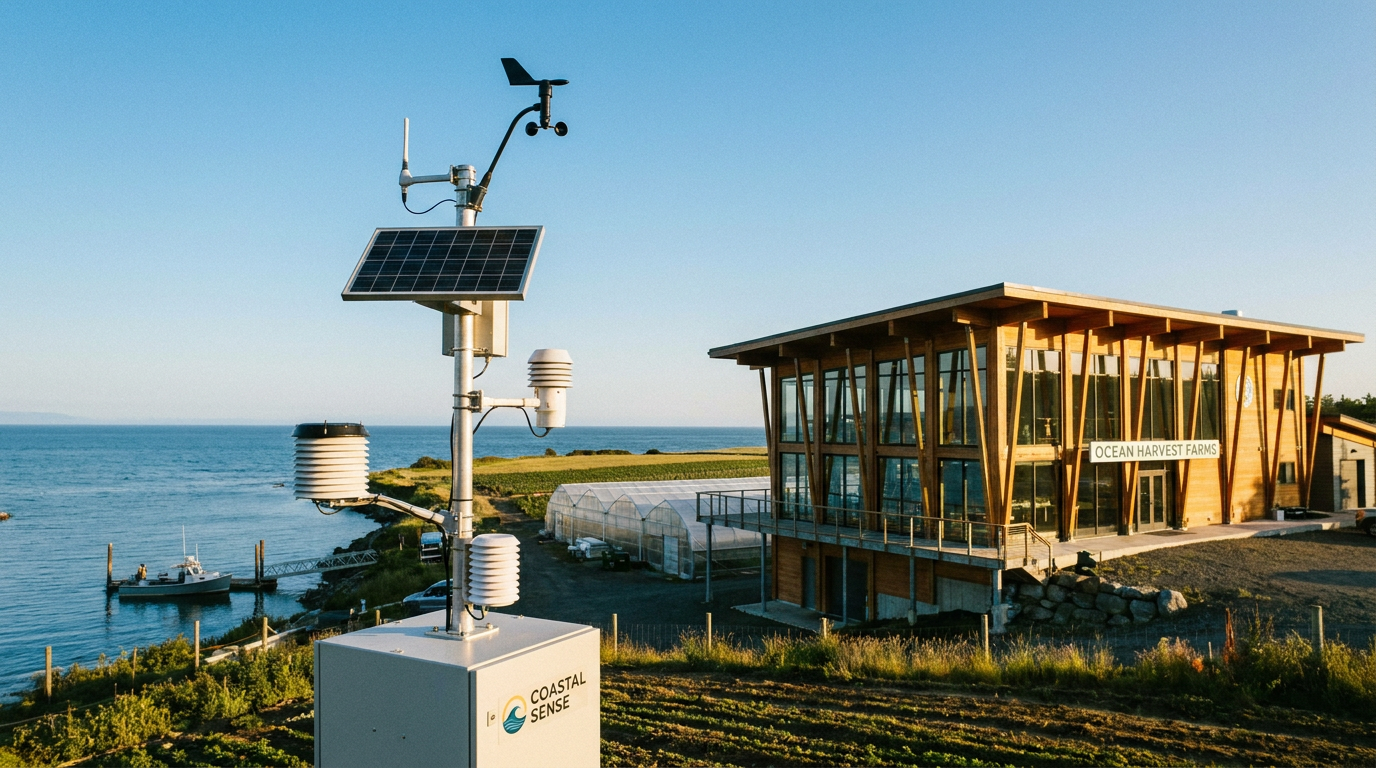
In recent years, the proliferation of advanced technology has dramatically expanded what can be measured. High-resolution satellite imagery, networks of localized IoT weather stations, and AI-driven climate models allow insurers to create highly specific triggers.[1]

In recent years, the proliferation of advanced technology has dramatically expanded what can be measured.
This precision has opened the door for industries that have historically struggled to find adequate coverage. In the agricultural sector, which accounts for roughly 27% of global parametric demand, farmers can purchase policies that trigger if rainfall drops below a certain threshold during crucial planting weeks, or if temperatures spike into a "heat blast" that destroys crops.[3]
The applications extend far beyond farms. Renewable energy companies use parametric policies to hedge against "wind droughts" that leave turbines idle. Tourism-dependent municipalities buy coverage that pays out if a hurricane simply approaches their coast, compensating for the inevitable wave of hotel cancellations even if the storm never makes landfall.[5]
In 2026, the shift toward parametric coverage is accelerating rapidly. As traditional insurers retreat from high-risk areas—raising premiums, shrinking coverage limits, and expanding exclusions—parametric policies are stepping in to fill the void.[2]
Industry analysts project the global parametric insurance market will surge to nearly $39 billion by 2030, growing at a compound annual rate of roughly 13%. Natural catastrophe coverage currently dominates the space, representing about 70% of the market.[3][4]

What was once a bespoke solution negotiated by massive multinational corporations is increasingly becoming the default for small and medium-sized enterprises (SMEs). For these businesses, fast access to cash to cover payroll, secure alternative suppliers, or repair critical infrastructure is paramount.[2]
However, the parametric model is not without its flaws. The most significant drawback is known as "basis risk"—the inherent gap between the payout triggered by the policy and the actual financial loss experienced by the policyholder.[5]
Because the payout is fixed in advance, a business might suffer $100,000 in damage but only receive a $50,000 payout. Conversely, they might receive a full payout even if their property miraculously escaped unscathed.[7]
More frustratingly, a catastrophic event might narrowly miss the trigger threshold. If a policy requires wind speeds of 130 mph, and the storm peaks at 129 mph, the policyholder receives nothing, regardless of how much their building was battered.[6]

For this reason, risk management experts universally advise that parametric insurance should not replace traditional indemnity coverage. Instead, it is best utilized as a supplemental tool designed to cover massive deductibles, business interruption costs, and immediate emergency expenses while the traditional claims process plays out.[6]
As the global economy adapts to an era of heightened climate volatility, the definition of resilience is changing. It is no longer just about building stronger walls; it is about securing faster capital. By transforming unpredictable risks into predictable, data-driven payouts, parametric insurance is giving communities the financial agility they need to weather the storm.[8]
How we got here
Early 2000s
Parametric insurance emerges as a niche tool for sovereign governments and massive multinational corporations to hedge against catastrophic risks.
2010s
The Caribbean Catastrophe Risk Insurance Facility (CCRIF) proves the model's viability by delivering rapid payouts to island nations following hurricanes.
2020s
Advances in satellite imagery, IoT sensors, and AI allow insurers to create highly localized, precise triggers for smaller businesses.
2024-2025
Traditional insurers begin retreating from high-risk climate zones, accelerating the demand for alternative risk transfer methods.
2026
Parametric insurance transitions from a corporate novelty to a mainstream default for small and medium-sized enterprises (SMEs) facing climate volatility.
Viewpoints in depth
Risk & Underwriting Professionals
Focuses on the operational efficiency and predictability of data-driven triggers.
For brokers and underwriters, parametric insurance solves the most expensive and adversarial part of the business: the claims adjustment process. By relying on objective third-party data from agencies like NOAA or the USGS, insurers eliminate the need to send human adjusters into disaster zones. This predictability allows them to model risk more accurately and offer coverage in regions where traditional indemnity policies are becoming too volatile to underwrite.
Climate Policy Advocates
Views parametric payouts as a critical lifeline for vulnerable populations and sovereign states.
Organizations focused on climate resilience emphasize the macroeconomic benefits of immediate liquidity. When a hurricane strikes a developing nation or a lower-income coastal community, the speed of recovery dictates long-term survival. Parametric catastrophe pools allow governments to access emergency funds within days to clear roads, restore power, and provide food, preventing a short-term natural disaster from spiraling into a long-term sovereign debt crisis.
Corporate Risk Managers
Utilizes the coverage to plug holes in traditional policies and ensure business continuity.
For business owners, the appeal of parametric insurance lies in its flexibility. Because payouts are not tied to physical property damage, the funds can be used to cover the cascading financial impacts of a disaster—such as paying idle workers, securing alternative supply chains, or offsetting lost revenue from canceled tourism. It is increasingly viewed as a necessary patch for the soaring deductibles and expanding exclusions found in modern commercial property policies.
What we don't know
- How regulators will standardize the third-party data sources used to trigger payouts across different jurisdictions.
- Whether the cost of parametric premiums will remain affordable for small businesses as extreme climate events become more frequent.
- How traditional insurers will adapt their legacy indemnity models to compete with the speed of parametric startups.
Key terms
- Parametric Insurance
- A type of coverage that pays a fixed amount upon the occurrence of a predefined triggering event, rather than indemnifying actual losses.
- Indemnity Insurance
- Traditional insurance that reimburses a policyholder for the exact value of verified physical damage or financial loss.
- Basis Risk
- The potential mismatch between the actual financial loss a policyholder experiences and the payout triggered by a parametric policy.
- Trigger Event
- The specific, measurable threshold—such as a certain rainfall level or earthquake magnitude—that activates a parametric payout.
- Business Interruption
- The loss of income a business suffers after a disaster, which parametric policies often help cover even if the physical property is undamaged.
Frequently asked
What is parametric insurance?
It is an index-based policy that pays a predetermined amount when a specific metric—like wind speed or earthquake magnitude—is met, rather than paying based on an assessment of actual physical damage.
How fast does parametric insurance pay out?
Because it relies on objective data rather than human claims adjusters, payouts are typically processed and delivered within 5 to 14 days of the triggering event.
Does parametric insurance replace traditional property insurance?
No. Experts recommend using it as a supplemental tool to cover immediate emergency expenses, business interruption, and large deductibles while the traditional claims process takes place.
What happens if I suffer damage but the trigger isn't met?
This is known as 'basis risk.' If the event does not reach the exact predefined threshold (e.g., wind speeds are 1 mph too slow), the policy will not pay out, regardless of the physical damage sustained.
Sources
Source coverage
8 outlets
4 viewpoints surfaced








[1]MapfreRisk & Underwriting Professionals
Parametric Insurance: Key Trends and Mapfre's Vision
Read on Mapfre →[2]Mitiga SolutionsRisk & Underwriting Professionals
2026 Climate Risk Trends: Insurance retreat accelerates and parametric coverage becomes the SME default
Read on Mitiga Solutions →[3]Industry ResearchMarket Forecasters
Parametric Insurance Market Latest Trends
Read on Industry Research →[4]Research and MarketsMarket Forecasters
Parametric Insurance Global Market Report 2026
Read on Research and Markets →[5]Climate Policy InitiativeClimate Policy Advocates
Parametric Insurance: Applications and Impact
Read on Climate Policy Initiative →[6]Private Risk Management AssociationRisk & Underwriting Professionals
Five Days: What Parametric Insurance Changes About Catastrophe Claims
Read on Private Risk Management Association →[7]MillimanRisk & Underwriting Professionals
Parametric insurance: A future for public entities?
Read on Milliman →[8]Factlen Editorial TeamEditorial Synthesis
Synthesis by Factlen editorial team
Read on Factlen Editorial Team →

Every angle. Every day.
Get finance stories with full source coverage and perspective breakdowns delivered to your inbox.