
Sodium-Ion Batteries Reach Mass Production: How the EV Industry is Decoupling from Lithium
After decades of research, sodium-ion batteries are officially hitting the commercial market in 2026, offering a cheaper, cold-weather resilient alternative to lithium for entry-level EVs and grid storage.
By Factlen Editorial Team
- Battery Manufacturers
- Focused on scaling production and lowering costs to capture the entry-level EV and grid storage markets.
- Automakers & Fleet Operators
- Prioritizing cold-weather reliability, fast charging, and supply chain resilience over pure energy density.
- Materials Scientists
- Focused on closing the energy density gap through novel anode designs and electrolyte chemistry.
What's not represented
- · Lithium Mining Industry
- · Environmental Advocacy Groups
Why this matters
By replacing scarce, expensive lithium with one of the Earth's most abundant elements, sodium-ion batteries promise to drastically lower the cost of entry-level electric vehicles. Furthermore, their unique ability to maintain full performance in sub-zero temperatures effectively eliminates winter range anxiety for drivers in colder climates.
Key points
- Major battery manufacturers CATL and BYD are scaling mass production of sodium-ion cells in 2026.
- Sodium is 1,000 times more abundant than lithium, bypassing volatile mining supply chains.
- The chemistry retains up to 90% of its usable capacity at -40°C, solving EV winter range loss.
- Due to lower energy density, sodium will power budget cars and grid storage, not luxury long-range EVs.
- Existing lithium-ion factories can produce sodium cells with 70% to 80% equipment compatibility.
For the past decade, the electric vehicle revolution has been entirely dependent on a single, volatile element: lithium. The "white gold" rush has sparked geopolitical tensions, supply chain bottlenecks, and environmental concerns over the mining of accompanying metals like cobalt and nickel. But in 2026, the automotive industry is crossing a critical inflection point. A fundamentally different chemistry is moving out of the laboratory and onto the assembly line, promising to decouple the EV transition from scarce minerals. Sodium-ion batteries have officially arrived.[1][2]
The shift is being driven by the world's largest battery manufacturers, who have quietly solved the engineering bottlenecks that kept sodium sidelined for decades. Contemporary Amperex Technology Co. Limited (CATL) and BYD are now aggressively scaling up mass production of sodium-ion cells. CATL's chief scientist recently confirmed that the company's "Naxtra" sodium-ion systems are entering large-scale deployment this year across passenger vehicles, commercial trucks, and grid storage.[1][2]
The appeal of sodium begins with basic geology. Sodium makes up approximately 2.74% of the Earth's crust, making it roughly 1,000 times more abundant than lithium. It can be sourced cheaply and easily from seawater and soda ash, completely bypassing the complex, geographically concentrated supply chains required for lithium, cobalt, and nickel. This abundance translates directly into lower raw material costs and a more resilient manufacturing ecosystem.[4][7]
At a foundational level, a sodium-ion battery operates on the exact same "rocking chair" principle as its lithium-ion counterpart. During charging and discharging, ions shuttle back and forth between a cathode and an anode through a liquid electrolyte. Because sodium and lithium sit in the same column of the periodic table, they share similar electrochemical behaviors. The primary difference is simply size: sodium ions are physically larger and heavier than lithium ions.[5][7]

That size difference has historically been sodium's fatal flaw. Because the ions are larger, they struggle to intercalate—or embed themselves—into the standard graphite anodes used in lithium batteries. For years, this resulted in sluggish performance, low energy density, and rapid degradation. But recent breakthroughs in materials science have cracked the code. Instead of graphite, engineers are now using "hard carbon" anodes, which feature a disordered, porous structure that easily accommodates the bulkier sodium ions.[6][8]
Recent research published in the journal Cell Reports Physical Science revealed that Chinese manufacturer Hina's sodium-ion cells have already achieved manufacturing quality and uniformity comparable to Tesla's industry-leading lithium-ion batteries. Furthermore, German researchers recently discovered that adding a microscopic layer of activated carbon around the hard carbon anode prevents the electrolyte from decomposing, dramatically boosting the battery's efficiency and cycle life.[4]
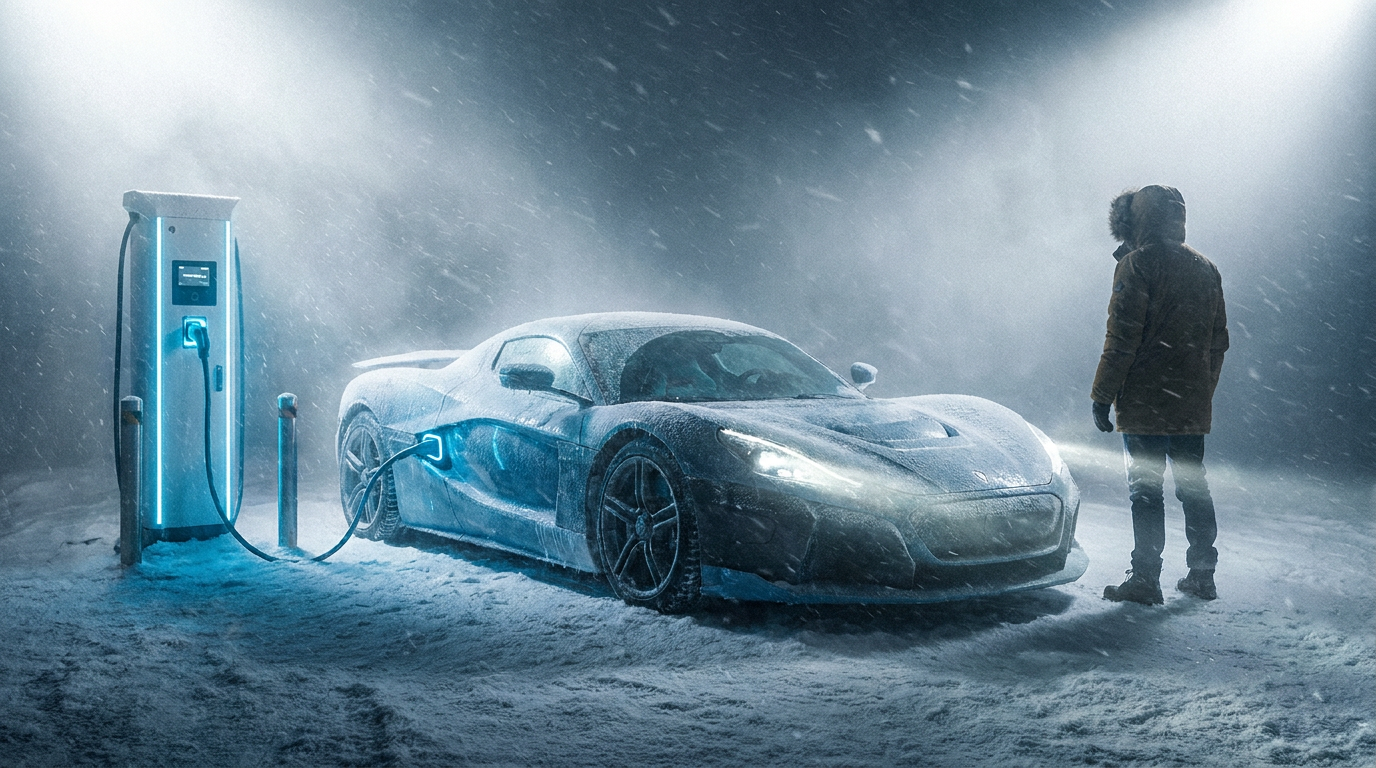
While the cost savings are significant, sodium's most immediate superpower is its resilience in extreme cold—a notorious weak point for traditional EVs. Lithium-ion batteries suffer severe range degradation and sluggish charging in freezing temperatures because their liquid electrolytes become viscous, slowing down ion movement. Sodium-ion chemistry, however, maintains a highly conductive electrolyte even in deep freezes.[1][8]
While the cost savings are significant, sodium's most immediate superpower is its resilience in extreme cold—a notorious weak point for traditional EVs.
The real-world data is striking. CATL reports that its sodium-ion cells retain roughly 90% of their usable capacity at a punishing -40°C (-40°F), and can still accept a fast charge when frozen solid. In comparison, standard lithium batteries often lose 20% to 30% of their capacity at much milder winter temperatures. For drivers in Canada, Scandinavia, and the northern United States, this technology effectively eliminates winter range anxiety.[1][8]

This cold-weather durability is already being proven in heavy industry. Chinese commercial vehicle brand FAW Jiefang recently concluded a grueling seven-month test of electric semi-trucks powered by 339 kWh sodium-ion battery packs. Operating in the frigid regions of northern China—where nighttime temperatures regularly plummet to -20°C—the trucks reliably maintained their freight schedules. The fleet also demonstrated ultra-fast charging, going from empty to full in just 20 to 25 minutes, a critical metric for logistics operators.[1]
Despite these advantages, sodium-ion is not poised to kill lithium-ion entirely. The laws of physics dictate that because sodium is heavier, its energy density will always trail behind premium lithium chemistries. CATL's current generation of sodium cells sits at an energy density of roughly 175 Watt-hours per kilogram (Wh/kg). While the company aims to push this closer to 200 Wh/kg in the coming years, it remains well below the 250+ Wh/kg offered by top-tier nickel-manganese-cobalt (NMC) lithium batteries.[2][8]
Because of this weight penalty, sodium-ion batteries are not destined for luxury, long-range cruisers that boast 400-mile ranges. Instead, automakers are positioning them as the ultimate solution for entry-level, budget-friendly city cars. The world's first mass-produced sodium-ion passenger vehicle, the Changan Nevo A06, rolled out earlier this year, signaling the beginning of a new era of genuinely affordable electric mobility.[2][8]
Beyond passenger cars, sodium's true breakout application may not be on the road at all, but on the electrical grid. As the world transitions to renewable energy and artificial intelligence data centers consume unprecedented amounts of power, the demand for stationary energy storage is skyrocketing. For a battery sitting in a shipping container next to a solar farm, physical weight and energy density are largely irrelevant. What matters is cost, safety, and lifespan.[3][5]

Western automakers are already pivoting to capture this market. General Motors recently announced a strategic partnership with Peak Energy to develop next-generation sodium-ion batteries specifically for grid-scale storage. GM executives noted that matching the right chemistry to the right job is essential, and sodium's robust thermal stability and low cost make it the defining chemistry for the future of the electrical grid.[3][5]
The speed of this commercial rollout is being accelerated by a massive manufacturing advantage: sodium-ion cells can be built using the exact same factories that currently produce lithium-ion batteries. Industry analysts estimate that existing production lines offer 70% to 80% equipment compatibility. This allows battery giants to seamlessly pivot their manufacturing capacity without requiring billions of dollars in new capital expenditure.[7]
The intellectual property landscape reflects this rapid industrialization. Patent data from the last two years shows CATL filing thousands of applications related to sodium-ion electrolytes and anode-free designs, building a formidable ecosystem for mass production. BYD, meanwhile, is focusing its patents on electrode materials and recycling processes, optimizing the chemistry for its own vertically integrated vehicle lineup.[6]

As 2026 unfolds, the battery market is bifurcating into a more mature, specialized ecosystem. Lithium-ion will remain the undisputed king of high-performance, long-range applications. But by solving the cost, supply chain, and cold-weather challenges that have long plagued the industry, sodium-ion technology is ensuring that the next phase of global electrification will be cheaper, more resilient, and accessible to a much broader swath of the world.[2][3][8]
How we got here
1970s-1980s
Initial research into sodium-ion batteries runs parallel to lithium, but is largely abandoned when Sony commercializes lithium-ion in 1991.
April 2023
CATL unveils its first-generation 'Naxtra' sodium-ion battery, signaling a renewed commercial interest in the chemistry.
February 2026
The Changan Nevo A06, the world's first mass-produced passenger EV powered by a sodium-ion pack, is officially unveiled.
May 2026
CATL confirms that manufacturing bottlenecks have been resolved, clearing the way for large-scale commercial deployment.
June 2026
GM announces a strategic partnership with Peak Energy to develop sodium-ion batteries for the US electrical grid.
Viewpoints in depth
Battery Manufacturers
Focused on scaling production and lowering costs to capture the entry-level EV and grid storage markets.
Companies like CATL and BYD view sodium-ion as the ultimate volume play. By utilizing abundant materials and leveraging existing lithium-ion manufacturing equipment, they can drastically lower the floor for battery pricing. Their primary goal is to achieve cost parity with traditional internal combustion engines for budget vehicles, while simultaneously dominating the booming stationary energy storage sector where weight is not a limiting factor.
Automakers & Fleet Operators
Prioritizing cold-weather reliability, fast charging, and supply chain resilience over pure energy density.
For commercial logistics companies and automakers targeting colder climates, sodium's ability to retain 90% capacity at -40°C is a game-changer. Fleet operators value predictable performance and ultra-fast charging times over maximum theoretical range. Furthermore, Western automakers like GM see sodium as a strategic hedge against the volatile geopolitical supply chains associated with lithium, cobalt, and nickel.
Materials Scientists
Focused on closing the energy density gap through novel anode designs and electrolyte chemistry.
Researchers acknowledge that sodium's larger ionic size presents fundamental physical limitations compared to lithium. However, the academic and R&D communities are rapidly iterating on 'hard carbon' anode structures and activated carbon coatings to prevent electrolyte degradation. Their ongoing work aims to push sodium's energy density past the 200 Wh/kg threshold, which would make it directly competitive with standard lithium iron phosphate (LFP) cells.
What we don't know
- Exactly how quickly Western automakers will integrate sodium-ion cells into their domestic passenger vehicle lineups.
- Whether ongoing materials research can push sodium's energy density high enough to eventually compete with premium lithium chemistries.
Key terms
- Sodium-ion battery (SIB)
- A rechargeable battery that uses sodium ions as the charge carrier, offering a cheaper, more abundant alternative to lithium.
- Energy density
- The amount of energy a battery can store relative to its weight, typically measured in Watt-hours per kilogram (Wh/kg).
- Hard carbon
- A specialized type of carbon used as the anode material in sodium batteries, featuring a porous structure that easily accommodates large sodium ions.
- Lithium iron phosphate (LFP)
- A popular, durable lithium-ion battery chemistry that sodium-ion technology is currently competing against for entry-level vehicles.
- Rocking-chair mechanism
- The electrochemical process by which ions shuttle back and forth between a battery's cathode and anode during charging and discharging.
Frequently asked
Will sodium-ion batteries replace lithium-ion?
No. Because sodium is heavier and has a lower energy density, lithium-ion will remain the standard for long-range and luxury EVs. Sodium is viewed as a complementary technology for budget cars and grid storage.
Why are sodium batteries better in the winter?
Sodium-ion chemistry maintains a highly conductive liquid electrolyte even in freezing temperatures, allowing it to retain up to 90% of its capacity and accept fast charges at -40°C.
Are sodium-ion electric vehicles available to buy now?
Yes, the first mass-produced models, such as the Changan Nevo A06, are hitting the market in China in 2026, targeting the entry-level, budget-friendly segment.
Why is sodium cheaper than lithium?
Sodium is approximately 1,000 times more abundant in the Earth's crust than lithium and can be easily extracted from seawater and soda ash, bypassing expensive and volatile mining supply chains.
Sources
Source coverage
8 outlets
3 viewpoints surfaced








[1]ElectrekAutomakers & Fleet Operators
CATL and BYD double down on sodium-ion EV batteries
Read on Electrek →[2]CarNewsChinaBattery Manufacturers
CATL to mass-produce sodium-ion batteries in 2026, targets 600 km range
Read on CarNewsChina →[3]Inside Climate NewsMaterials Scientists
GM Partners With Peak Energy on Sodium-Ion Batteries
Read on Inside Climate News →[4]ScienceDailyMaterials Scientists
Chinese sodium battery surprised scientists by matching key Tesla benchmarks
Read on ScienceDaily →[5]General MotorsAutomakers & Fleet Operators
The right battery for the right application
Read on General Motors →[6]PatSnapBattery Manufacturers
CATL vs BYD: Sodium-Ion Battery Patent Landscape
Read on PatSnap →[7]Tocco EarthBattery Manufacturers
A 60 GWh sodium ion supply agreement tells that the tech is now viable
Read on Tocco Earth →[8]EleportAutomakers & Fleet Operators
Line up the new battery technologies 2026
Read on Eleport →
Every angle. Every day.
Get automotive stories with full source coverage and perspective breakdowns delivered to your inbox.