
How Deep Sleep Washes the Brain: The Science of the Glymphatic System
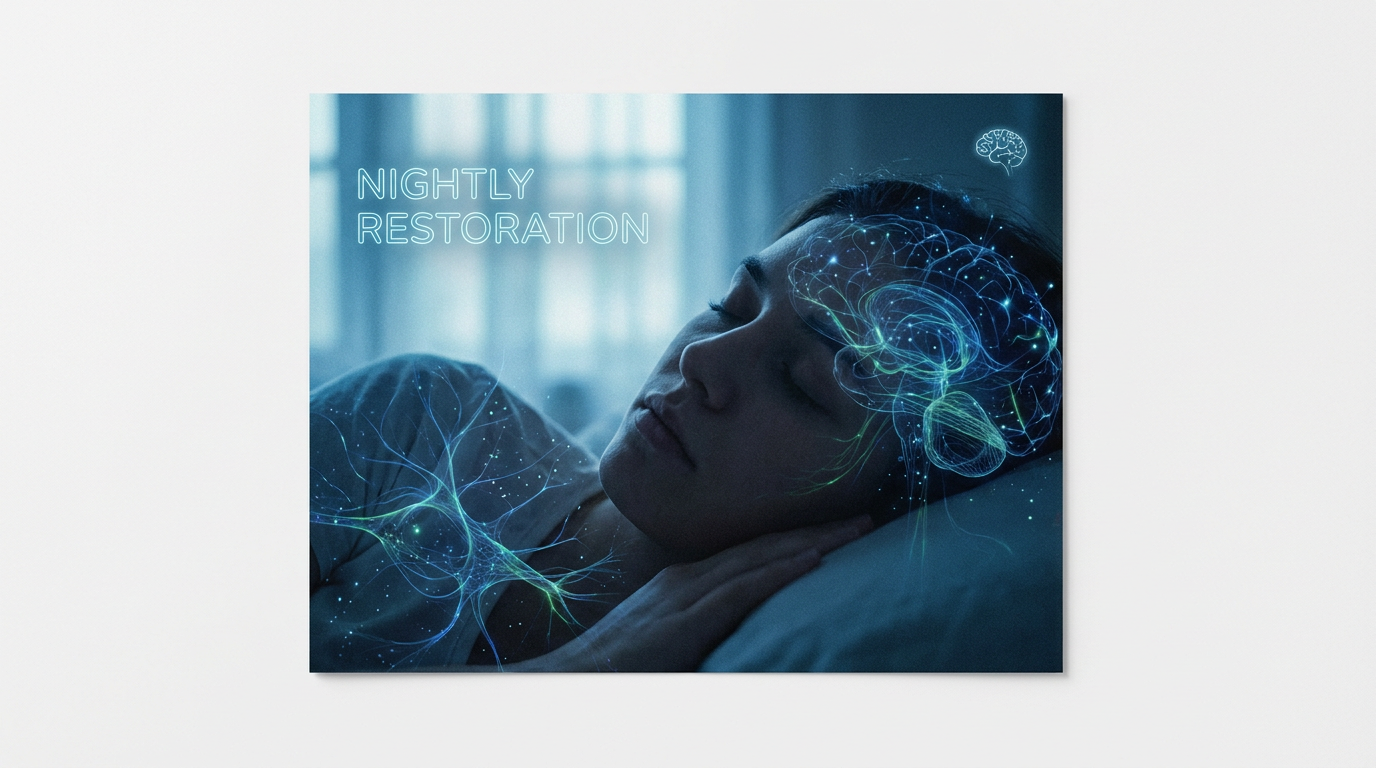
Scientists have discovered that during deep sleep, brain cells shrink to allow cerebrospinal fluid to wash away toxic proteins linked to Alzheimer's disease.
By Factlen Editorial Team
- Neuroscience Researchers
- Focuses on mapping the exact mechanical pumps and fluid dynamics that drive the glymphatic system.
- Clinical Neurologists
- Views the glymphatic system as a crucial early-intervention target for preventing neurodegenerative diseases.
- Public Health Advocates
- Argues that society must recognize sleep as a fundamental pillar of preventative health.
What's not represented
- · Patients with chronic insomnia
- · Shift workers
Why this matters
Understanding how the brain cleans itself during deep sleep transforms rest from a luxury into a critical pillar of long-term health. By prioritizing sleep quality, you can actively help your brain flush out the toxic proteins linked to Alzheimer's disease and cognitive decline.
Key points
- The brain lacks a traditional lymphatic system and instead uses the glymphatic system to clear waste.
- This clearance process is highly active during deep, slow-wave sleep and nearly inactive while awake.
- During deep sleep, brain cells shrink, allowing cerebrospinal fluid to wash away toxic proteins like amyloid-beta.
- Improving sleep quality and sleeping on your side can actively enhance the brain's ability to protect itself from dementia.
For decades, biologists looked at the human brain and saw a plumbing problem. Every other organ in the body relies on the lymphatic system—a network of vessels that drains cellular waste and excess fluid. But the brain, the most energy-hungry organ we have, appeared to lack this crucial infrastructure. It was assumed that the brain simply handled its own metabolic garbage locally, recycling what it could and leaving the rest.[1][5]
That assumption was overturned in 2012 when researchers at the University of Rochester made a landmark discovery. They identified a hidden, dedicated waste-clearance network inside the brain and named it the "glymphatic system," a nod to the glial cells that manage the process. This specialized plumbing network runs alongside the brain's blood vessels, quietly waiting for the right conditions to begin its work.[1][5]
The glymphatic system's primary job is to flush out the metabolic byproducts that accumulate while we are awake and thinking. Just as a car engine produces exhaust, active neurons produce cellular debris. Among this debris are amyloid-beta and tau—two proteins that, if left to accumulate, can clump together into the toxic plaques and tangles that are the hallmark of Alzheimer's disease.[2][7]
But the brain's cleaning crew does not work around the clock. Research shows that during waking hours, glymphatic clearance is suppressed by nearly 90 percent. It is only when we fall asleep that the system shifts into high gear, transforming the brain from a processing engine into a self-cleaning machine.[1][7]
Not all sleep triggers this wash cycle equally. The glymphatic system relies specifically on non-rapid eye movement (NREM) Stage 3 sleep—commonly known as deep sleep or slow-wave sleep. During this restorative phase, the brain's electrical activity slows down into synchronized, rolling delta waves, signaling the cleaning system to open its valves.[4][8]
The mechanics of this process are remarkable. As the brain enters deep sleep, the glial cells actually shrink by up to 60 percent. This physical contraction dramatically expands the interstitial space between the brain cells, turning narrow microscopic alleys into wide-open channels.[5][7]

With the channels open, cerebrospinal fluid (CSF)—the clear liquid that cushions the brain—rushes through the tissue. It washes over the neurons, picking up the day's accumulation of amyloid-beta, tau, and other metabolic waste, and flushes it out toward the bloodstream, where the liver and kidneys can eventually process and eliminate it.[2][5]
With the channels open, cerebrospinal fluid (CSF)—the clear liquid that cushions the brain—rushes through the tissue.
Scientists are still uncovering exactly how this fluid is pumped through the dense tissue of the brain. A breakthrough 2024 study published in the journal Cell revealed that synchronized oscillations in the neurotransmitter norepinephrine during deep sleep create rhythmic constrictions and dilations of cerebral arteries. These slow, pulsing waves act as a mechanical pump, driving the cerebrospinal fluid through the brain like a steady washing machine cycle.[3]
The implications for neurodegenerative diseases are profound. Because the glymphatic system is responsible for clearing amyloid-beta, chronic sleep deprivation effectively traps these toxic proteins inside the brain. Over years and decades, this missed maintenance can allow plaques to build up, accelerating cognitive decline and increasing dementia risk.[2][8]
However, deep sleep also appears to offer a powerful defense mechanism. Research led by Matthew Walker at the University of California, Berkeley, found that in older adults who already have high levels of amyloid-beta pathology, those who get more deep sleep perform significantly better on memory tests. Walker described deep sleep as a "life raft" that keeps memory function afloat even as the biological weight of Alzheimer's pathology tries to pull it down.[4]

This creates a complex, bidirectional relationship—a biological chicken-and-egg scenario. Poor sleep accelerates the buildup of amyloid-beta, but the accumulation of amyloid-beta in the brain also disrupts the neural pathways that generate deep sleep. Breaking this vicious cycle is now a major focus of preventative dementia research.[4][8]
Animal models have provided compelling evidence that the relationship is causal. In a recent study at Harvard Medical School, researchers used optogenetics—a technique that uses light to control cells—to artificially restore slow-wave sleep in mice genetically engineered to develop Alzheimer's. The results were striking: restoring deep sleep actively reduced the deposition of amyloid-beta plaques and halted memory deficits.[6]
For the general public, this science offers a deeply empowering message. Unlike genetic risk factors or a family history of dementia, sleep quality is a modifiable behavior. By taking steps to protect and enhance our deep sleep, we can actively support our brain's nightly detoxification process at any age.[1][4]
Optimizing the glymphatic system starts with basic sleep hygiene: maintaining a consistent sleep schedule, keeping the bedroom cool, and avoiding late-day caffeine. Crucially, alcohol and certain sedatives like benzodiazepines should be avoided before bed, as they can fragment sleep architecture and suppress the slow-wave stages required for brain clearance.[7][8]
Even sleep position may play a role. Several studies suggest that sleeping in the lateral position—on your side—is the most efficient posture for glymphatic clearance, as it aligns optimally with the brain's fluid drainage pathways and gravity.[1][7]

Looking to the future, neurologists are exploring non-pharmacological therapies to boost deep sleep in aging populations. Clinical trials are currently testing acoustic stimulation—playing specific pink-noise frequencies during the night—and transcranial direct current stimulation (tDCS) to artificially enhance slow-wave brain activity and supercharge the glymphatic pump.[2][8]
The discovery of the glymphatic system has fundamentally changed how science views rest. Sleep is no longer seen merely as a period of passive downtime or a blank space between days. It is an active, essential biological maintenance process—a nightly deep-clean that protects our memories, preserves our cognition, and washes away the debris of waking life.[1][5]
How we got here
2012
The glymphatic system is first discovered by researchers at the University of Rochester.
2018
PET scans reveal that just one night of sleep deprivation significantly increases amyloid-beta accumulation in the brain.
2024
Researchers publish findings in Cell detailing the arterial 'pump' mechanism that drives fluid during sleep.
2026
Ongoing clinical trials test acoustic and electrical stimulation to artificially boost slow-wave sleep in older adults.
Viewpoints in depth
Neuroscience Researchers
Focuses on mapping the exact mechanical pumps and fluid dynamics that drive the glymphatic system.
For neurobiologists, the brain is a biomechanical engine that requires physical maintenance. They view the glymphatic system as a marvel of evolutionary engineering—a way for an organ isolated by the blood-brain barrier to manage its own waste. Their current focus is on understanding the exact vascular and chemical triggers, such as norepinephrine oscillations, that turn the cerebrospinal fluid pump on and off, hoping to eventually replicate this mechanism pharmacologically.
Clinical Neurologists
Views the glymphatic system as a crucial early-intervention target for preventing neurodegenerative diseases.
Clinicians treating dementia are shifting their focus from managing late-stage symptoms to early prevention. Because amyloid-beta accumulation can begin decades before cognitive decline is noticeable, neurologists view sleep disruption not just as a symptom of aging, but as a modifiable risk factor. They advocate for aggressive treatment of sleep apnea and insomnia in midlife to protect the brain's long-term structural integrity.
Public Health Advocates
Argues that society must recognize sleep as a fundamental pillar of preventative health.
Public health experts emphasize that the science of brain clearance should change how society values rest. They argue against the cultural glorification of 'hustle culture' and sleep deprivation, pointing out that chronic lack of sleep is a public health crisis that will exacerbate the future burden of dementia care. They advocate for workplace policies and lifestyle education that prioritize sleep hygiene alongside diet and exercise.
What we don't know
- Whether artificially inducing slow-wave sleep with drugs or devices provides the exact same clearance benefits as natural sleep.
- How much damage from years of poor sleep can be reversed once healthy sleep habits are established.
- The exact mechanisms by which the glymphatic system interacts with the rest of the body's immune system.
Key terms
- Glymphatic system
- The brain's dedicated waste-clearance network that operates primarily during sleep to flush out cellular debris.
- Slow-wave sleep
- The deepest stage of non-rapid eye movement (NREM) sleep, characterized by slow brain waves and critical for physical restoration.
- Cerebrospinal fluid (CSF)
- The clear fluid surrounding the brain and spinal cord that acts as the 'water' in the brain's nightly wash cycle.
- Amyloid-beta
- A metabolic waste protein that, if not cleared properly, can clump together to form plaques associated with Alzheimer's disease.
- Optogenetics
- A biological technique that uses light to control cells in living tissue, used by researchers to study sleep mechanisms in animal models.
Frequently asked
What is the glymphatic system?
It is the brain's unique waste-clearance network that uses cerebrospinal fluid to flush out toxins and metabolic byproducts that accumulate during the day.
Why is deep sleep so important for the brain?
During deep sleep, brain cells shrink by up to 60%, allowing fluid to wash away harmful proteins like amyloid-beta that are linked to cognitive decline.
Can I improve my glymphatic clearance?
Yes. Getting consistent deep sleep, sleeping on your side, and avoiding alcohol before bed can all enhance the brain's nightly cleaning cycle.
Does poor sleep cause Alzheimer's?
While poor sleep alone doesn't cause Alzheimer's, chronic lack of deep sleep prevents the brain from clearing amyloid-beta, which is a major risk factor for the disease.
Sources
Source coverage
8 outlets
3 viewpoints surfaced








[1]Factlen Editorial TeamPublic Health Advocates
Synthesis by Factlen editorial team
Read on Factlen Editorial Team →[2]National Institutes of HealthClinical Neurologists
The glymphatic system and waste clearance with brain aging
Read on National Institutes of Health →[3]CellNeuroscience Researchers
Synchronized neuronal networks drive glymphatic flow during sleep
Read on Cell →[4]University of California, BerkeleyClinical Neurologists
Deep sleep may act as a 'life raft' against Alzheimer's disease
Read on University of California, Berkeley →[5]University of Rochester Medical CenterNeuroscience Researchers
The Brain's 'Night Shift' Cleaning Crew
Read on University of Rochester Medical Center →[6]Harvard Medical SchoolNeuroscience Researchers
Restoring slow-wave sleep reduces Alzheimer's pathology in mice
Read on Harvard Medical School →[7]Cleveland ClinicPublic Health Advocates
Glymphatic System: What It Is and How It Works
Read on Cleveland Clinic →[8]NeurologyLiveClinical Neurologists
The Impact of Slow-Wave Sleep on Alzheimer Disease Risk
Read on NeurologyLive →



Every angle. Every day.
Get health stories with full source coverage and perspective breakdowns delivered to your inbox.