
US and Iran Open High-Stakes Peace Talks in Switzerland Amid Renewed Hormuz Tensions
Vice President JD Vance and Iranian officials have begun direct negotiations at the Bürgenstock resort to finalize a peace deal, even as disputes over Lebanon and the Strait of Hormuz threaten the fragile ceasefire.
By Factlen Editorial Team
- US Administration
- Aims to secure a lasting peace deal and end Iran's nuclear program while maintaining maximum leverage through military threats.
- Iranian Government
- Seeks immediate sanctions relief and the unfreezing of assets, conditioning final agreements on an end to Israeli operations in Lebanon.
- Washington Critics
- Argues the interim deal concedes too much to Tehran prematurely and fails to adequately punish Iran for its proxy network.
- Global Economic Stakeholders
- Focused entirely on ensuring the uninterrupted flow of energy through the Strait of Hormuz to prevent catastrophic spikes in oil prices.
What's not represented
- · Lebanese civilians affected by ongoing strikes
- · European energy importers reliant on the Strait of Hormuz
Why this matters
The outcome of these 60-day negotiations will determine whether the US and Iran can permanently end a war that has already disrupted global shipping. Failure to reach a final agreement could trigger a renewed closure of the Strait of Hormuz, sending global energy prices soaring and pulling the US back into direct military conflict.
Key points
- US and Iranian delegations have begun direct peace talks at the Bürgenstock resort in Switzerland.
- The summit aims to build on the Islamabad Memorandum of Understanding, which established a 60-day negotiation window.
- Iran's delegation includes central bank and oil officials, signaling a focus on immediate economic relief.
- Tensions remain high over the Strait of Hormuz, with Iran claiming closure and Trump threatening US tolls.
- The interim deal faces fierce bipartisan criticism in Washington from lawmakers who view it as a premature concession.
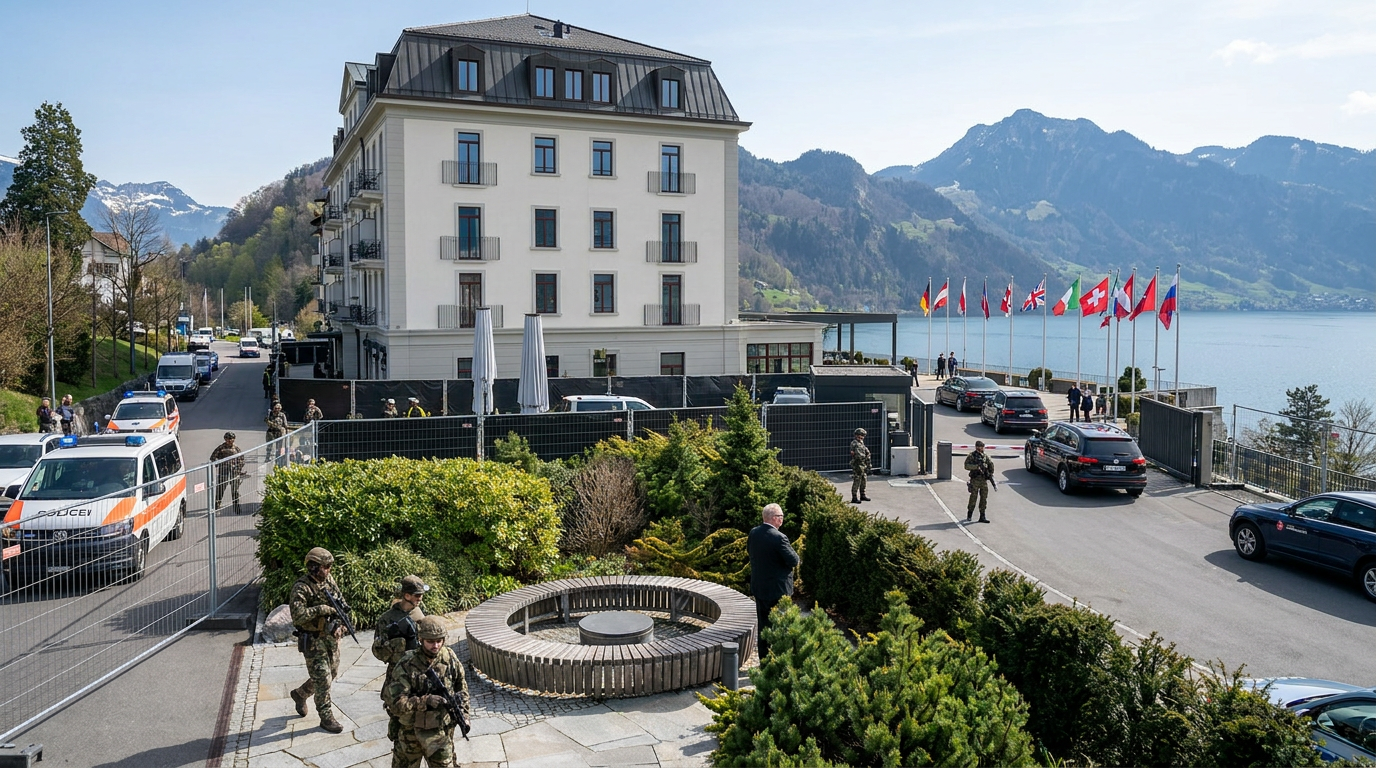
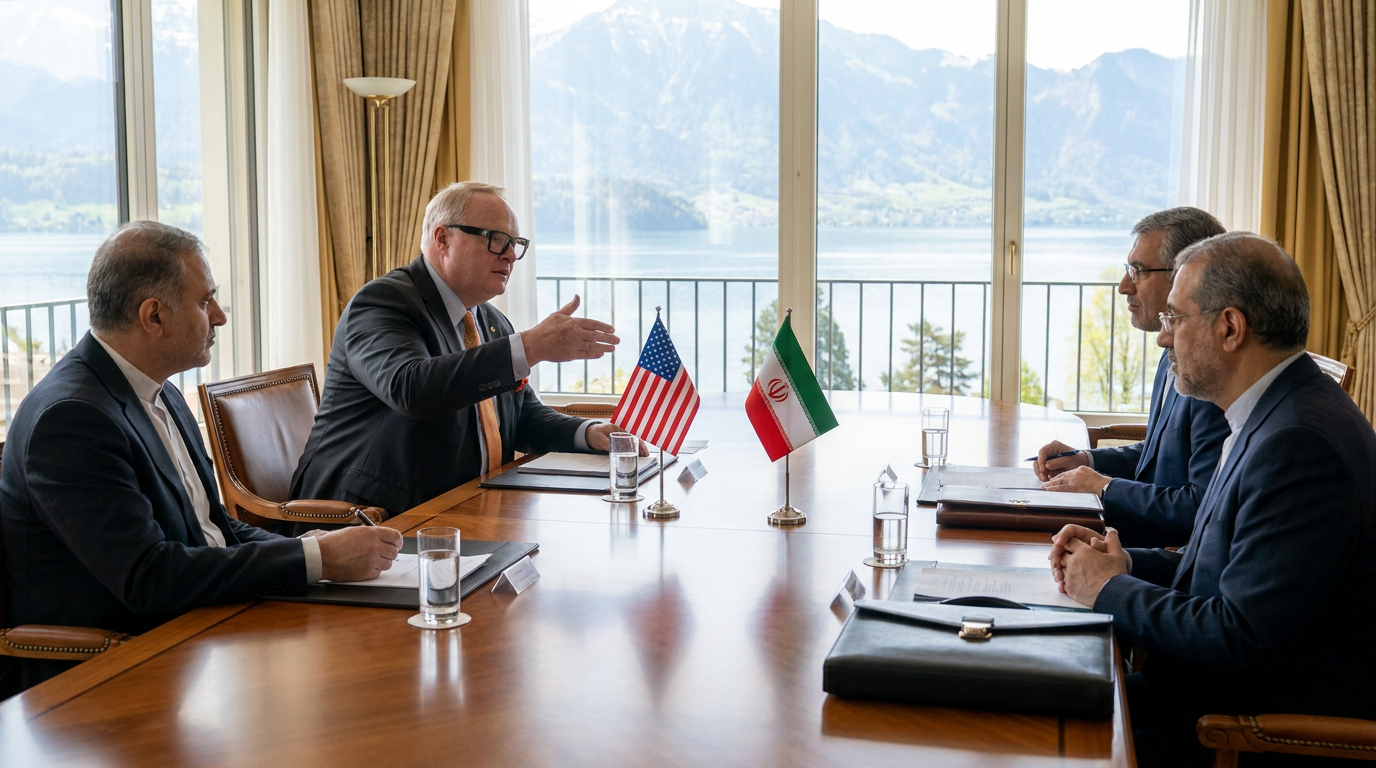
High-level delegations from the United States and Iran have converged on the Bürgenstock resort in Switzerland for the first direct talks aimed at cementing a fragile interim ceasefire. The Lake Lucerne Summit marks a critical juncture following the brief but intense 2026 war that reshaped the Middle East and rattled global energy markets. Mediated by Qatar and Pakistan, the negotiations are designed to build upon the Islamabad Memorandum of Understanding—a preliminary pact signed digitally last week by US President Donald Trump and Iranian President Masoud Pezeshkian.[4][5][7]
Vice President JD Vance is leading the American delegation, expressing optimism that the two adversaries can "turn over a new leaf" during the 60-day negotiation window established by the interim deal. Vance is joined by US special envoy Steve Witkoff and Jared Kushner, who arrived in Switzerland early to begin sifting through the technical details of Iran's nuclear program and regional security commitments.[3][4][5]
On the other side of the table, Iran has dispatched an unprecedented "whole-regime" delegation led by Parliament Speaker Mohammad Bagher Ghalibaf. The group includes Foreign Minister Abbas Araghchi, alongside senior officials from Iran's central bank and oil ministry. The composition of the Iranian team signals Tehran's primary objective: securing immediate economic relief, unfreezing billions of dollars in assets, and restoring its oil export capabilities.[1][6][7]

The Iranian delegation pointedly named itself "Minab 168" in remembrance of a school struck during the initial US-Israeli military campaign on February 28. This framing underscores the deep hostilities underlying the diplomatic pleasantries. Iranian officials have made it clear that final negotiations remain strictly conditional upon the implementation of the interim agreement's provisions, particularly the cessation of military operations across all fronts.[6]
The Iranian delegation pointedly named itself "Minab 168" in remembrance of a school struck during the initial US-Israeli military campaign on February 28.
The most immediate threat to the talks is the escalating situation in Lebanon. Over the weekend, Iran's Islamic Revolutionary Guard Corps (IRGC) announced it was closing the Strait of Hormuz, accusing Israel of violating the ceasefire by intensifying strikes against Hezbollah in southern Lebanon. The status of the vital waterway—through which roughly a quarter of the world's seaborne oil trade passes—remains highly contested, with the US and Iranian militaries offering conflicting accounts of whether commercial vessels are freely transiting.[3][4][8]

President Trump responded to the IRGC's announcement with fierce rhetoric, threatening to strike Iran "very hard again" if its proxy forces in Lebanon continue operations. In a phone interview, Trump warned that any Iranian interference with passage through the Strait of Hormuz would result in the destruction of the country. Furthermore, Trump threatened to impose US-collected tolls on vessels transiting the strait if a final deal is not reached within 60 days, claiming the revenue would serve as payment for America acting as the "Guardian Angel" of the Middle East.[3][7]
Back in Washington, the provisional agreement is facing intense bipartisan blowback. Lawmakers from both sides of the aisle argue that the administration is conceding too much leverage to Tehran prematurely. Senator Cory Booker (D-NJ) slammed the memorandum of understanding as an "abject surrender," while Senator John Cornyn (R-TX) and other Republicans have voiced deep skepticism about lifting the naval blockade and unfreezing assets before Iran's nuclear program is verifiably dismantled.[2]

The economic stakes of the summit are monumental. The initial outbreak of the war in February sent global oil prices soaring past $100 a barrel, prompting the International Energy Agency to orchestrate the largest emergency reserve release in its history to prevent a collapse of the energy supply chain. While the interim deal temporarily calmed markets, the renewed threats surrounding the Strait of Hormuz have put the global economy back on edge.[4][7]
As technical meetings commence, mediators are scrambling to compartmentalize the Lebanon crisis from the broader nuclear and economic negotiations. The next 60 days will test whether the digital signatures on the Islamabad Memorandum can translate into a permanent restructuring of US-Iran relations, or if the Lake Lucerne Summit will merely serve as a brief pause before a return to outright regional war.[4][5][6]
How we got here
Feb 28, 2026
The US and Israel launch a major military campaign against Iran, sparking a regional war.
April 13, 2026
The US imposes a naval blockade on Iranian ports after initial ceasefire talks in Islamabad fail.
June 17, 2026
President Trump and Iranian President Pezeshkian digitally sign an interim memorandum of understanding.
June 20, 2026
Iran threatens to close the Strait of Hormuz again, citing Israeli strikes in Lebanon.
June 21, 2026
Direct high-level negotiations begin at the Bürgenstock resort in Switzerland.
Viewpoints in depth
The US Administration's View
The White House sees an opportunity to permanently reshape the Middle East while maintaining maximum pressure.
Vice President JD Vance has framed the Switzerland talks as a genuine opportunity to 'turn over a new leaf' and permanently end Iran's nuclear ambitions. However, the administration's diplomatic outreach is heavily backstopped by the threat of overwhelming military force. President Trump's rhetoric emphasizes that the US will not tolerate proxy attacks in Lebanon or interference in the Strait of Hormuz, positioning the US as the ultimate guarantor of regional security—even floating the idea of charging tolls for that protection.
The Iranian Delegation's View
Tehran is focused on immediate economic relief and views the ceasefire as strictly conditional.
By sending a 'whole-regime' delegation that includes central bank and oil officials, Iran is signaling that its primary objective is the unfreezing of billions of dollars in assets and the restoration of its oil export economy. The delegation's choice to name itself 'Minab 168' after a bombed school serves as a stark reminder of the war's toll. Iranian officials insist that the 60-day negotiation window will collapse if the US cannot rein in Israeli military operations in Lebanon, using the Strait of Hormuz as their primary leverage.
The Washington Critics' View
Bipartisan lawmakers argue the interim deal is a dangerous concession that rewards Iranian aggression.
In Washington, the Islamabad Memorandum of Understanding has united hawkish Republicans and prominent Democrats in opposition. Critics like Senator Cory Booker and Senator John Cornyn argue that lifting the naval blockade and unfreezing assets before Iran has verifiably dismantled its nuclear program amounts to a surrender. They fear the 60-day window simply gives Tehran time to regroup and rebuild its proxy network, rather than forcing a genuine capitulation.
What we don't know
- Whether the US can successfully pressure Israel to halt strikes in Lebanon to satisfy Iran's conditions for the talks.
- How global energy markets will react if the 60-day negotiation window expires without a final agreement.
- The true extent of commercial shipping disruptions currently occurring in the Strait of Hormuz.
Key terms
- Strait of Hormuz
- A narrow, strategically critical waterway between the Persian Gulf and the Gulf of Oman, through which roughly a quarter of the world's seaborne oil passes.
- Islamabad Memorandum of Understanding
- The preliminary ceasefire framework signed in June 2026 that paused the US-Iran war and established a 60-day window for final negotiations.
- Minab 168
- The name adopted by the Iranian delegation in Switzerland, referencing a school struck during the initial US-Israeli military campaign.
Frequently asked
Why are the US and Iran meeting in Switzerland?
Delegations are holding direct talks at the Bürgenstock resort to negotiate a final peace agreement following the brief 2026 US-Israel war on Iran.
What is the Islamabad Memorandum of Understanding?
It is an interim ceasefire agreement signed digitally by President Trump and Iranian President Pezeshkian on June 17, 2026, opening a 60-day window for final negotiations.
Is the Strait of Hormuz currently open?
The situation is highly contested. While the interim deal called for toll-free passage, Iran's military recently claimed to have closed the strait in response to Israeli strikes in Lebanon, though the US disputes the extent of the closure.
Who is leading the negotiations?
Vice President JD Vance is leading the US delegation, while Parliament Speaker Mohammad Bagher Ghalibaf is leading the Iranian delegation.
Sources
Source coverage
8 outlets
4 viewpoints surfaced








[1]Fox NewsWashington Critics
Iran's unprecedented 'whole-regime' delegation at US deal talks signals one goal: expert
Read on Fox News →[2]The GuardianWashington Critics
Trump faces fresh bipartisan criticism on Iran deal as Vance hails peace talks
Read on The Guardian →[3]The Washington PostGlobal Economic Stakeholders
Trump threatens Iran over Hormuz as JD Vance holds peace talks
Read on The Washington Post →[4]Al JazeeraIranian Government
Lebanon to top the agenda as US and Iran to hold talks in Switzerland's Burgenstock
Read on Al Jazeera →[5]AxiosUS Administration
U.S. and Iran launch direct negotiations in Switzerland
Read on Axios →[6]Tasnim News AgencyIranian Government
Iranian Delegation Arrives in Switzerland for Negotiations with US
Read on Tasnim News Agency →[7]PBS NewsHourUS Administration
U.S. and Iranian negotiators head to Swiss venue for talks on adding key details to interim agreement
Read on PBS NewsHour →[8]The New York TimesGlobal Economic Stakeholders
Uncertainty Remains Over the Strait of Hormuz
Read on The New York Times →
Every angle. Every day.
Get news politics stories with full source coverage and perspective breakdowns delivered to your inbox.