
The Handheld Gaming PC Revolution: How Portable Power Finally Conquered 2026
Handheld gaming PCs have evolved from niche travel curiosities into mainstream, desktop-class workstations. Driven by massive leaps in APU efficiency, 80Wh batteries, and refined operating systems, 2026 marks the year portable gaming truly arrived without compromise.
By Ryder James

For decades, the quintessential "gaming PC" was a massive, glowing monolith tethered to a desk. But as the industry moves through 2026, a silent hardware revolution has fundamentally reshaped how and where people play. The handheld gaming PC sector, which has seen staggering growth since Valve's original Steam Deck disrupted the market, has matured from a niche travel curiosity into a primary gaming platform. These devices are no longer compromised mobile ports; they are fully functional, desktop-class workstations that happen to fit inside a backpack.[4]
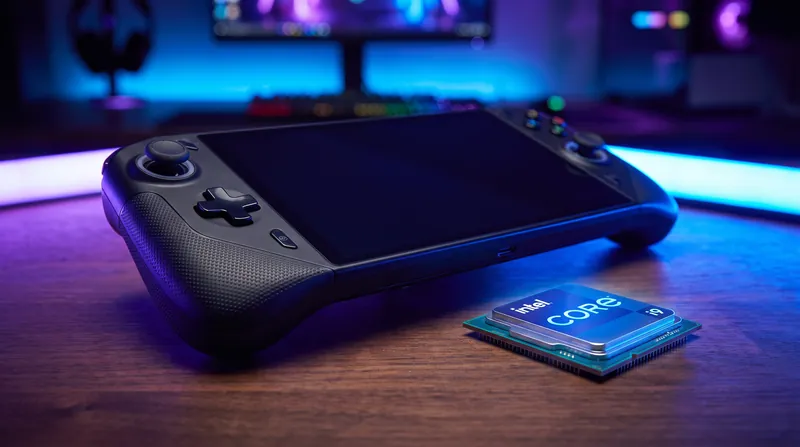
The current landscape is dominated by a fierce arms race among major hardware manufacturers. Devices like the Asus ROG Xbox Ally X and the MSI Claw 8 AI+ are pushing the boundaries of raw portable power, while the Lenovo Legion Go series and the enduring Steam Deck OLED focus on refining the user experience.
The market has fractured into distinct philosophies—some prioritizing sheer performance and Windows compatibility, while others double down on battery efficiency and bespoke, console-like operating systems. Yet, across the board, the hardware has reached a tipping point where playing demanding, AAA titles on a subway or a flight is not just possible, but visually stunning.[1]
The core mechanism driving this portable revolution is the rapid advancement of the Accelerated Processing Unit (APU). Unlike traditional gaming laptops that require separate, power-hungry central processors (CPUs) and graphics cards (GPUs), an APU combines both onto a single piece of silicon. In 2026, the transition to ultra-efficient 3-nanometer and 2-nanometer manufacturing processes has allowed chipmakers to cram unprecedented graphical horsepower into these unified chips without melting the plastic chassis holding them.
This year's flagship silicon illustrates the leap. AMD's Ryzen AI Z2 Extreme and Intel's Arc G3 Extreme architectures have redefined performance-per-watt metrics. Intel's latest mobile chips, for instance, are delivering up to a 44 percent increase in gaming performance compared to previous generations, allowing handhelds to render complex lighting and high-resolution textures that were previously restricted to desktop rigs. This efficiency means the silicon spends less energy generating waste heat and more energy pushing frames to the screen.[4]
But raw power is useless if the device dies in forty minutes. The most transformative hardware shift in 2026 hasn't been the processors, but the power delivery. The industry standard for battery capacity has doubled, moving from the 40-watt-hour (Wh) cells of early handhelds to massive 80Wh batteries. This physical expansion—achieved through denser battery chemistry and redesigned internal cooling layouts—finally solves the primary complaint of early adopters, allowing for two to three hours of heavy AAA gaming, or significantly longer for indie titles and cloud streaming.[2][4]
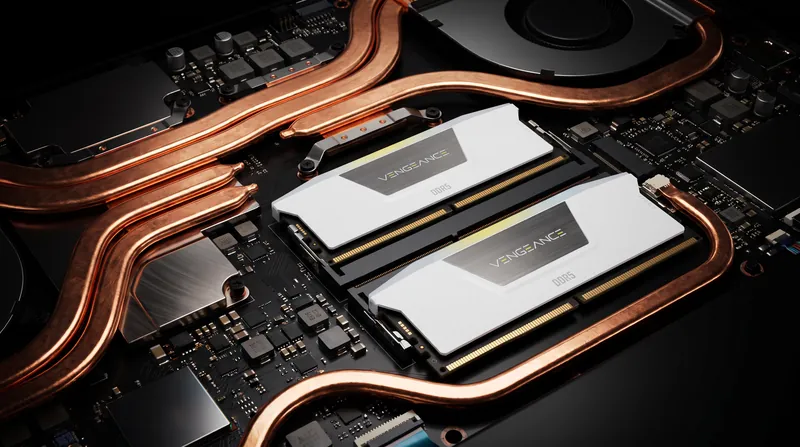
Memory architecture has undergone a similar overhaul. Because an APU shares a single pool of memory for both standard computing tasks and graphics rendering, the 16GB of RAM that was standard in 2023 quickly became a bottleneck. In 2026, 24GB to 32GB of ultra-fast LPDDR5X or LPDDR6 RAM is the new sweet spot. This massive memory pool allows the system to dedicate a full 8GB exclusively to Video RAM (VRAM), ensuring that high-resolution textures load smoothly without stuttering or crashing the game.[4]
Storage has also matured, moving away from proprietary or hard-to-find formats. Most modern premium handhelds have transitioned to standard M.2 2280 NVMe solid-state drives—the exact same storage sticks used in desktop PCs. This shift not only lowers the manufacturing cost but empowers users to easily upgrade their devices to two or even four terabytes of storage, a necessity in an era where a single modern game installation can easily exceed 150 gigabytes.[4]
The visual output of these devices has kept pace with the internal hardware. OLED (Organic Light-Emitting Diode) displays are now the baseline for premium models, offering perfect black levels and vibrant color reproduction that LCD screens cannot match. Crucially, these panels now widely feature Variable Refresh Rate (VRR) technology.
VRR dynamically syncs the screen's refresh rate to the exact frame rate the APU is outputting. If a demanding explosion drops the game's performance to 45 frames per second, the screen adjusts instantly, eliminating visual tearing and making the dip feel imperceptibly smooth to the player.[2][4]
Yet, the true battleground of 2026 isn't just silicon and screens; it is the operating system. Hardware is only as good as the software that commands it, and the market is currently split between two distinct software philosophies. Valve's Linux-based SteamOS remains the gold standard for a frictionless, console-like user experience. Its ability to instantly suspend and resume a game with the press of a single button, combined with a UI designed entirely for a controller, has prompted competitors like Lenovo to begin offering dedicated SteamOS versions of their hardware.[1][3][4]
On the other side of the aisle is Microsoft's Windows 11, which offers the distinct advantage of 100 percent game compatibility, including titles from the Epic Games Store, Xbox Game Pass, and multiplayer games reliant on strict anti-cheat software that blocks Linux.
To combat the historical clunkiness of navigating a desktop OS on a 7-inch touchscreen, Microsoft and hardware partners have introduced the "Xbox Full Screen Experience." This deep integration on devices like the ROG Xbox Ally X boots the handheld directly into a controller-friendly interface, largely masking the underlying Windows architecture.[3][4]
Because these devices run full desktop operating systems, their utility extends far beyond gaming. The "handheld PC" is increasingly functioning as a modular, portable workstation. By plugging the device into a USB-C docking station, users can output to external monitors, connect a mouse and keyboard, and utilize the 32GB of RAM to edit 4K video, run local AI models, or manage heavy productivity workflows.
Some users are abandoning traditional laptops entirely, pairing their handhelds with foldable keyboards and augmented reality (AR) glasses to create virtual multi-monitor setups in coffee shops and airport lounges.[4]
Despite these massive leaps, the 2026 handheld market faces significant economic headwinds. The explosive global demand for memory and processing power—driven largely by the enterprise AI boom—has triggered a severe "RAM crisis." The cost of high-speed LPDDR RAM and advanced GPUs has skyrocketed, forcing manufacturers to raise prices on premium handhelds. Top-tier devices featuring 32GB of RAM and Intel's latest chips are now regularly crossing the $1,000 to $1,350 threshold, making them as expensive as mid-range gaming laptops.[3][4]
This pricing pressure has created a bifurcated market. While enthusiasts chase the bleeding edge of portable performance, budget-conscious gamers are flocking to older, highly optimized hardware. The Steam Deck OLED, despite featuring an older APU, remains fiercely competitive at its $549 price point simply because its bespoke software extracts every ounce of performance from its components. Meanwhile, Windows handhelds, despite their new interfaces, still occasionally suffer from the friction of forced OS updates and driver conflicts that interrupt the "pick up and play" illusion.[1][3][4]
Ultimately, the handheld gaming PCs of 2026 represent a paradigm shift in digital entertainment. The historical barrier between "mobile gaming" and "PC gaming" has officially vanished. Supported by high-speed cloud synchronization that allows players to seamlessly transition a save file from a desktop rig to a handheld device on a train, the industry has entered an era of infinite play. The modern gaming PC is no longer a place you go; it is something you take with you.
Key points
- Handheld gaming PCs have evolved into desktop-class workstations capable of running AAA titles natively.
- Battery capacities have doubled to 80Wh, solving the primary complaint of early handheld adopters.
- RAM capacities have increased to 32GB to accommodate shared memory architecture for high-end graphics.
- The market is split between Windows 11 devices for maximum compatibility and SteamOS devices for a seamless UI.
What we don’t know
- How long the 'RAM crisis' will keep premium handheld prices artificially inflated above the $1,000 mark.
- Whether Microsoft will eventually release a dedicated, lightweight 'Windows Handheld Edition' to fully compete with SteamOS.
- The absolute physical limit of battery density before handhelds become too heavy for comfortable extended play.
How we got here
2022
Valve launches the original Steam Deck, proving the viability of the x86 handheld market.
2023
ASUS and Lenovo enter the space with the ROG Ally and Legion Go, pushing Windows-based handhelds into the mainstream.
Early 2025
Battery capacities double to 80Wh across flagship models, solving the form factor's biggest historical flaw.
CES 2026
Intel unveils the Arc G3 Extreme architecture, pushing portable gaming performance up by 44 percent.
Mid 2026
The global 'RAM crisis' pushes premium handheld prices past the $1,000 threshold, bifurcating the market.
- SteamOS Purists
- Value seamless UI, battery efficiency, and console-like sleep/wake functionality over raw horsepower and anti-cheat compatibility.
- Windows Power Users
- Demand 100% game compatibility and the ability to use the device as a full desktop replacement, accepting some UI clunkiness.
- Hardware Enthusiasts
- Focus on the bleeding edge of portable performance, willing to pay premium prices for maximum fidelity and new tech like AR integration.
Perspectives this story doesn't cover
- Budget Gamers
- Traditional Console Players
Sources
Source coverage
4 outlets
3 viewpoints surfaced




- [1]KinjaSteamOS Purists
The Best Handheld Gaming PCs in 2026 Aren't the Steam Deck
Read on Kinja → - [2]TechAuraHardware Enthusiasts
Top 5 Best Gaming Handhelds of 2026
Read on TechAura → - [3]NotebookCheckSteamOS Purists
Windows handheld gaming PCs face RAM shortage amid strong sales
Read on NotebookCheck → - [4]Handheld Gaming HubWindows Power Users
The handheld sector has seen a staggering +9,900% growth
Read on Handheld Gaming Hub →
More in Gaming & Esports
See all →Display Latency
Why Capping Frame Rates Below Display Refresh Ceilings Eliminates V-Sync Latency Under Variable Refresh Rate
6 sources
Silicon Economics
Nvidia Authorizes Record $150 Billion Share Buyback as Market Cap Eclipses $5 Trillion
6 sources

Hardware Supply Chain
XMG Raises Gaming Laptop Prices by Up to €300 as DDR5 Memory Costs Surge Sixfold
6 sources
Xbox Restructuring
Microsoft Proposes Closure of Ninja Theory as Activision Takes Over Halo Development
5 sources
Comments
Every angle. Every day.
Get Gaming & Esports stories with full source coverage and perspective breakdowns, free every day.