
full timeline
EU–India free trade agreement negotiations
India and the European Union will sign a sweeping free trade agreement on December 16, eliminating tariffs on the vast majority of bilateral trade.
Follow EU–India free trade agreement negotiations in the Factlen app and get an alert when there is news. Get the app
Share this story
Latest report
India and EU to Sign 'Mother of All Deals' Free Trade Pact on December 16 in Brussels
India and the European Union will sign a sweeping free trade agreement on December 16, eliminating tariffs on the vast majority of bilateral trade. The pact, concluding years of negotiations, is expected to take effect in early 2027 after European Parliament approval.
- India and the European Union will officially sign their comprehensive free trade agreement on December 16 in Brussels.
- The pact grants immediate duty-free access to 93 percent of Indian shipments, heavily benefiting labor-intensive sectors like textiles and leather.
- European exporters will see tariffs eliminated or reduced on 96.6 percent of their export value, saving an estimated €4 billion annually.
- The agreement bypasses individual member-state ratification and is expected to take effect in early 2027 following a European Parliament vote.
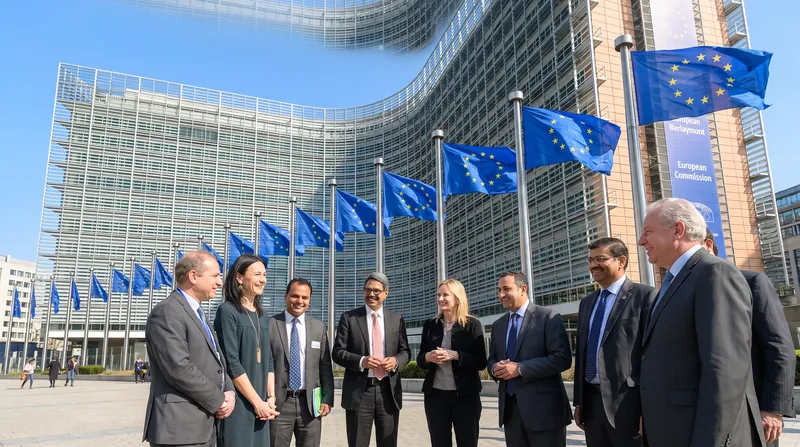
Indian and European Union leaders will officially sign a sweeping free trade agreement on December 16 in Brussels, fundamentally altering the tariff structure between the world's fourth-largest economy and the 27-nation bloc. The finalized pact guarantees duty-free access for 93 percent of Indian shipments immediately upon implementation.[2][8]
The European side secures equivalent market access, with tariffs eliminated or reduced on the vast majority of its export value. This reciprocal liberalization is projected to save European exporters billions annually in duties and significantly boost EU exports to India over the next decade.[2][7]
The December 16 signing ceremony will feature Indian Prime Minister Narendra Modi and top European officials, anchoring a concentrated month of Indian trade diplomacy. The event concludes a negotiation process that restarted in June 2022 and reached a political consensus on January 27, 2026.[1][2]
Because the agreement has secured majority approval within the European Council, it bypasses the need for individual ratification by each of the 27 EU member states. This streamlined approval mechanism removes a historical bottleneck that has stalled previous European trade pacts for years.[1][3]
Following the Brussels signing, the finalized legal text moves to the European Parliament for a formal vote. "The signing is scheduled for December 16, after which it will go to the European Parliament, which will add just about 1-2 months to the process," a diplomatic source told The Hindu.[1]
That legislative timeline paves the way for the new tariff schedules to take effect in early 2027. The swift transition from signature to implementation is designed to lock in the economic benefits before the end of the decade.[1][4]
Restructuring Bilateral Tariffs
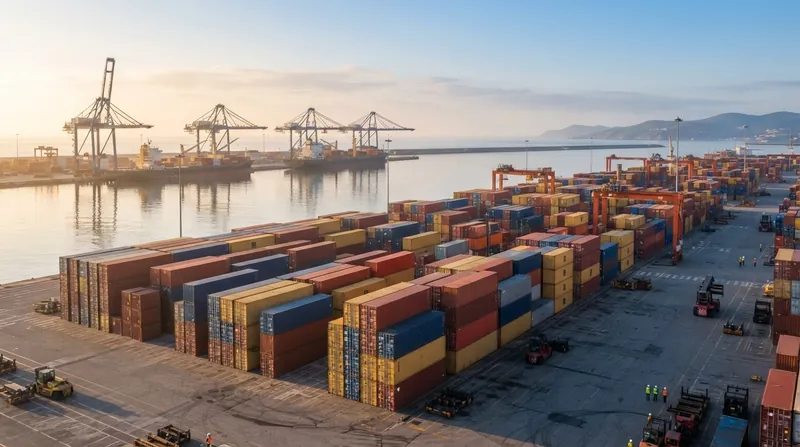
The immediate tariff relief heavily favors India's labor-intensive manufacturing sectors, securing zero-duty access for tens of billions of dollars in current export value. Textiles, apparel, leather goods, footwear, and marine products will see immediate competitive advantages in European markets.[2][8]
European industrial and technology exporters gain unprecedented access to the Indian market, where import duties have historically been high. India will execute a phased reduction of tariffs on European machinery, electrical equipment, medical devices, optical instruments, and aircraft components.[7][8]
The automotive sector, a traditional sticking point in Indian trade negotiations, operates under a specific quota mechanism. India will gradually lower duties on European automobiles to 10 percent, capped at an annual quota of 250,000 vehicles, protecting domestic manufacturers from unlimited import volumes while giving European automakers a vital foothold.[2][8]
European agricultural and luxury exports also secure significant concessions under the finalized schedules. Import duties will fall substantially on European wines, spirits, olive oil, and processed foods, making these products significantly cheaper for Indian consumers.[2][8]
To secure the broader agreement, negotiators agreed to shield highly sensitive domestic sectors entirely. India's dairy industry remains protected from European market opening, with phased timelines designed to give domestic micro, small, and medium enterprises time to adjust to the new trade environment.[7][8]
The Strategic Economic Calculus
The finalized pact unites a market of roughly two billion people, representing a quarter of global gross domestic product and a third of international trade. European Union Ambassador to India Jean-Eric Paquet confirmed the December timeline, emphasizing the deal's massive scale and its 2027 implementation target.[2][7]
The agreement carries a direct financial cost for the European Union's internal budget through lost customs revenue. Internal European Commission estimates project that foregone import duties will reach between €3.3 billion and €3.6 billion annually once the agreement is fully implemented across all member states.[2][7]
Beyond raw tariff elimination, the pact establishes a framework for regulatory transparency and the adoption of international standards. This alignment is designed to lower compliance costs for small and medium enterprises attempting to integrate into cross-border supply chains.[6][7]
Preparations for the physical rollout are already underway, with Indian Commerce Secretary Rajesh Agrawal holding high-level meetings in Brussels throughout November. Discussions with senior European Commission officials focused on simplifying customs procedures and promoting digitally enabled trade to reduce transaction friction.[6][7]
Technical discussions focused heavily on aligning digital customs clearing at European ports. By modernizing these logistical frameworks, both sides aim to ensure that the negotiated tariff cuts are not offset by administrative delays or border bottlenecks.[6][7]
Navigating Global Trade Pressures
The successful conclusion of the India-EU pact relies on a pragmatic negotiating strategy that deliberately excluded the most intractable disputes. By leaving certain contentious issues outside the core text, negotiators avoided the deadlocks that collapsed the previous round of talks a decade ago.[1][7]
The two partners continue to negotiate separate, parallel agreements covering Investment Protection and Geographic Indications. While these tracks remain open, they were decoupled from the primary goods and services text to ensure the core tariff reductions could proceed to signature.[1][7]
For the European Union, the agreement accelerates a broader strategic diversification agenda. Securing preferential access to the Indian market reduces European reliance on other Asian manufacturing hubs while strengthening supply chain resilience for critical industrial components.[2][7]
India's aggressive push to finalize the European deal coincides with mounting trade friction with the United States. The Biden administration imposed reciprocal tariffs on Indian imports in mid-2025, and new U.S. legislation threatens heavy penalties over India's purchases of Russian energy.[1][7]
The Brussels signing forms the centerpiece of a three-leg diplomatic tour for Prime Minister Modi, who is actively hedging against American trade volatility. Modi is scheduled to visit Canada around December 12 to sign a parallel free trade agreement before attending the G20 Summit in Miami.[1][7]
Finalizing the Legal Framework
The European Commission has already submitted the formal proposals to the Council of the European Union, seeking the final authorization to sign the agreement. "The most recent development was the European Commission finalising the text of the deal and sending it to the European Council," a diplomatic source told The Hindu.[1][8]
This submission includes the scrubbed legal text and the exact product-by-product tariff reduction schedules. The baseline economic relationship the deal will govern is already substantial, with India-EU merchandise trade reaching $136.54 billion in the recent fiscal year.[7][8]
The agreement also includes an in-principle consensus on a dedicated Digital Trade chapter and an Anti-Fraud clause, finalized during the technical rounds in Brussels. These provisions aim to secure cross-border data flows and protect intellectual property in the digital services sector.[7][8]
While the goods and services schedules are locked, the eventual impact of the agreement depends heavily on utilization rates. Indian exporters will need to adapt to strict European environmental and labor standards to fully capitalize on the zero-tariff access.[1][7]
The next definitive milestone arrives on December 16, when the physical signatures commit both economies to the new trade architecture. Attention will then shift immediately to the European Parliament, where a vote will determine exactly when the 2027 rollout begins.[1][4]
The successful implementation of this pact will serve as a blueprint for India's future trade negotiations with other Western economies. By proving it can close a comprehensive deal with a regulatory heavyweight like the EU, New Delhi strengthens its position in ongoing talks with the United Kingdom and other G7 nations.[1][2]
Sources
- [1]The Hindu — India-EU trade pact likely to be signed on December 16 Read on The Hindu →
- [2]Business Standard — India-EU free trade pact likely to be signed on Dec 16 in Brussels Read on Business Standard →
- [3]Times Now — India, EU To Sign Long-Awaited FTA On December 16: Report Read on Times Now →
- [4]The Tribune — India-EU trade pact likely to be signed on December 16 Read on The Tribune →
- [5]Ada Derana — India, European Union likely to sign free trade agreement on Dec. 16 Read on Ada Derana →
- [6]ANI News — India hopes to sign EU trade pact in December, says Commerce Secretary Read on ANI News →
- [7]Open The Magazine — India-EU FTA set for December signing: When will the trade deal take effect and what does it mean? Read on Open The Magazine →
- [8]NDTV — 'Mother Of All Deals': India, European Union Likely To Sign Free Trade Agreement On Dec 16 Read on NDTV →
What to watch
- India and the European Union are scheduled to sign the free trade agreement on December 16 in Brussels.
- The European Parliament is set to vote on the agreement before it takes effect.
- The free trade agreement is targeted to be operationalized in early 2027.
Charts, maps and images
Timeline
November 2026
India and EU to Sign 'Mother of All Deals' Free Trade Pact on December 16 in Brussels
October 2026
India and EU Target Year-End Signing for Sweeping Free Trade Agreement Ahead of 2027 Rollout
August 2026
The EU-India Free Trade Agreement's Tech Trade-Off: Hardware Tariffs vs. Data Borders
AI
How the story developed
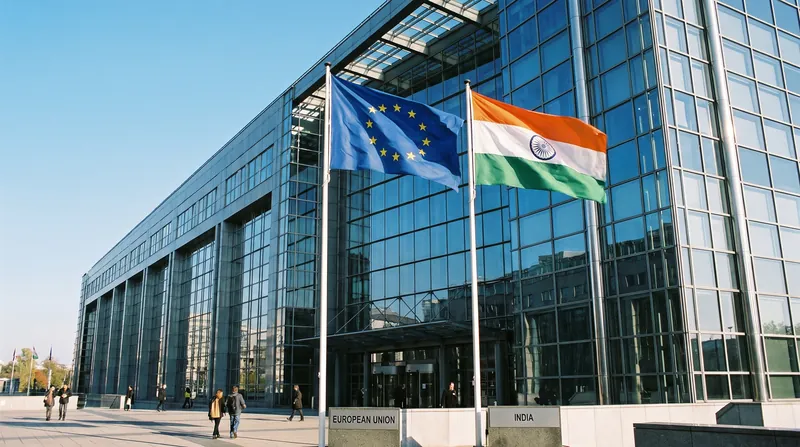
The free trade agreement negotiations reached a milestone by 08:09 UTC on August 10, when details of the pact's technology and digital trade provisions were outlined. The agreement eliminates tariffs on over 90 percent of European goods exports, while Indian import duties on information technology devices and industrial machinery, which previously reached up to 44 percent, are largely erased.
In the technology sector, the Digital Trade Chapter protects software source code from mandatory disclosure by public authorities. However, the European Union did not grant India a General Data Protection Regulation adequacy decision, maintaining strict controls on personal data transfers and leaving Indian information technology service providers to navigate European data privacy regulations.
During the negotiations, India successfully resisted TRIPS-plus intellectual property mandates. This prevented patent evergreening within the agreement.
By 22:56 UTC on October 25, Commerce Minister Piyush Goyal announced the target for a year-end signing. The pact was designed to lower duties on European luxury vehicles and wines, and Goyal proposed expanding bilateral trade between India and Germany to €310 billion, representing a tenfold increase from current levels.
Despite the progress on tariffs, friction persisted over environmental regulations. The European Union's incoming carbon border tax continued to present challenges for Indian heavy industry and steel exporters as the two sides moved toward finalizing the deal.