
Appeals Court Strikes Down Pregnant Workers Fairness Act and $1.7 Trillion Bill Over Proxy Voting
A federal appeals court ruled that pandemic-era proxy voting in the House violated the Constitution's Quorum Clause. The decision invalidates the Pregnant Workers Fairness Act and a massive 2022 government funding package, setting up a Supreme Court showdown.

Share this story
The United States Constitution requires a physical majority of lawmakers to be present before the House of Representatives can conduct business. That binding constraint has now dismantled one of the most significant workplace protection laws passed in the last decade.[1][2]
A federal appeals court ruled this week that the pandemic-era proxy voting system utilized by the House was unconstitutional. The decision effectively voids any legislation passed solely because absent members cast votes through their colleagues.[3][4]
The immediate casualty of the ruling is the Pregnant Workers Fairness Act, a bipartisan measure enacted in late 2022. The law mandated that employers provide reasonable accommodations for pregnant employees, such as extra bathroom breaks or light duty.[1][4]
The Fifth Circuit Court of Appeals determined that the House lacked a physical quorum when it passed the broader $1.7 trillion Consolidated Appropriations Act, which contained the pregnancy accommodations measure. Without a physical majority, the court concluded, the vote was invalid.[3][5]
"The Constitution's Quorum Clause requires actual presence," the appellate panel wrote in its decision. The judges rejected the Biden administration's argument that the House holds the exclusive authority to determine its own procedural rules, including how presence is defined.[1][2]
The Proxy Voting Mechanism
The proxy system was instituted by former House Speaker Nancy Pelosi in 2020 to keep Congress functioning during the COVID-19 pandemic. It allowed members to designate a colleague to cast their vote on the floor if they could not travel to Washington.[6]
By December 2022, when the funding package passed, the pandemic's acute phase had subsided, but the proxy rule remained in effect. During the final vote on the $1.7 trillion bill, fewer than half of the House members were physically present in the chamber.[2][6]
The State of Texas sued the federal government shortly after the bill's passage, arguing the legislation was illegitimate. Texas officials specifically targeted the Pregnant Workers Fairness Act, claiming it imposed unconstitutional burdens on state agencies as employers.[1][4]
A lower federal judge initially agreed with Texas in early 2024, blocking the enforcement of the pregnancy law against the state government. The Fifth Circuit has now expanded that logic, striking down the law entirely across the nation.[1]
Impact on Pregnant Workers
The invalidation of the Pregnant Workers Fairness Act removes a federal safety net for an estimated 20 million women. Before the law's passage, pregnant workers often faced a patchwork of state regulations or had to rely on the Americans with Disabilities Act.[7]
Advocacy groups condemned the appellate decision, warning of immediate consequences for maternal health and economic stability. They argue the ruling forces women to choose between maintaining their income and protecting their pregnancies during physically demanding shifts.[7]
"The Fifth Circuit has invalidated a lifeline for 20 million women," a spokesperson for A Better Balance, a legal advocacy organization that championed the legislation, said in a statement. "This decision strips away fundamental workplace protections over a procedural technicality."[7]
Employers across the country now face a sudden shift in compliance requirements. While many states have their own pregnancy accommodation laws, federal enforcement by the Equal Employment Opportunity Commission is effectively halted pending further appeals.[4][7]
A $1.7 Trillion Legal Void
While the lawsuit focused on the workplace accommodations provision, the Fifth Circuit's logic applies to the entire Consolidated Appropriations Act of 2023. That $1.7 trillion package funded the federal government through the fiscal year and included major policy shifts.[3][5]
The legislation contained billions in military and economic assistance for Ukraine, disaster relief funding, and the Electoral Count Reform Act, which updated the procedures for certifying presidential elections. The legal status of all those provisions is now in question.[3][5]
Legal scholars note that unwinding a massive spending bill years after the money has been disbursed presents an unprecedented logistical nightmare. The federal government has already executed the contracts, paid the salaries, and distributed the grants authorized by the 2022 vote.[2][3]
The appellate court acknowledged the disruptive nature of its ruling but maintained that constitutional requirements cannot be waived for convenience. The judges emphasized that the Quorum Clause was designed to ensure that a minority of legislators could not impose their will on the nation.[1][2]
The Biden administration is expected to request an immediate stay of the ruling while it appeals the decision to the Supreme Court. A stay would keep the Pregnant Workers Fairness Act in effect during the lengthy appellate process.[3][4]
The Constitutional Clash
The core legal dispute centers on the separation of powers. Article I of the Constitution states that each chamber of Congress may determine the rules of its proceedings, a clause the government argued protects proxy voting.[2][6]
Department of Justice attorneys argued that the judiciary has no authority to second-guess how the House defines a quorum. They warned that judicial interference in legislative procedures violates centuries of precedent regarding congressional independence and internal rulemaking.[2]
The Fifth Circuit rejected that defense, ruling that the Constitution's explicit requirement for a majority to constitute a quorum establishes a hard limit on the House's rulemaking power. The court leaned heavily on the historical understanding of the word presence at the time of the founding.[1][6]
The decision creates a stark vulnerability for any other legislation passed during the two years the proxy voting rule was active. Dozens of bills, including the American Rescue Plan and the Bipartisan Infrastructure Law, relied on proxy votes at various stages of passage.[3][5]
However, the court noted that challenges to other laws would require plaintiffs who can demonstrate specific, concrete injuries caused by those specific statutes. Texas was able to prove injury from the Pregnant Workers Fairness Act because it faced compliance costs as a state employer.[1][2]
The Path to the Supreme Court
The Supreme Court has historically avoided intervening in the internal operations of Congress. In previous cases, the justices have ruled that once a bill is enrolled and signed by the president, courts should assume it was passed constitutionally.[2][5]
This doctrine, known as the enrolled bill rule, was a central pillar of the federal government's defense. The Fifth Circuit bypassed the rule, arguing it does not apply when the congressional record explicitly shows that a physical majority was absent.[2]
If the Supreme Court takes up the case, it will have to weigh the strict textual interpretation of the Quorum Clause against the catastrophic instability of invalidating years of federal law. A ruling upholding the Fifth Circuit would force Congress to retroactively pass the affected legislation.[3][5]
Such a retroactive vote would require the current Congress, which operates under a different partisan majority than the one that passed the 2022 funding bill, to agree on the exact same legislative text. That scenario is considered politically impossible by congressional leadership.[3]
Key points
- The Fifth Circuit Court of Appeals struck down the Pregnant Workers Fairness Act, ruling the House lacked a physical quorum when passing it.
- The decision invalidates the $1.7 trillion Consolidated Appropriations Act of 2023, which relied on pandemic-era proxy voting.
- The ruling strips federal workplace accommodation rights from an estimated 20 million pregnant employees nationwide.
- The Biden administration is expected to seek an emergency Supreme Court stay to prevent the unwinding of federal funding and laws.
What we don’t know
- Whether the Supreme Court will issue an emergency stay to keep the PWFA and federal funding mechanisms intact during the appeal.
- If other major legislation passed via proxy voting, such as the American Rescue Plan, will face successful copycat lawsuits.
- How federal agencies will manage the logistical fallout if the $1.7 trillion spending package is permanently voided.
How we got here
May 2020
House Speaker Nancy Pelosi institutes proxy voting to maintain congressional operations during the COVID-19 pandemic.
December 2022
The House passes the $1.7 trillion Consolidated Appropriations Act, including the PWFA, with fewer than half of members physically present.
February 2024
A federal judge in Texas blocks the enforcement of the PWFA against the state government, citing the proxy voting mechanism.
November 2026
The Fifth Circuit Court of Appeals strikes down the PWFA and the underlying funding bill entirely.
- State Litigants
- Argue that the Quorum Clause requires physical presence and Congress cannot bypass the Constitution for convenience.
- Labor Advocates
- Argue the ruling weaponizes procedural technicalities to strip away hard-won workplace protections for vulnerable workers.
- Federal Executive Branch
- Argue that the judiciary violates the separation of powers by interfering with the House's constitutional right to set its own procedural rules.
Perspectives this story doesn't cover
- Private sector employers facing sudden compliance changes
Sources
Source coverage
7 outlets
3 viewpoints surfaced







- [1]Associated PressState Litigants
Court strikes down pregnant workers law, citing constitutional issues
Read on Associated Press → - [2]The Washington PostFederal Executive Branch
Pandemic-era law passed unconstitutionally because of proxy voting, appeals court rules
Read on The Washington Post → - [3]CNNFederal Executive Branch
Biden-era spending law found unconstitutional by federal appeals court
Read on CNN → - [4]PBS NewsHourLabor Advocates
Appeals court says federal law requiring accommodations for pregnant workers is unconstitutional
Read on PBS NewsHour → - [5]The HillFederal Executive Branch
$1.7T Biden-era government funding bill found unconstitutional, appeals court rules
Read on The Hill → - [6]The Washington TimesState Litigants
Pelosi's pandemic proxy voting scheme in House ruled unconstitutional
Read on The Washington Times → - [7]A Better BalanceLabor Advocates
5th Circuit Invalidates Pregnant Workers Fairness Act for 20 Million Women
Read on A Better Balance →

More in News & Politics
See all →House Elections
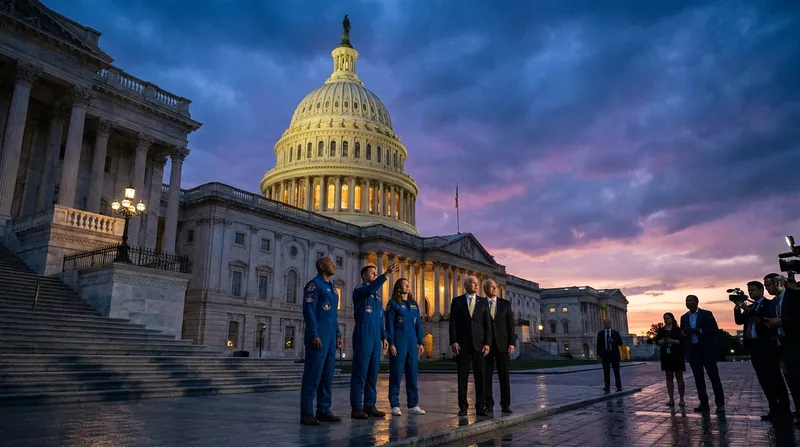
House Democrats Reach 258-Seat Majority as Chuck Hubbard Wins North Carolina Recount
4 sources
Executive Power
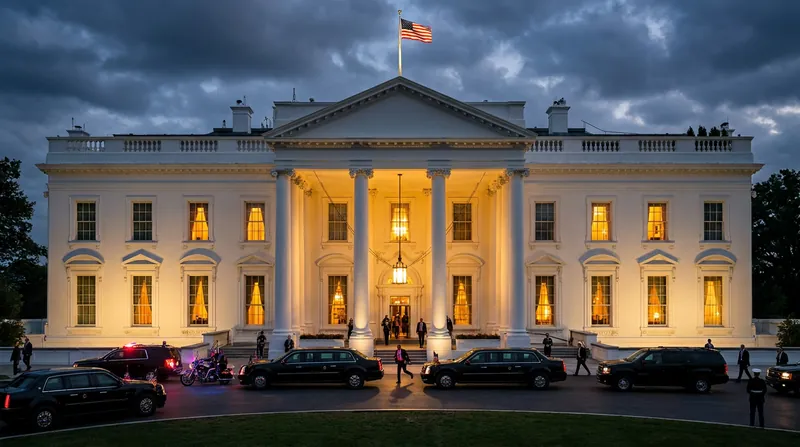
White House Orders Federal Contractors to Clear Congressional Inquiries Before Complying
4 sources
Monument Litigation
Second Federal Judge Halts Construction of Trump's Washington Triumphal Arch
6 sources
AI Infrastructure
Trump Threatens 'Tremendous Tax' on US Tech Companies Building Data Centers Overseas
3 sources

Comments
Every angle. Every day.
Get News & Politics stories with full source coverage and perspective breakdowns, free every day.