
full timeline
US elections
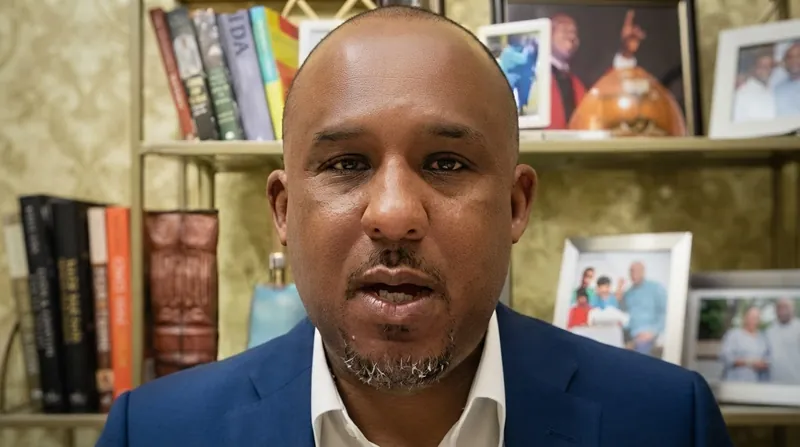
Democrat Scott Colom has defeated Republican incumbent Cindy Hyde-Smith in the Mississippi Senate race, becoming the state's first Black statewide elected official since Reconstruction.
Follow US elections in the Factlen app and get an alert when there is news. Get the app
Share this story
Latest report
Democrat Scott Colom Wins Mississippi Senate Seat in Historic Upset
Democrat Scott Colom has defeated Republican incumbent Cindy Hyde-Smith in the Mississippi Senate race, becoming the state's first Black statewide elected official since Reconstruction. The razor-thin victory delivers Democrats their eighth flipped Senate seat of the 2026 midterms.
- Democrat Scott Colom defeated Republican incumbent Cindy Hyde-Smith in the Mississippi Senate race by a margin of roughly 0.5 percentage points.
- The victory makes Colom the first Democrat elected to the Senate from Mississippi since 1982 and the state's first Black senator since 1874.
- Colom's campaign focused heavily on local economic issues, healthcare access, and Hyde-Smith's controversial remarks on grocery prices.
- The upset delivers Democrats their eighth flipped Senate seat of the 2026 midterms, further expanding their incoming majority.
Democrat Scott Colom has defeated Republican incumbent Cindy Hyde-Smith to win the United States Senate race in Mississippi. The victory, projected by multiple networks on Wednesday, concludes days of tense ballot counting in one of the tightest contests of the 2026 midterm elections.[3][4]
Colom, a 43-year-old district attorney for Mississippi's 16th Judicial District, secured the win by a margin of roughly 4,585 votes, or 0.5 percentage points, with 99 percent of the ballots counted. Hyde-Smith formally conceded the race on Wednesday evening, according to the Colom campaign.[4][5]
The result marks a seismic political shift in the Deep South. Colom becomes the first Democrat elected to the Senate from Mississippi since John C. Stennis won his final term in 1982, shattering a four-decade Republican monopoly on the state's congressional delegation.[1][2]
He also becomes the first Black person elected to statewide office in Mississippi since the Reconstruction era ended in the late 19th century. The state has not sent a Black representative to the Senate since Blanche K. Bruce was seated in 1874.[1][2]
Because Bruce was appointed by the state legislature, Colom's victory makes him the first Black senator from Mississippi to be elected by popular vote since the ratification of the 17th Amendment in 1913.[6]
For the national Democratic Party, the victory delivers an eighth flipped Senate seat in the 2026 cycle. The upset further expands the incoming Democratic majority in the upper chamber, overcoming a political environment dominated by inflation and overseas conflicts.[3][4]
Economic messaging over culture wars
Throughout the campaign, Colom focused heavily on local economic anxieties, healthcare access, and the preservation of rural Mississippi hospitals. He consistently attacked Hyde-Smith's record, arguing she prioritized donor interests over bringing well-paying jobs to the Magnolia State.[3][5]
The Democrat seized on a February 2026 television interview in which Hyde-Smith appeared to dismiss concerns about rising grocery costs. When asked about the surging price of beef, the incumbent suggested that consumers had "so many proteins to choose from."[1][4]
Colom weaponized the remark, dubbing his opponent "Cindy High Prices" and telling voters, "I'd rather pick another senator." The strategy resonated in a state where former President Donald Trump won the 2024 presidential election by nearly 23 points.[1][4]
Hyde-Smith, 67, who was appointed to the Senate in 2018 and became the first woman to represent Mississippi in Congress, attempted to nationalize the race. She labeled Colom "the most radical liberal" to ever seek office in the state.[1][3]
The Republican incumbent frequently referred to Colom as a "Transgender Defender," pointing to a 2021 letter he signed opposing the criminalization of gender-affirming care. Colom countered by clarifying his opposition to gender-affirming surgeries for minors, while calling Hyde-Smith a "chicken" for refusing to debate him.[1]
"There was no point in debating someone so out of touch with Mississippi that he advocates for the sex change surgeries for children," Hyde-Smith's campaign said in response to the debate challenge.[1]
A razor-thin margin
The race remained too close to call for days after the November 3 election, as local officials vetted thousands of provisional ballots. High voter turnout strained the state's election infrastructure, leaving the candidates separated by as little as 0.1 percent in the immediate aftermath.[1][4]
As the tally progressed, updates consistently favored the Democratic challenger. A critical batch of results released on Wednesday increased Colom's margin by more than 1,500 votes, prompting news organizations to project his victory.[4]
The Colom campaign maintained confidence throughout the prolonged counting process, asserting that the outstanding ballots from Democratic-leaning areas would sustain his lead. That confidence was validated on Wednesday evening when Hyde-Smith formally conceded the race.[1][4]
Mississippi law does not provide an automatic recount mechanism for United States Senate races. While trailing candidates can petition the courts for a retallying of ballots, election experts noted that overcoming a deficit of more than 1,000 votes is historically unprecedented.[1]
The final days of the campaign drew massive national attention and surrogate involvement. Former Vice President Kamala Harris and former President Bill Clinton both traveled to Mississippi to rally support for Colom in the closing weeks.[3][4]
Trump also visited the state to energize the Republican base for Hyde-Smith, underscoring the GOP's late realization that the seat was genuinely vulnerable. Despite the high-profile intervention, the incumbent failed to match her previous electoral margins.[4]
As the polling tightened in late October, Democratic super PACs flooded the state with late spending to capitalize on the momentum. The influx of resources allowed Colom to maintain a heavy television presence, broadcasting his attacks on Hyde-Smith's economic record to rural voters.[4]
National implications
Senate Democratic leader Chuck Schumer celebrated the projection on social media. "Blue Mississippi is here. Scott Colom is the only person who could've gotten this done," Schumer wrote, adding that he could not wait to welcome Colom to the chamber.[4]
The Mississippi outcome mirrors other surprising Democratic breakthroughs in the 2026 midterms, including Annie Andrews flipping a Senate seat in South Carolina. These victories suggest a weakening of traditional partisan loyalties in the South when candidates focus on localized economic issues.[4]
Colom's background as a prosecutor and a seventh-generation Mississippian helped insulate him from Republican efforts to paint him as a national progressive. His campaign emphasized his Christian faith and his record of keeping communities safe from violent crime.[5][6]
Before his Senate run, Colom was nominated by President Joe Biden in 2022 to serve on the United States District Court for the Northern District of Mississippi. However, his nomination stalled in the Senate, ultimately leading him to seek electoral office instead.[6]
The transition of power will take place in January 2027, when the new Congress convenes. Colom will join a Senate where Democrats hold a significantly strengthened hand to advance their legislative agenda and confirm judicial nominees.[3][6]
The defeat of a sitting Republican senator in a state that Trump carried so decisively will likely prompt a thorough post-mortem within the GOP. Party strategists are already questioning whether Hyde-Smith's refusal to debate and her controversial public statements fatally undermined her reelection bid.[1][4]
Counties across Mississippi have until Friday to officially certify their election results. While minor adjustments to the final vote tally are expected as the remaining provisional ballots are processed, they will not alter the fundamental outcome of the race.[4]
In his victory remarks, Colom emphasized the historic nature of the turnout and the broad coalition that propelled him to Washington. He told supporters that the election proved "Mississippi matters" on the national stage.[4]
Sources
- [1]TIME — Democrat Scott Colom Wins Nail-Biter Mississippi Senate Race Read on TIME →
- [2]The Guardian — Colom takes victory by razor-thin margin in state that hasn't elected a Democrat to the Senate since 1982 Read on The Guardian →
- [3]CBS News — Democrat Scott Colom wins Mississippi 2026 Senate race, flipping seat in upset - CBS News Read on CBS News →
- [4]CNN — Democrat Scott Colom will win US Senate seat in deep-red Mississippi, CNN projects Read on CNN →
- [5]Scott Colom for Senate — Scott Colom for Senate
- [6]Wikipedia — Scott Colom Read on Wikipedia →
What to watch
- Alaska's Division of Elections will proceed with its scheduled ranked-choice tabulation process for the Senate election.
- South Carolina will hold a special election during the next general election to permanently fill the Senate seat left vacant by Lindsey Graham.
- The incoming unified Democratic Congress is expected to intensify antitrust scrutiny and pursue comprehensive federal data privacy legislation.
- President Trump and Democratic lawmakers may negotiate an immigration compromise to provide legal status for undocumented immigrants who pay taxes.
Earlier updates
1 update
Trump Admits Iran War and Gas Prices Fueled Republican Midterm Losses
Key point: President Trump and Vice President Vance conceded that the economic fallout from the war with Iran was a major factor in the Republican Party's midterm defeat.
AIPresident Donald Trump acknowledged the political cost of his administration's deportation policies during a broadcast interview.From: Trump Concedes Hardline Deportation Stance Harmed Republicans in Midterm Defeats U.S. President Donald Trump has acknowledged that the ongoing war with Iran and the resulting spike in gasoline prices contributed to the Republican Party's sweeping losses in the midterm elections. Speaking to reporters at a White House construction site and in a Fox News interview, Trump conceded that voters were unwilling to tolerate the short-term economic consequences of the conflict. He admitted he was surprised by the extent of the defeat, noting that he had expected the party to perform better following his campaign rallies.
Despite the electoral backlash, Trump defended his decision to launch the military campaign, insisting he would "do it again" because preventing Tehran from acquiring a nuclear weapon outweighed the political costs. Vice President JD Vance offered a starker assessment, stating on social media that the war was the principal reason Republicans lost. Vance challenged the notion that the defeat was due to low turnout, arguing instead that the party must confront the grievances of disillusioned voters who shifted their support to Democrats over inflation and the conflict.
The midterm blowout delivered control of both the House of Representatives and the Senate to the Democratic Party, upending the final two years of Trump's presidency. The shifting balance of power is expected to subject the administration's handling of the Iran conflict to intense congressional scrutiny. Democratic leaders, including top Senate Democrat Chuck Schumer, are already calling for an end to the war, setting the stage for a divided government ready to launch investigations and challenge the president's agenda.
The political fallout follows a surge in global energy costs after Iran blocked the Strait of Hormuz in retaliation for U.S. and Israeli military strikes. While Trump claimed that operations have severely weakened Iran's military capabilities and pointed to renewed oil shipments as evidence of easing disruption, the economic strain became a central issue at the ballot box. Independent voter surveys indicated that the cost of living and the Iran war were crucial factors driving the electorate's decisive rejection of unified Republican control.
7 updates
Democrats Flip Senate Seats in North and South Carolina in Early Midterm Returns
Key point: Democratic candidates Roy Cooper and Annie Andrews have flipped Republican-held Senate seats in North and South Carolina, signaling early momentum for their party.
Democrats have secured crucial victories in the US midterm elections by flipping Senate seats in both North and South Carolina. Roy Cooper won the Senate race in North Carolina, while Annie Andrews defeated Republican Darline Graham in South Carolina.
The South Carolina result is considered a stunning upset and a significant blow to Donald Trump, who had handpicked Graham for the race. The seat was previously held by Graham's late brother, Senator Lindsey Graham, and Republicans had worked extensively to keep it in their control.
These early returns move Democrats significantly closer to securing a Senate majority. The dual victories in the Carolinas represent a major rebuke to the Republican party and highlight a surging blue wave as the midterm elections unfold.
Graham's campaign had faced tightening polls in its final days, with the Republican party fracturing over her candidacy and observers pointing to her own missteps. The loss of these traditionally conservative and battleground seats underscores the challenges the GOP faces as the remaining national results are tallied.
Democrats Flip US House of Representatives in Midterm Rebuke to Trump
Key point: The Democratic Party has regained control of the US House of Representatives, delivering a significant midterm rebuke to the Trump administration.
The Democratic Party has regained majority control of the United States House of Representatives after four years. Media projections confirmed the chamber flipped during the 2026 midterm elections, marking a significant shift in congressional power.
The election results are being widely interpreted as a sweeping rebuke to President Donald Trump and the Republican-led Congress. As the blue wave materialized, Trump responded on social media, arguing that the Republican losses occurred because he was not personally on the ballot and claiming they would have won in a landslide otherwise.
The Democratic majority was secured through critical victories in highly competitive races across the country. In one notable upset contributing to the shift, Democratic challenger Janelle Stelson defeated Republican incumbent Scott Perry to capture Pennsylvania's 10th Congressional District.
This House victory follows two turbulent years since Trump's return to the White House. The shift in the lower chamber aligns with broader Democratic gains, as the party also moves closer to a Senate majority following early seat flips in North and South Carolina.
Keisha Lance Bottoms Wins Georgia Governorship, Making US History
Key point: Democrat Keisha Lance Bottoms has been elected governor of Georgia, becoming the first Black woman to serve as a state chief executive in US history.
Democrat Keisha Lance Bottoms has won the Georgia gubernatorial election, securing a historic victory over her opponent, Rick Jackson. By winning the race, Bottoms becomes the first Black woman to be elected as a state governor in United States history, and the first woman to serve as the chief executive of Georgia.
The outcome of the highly anticipated midterm contest was solidified after Jackson formally conceded the race. Bottoms's triumph successfully flips the Georgia governor's mansion to the Democratic Party, marking the first time in nearly thirty years that a Democrat will hold the state's highest office.
Prior to this election, no Black woman had ever served as the chief executive of any American state. Bottoms has now broken that barrier, adding a landmark achievement to the broader Democratic successes in the ongoing midterm elections.
Democrats Win Control of House and Senate in Major Midterm Rebuke to Trump
Key point: Democrats have secured full control of the US Congress in the 2026 midterms, gaining the power to block President Donald Trump's agenda.
The Democratic Party has won control of both the US House of Representatives and the Senate in the 2026 midterm elections. The sweeping victory secures full Democratic control of Congress, delivering a historic reversal and a major rebuke to President Donald Trump.
Following the results, Trump acknowledged the outcome by stating that Democrats did a good job, while blaming individual Republican candidates for the party's widespread losses. Top House Democrat Hakeem Jeffries celebrated the sweeping victory and vowed to investigate those he accused of enriching themselves.
The newly secured majorities grant Democrats the legislative power to block Trump's agenda and launch investigations into alleged corruption during the final two years of his presidency. The congressional takeover was fueled by stunning statewide upsets, including Democrat James Talarico defeating Republican Ken Paxton in the Texas Senate race, and megachurch pastor Adam Hamilton ousting GOP Senator Roger Marshall in Kansas.
Voter turnout and sentiment were heavily driven by deep public anger over the rising cost of living, punishing tariff policies, and the economic impacts of Trump's war against Iran. Before Tuesday's blue wave, Republicans controlled the outgoing 119th Congress with a 53-seat Senate majority.
Democrat Abdul El-Sayed Wins Michigan Senate Seat, Becoming First Muslim Senator
Key point: Democrat Abdul El-Sayed has defeated Republican Mike Rogers in Michigan, becoming the first Muslim elected to the U.S. Senate.
Democrat Abdul El-Sayed has defeated Republican Mike Rogers to win Michigan's U.S. Senate race, networks projected early Wednesday. The victory makes El-Sayed the first Muslim elected to the upper chamber of Congress.
El-Sayed, a 42-year-old medical administrator, campaigned heavily on leftist promises, including the implementation of universal healthcare to help voters navigate the for-profit medical system. He secured the seat previously held by retiring Democratic Senator Gary Peters, holding a nearly six-point lead when the race was called. The win makes him the first Democratic doctor to serve in the Senate since 1969. In his victory speech to supporters in Detroit, El-Sayed celebrated the historic milestone and directly addressed Vice President JD Vance, stating, "You're constitutionally obligated to swear me in in January."
El-Sayed's success in the battleground state successfully holds the seat for the Democrats, bolstering their incoming majorities in Congress following a night of sweeping midterm victories. He managed to secure the win despite a late curveball in his campaign when Congresswoman Haley Stevens, who had lost the Democratic primary to El-Sayed, publicly endorsed Rogers at the eleventh hour.
The Senate race was marked by highly polarized rhetoric and personal attacks. Trump repeatedly mocked El-Sayed's Arabic name, labeled him a "jihadist," and joked at a rally that the Democrat would have to pass through a metal detector before being allowed onto the Senate floor. El-Sayed also faced intense scrutiny over his family history after reports revealed his mother previously worked for a charity designated by the U.S. Treasury as a terrorist organization, and he drew criticism for stating in an interview that Israel is "not our friend."
Democrats Secure Control of US Congress After Flipping the House
Key point: The Democratic Party has won unified control of the US Congress after securing a majority in the House of Representatives during the 2026 midterm elections.
The Democratic Party has secured a majority in the US House of Representatives, confirming their unified control of Congress following the 2026 midterm elections. The victory marks the party's return to power in the lower chamber after four years of Republican rule.
The decisive "blue wave" saw Democrats sweep both the House and the Senate. The party's success in flipping the House was driven in part by strong performances from women candidates across key battleground districts.
The confirmed Democratic sweep solidifies the projected midterm gains that recently rattled global markets, sending tech shares and the US dollar lower amid policy jitters. Unified control of the legislative branch will now allow the party to advance its agenda with significantly less opposition.
All 435 House seats and approximately one-third of the Senate were contested in the midterms. By capturing both chambers, Democrats have fundamentally reshaped the political landscape in Washington for the remainder of the presidential term.
Global Markets Rebound and Bond Yields Fall Following Democratic Sweep
Key point: Global stocks and U.S. Treasury bonds rallied while the dollar weakened as markets absorbed the Democratic Party's victory in the U.S. midterm elections.
El-Sayed secured the open Senate seat following a highly competitive general election.From: Democrat Abdul El-Sayed Defeats Mike Rogers in Michigan to Become First Muslim US Senator Global stock markets and U.S. equity futures rebounded sharply on Wednesday, while U.S. Treasury bond yields fell as investors digested the Democratic Party's sweep of the midterm elections. The U.S. dollar also weakened against major currencies, accompanied by a rally in safe-haven assets like gold.
Dow Jones Industrial Average futures surged by 912 points, or 1.75 percent, signaling strong opening gains on Wall Street following the decisive election results. In the bond market, U.S. Treasury yields declined as traders adjusted their expectations for future fiscal policy and government borrowing. Meanwhile, investors began picking winners and losers across various sectors, with some tech and artificial intelligence bets facing pressure amid the shifting landscape.
The broad market rally marks a sharp reversal from earlier trading sessions, where projected Democratic gains had initially sparked policy jitters and a sell-off in global equities. Investors appear to have quickly pivoted from uncertainty to pricing in the new political landscape, shifting capital into bonds and broader market indexes while liquidating some pre-election positions.
The market movements follow confirmation that Democrats secured control of both chambers of the U.S. Congress, having successfully flipped the House of Representatives. Analysts note that while unified government control can sometimes bring short-term volatility, historical trends often favor stock market growth once the political outcome is finalized.
1 update
DOJ Asks Washington State to Set Aside Over 400 Ballots Over Noncitizen Voting Claims
Key point: The Justice Department has demanded that Washington state set aside ballots from over 400 suspected noncitizens, a move state officials criticized as an attempt to undermine election confidence.
AIIllustration: Election workers process ballots in Alaska, where a federal judge has allowed tabulation to continue uninterrupted.From: Federal Judge Dismisses Justice Department Attempt to Block Alaska Senate Certification The U.S. Justice Department has asked Washington state to set aside ballots from more than 400 individuals it suspects are noncitizens ineligible to vote. In a letter sent to Washington Secretary of State Steve Hobbs on Monday, federal prosecutors claimed the individuals had cast about 1,500 votes in prior elections and requested their upcoming midterm ballots be segregated until their eligibility is confirmed.
Acting U.S. Attorney Neil Floyd described the identified voters as the "tip of the iceberg," though the DOJ did not publicly disclose evidence for the claims. Hobbs stated his office is reviewing the demand but criticized the timing—just eight days before Election Day—as an attempt to cast unfounded suspicion on the election results.
The Washington request marks the latest in a series of direct state challenges by the Trump administration as voting is underway. It follows a similar DOJ effort in California, where a federal appeals court recently rejected the department's attempt to sequester mail ballots from up to 20,000 people.
Charts, maps and images
Timeline
November 2026
Democrat Scott Colom Wins Mississippi Senate Seat in Historic Upset
Trump Concedes Hardline Deportation Stance Harmed Republicans in Midterm Defeats
South Korea Halts Trading as Kospi Plunges 8.8 Percent in $2.5 Trillion Global Tech Rout
Democrat Annie Andrews Flips South Carolina Senate Seat in Historic Upset
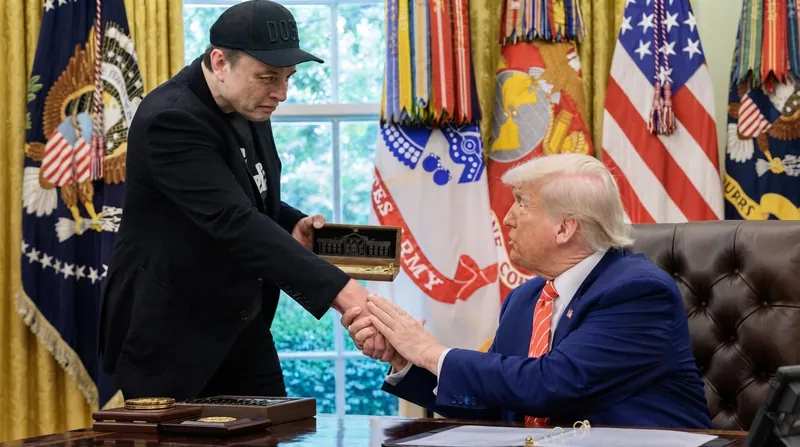
AI- Trump Admits Iran War and Gas Prices Fueled Republican Midterm LossesKey point: President Trump and Vice President Vance conceded that the economic fallout from the war with Iran was a major factor in the Republican Party's midterm defeat.
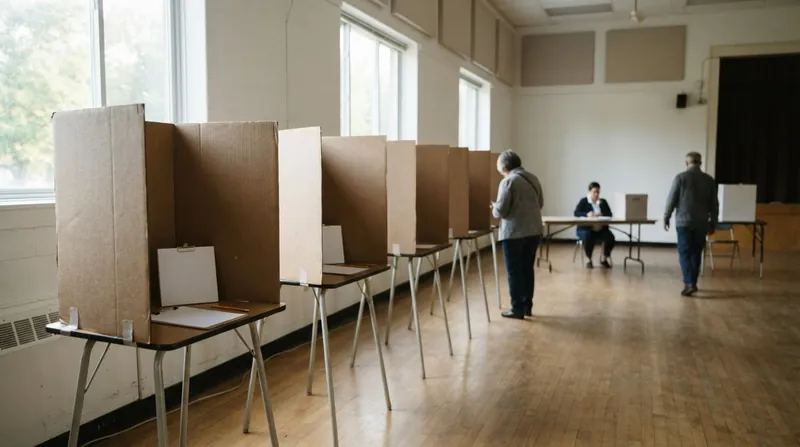
Voters cast ballots in nationwide congressional races that determine the balance of power in the United States government.
AIAIAIAI- Democrats Flip Senate Seats in North and South Carolina in Early Midterm ReturnsKey point: Democratic candidates Roy Cooper and Annie Andrews have flipped Republican-held Senate seats in North and South Carolina, signaling early momentum for their party.
- Democrats Flip US House of Representatives in Midterm Rebuke to TrumpKey point: The Democratic Party has regained control of the US House of Representatives, delivering a significant midterm rebuke to the Trump administration.
- Keisha Lance Bottoms Wins Georgia Governorship, Making US HistoryKey point: Democrat Keisha Lance Bottoms has been elected governor of Georgia, becoming the first Black woman to serve as a state chief executive in US history.
- Democrats Win Control of House and Senate in Major Midterm Rebuke to TrumpKey point: Democrats have secured full control of the US Congress in the 2026 midterms, gaining the power to block President Donald Trump's agenda.
- Democrat Abdul El-Sayed Wins Michigan Senate Seat, Becoming First Muslim SenatorKey point: Democrat Abdul El-Sayed has defeated Republican Mike Rogers in Michigan, becoming the first Muslim elected to the U.S. Senate.
- Democrats Secure Control of US Congress After Flipping the HouseKey point: The Democratic Party has won unified control of the US Congress after securing a majority in the House of Representatives during the 2026 midterm elections.
- Global Markets Rebound and Bond Yields Fall Following Democratic SweepKey point: Global stocks and U.S. Treasury bonds rallied while the dollar weakened as markets absorbed the Democratic Party's victory in the U.S. midterm elections.
Supreme Court Rejects Trump Administration Bid to Exclude 20,000 California Ballots
AIAIFederal Judge Dismisses Justice Department Attempt to Block Alaska Senate Certification
AIAIAIAI







How the story developed
The 2026 midterm cycle began taking shape on May 31 when Texas Attorney General Ken Paxton defeated incumbent John Cornyn in the Republican primary runoff, setting up a general election against Democrat James Talarico. On July 12, the sudden death of South Carolina Senator Lindsey Graham at age 71 created a vacancy, prompting Governor Henry McMaster to appoint a temporary successor. By August 17, polling indicated tight races in Texas, with an Emerson College poll showing Paxton and Talarico statistically tied at 47 percent to 46 percent, and Governor Greg Abbott holding a narrow lead over Democratic challenger Gina Hinojosa, 49 percent to 45 percent. Despite the tight polling, Abbott held over $67 million in cash on hand.
In September, legal battles over election procedures reached the Supreme Court. After a First Circuit appellate panel upheld an injunction on September 13 blocking a new U.S. Postal Service rule requiring states to register voters in a federal portal and use specific barcodes for mail-in ballots, the Trump administration sought emergency intervention. State election officials argued that redesigning and reprinting envelopes for 50 million expected mail ballots was logistically impossible. On September 15, the Supreme Court rejected the bid to impose the last-minute restrictions via its emergency docket, preserving existing state election procedures.
As the election neared, an October 16 survey revealed that 80 percent of registered voters wanted substantial change, while President Trump's approval rating fell to 36 percent. Tensions escalated on the campaign trail on October 26 when Trump invoked the September 11 attacks and repeated claims linking Michigan Democratic Senate nominee Abdul El-Sayed to the Muslim Brotherhood, claims described as debunked. Meanwhile, on October 23, the Justice Department, directed by Trump, sued to block the certification of Alaska's Senate election over ballot confusion involving two candidates named Dan Sullivan. A federal judge dismissed the lawsuit on November 2, ruling that separating already-cast ballots would violate voter privacy.
Following a record 54 million early votes, Election Day on November 3 and 4 resulted in Democrats securing full control of the US Congress. The Democratic Party flipped the House of Representatives and captured multiple Senate seats. In North Carolina, Roy Cooper won a Senate seat, while in South Carolina, pediatrician Annie Andrews defeated Republican Darline Graham on November 5, leveraging a $24.2 million fundraising advantage to become the first woman elected to represent the state in the Senate. President Trump's job approval rating dropped to a term-low 32 percent by November 4, with 64 percent of voters intending to use their ballot to express opposition to the administration.
The midterms yielded several historic outcomes on November 4. In Michigan, Abdul El-Sayed overcame a late-stage endorsement retraction from Democratic Representative Haley Stevens to defeat Republican Mike Rogers, becoming the first Muslim elected to the U.S. Senate. In Texas, James Talarico defeated Ken Paxton for a Senate seat, and Gina Hinojosa ousted Greg Abbott with 57.1 percent of the vote to become the state's first Latina governor. In Georgia, Keisha Lance Bottoms became the first Black woman elected as a state chief executive in US history.
The projected Democratic sweep initially caused global tech shares and the US dollar to sink. On November 6, South Korea's Kospi index triggered a circuit breaker after plunging 8.8 percent, following a 5.5 percent drop in the Nasdaq that erased $2.5 trillion in U.S. market value amid fears of impending artificial intelligence regulations. However, global markets and U.S. Treasury bonds eventually rebounded as markets absorbed the Democratic Party's victory.