
Pentagon Revokes Former Air Force Chief's Security Clearance Over Air Force One Disclosure
The Department of Defense has stripped Frank Kendall of his access to classified information, alleging he leaked sensitive details about the defensive vulnerabilities of a Qatari-donated presidential aircraft.
By Adel Khoury
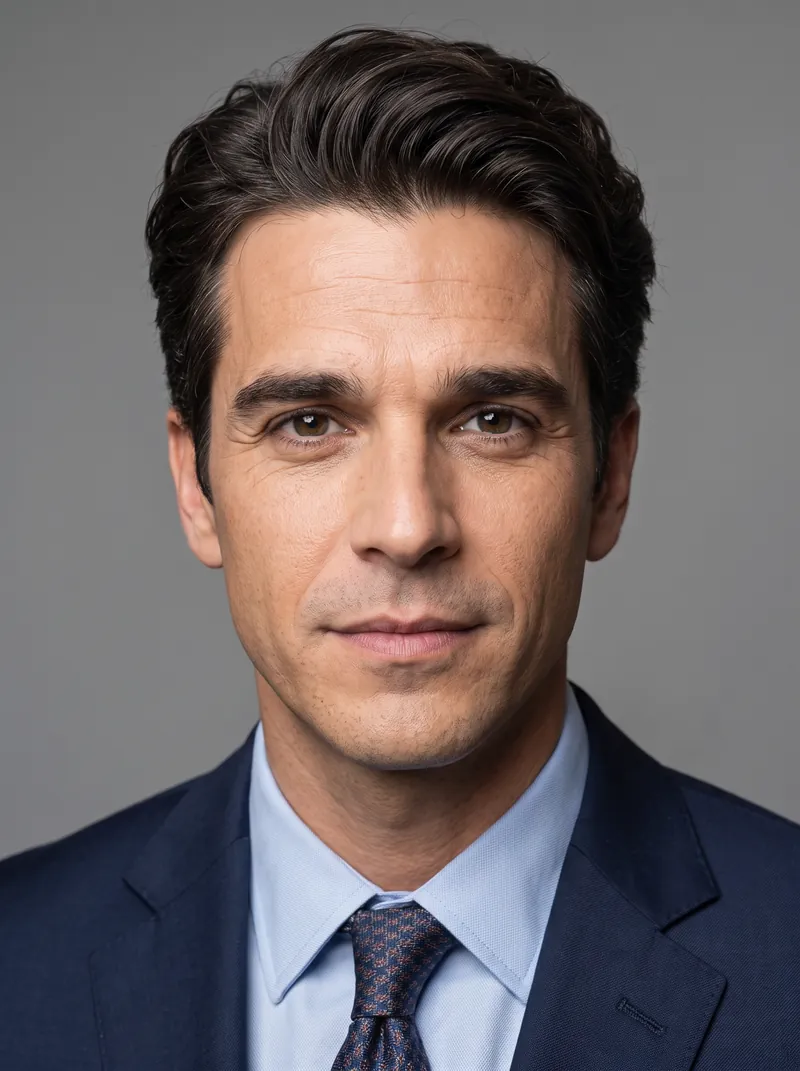
The sudden revocation of former Air Force Secretary Frank Kendall’s security clearance is widely being framed as a straightforward response to a classified leak. However, the evidence suggests it is instead the climax of a month-long, highly public dispute between the Trump administration and the press over the defensive vulnerabilities of a Qatari-donated Boeing 747 now serving as Air Force One.
By stripping a former service chief of his access to state secrets, the administration has escalated a confrontation that touches on presidential safety, press freedom, and the weaponization of administrative authority.[1][4]
Chief Pentagon Spokesman Sean Parnell announced the disciplinary action late Friday, stating that the Department of Defense had immediately revoked Kendall’s eligibility to access classified information and barred him from holding any sensitive position. The Pentagon alleged that Kendall made an 'unauthorized disclosure of classified information regarding Air Force One's capabilities to a media outlet.' Parnell framed the move as a necessary step to safeguard presidential transport details, declaring that protecting classified information is a non-negotiable duty and that those who violate that trust inherently forfeit the privilege of access.[1][6]
Kendall, who led the Air Force from 2021 to 2025 during the Biden administration, forcefully rejected the accusation. In a statement to reporters, he described himself as 'completely mystified' by the revocation, asserting that he has always been extremely careful not to cross into classified territory during his public appearances. He further noted that the Pentagon has not informed him of what specific information he allegedly revealed, nor have they named the media outlet in question, leaving him unable to directly address the underlying claims.[2][5]
The mechanism of security clearance revocation grants the executive branch broad, largely unilateral authority over who can access state secrets. While clearances are routinely suspended during active criminal investigations or upon the discovery of severe financial compromises, administrative revocations without accompanying Espionage Act charges are relatively rare.
However, they have become an increasingly utilized tool under Defense Secretary Pete Hegseth to discipline former officials who publicly clash with the administration's narrative. Because clearances are considered a privilege rather than a right, the government faces a very low burden of proof when deciding to sever access.[1][4]
The underlying subject of the dispute is a modified luxury Boeing 747-8 donated to the United States by the Qatari government last year. The aircraft underwent a rapid, $400 million retrofit to serve as President Donald Trump's official transport, bypassing the traditional, decade-long procurement process for presidential aircraft. While the administration championed the swift deployment of the aircraft as a triumph of efficiency, defense analysts and former military officials quickly raised concerns about its defensive posture in hostile airspace.[1][5]
The Air Force has publicly acknowledged that the Qatari-donated jet lacks several highly complex engineering modifications found on the traditional VC-25A fleet. Specifically, the new aircraft was put into service without the advanced antimissile defense systems, hardened secure communications suites, and structural hull modifications that define the older Air Force One models. These omissions were reportedly accepted to expedite the plane's delivery, fundamentally altering the risk profile of presidential travel.[1][2]
Kendall's involvement centers on his recent public commentary regarding these missing capabilities. He was quoted in both The New York Times and The Wall Street Journal expressing surprise that the new plane was being used for international travel given its rapid modification timeline. He also publicly voiced skepticism that the aircraft had been 'maxed out' with security features, directly contradicting the administration's public assurances that the plane was fully equipped to handle any global threat.[4][5]
The debate over the plane's safety moved from theoretical to operational during last month's NATO summit in Turkey. President Trump flew the new Qatari-donated aircraft to the summit, intending to showcase the vessel on the world stage. However, the U.S. Secret Service abruptly swapped him to the older, traditional Air Force One for the return flight to Washington, leaving the new aircraft behind. The sudden logistical pivot immediately drew scrutiny from the press corps traveling with the President, prompting questions about the new plane's viability.[1]
U.S. officials later disclosed that the swap was triggered by a credible plot to fire a missile at the presidential aircraft amid escalating hostilities with Iran. The Secret Service determined that the new plane's defenses were insufficient for the heightened threat environment, necessitating a return to the older aircraft, which is equipped with sophisticated military countermeasures designed to jam and deflect incoming projectiles. The incident laid bare the exact vulnerabilities that Kendall and other defense analysts had been warning about, transforming a procurement debate into an active national security crisis.[1][4]
The administration has been highly sensitive to coverage of this incident. President Trump publicly denied that the aircraft swap was due to security concerns, insisting that the new plane was perfectly safe. Nevertheless, the White House subsequently announced that the Qatari-donated plane would undergo an additional month of 'upgrades and enhancements' this fall, tacitly acknowledging that the aircraft required further modification before it could safely operate in contested airspace.[1][3]
The Pentagon's move against Kendall is part of a broader, aggressive campaign to stem unauthorized disclosures and punish critics who highlight these discrepancies. Last month, the Justice Department issued subpoenas to New York Times reporters in an attempt to uncover their sources for the Air Force One security story. The DOJ only dropped the effort after a federal judge indicated the investigation violated press protections, shifting the administration's focus from the journalists to the suspected leakers.[4]
The revocation also fits a pattern of the current Defense Department leadership using administrative security powers against former officials. Defense Secretary Hegseth previously pulled the security clearance of Gen. Mark Milley, the retired Joint Chiefs of Staff chairman, shortly after taking office. Furthermore, the administration revoked clearances for 37 other former national security officials last year, signaling a willingness to sever access for anyone deemed insufficiently loyal or overly critical of executive branch decisions.[1][2]
For former senior officials like Kendall, losing a security clearance carries significant professional consequences. It effectively bars them from lucrative defense consulting, corporate advisory boards, and roles that require access to classified threat assessments. More broadly, it severs their ability to advise current military leadership on complex, ongoing strategic programs, isolating institutional knowledge from the active chain of command. By targeting Kendall's clearance, the Pentagon is not just punishing a single individual, but sending a stark warning to the entire defense establishment about the cost of public dissent.[2][5]
The Pentagon has declined to state whether Kendall’s case is being referred to the Justice Department for criminal prosecution under the Espionage Act. Until such a referral is made, the standoff leaves a core tension unresolved: whether Kendall actually crossed a legal line into classified territory, or whether the administration is utilizing its administrative authority to penalize a prominent critic for highlighting an embarrassing security gap. As the Qatari-donated aircraft heads back for upgrades, the fallout from its deployment continues to ripple through the national security apparatus.[1][4]
Key points
- The Pentagon revoked former Air Force Secretary Frank Kendall's security clearance over alleged unauthorized disclosures to the media.
- The dispute centers on Kendall's public comments regarding the defensive vulnerabilities of a Qatari-donated Boeing 747 serving as Air Force One.
- Kendall denied sharing classified information, stating he is 'completely mystified' by the disciplinary action.
- The Secret Service previously swapped the President to an older aircraft in Turkey due to a credible missile threat.
What we don’t know
- What specific classified information the Pentagon believes Frank Kendall disclosed to the media.
- Whether the Department of Defense plans to refer Kendall's case to the Justice Department for prosecution under the Espionage Act.
- The exact nature of the 'upgrades and enhancements' the Qatari-donated Air Force One will receive this fall.
How we got here
2025
The Qatari government donates a luxury Boeing 747-8 to the United States, which undergoes a rapid $400 million retrofit to serve as presidential transport.
July 2026
President Trump flies the new aircraft to the NATO summit in Turkey, but the Secret Service swaps him to the older Air Force One for the return flight due to a credible missile threat.
Late July 2026
The New York Times and Wall Street Journal publish reports detailing the new aircraft's lack of advanced antimissile capabilities, quoting former Air Force Secretary Frank Kendall.
July 2026
The Justice Department subpoenas New York Times reporters over the Air Force One coverage, later dropping the subpoenas following judicial pushback.
August 7, 2026
The Pentagon immediately revokes Frank Kendall's security clearance, alleging he made an unauthorized disclosure of classified information to the media.
- Defense Department Leadership
- Argues that safeguarding presidential transport details is a non-negotiable duty and unauthorized disclosures inherently risk national security.
- Former Military Officials
- Argues the revocation is retaliatory, designed to punish Kendall for publicly confirming known shortcomings of the Qatari-donated aircraft.
- Press Freedom Advocates
- Views the clearance revocation and recent DOJ subpoenas as a coordinated effort to chill national security journalism.
Perspectives this story doesn't cover
- The Secret Service detail responsible for presidential transport security
- Aviation engineers familiar with the VC-25A modifications
Sources
Source coverage
6 outlets
3 viewpoints surfaced






- [1]CBS NewsFormer Military Officials
Pentagon revokes security clearance of former Air Force chief for disclosing 'classified information regarding Air Force One's capabilities'
Read on CBS News → - [2]The Associated PressFormer Military Officials
Pentagon revokes former Air Force Secretary Frank Kendall’s access to classified information
Read on The Associated Press → - [3]Fox NewsDefense Department Leadership
Former Air Force Secretary Frank Kendall has security clearance revoked over Air Force One disclosure
Read on Fox News → - [4]The New York TimesPress Freedom Advocates
Pentagon Strips Former Air Force Secretary of Security Clearance Over Aircraft Comments
Read on The New York Times → - [5]The Wall Street JournalPress Freedom Advocates
Pentagon Revokes Frank Kendall’s Security Clearance Over Alleged Disclosure
Read on The Wall Street Journal → - [6]Department of DefenseDefense Department Leadership
Statement on Security Clearance Revocation
Read on Department of Defense →
More in News & Politics
See all →Dual Sovereignty
The Dual Sovereignty Doctrine: Why the Double Jeopardy Clause Allows Two Trials for One Crime
6 sources
Climate Liability
Supreme Court Hears Landmark Arguments on Whether Cities Can Sue Big Oil Over Climate Damages
4 sources
Executive Power
Trump Directs $2 Billion From Medicare Fund for $90 Senior Rebates Ahead of Midterms
7 sources
Federal Savings Programs
Treasury Department Completes Automatic Enrollment of 60 Million Children in Trump Accounts
8 sources
Comments
Every angle. Every day.
Get News & Politics stories with full source coverage and perspective breakdowns, free every day.