
Acer Enters 7-Inch Handheld Market With 80Wh Predator Atlas 7
Acer has expanded its portable gaming lineup with the Predator Atlas 7, combining a massive 80-watt-hour battery with Intel's Arc B390 graphics in a compact 7-inch form factor.
By Ryder James

Share this story
A portable PC gaming device is only as useful as its battery life, a physical constraint that has forced manufacturers to either accept two-hour runtimes or build increasingly bulky hardware. Acer’s newly announced Predator Atlas 7 attempts to break that compromise, packing an 80-watt-hour battery into a compact 7-inch chassis.[1][4]
The device, unveiled this week, marks a deliberate shift in Acer's handheld strategy. While competitors have moved toward larger 8-inch or 8.8-inch screens to justify heavier batteries, the Atlas 7 retains the smaller footprint popularized by the original Steam Deck and Asus ROG Ally, but doubles the battery capacity of those first-generation devices.[2][3]
"We are pushing the physical limits of what can fit inside a 7-inch form factor," Acer representatives noted during the reveal, emphasizing that the engineering focus was entirely on power density and thermal management.[5]
Driving the 120Hz FHD display is Intel's new Arc B390 graphics architecture, also referred to in hardware circles as the Arc G3 Extreme silicon. This represents a significant departure from the AMD Ryzen Z1 Extreme processors that currently dominate the Windows handheld market.[1][5]
Intel's mobile graphics push is critical for the Atlas 7's viability. The Arc B390 chip is designed to leverage Intel's XeSS upscaling technology, which renders games at lower internal resolutions before using AI to upscale them to the screen's native 1080p, saving crucial wattage in the process.[3][5]
The 80Wh battery is the defining specification. For context, Valve's Steam Deck OLED utilizes a 50Wh battery, while the original Asus ROG Ally shipped with a 40Wh unit. Only recent, heavier revisions like the ROG Ally X have managed to hit the 80Wh mark, making Acer's achievement in a smaller 7-inch frame a notable engineering milestone.[1][4]
Heat dissipation remains the primary challenge when pairing an 80Wh battery with a 120Hz display in a condensed shell. Acer has implemented a dual-fan cooling system with high-density copper heat pipes to prevent the Intel silicon from thermal throttling during extended sessions.[2][4]
The handheld market has become increasingly crowded in 2026, with Lenovo, Asus, MSI, and Valve all fighting for market share. Acer's entry signals that major PC manufacturers still see substantial growth in the category, provided they can solve the battery life equation that frustrates early adopters.[2][3]
Perspectives explored
Hardware Enthusiasts
Focused on the engineering achievement of the battery density.
For the teardown and modification community, the Atlas 7 represents a significant packaging achievement. Fitting an 80Wh battery into a 7-inch chassis without compromising the cooling required for Intel's Arc B390 silicon addresses the primary complaint leveled against first-generation Windows handhelds. Enthusiasts are closely watching the thermal benchmarks, noting that if Acer has solved the heat dissipation challenge, this power density could become the new baseline for the entire category.
Market Analysts
Evaluating the shift toward Intel silicon in a market dominated by AMD.
Industry observers view the Atlas 7 as a critical test for Intel's mobile gaming ambitions. With AMD's Ryzen Z1 series currently holding a near-monopoly on Windows handhelds, Intel's Arc G3 architecture needs to prove it can compete on performance-per-watt. Analysts point out that Acer's decision to pair the unproven Intel chip with a massive battery might be a calculated hedge, ensuring the device delivers acceptable playtime even if the silicon proves less efficient than its AMD rivals.
Key points
- Acer announced the Predator Atlas 7, a new 7-inch Windows gaming handheld.
- The device features an 80Wh battery, doubling the capacity of early 7-inch competitors.
- It utilizes Intel's new Arc B390 graphics architecture rather than standard AMD chips.
- The 120Hz FHD display is cooled by a dual-fan thermal system designed for the compact chassis.
- Hardware Reviewers
- Focused on the engineering achievement of fitting an 80Wh battery into a 7-inch chassis.
- Consumer Tech Press
- Evaluating the device's portability and appeal to mainstream gamers.
- Silicon Analysts
- Analyzing Intel's push into a handheld market currently dominated by AMD.
Perspectives this story doesn't cover
- Game Developers
- AMD Representatives
Sources
Source coverage
5 outlets
3 viewpoints surfaced



- [1]igor´sLABHardware Reviewers
Acer Predator Atlas 7 arrives with Arc B390, 120 Hz FHD and up to 80 Wh
Read on igor´sLAB → - [2]TechPowerUpHardware Reviewers
Acer Expands Gaming Handheld Portfolio With Predator Atlas 7
Read on TechPowerUp → - [3]GamerTechConsumer Tech Press
Acer Predator Atlas 7: A Smaller, More Portable Gaming Handheld with Intel Arc G3
Read on GamerTech → - [4]GizmochinaConsumer Tech Press
Acer unveils Predator Atlas 7 Windows gaming handheld with 120Hz display & 80Wh battery
Read on Gizmochina → - [5]WccftechSilicon Analysts
Acer's Predator Atlas 7 Shrinks To A 7-Inch 120Hz Screen But Keeps The Same Intel Arc G3 Extreme Silicon
Read on Wccftech →

More in Gaming & Esports
See all →Mobile Architecture
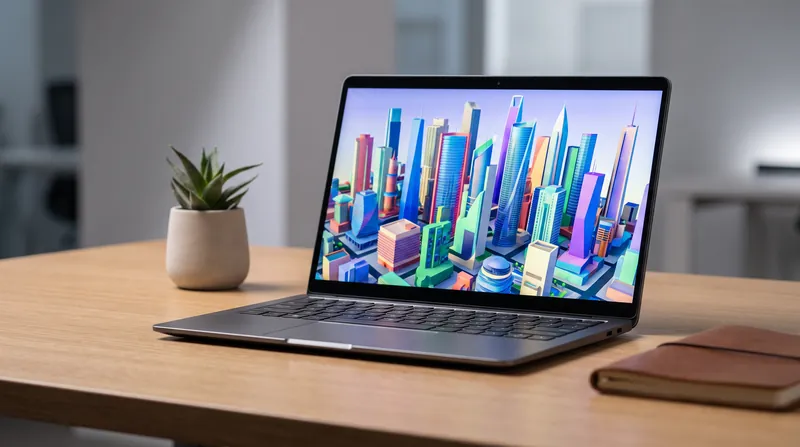
Nvidia Details RTX Spark Superchip: 20-Core ARM CPU and 6144-Core Blackwell GPU for Fall Laptops
5 sources
Graphics Tech
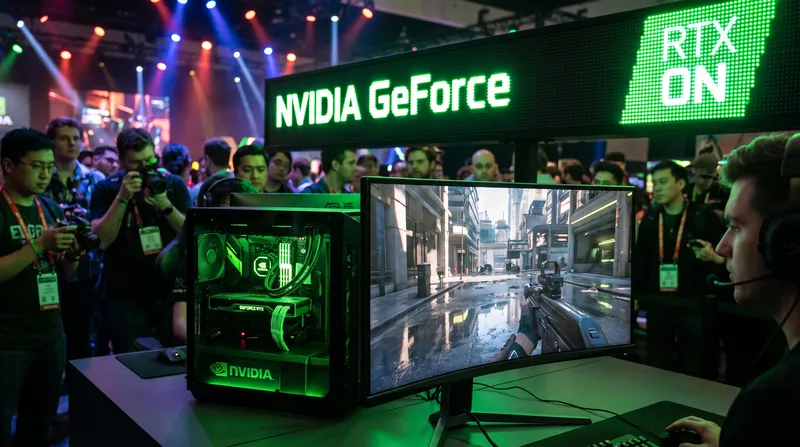
Nvidia Launches DLSS 4.5 Ray Reconstruction at Gamescom, Overhauling PC Ray Tracing
6 sources
Esports Gear
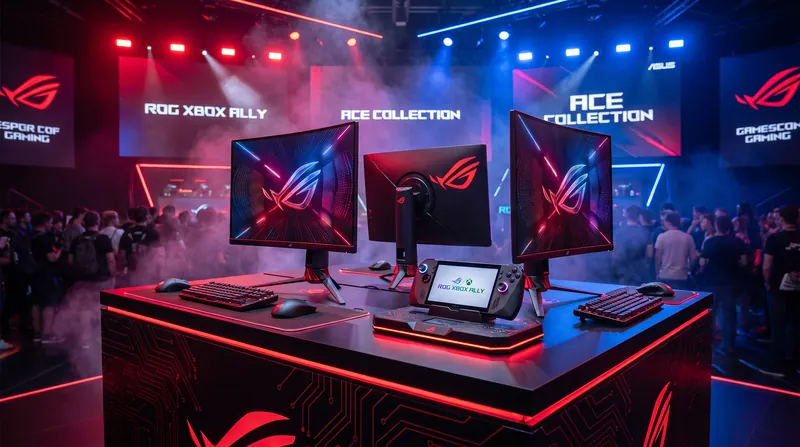
ASUS ROG Unveils 'Ace Collection' Esports Hardware Line at Gamescom, Signs GamerLegion
3 sources
Silicon Economics
Nvidia Authorizes Record $150 Billion Share Buyback as Market Cap Eclipses $5 Trillion
6 sources

Comments
Every angle. Every day.
Get Gaming & Esports stories with full source coverage and perspective breakdowns, free every day.