
Nvidia Launches DLSS 4.5 Ray Reconstruction at Gamescom, Overhauling PC Ray Tracing
Nvidia has released DLSS 4.5 Ray Reconstruction for all GeForce RTX GPUs, utilizing a second-generation AI model to significantly enhance image quality and performance in path-traced games.
By Ryder James

The era of compromising between visual fidelity and playable frame rates in PC gaming is taking another massive hit. For years, turning on full path tracing meant accepting a blurry, ghosting image as traditional denoisers struggled to fill in the gaps of simulated light. Now, the math has changed. Gamers with RTX graphics cards can offload that heavy lifting entirely to a unified AI model, extracting sharper reflections and cleaner motion without buying new hardware.
It is a fundamental shift in how rendering pipelines operate, moving away from hand-tuned developer workarounds and toward a machine-learning approach that understands the entire scene at once. For the player, the stakes are simple: the games you already own are about to look significantly better and run smoother, entirely for free.
At Gamescom 2026 in Cologne, Nvidia officially launched DLSS 4.5 Ray Reconstruction, making the highly anticipated feature available immediately via an update to the NVIDIA app. The rollout brings Nvidia's second-generation transformer model to all GeForce RTX GPUs, fundamentally altering how ray-traced and path-traced games are rendered.
By combining denoising and Super Resolution into a single AI-driven pipeline, the update delivers 35 percent more compute capability and processes 20 percent more parameters while maintaining the exact same performance footprint as its predecessor. Rather than relying on multiple separate denoisers for shadows, reflections, and global illumination, the unified model intelligently uses game engine pixel sampling and motion data to produce a vastly more stable image.[1][3][6]
The technology arrives with immediate support for 30 major titles, including heavyweights like Cyberpunk 2077, Alan Wake 2, and the upcoming Call of Duty: Black Ops 7. Nvidia also showcased upcoming integrations on the show floor, revealing that 007 First Light will receive its path tracing and DLSS 4.5 update in mid-September, while Control Resonant is currently being bundled with new RTX hardware to highlight the tech's capabilities.
For developers, the unified model removes the need to hand-tune multiple denoisers for different lighting effects, streamlining the pipeline for future releases. The update also extends to the modding community, with RTX Remix receiving a DLSS 4.5 upgrade that will power upcoming projects like the highly anticipated The Elder Scrolls III: Morrowind RTX.[2][3][5]
The rollout of DLSS 4.5 arrives just days after Nvidia CEO Jensen Huang addressed industry pushback regarding the company's broader AI roadmap. Following the recent unveiling of DLSS 5, some critics expressed concern that aggressive AI reconstruction might apply an unwanted sheen to character models, overriding artistic intent.
Huang firmly rejected the premise, arguing that Nvidia's tools fuse the controllability of traditional geometry and textures with generative AI, leaving direct creative control entirely in the hands of developers. The immediate adoption of DLSS 4.5 by major studios—including Bethesda, Capcom, and Ubisoft—suggests that the industry remains eager to leverage Nvidia's neural networks to solve complex rendering challenges.[2]
The upgrades are not limited to local desktop hardware. Nvidia announced that GeForce NOW Ultimate members will receive DLSS 4.5 controls in the cloud this fall, allowing players to utilize Ray Reconstruction and Dynamic Frame Generation even on low-end devices. This move effectively democratizes high-end path tracing, letting players stream uncompromised visuals to standard laptops or mobile screens. The cloud platform is also expanding its ecosystem integration, introducing single sign-on support for GOG accounts and broadening compatibility to include more Amazon Fire TV devices and Firefox browser support.[4]
Meanwhile, the company detailed its upcoming RTX Spark platform—a new class of AI-ready PCs arriving later this year designed to unify gaming, content creation, and local AI workloads. Targeting 1440p gaming at over 100 frames per second, the Spark ecosystem has already secured commitments from major publishers including Electronic Arts, Ubisoft, and Embark Studios. Titles like Apex Legends, Anno, and ARC Raiders will be optimized for the platform, which also features native support for Nvidia's Javelin anti-cheat system to ensure competitive integrity on ARM-based and AI-heavy architectures.[2][3]
Beyond upscaling, Nvidia used the Gamescom stage to push its broader rendering and display initiatives. The company revealed that Gears of War: E-Day will introduce RTX Mega Geometry, a technique that allows Unreal Engine 5's Nanite system to render at full detail in ray tracing for the first time.
Nvidia noted that this technique, the product of six years of research and development, will eventually be adopted into Microsoft's DirectX Raytracing 2.0 standard. On the hardware front, AGON by AOC unveiled the first 5K G-SYNC Pulsar monitor, while the NVIDIA app received an update to support G-SYNC Pulsar controls natively.[2][3]
Nvidia is also pushing further into generative AI for gameplay mechanics. The company's ACE suite—designed to power intelligent non-playable characters—is being integrated into upcoming titles like Aniimo, allowing players to interact with in-game creatures using natural language. Similarly, publisher KRAFTON showcased AI teammates that combine speech recognition and small language models with live game-state data to coordinate strategies dynamically.
As the PC gaming industry braces for the eventual reveal of the RTX 50 Series, this sweeping suite of Gamescom announcements proves that Nvidia's most significant advancements are no longer just in silicon, but in the neural networks that run on top of it.[3]
Key points
- Nvidia launched DLSS 4.5 Ray Reconstruction for all GeForce RTX GPUs at Gamescom 2026.
- The update replaces traditional denoisers with a unified AI model for sharper ray-traced images.
- Thirty games support the feature at launch, including Cyberpunk 2077 and Alan Wake 2.
- GeForce NOW will add DLSS 4.5 controls for cloud gamers this fall.
- Hardware Enthusiasts
- Focused on maximizing performance and visual fidelity on existing graphics cards.
- Game Developers
- Interested in streamlined rendering pipelines and easier implementation of advanced lighting.
- Cloud & Ecosystem Gamers
- Focused on the expansion of high-end features to streaming platforms and new form factors.
Perspectives this story doesn't cover
- Console Gamers
- AMD Radeon Users
Sources
Source coverage
6 outlets
3 viewpoints surfaced






- [1]Digital TrendsHardware Enthusiasts
Nvidia DLSS 4.5 Ray Reconstruction arrives at Gamescom 2026
Read on Digital Trends → - [2]GamesIndustry.bizGame Developers
Nvidia details DLSS 4.5 and RTX Spark at Gamescom
Read on GamesIndustry.biz → - [3]SportskeedaCloud & Ecosystem Gamers
Every NVIDIA announcement at Gamescom 2026
Read on Sportskeeda → - [4]Nvidia BlogCloud & Ecosystem Gamers
GeForce NOW Gives Gamers More Ways to Play at Gamescom 2026
Read on Nvidia Blog → - [5]Instant GamingHardware Enthusiasts
NVIDIA On at Gamescom 2026
Read on Instant Gaming → - [6]India TimesHardware Enthusiasts
Nvidia releases DLSS 4.5 Ray Reconstruction at Gamescom 2026
Read on India Times →

More in Gaming & Esports
See all →Handheld PCs
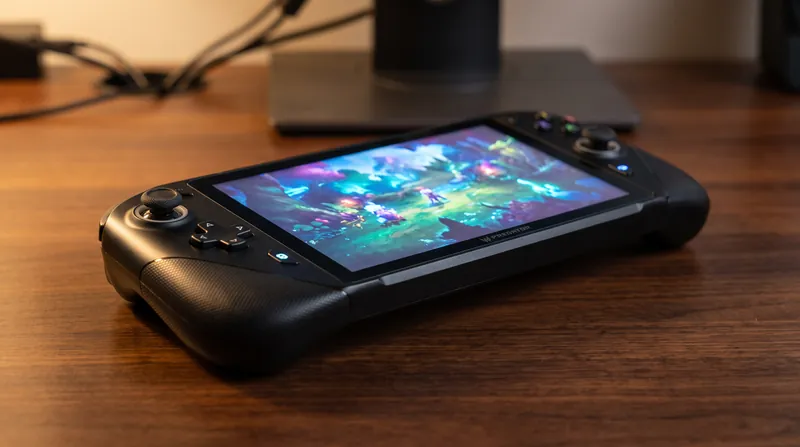
Acer Enters 7-Inch Handheld Market With 80Wh Predator Atlas 7
5 sources
Mobile Architecture
Nvidia Details RTX Spark Superchip: 20-Core ARM CPU and 6144-Core Blackwell GPU for Fall Laptops
5 sources
Esports Gear
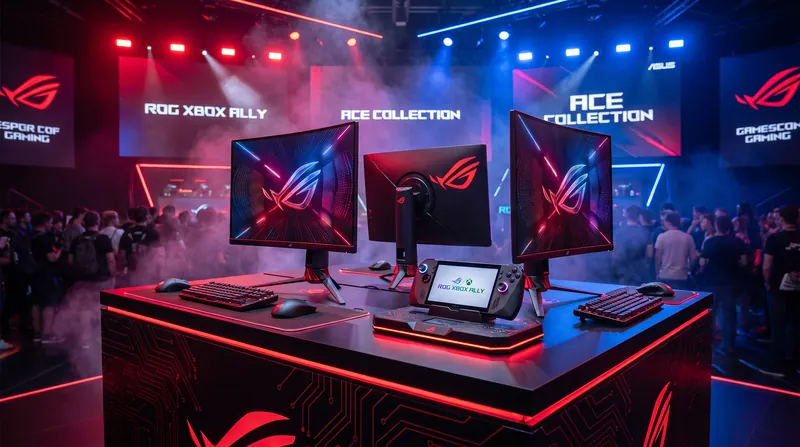
ASUS ROG Unveils 'Ace Collection' Esports Hardware Line at Gamescom, Signs GamerLegion
3 sources
Hardware Supply Chain
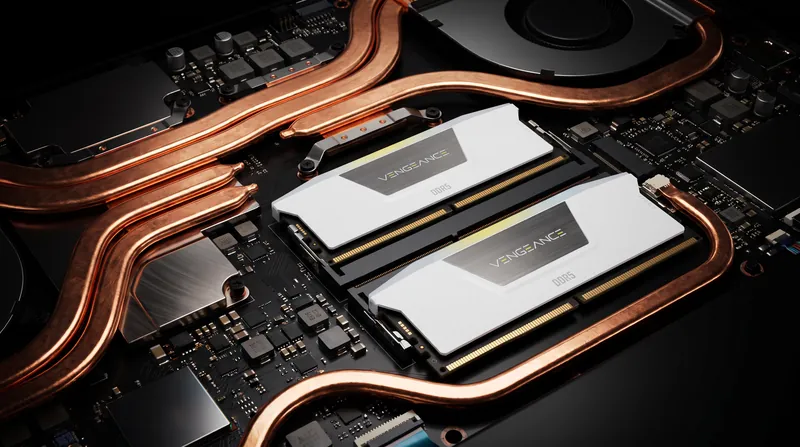
XMG Raises Gaming Laptop Prices by Up to €300 as DDR5 Memory Costs Surge Sixfold
6 sources
Comments
Every angle. Every day.
Get Gaming & Esports stories with full source coverage and perspective breakdowns, free every day.