
US and Iran Open High-Stakes Peace Talks in Switzerland Amid Dispute Over Strait of Hormuz
US and Iranian delegations have begun a 60-day sprint of negotiations in Switzerland to solidify a fragile interim peace deal. The talks open under the shadow of Iran's claim that it has re-closed the Strait of Hormuz in retaliation for ongoing Israeli strikes in Lebanon, a closure the US military denies.
By Factlen Editorial Team
- U.S. Negotiators
- Focused on stabilizing energy markets, securing nuclear concessions, and managing Israeli actions.
- Iranian Leadership
- Demanding sanctions relief and an immediate halt to Israeli strikes in Lebanon.
- Israeli Defense Establishment
- Committed to degrading Hezbollah's capabilities regardless of the broader U.S.-Iran diplomatic framework.
- Global Shipping & Energy Sectors
- Seeking safe, unimpeded access to the Strait of Hormuz to prevent market shocks.
What's not represented
- · Lebanese civilians affected by the ongoing strikes
- · European energy consumers facing potential price spikes
Why this matters
The outcome of these 60-day negotiations will determine whether a devastating four-month regional war permanently ends or reignites. With 20% of the world's liquefied natural gas and 25% of seaborne oil passing through the Strait of Hormuz, a collapse in talks could trigger an immediate global energy crisis and severe economic recession.
Key points
- U.S. and Iranian delegations have begun 60 days of negotiations in Switzerland to finalize a peace deal.
- Iran claims it has re-closed the Strait of Hormuz in response to ongoing Israeli strikes in Lebanon.
- The U.S. military denies the strait is closed, reporting that 55 merchant ships transited safely on Saturday.
- Israel, not a party to the interim deal, insists it will continue operating against Hezbollah without restriction.
- President Trump has threatened renewed military strikes and maritime tolls if a final agreement is not reached.
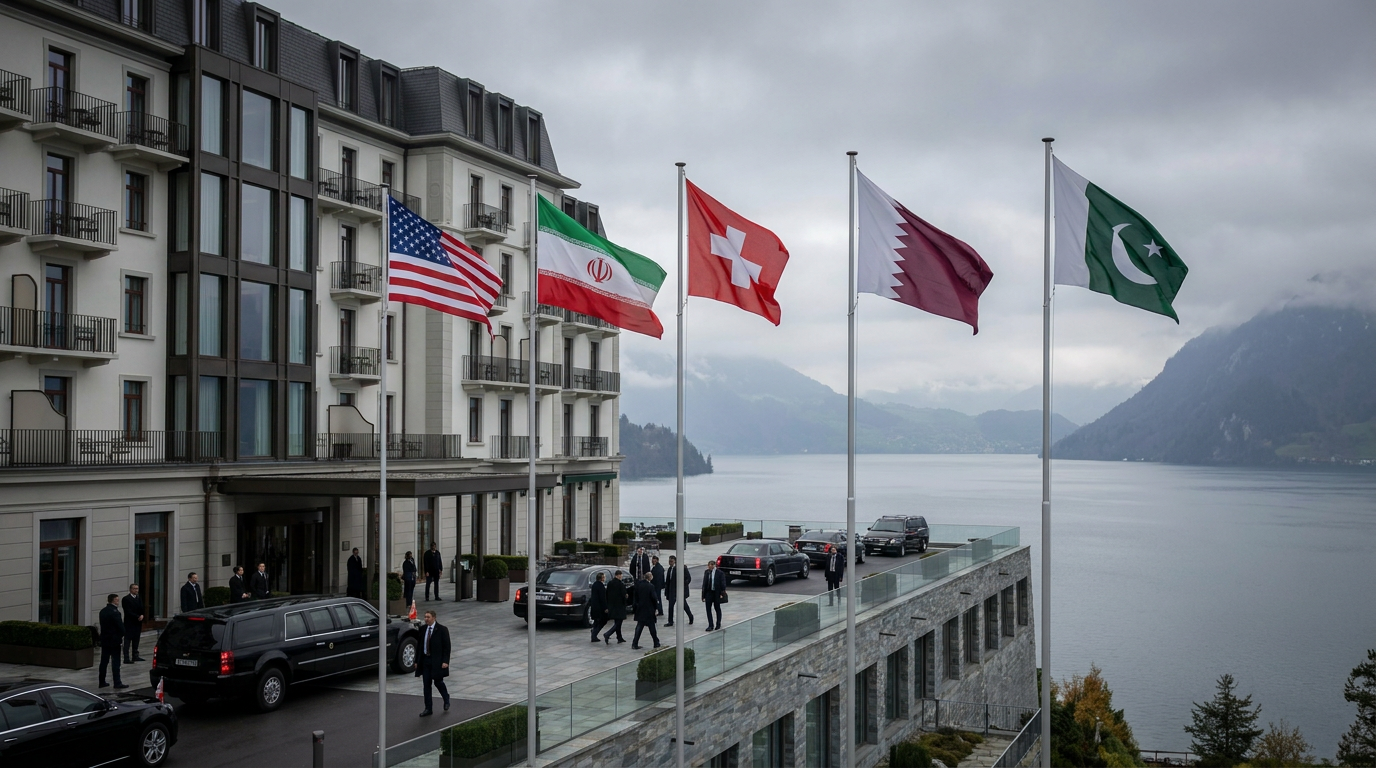
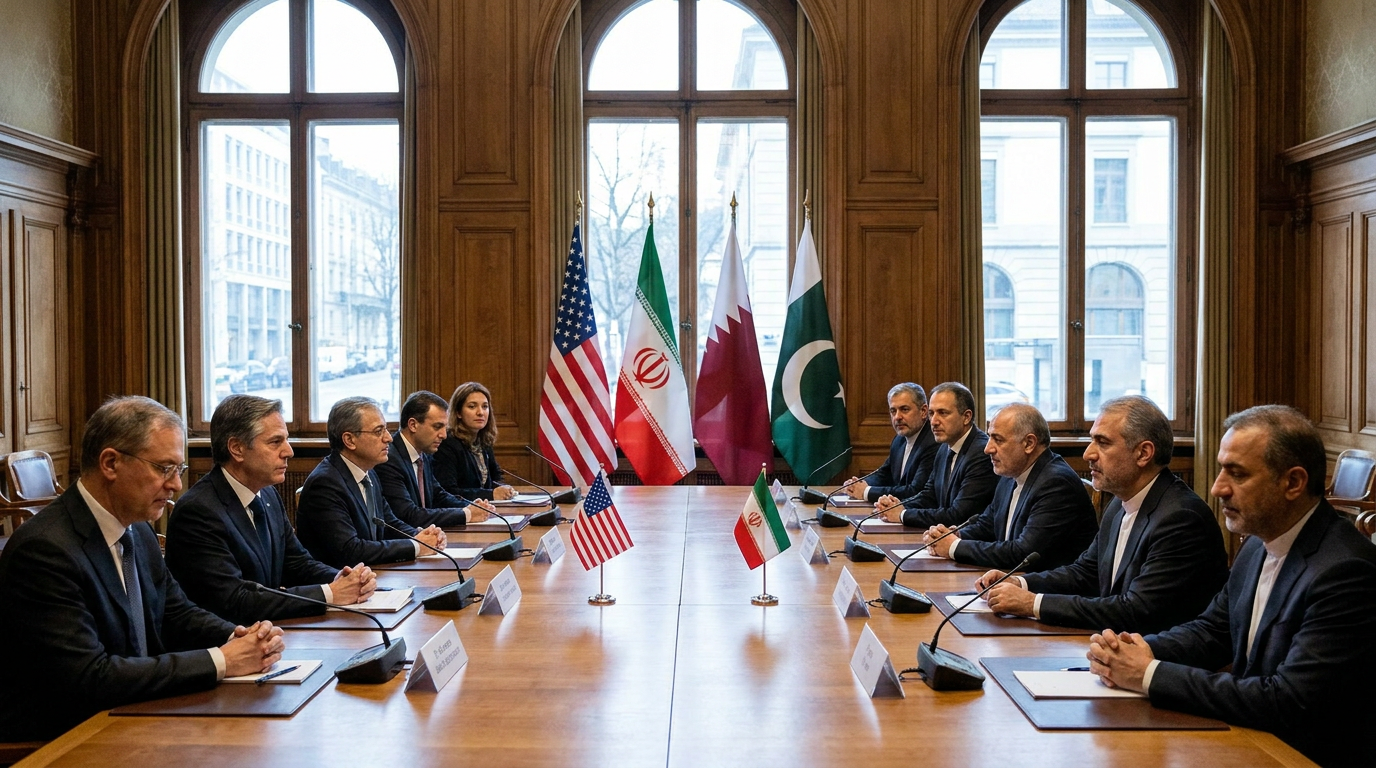
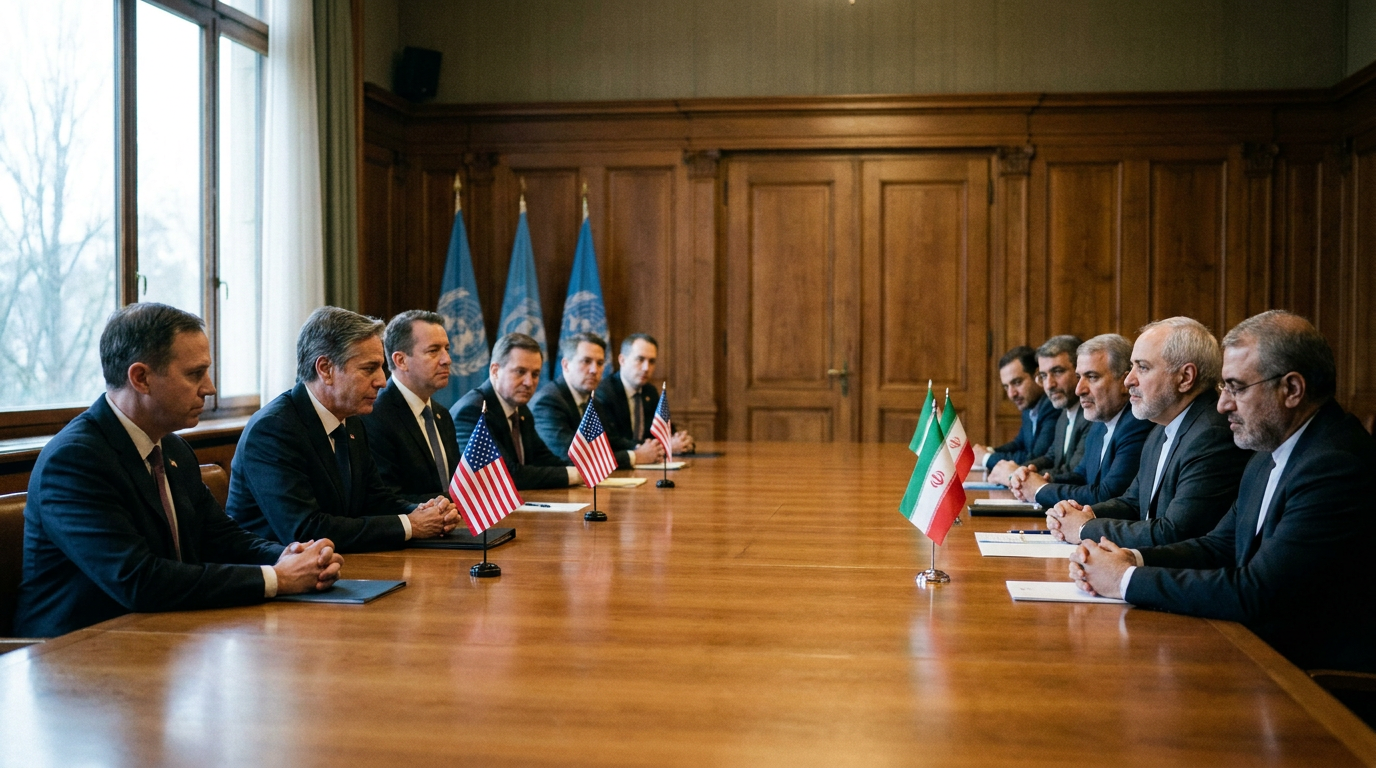
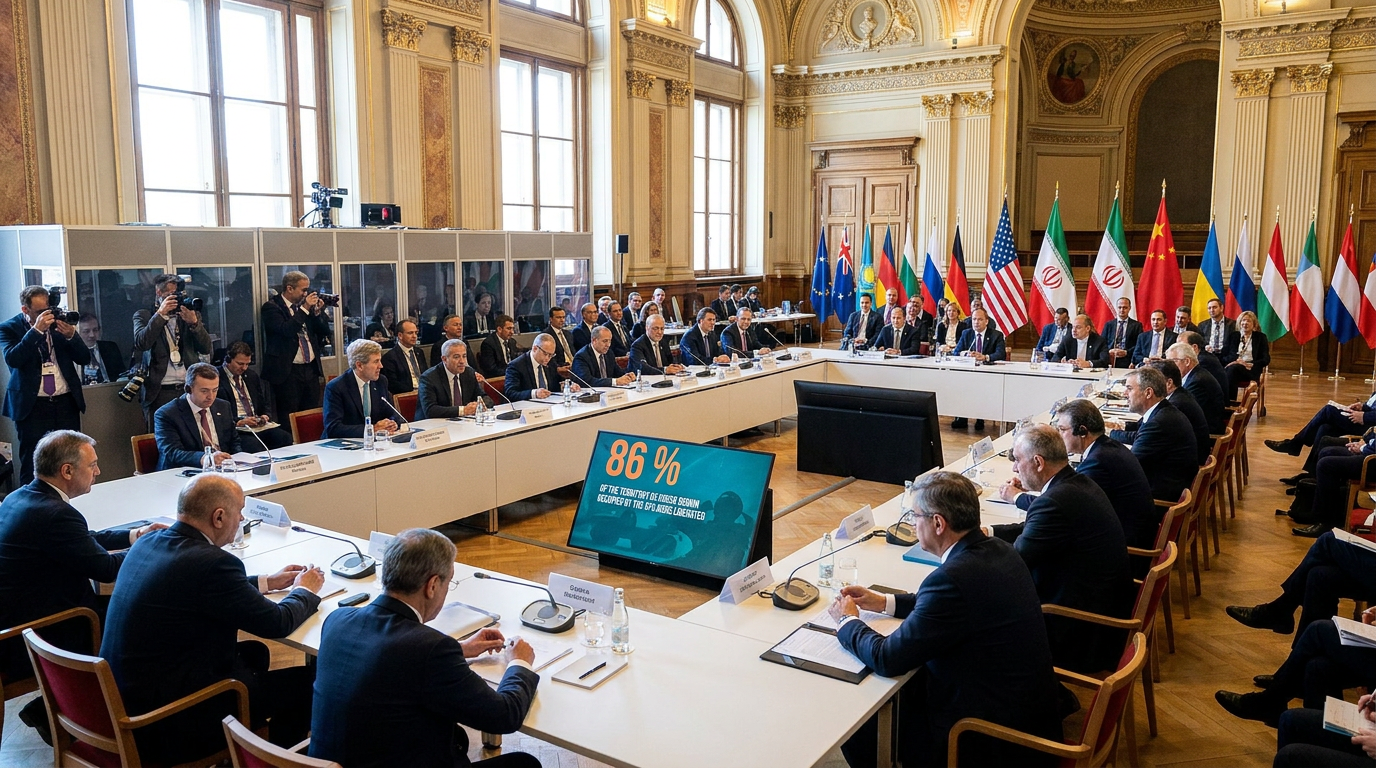
High above Lake Lucerne at the Bürgenstock resort in Switzerland, delegations from the United States and Iran have opened a critical 60-day window of negotiations. The talks, mediated by Qatar and Pakistan, aim to transform a fragile memorandum of understanding signed last week into a permanent settlement ending a four-month regional war.[1][2]
Yet the diplomatic effort is already being tested by a severe crisis on the water. Just hours before the summit began, Iran's military command announced it was re-closing the Strait of Hormuz to all maritime traffic. The strategic waterway, a vital artery for global energy supplies, had only just begun to see cautious commercial movement following the interim agreement.[3][5]
The mechanism of the closure relies on a combination of naval posturing and the threat of force. Iran controls the northern shipping lanes near Larak Island, while the internationally recognized Traffic Separation Scheme remains compromised by suspected mines laid by the Islamic Revolutionary Guard Corps (IRGC) Navy. By declaring the strait closed, Tehran forces commercial shipping companies to calculate whether the risk of traversing the corridor outweighs the economic cost of rerouting.[5]
The United States, however, flatly denies that the strait is shut. U.S. Central Command stated that Iran "does not control" the waterway and reported that 55 merchant ships carrying 17 million barrels of oil successfully transited the corridor on Saturday. This creates a dual reality on the water, where shipping firms must weigh U.S. naval assurances against explicit Iranian threats.[1][6]

The immediate trigger for Iran's blockade threat is the ongoing conflict in Lebanon. Tehran claims that continued Israeli military strikes against Hezbollah constitute a direct violation of the June 17 ceasefire agreement. Iranian Foreign Ministry spokesperson Esmaeil Baghaei stated that Israel's actions in Lebanon would be the primary focus of Sunday's quadrilateral meetings.[2][3]
The diplomatic friction highlights a structural flaw in the interim deal: Israel was not a direct signatory to the U.S.-Iran memorandum. While the agreement calls for a halt to hostilities on all fronts, Israeli Defense Minister Israel Katz emphasized on Sunday that the Israel Defense Forces face "no restrictions" in operating to remove threats in southern Lebanon.[4]
The diplomatic friction highlights a structural flaw in the interim deal: Israel was not a direct signatory to the U.S.-Iran memorandum.
This dynamic leaves the U.S. delegation, led by Vice President JD Vance, navigating a complex proxy environment. Vance, accompanied by White House envoys Steve Witkoff and Jared Kushner, acknowledged the difficulty of the task, noting that ceasefires are inherently "messy." U.S. intelligence agencies have reportedly warned the administration that Israeli Prime Minister Benjamin Netanyahu intends to maintain military pressure in Lebanon, complicating Washington's ability to deliver the comprehensive truce Iran demands.[1][3]
Despite the friction, both sides have powerful incentives to keep the talks alive. The Iranian delegation, led by Parliament Speaker Mohammad Bagher Ghalibaf and Foreign Minister Abbas Araghchi, arrived with a mandate to secure the unfreezing of billions in overseas assets and the lifting of U.S. sanctions on oil exports. The inclusion of Iran's central bank governor and deputy oil minister underscores Tehran's focus on immediate economic relief.[2][3]

For the United States, the primary objective is stabilizing global energy markets and curbing Iran's nuclear ambitions. President Donald Trump pushed for the initial memorandum to avert a global economic depression driven by skyrocketing oil prices. Vance indicated that alongside the Lebanon ceasefire, making tangible progress on limiting Iran's nuclear program is a top priority for the 60-day sprint.[3][6]
The negotiations are structured as a series of high-level technical discussions. Following initial meetings with Qatari and Pakistani mediators, the U.S. and Iranian teams are engaging in direct dialogue to hash out the mechanics of sanctions relief, nuclear compliance, and regional de-escalation.[2][7]
Outside the negotiating room, President Trump is applying maximum pressure to force a resolution. On Sunday, he threatened to strike Iran again if it does not rein in its proxies in Lebanon. Furthermore, Trump has floated a controversial proposal to impose U.S.-collected tolls on vessels transiting the Strait of Hormuz if a final agreement is not reached within the 60-day window, framing it as reimbursement for American military protection.[1][4]
The global economy hangs in the balance as the Bürgenstock summit proceeds. Oil prices, which had tumbled following the announcement of the interim deal, are highly sensitive to the conflicting reports emerging from the Strait of Hormuz. If shipping companies determine the risk of IRGC interdiction is too high despite U.S. Navy escorts, the resulting supply bottleneck could quickly erase recent market gains.[5][6]

Ultimately, the success of the Switzerland talks hinges on resolving the "chicken-and-egg" dilemma of proxy warfare. The U.S. must find a way to guarantee a cessation of Israeli operations in Lebanon to satisfy Tehran, while Iran must demonstrably halt Hezbollah's attacks to satisfy Washington and Jerusalem. Over the next two months, negotiators will test whether this transactional ceasefire can evolve into a durable framework for Middle East stability.[1][4]
How we got here
Late Feb 2026
A major regional war begins following U.S.-Israeli attacks on Iran, leading to severe disruptions in the Strait of Hormuz.
June 17, 2026
The U.S. and Iran sign a memorandum of understanding to end the war, unfreeze assets, and reopen the strait.
June 20, 2026
Iran announces the re-closure of the Strait of Hormuz, citing ongoing Israeli strikes in Lebanon as a ceasefire violation.
June 21, 2026
U.S. and Iranian delegations arrive in Switzerland to begin a 60-day negotiation period aimed at a final peace deal.
Viewpoints in depth
The U.S. Administration's View
Washington seeks to stabilize energy markets and secure long-term nuclear concessions.
The U.S. delegation views the interim memorandum as a necessary step to avert a global economic crisis caused by the closure of the Strait of Hormuz. Vice President JD Vance and the negotiating team are focused on using the 60-day window to extract binding commitments on Iran's nuclear program. Concurrently, the administration is utilizing a 'maximum pressure' approach, with President Trump threatening both renewed military strikes and the imposition of U.S. maritime tolls if Tehran fails to finalize a comprehensive deal.
Iran's View
Tehran demands immediate economic relief and an end to Israeli operations against its regional allies.
For Iran, the negotiations are heavily contingent on the U.S. delivering a complete cessation of hostilities across all fronts, particularly in Lebanon. Iranian officials argue that Israel's continued strikes against Hezbollah violate the core premise of the ceasefire. By threatening to re-close the Strait of Hormuz, Tehran is leveraging its control over global energy arteries to force Washington to restrain Israeli military actions, while simultaneously pushing for the unfreezing of overseas assets and the lifting of oil sanctions.
Israel's View
Jerusalem insists on maintaining operational freedom against immediate security threats.
Israel, which is not a direct signatory to the U.S.-Iran memorandum, views the Lebanon theater as a distinct and ongoing security imperative. Defense Minister Israel Katz has made it clear that the IDF will operate without restriction to neutralize threats from Hezbollah in southern Lebanon. Israeli leadership is wary of any U.S.-Iran agreement that provides Tehran with sanctions relief without permanently dismantling the military capabilities of Iranian proxy groups on Israel's borders.
The Global Shipping Industry
Maritime operators face an impossible calculation between physical security and economic viability.
Commercial shipping firms are caught in the crossfire of the 'dual reality' in the Strait of Hormuz. While the U.S. military provides assurances and escorts, the threat of IRGC interdiction or naval mines presents an unacceptable risk for many insurers and operators. The industry requires absolute clarity and a durable diplomatic resolution, as the cost of rerouting vessels or paying exorbitant insurance premiums threatens the fundamental economics of global energy transport.
What we don't know
- Whether commercial shipping companies will continue to transit the Strait of Hormuz or halt operations due to insurance risks.
- How the U.S. plans to bridge the gap between Iran's demand for a Lebanon ceasefire and Israel's refusal to halt operations.
- Whether the 60-day negotiation window will be sufficient to resolve decades-old disputes over Iran's nuclear program.
Key terms
- Strait of Hormuz
- A narrow, strategically critical waterway between the Persian Gulf and the Gulf of Oman, through which roughly 25% of the world's seaborne oil passes.
- Memorandum of Understanding (MoU)
- A formal, non-binding agreement outlining the terms and framework for future, more permanent negotiations.
- Islamic Revolutionary Guard Corps (IRGC)
- A multi-service primary branch of the Iranian Armed Forces, which controls Iran's coastal defense and naval operations in the Strait of Hormuz.
- Proxy Warfare
- A conflict in which major powers instigate or support fighting by smaller allied groups—such as Hezbollah in Lebanon—rather than engaging each other directly.
Frequently asked
Why are the U.S. and Iran meeting in Switzerland?
Delegations are meeting at the Bürgenstock resort for a 60-day negotiation sprint to finalize a permanent peace deal based on an interim agreement signed last week.
Is the Strait of Hormuz currently closed?
It is disputed. Iran claims it has closed the strait in retaliation for strikes in Lebanon, while the U.S. military states the waterway remains open and that 55 ships transited on Saturday.
What does Lebanon have to do with the U.S.-Iran talks?
Iran considers the ongoing Israeli military operations against Hezbollah in Lebanon to be a violation of the broader ceasefire agreement, making it a primary sticking point in the negotiations.
What happens if a final deal isn't reached in 60 days?
If negotiations fail, the region risks returning to full-scale war. President Trump has threatened renewed military strikes and the imposition of U.S. tolls on ships using the Strait of Hormuz.
Sources
Source coverage
7 outlets
4 viewpoints surfaced







[1]The Washington PostU.S. Negotiators
JD Vance, Iranian officials begin peace talks in Switzerland
Read on The Washington Post →[2]Al JazeeraIranian Leadership
US-Iran talks in Switzerland: Is Lebanon top of agenda; who is attending?
Read on Al Jazeera →[3]The GuardianGlobal Shipping & Energy Sectors
US-Iran talks in Switzerland get under way as strait of Hormuz remains closed
Read on The Guardian →[4]The Times of IsraelIsraeli Defense Establishment
US, Iran and Qatar kick off talks in Switzerland with discussions on Lebanon truce, frozen assets
Read on The Times of Israel →[5]Seatrade Maritime NewsGlobal Shipping & Energy Sectors
Iran declares the Strait of Hormuz closed
Read on Seatrade Maritime News →[6]CNAGlobal Shipping & Energy Sectors
US, Iran begin talks in Switzerland, diplomacy overshadowed by Hormuz closure
Read on CNA →[7]AxiosU.S. Negotiators
U.S. and Iran launch direct negotiations in Switzerland
Read on Axios →
More in news politics
See all 9 stories →Middle East Diplomacy
U.S. and Iran Open Historic Peace Talks in Switzerland with 60-Day Roadmap
6 sources
US-Iran Relations
Historic US-Iran Peace Talks Open in Switzerland with 60-Day Roadmap Amid Lebanon Tensions
8 sources
Middle East Diplomacy
U.S. and Iran Open Historic Peace Talks in Switzerland with 60-Day Roadmap
6 sources
Middle East Diplomacy
U.S. and Iran Open Historic Peace Talks in Switzerland With 60-Day De-Escalation Roadmap
6 sources
Every angle. Every day.
Get news politics stories with full source coverage and perspective breakdowns delivered to your inbox.