
Oil Prices Slump as US-Iran Peace Deal Reopens Strait of Hormuz
Crude futures have plummeted following a historic memorandum of understanding between Washington and Tehran, sparking bets on a massive global oil glut as negotiators race to finalize a permanent treaty.
By Factlen Editorial Team
- Energy Markets & Consumers
- Welcomes the deflationary impact of the deal and anticipates a massive oil glut.
- Geopolitical Negotiators
- Focused on the fragile 60-day window to secure a permanent treaty.
- Maritime Shipping Industry
- Cautious about resuming transit without concrete safety guarantees.
- Regional Skeptics
- Doubtful that the MoU will hold given ongoing regional violence in Lebanon.
What's not represented
- · Environmental groups analyzing the climate impact of cheaper, more abundant fossil fuels.
- · U.S. domestic oil producers who may face margin pressure from falling global crude prices.
Why this matters
The reopening of the Strait of Hormuz and the return of Iranian crude to the global market acts as a massive deflationary stimulus. For consumers and businesses, this means significantly lower fuel costs and reduced inflationary pressure, though the fragile 60-day diplomatic window means the relief could be temporary.
Key points
- The U.S. and Iran signed an interim MoU, ending a four-month conflict and reopening the Strait of Hormuz.
- Brent crude prices plummeted below $79 a barrel, sparking "oil glut bets" among financial traders.
- Negotiators in Switzerland have a 60-day window to finalize a permanent treaty, which includes a $300 billion economic plan for Iran.
- The deal remains highly fragile, threatened by ongoing clashes between Israel and Hezbollah in Lebanon.
- The global oil supply is simultaneously being constrained by Ukrainian drone strikes that have knocked out 20-30% of Russia's refining capacity.
The global energy landscape is undergoing a seismic shift following the signing of an interim peace agreement between the United States and Iran. The memorandum of understanding (MoU), which halts a volatile four-month military conflict, has immediately triggered a steep sell-off in global energy markets. Brent crude, the international benchmark, tumbled below $79 a barrel shortly after the announcement, erasing the massive risk premiums that had defined the spring.[4][7]
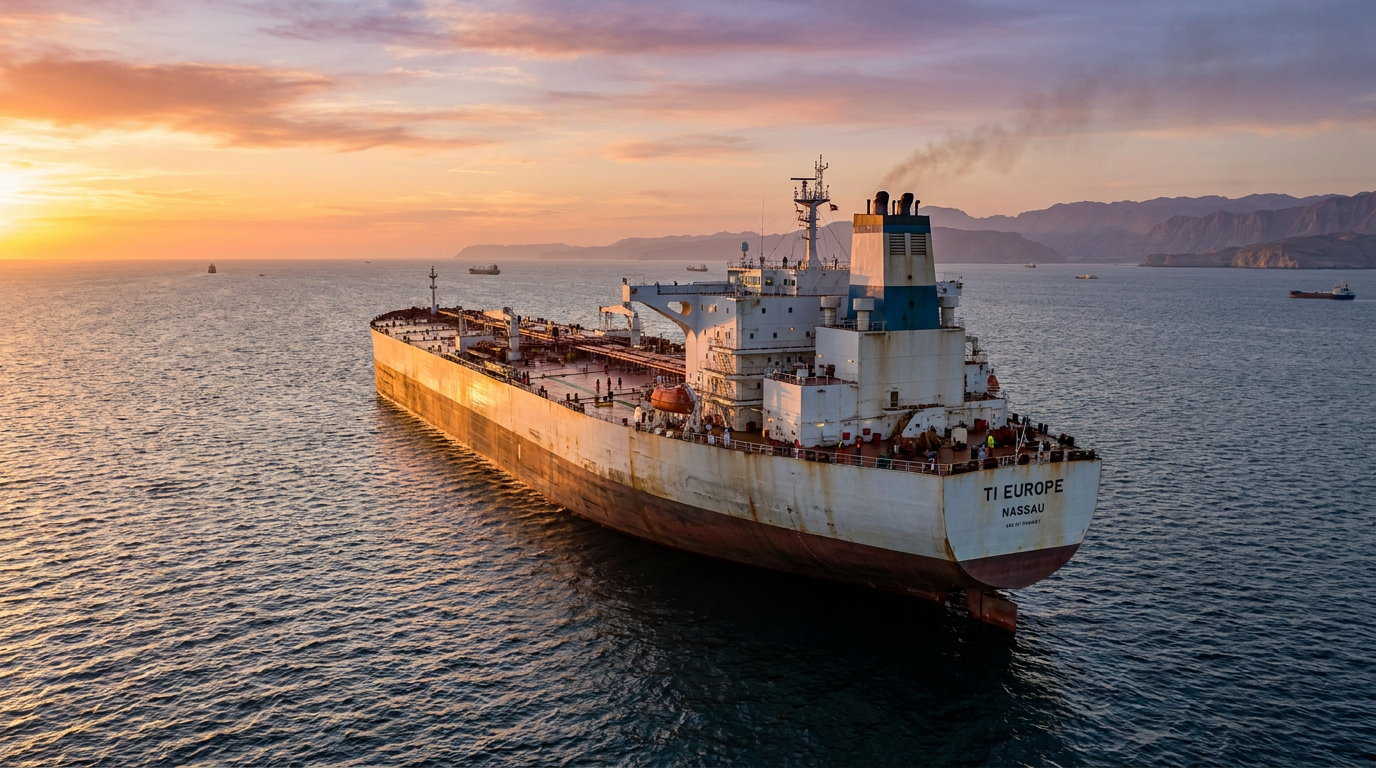
The core of the market's reaction centers on the Strait of Hormuz. Since late February, the conflict had effectively shuttered the vital maritime chokepoint, through which roughly a fifth of the world's traded oil and liquefied natural gas flows. The sudden prospect of unimpeded tanker traffic has transformed market psychology overnight, shifting the dominant narrative from a fear of catastrophic supply shortages to the looming possibility of an oversupplied market.[1][4][7]
This rapid repricing has resurrected "oil glut bets" across financial trading desks. Niche options positions that profit from a severe oversupply of crude are coming back into play as traders anticipate a flood of Iranian barrels hitting the global market. With the MoU stipulating an immediate lifting of the U.S. blockade on Iranian ports and the waiving of sanctions on Iranian oil exports, Tehran is positioned to rapidly scale up its output and clear its floating storage.[1][4][6]
Financial analysts are already recalibrating their forecasts to account for the influx. Goldman Sachs projects that if a comprehensive peace deal is finalized, oil prices will enter a significantly more "benign" phase, with Brent crude likely establishing a near-term floor around $70 to $75 per barrel. However, some institutional investors are taking even more aggressive positions, betting that the rapid building of crude surpluses could drive prices down to the $50 or $60 range if global demand fails to absorb the new supply.[5]

The economic stakes of the agreement extend far beyond the spot price of crude. For the global economy, the reopening of the Strait of Hormuz acts as a massive, immediate stimulus, alleviating the inflationary pressures that had threatened to derail central bank rate cuts. Asian stock markets, heavily dependent on Middle Eastern energy imports, rallied sharply on the news, with indices in Japan, South Korea, and Taiwan posting significant gains.[6]
Yet, the transition from an interim MoU to a permanent treaty remains fraught with geopolitical landmines. To solidify the framework, U.S. and Iranian negotiators have launched a 60-day diplomatic sprint in Switzerland. The "Lake Lucerne Summit" marks a rare instance of direct, high-level engagement, with U.S. Vice President JD Vance appearing in the same room as Iranian parliamentary Speaker Mohammad Bagher Ghalibaf and Foreign Minister Abbas Araghchi.[2][3]
The negotiations, mediated by Pakistani and Qatari officials, are tasked with hashing out the technical details of a profoundly complex arrangement. Beyond the immediate resumption of maritime traffic, the framework reportedly includes the unfreezing of billions in Iranian assets held overseas and outlines a staggering $300 billion economic rehabilitation plan for Iran. In exchange, Tehran has agreed to halt its military operations and reaffirm its commitment to never pursue a nuclear weapon.[3][4]

The negotiations, mediated by Pakistani and Qatari officials, are tasked with hashing out the technical details of a profoundly complex arrangement.
Despite the optimism in equity markets, the diplomatic reality on the ground remains highly volatile. The agreement is already being stress-tested by ongoing violence in the region, particularly the escalating clashes between Israel and the Iranian-backed militant group Hezbollah in Lebanon. Because Israel is not a signatory to the U.S.-Iran MoU, its continued military operations in southern Lebanon threaten to unravel the fragile consensus.[2][3]
The fragility of the truce was laid bare just days after the MoU was signed, when Iran's military briefly threatened to re-close the Strait of Hormuz in retaliation for Israeli strikes in Lebanon. Although the U.S. military vowed to keep the shipping lane open and millions of barrels have continued to transit the waterway, the threat underscored how easily the economic relief could be reversed if the broader regional conflict is not contained.[2][3]
This lingering uncertainty is keeping the maritime shipping industry on edge. Major shipping associations and insurers have expressed deep reservations about the lack of concrete safety protocols for vessels navigating the newly reopened channel. Organizations like the Baltic and International Maritime Council (BIMCO) have warned that the security situation remains volatile, advising shipowners that it is still highly risky to commence transits without explicit guarantees and safe routes.[6]
While the return of Iranian oil dominates the bearish outlook for crude, the global supply picture is being complicated by simultaneous disruptions in Russia. Over 50 regions in Russia are currently experiencing severe civilian fuel shortages, prompting authorities in Russian-occupied Crimea to suspend gasoline sales entirely.[8][9]
These shortages are the direct result of a sustained campaign of long-range Ukrainian drone strikes targeting Russian oil refineries and export terminals on the Black Sea. The targeted attacks have knocked an estimated 20% to 30% of Russia's refining capacity offline, severely constraining the world's second-largest oil producer. This massive reduction in Russian output is acting as a partial counterweight to the anticipated Iranian oil glut, preventing global prices from collapsing even further.[8][9]

The convergence of these two massive geopolitical events—peace in the Persian Gulf and escalating infrastructure warfare in Eastern Europe—has created an unprecedented environment for energy traders. The market is caught in a tug-of-war between the deflationary impact of the U.S.-Iran deal and the inflationary floor provided by Russia's refining crisis.[1][9]
For the U.S. administration, the economic imperative of the deal is clear. The severe restrictions on oil traffic since February had created an energy shock that acted as a heavy drag on the global economy, threatening domestic growth. By securing the MoU, the administration has prioritized immediate economic relief and the stabilization of global supply chains over the objections of domestic hardliners who view the concessions to Tehran as too steep.[2][7]
The ultimate success of the Lake Lucerne Summit will depend on the ability of the technical teams to navigate the deeply entrenched mistrust between Washington and Tehran. Special envoys Steve Witkoff and Jared Kushner have been tasked with the granular work of structuring the sanctions relief and verifying Iran's nuclear compliance, a process that will require unprecedented transparency from both sides.[2][3]
As the 60-day clock ticks down, the global economy hangs in the balance. If the negotiators can successfully compartmentalize the ongoing violence in the Levant and finalize the permanent treaty, the resulting energy dividend could fuel a sustained period of global economic growth. If the talks collapse and the Strait of Hormuz is once again weaponized, the current drop in oil prices will be remembered as nothing more than a fleeting illusion of peace.[3][5][6][7]
How we got here
Feb 28, 2026
The U.S. and Israel launch military operations against Iran, effectively closing the Strait of Hormuz.
April 2026
Global oil prices peak near $118 a barrel amid fears of a prolonged energy crisis.
June 17, 2026
The U.S. and Iran officially sign the Memorandum of Understanding, immediately reopening the Strait.
June 21, 2026
U.S. and Iranian negotiators arrive in Switzerland to begin a 60-day sprint to finalize the treaty.
Viewpoints in depth
Energy Markets & Consumers
Traders and importing nations welcome the deflationary impact of the deal.
For energy-dependent economies in Asia and Europe, the MoU is a massive economic lifeline. The resumption of traffic through the Strait of Hormuz eliminates the catastrophic risk of a global supply chokehold. Financial analysts note that the rapid repricing of crude will lower transportation costs, ease consumer inflation, and give central banks more runway to cut interest rates. Traders are aggressively pricing in an 'oil glut,' betting that Iran's uninhibited exports will overwhelm current global demand.
Geopolitical Negotiators
Diplomats emphasize the extreme fragility of the 60-day window.
U.S. and mediating officials view the MoU as a monumental but highly precarious first step. They argue that the $300 billion economic rehabilitation plan and the unfreezing of assets are necessary levers to ensure Tehran's compliance on nuclear non-proliferation and maritime security. However, negotiators are acutely aware that the deal could collapse at any moment, particularly given the ongoing military clashes between Israel and Hezbollah in Lebanon, which constantly threaten to drag the primary signatories back into conflict.
Maritime Shipping Industry
Carriers remain hesitant to resume full operations without security guarantees.
Despite the political declarations of an open strait, the organizations that actually insure and operate the world's commercial fleets remain deeply skeptical. Groups like BIMCO argue that political memorandums do not immediately translate to safe waters. Until there are established, verifiable safe routes and a sustained cessation of hostilities, many shipowners consider the transit too risky, fearing their crews and vessels could be caught in a sudden resumption of the blockade.
What we don't know
- Whether the technical teams in Switzerland can successfully resolve the granular details of sanctions relief and nuclear compliance within 60 days.
- How Israel's ongoing military operations in Lebanon will impact Iran's willingness to adhere to the maritime ceasefire.
- Exactly how much crude Iran has in floating storage ready to immediately flood the market.
Key terms
- Strait of Hormuz
- A narrow waterway between the Persian Gulf and the Gulf of Oman through which roughly 20% of the world's oil supply passes.
- Brent Crude
- The primary international benchmark price for purchases of oil worldwide.
- Memorandum of Understanding (MoU)
- A formal agreement between two or more parties that establishes a framework for future negotiations, though it is not legally binding.
- Oil Glut
- A situation where the global supply of oil significantly exceeds market demand, typically leading to a sharp drop in prices.
- Sanctions Waiver
- A temporary exemption granted by a government allowing certain prohibited economic activities, such as purchasing Iranian oil, to take place without penalty.
Frequently asked
Why did oil prices drop so suddenly?
Prices dropped because the U.S.-Iran peace deal reopened the Strait of Hormuz, allowing millions of barrels of oil to flow freely and removing the fear of a global supply shortage.
What is an 'oil glut bet'?
It is a financial trading strategy where investors bet that a massive oversupply of oil—in this case, from Iran re-entering the market—will cause prices to fall significantly.
Is the peace deal permanent?
Not yet. The current agreement is an interim Memorandum of Understanding. Negotiators have 60 days to finalize the technical details of a permanent treaty.
How does Russia fit into this?
While Iranian oil is returning to the market, global supply is still tight because Ukrainian drone strikes have knocked out 20% to 30% of Russia's oil refining capacity.
Sources
Source coverage
9 outlets
4 viewpoints surfaced







[1]BloombergEnergy Markets & Consumers
Oil Glut Bets Are Back in Play as Crude Sinks After US-Iran Deal
Read on Bloomberg →US and Iranian Negotiators Begin Talks in Switzerland
Read on Bloomberg →[3]CBS NewsGeopolitical Negotiators
Live Updates: JD Vance appeared directly with Iranian officials as U.S.-Iran peace talks begin
Read on CBS News →[4]ICIS
Oil prices fall after US, Iran sign interim peace agreement
Read on ICIS →[5]Goldman SachsEnergy Markets & Consumers
Why Oil Prices Could 'Grind Lower' Amid the US-Iran Deal
Read on Goldman Sachs →[6]Al JazeeraMaritime Shipping Industry
Oil prices fall, stocks rally as US, Iran sign framework to end war
Read on Al Jazeera →[7]AxiosRegional Skeptics
Oil prices fall on US, Iran deal announcement
Read on Axios →[8]NPRGeopolitical Negotiators
Ukrainian attacks prompt Russian-held Crimea to halt civilian gasoline sales
Read on NPR →Fuel Shortages in Russia Amid Ukraine Drone Attacks
Read on Bloomberg →
Every angle. Every day.
Get business stories with full source coverage and perspective breakdowns delivered to your inbox.