
The 2026 Guide to Local AI: How to Run LLMs on Your Own Hardware
Open-weight models and intuitive tools like Ollama and LM Studio have transformed local AI from a developer experiment into a practical, private, and free alternative to cloud-based services.
By Factlen Editorial Team
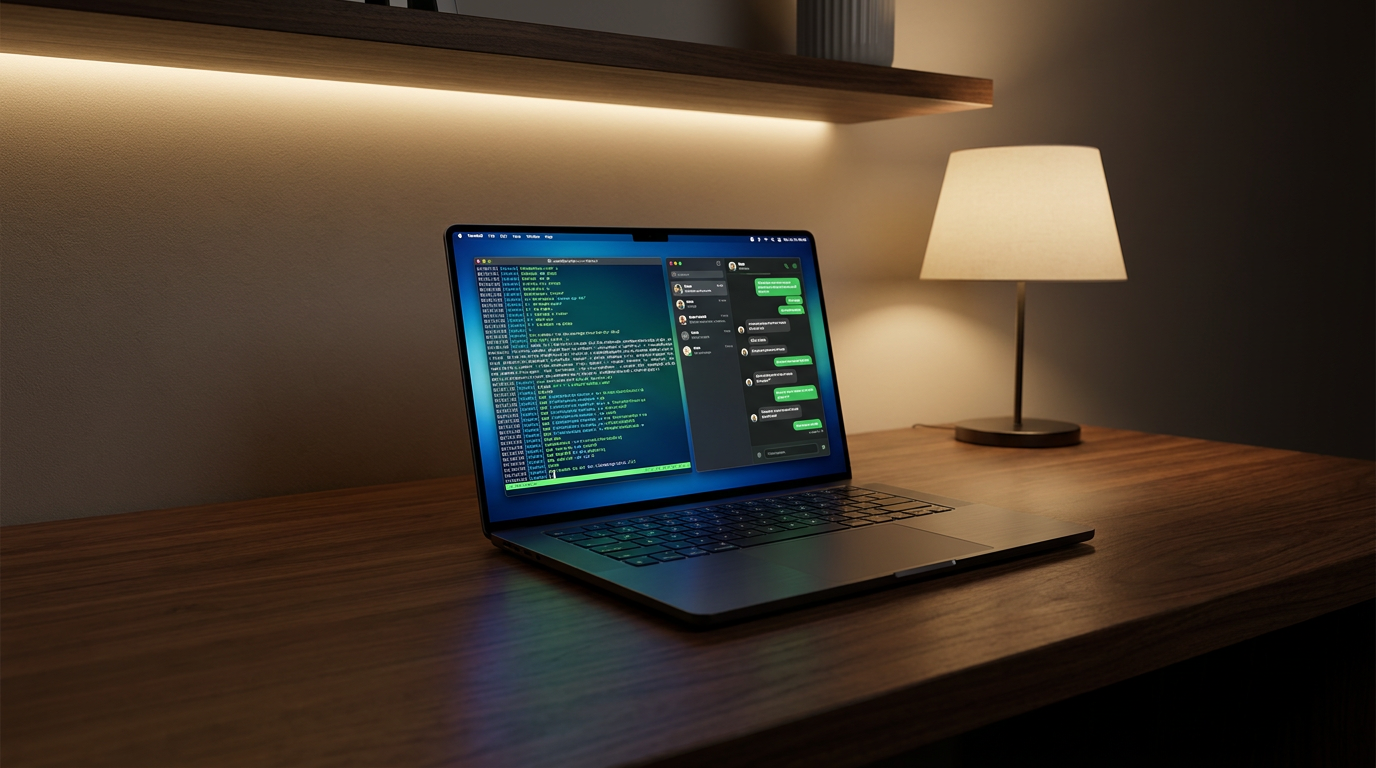
- Privacy & Security Advocates
- Argue that local AI is essential for data sovereignty, HIPAA compliance, and eliminating third-party server logs.
- Open-Source Developers
- Value the rapid iteration of open weights, avoiding API lock-in, and the scriptable flexibility of tools like Ollama.
- Enterprise IT Leaders
- Focus on the massive cost savings at scale and the efficiency of hybrid routing for corporate infrastructure.
- Hardware Ecosystem Providers
- Push for advanced NPUs and unified memory to sell capable edge devices rather than relying solely on cloud compute.
What's not represented
- · Cloud AI Providers losing API revenue
- · Non-technical users navigating hardware limitations
Why this matters
Running AI locally guarantees complete data privacy, eliminates monthly subscription fees, and allows you to use powerful language models entirely offline. As open-weight models reach parity with commercial cloud APIs, mastering local AI tools gives users and developers unprecedented control over their digital workflows.
Key points
- Running AI locally ensures complete data privacy, as prompts and documents never leave the user's device.
- Tools like Ollama and LM Studio have eliminated the technical barriers, allowing anyone to install local AI in minutes.
- Quantization and Mixture-of-Experts (MoE) architectures allow massive models to run efficiently on consumer laptops.
- Local inference eliminates cloud API subscription costs and network latency.
- A hybrid approach is emerging, using local AI for routine tasks and cloud APIs for complex reasoning.
In 2023, running a large language model on a personal computer was a frustrating weekend project reserved for hardcore developers with flagship desktop graphics cards. By mid-2026, the landscape has completely transformed, turning local AI into a daily driver for millions of users.[1][2]
The barrier to entry has effectively vanished. Tools like Ollama and LM Studio have replaced what used to be a complex web of Python dependencies with single-click installations, allowing anyone to download and chat with a frontier-level AI model in under five minutes.[2][8]
The primary driver behind this massive shift is privacy. When a user queries a cloud-based AI, their data—whether it is proprietary code, sensitive financial documents, or personal health questions—is transmitted to external servers, creating compliance headaches for enterprises and privacy concerns for individuals.[1][3]
Local inference flips this dynamic entirely. Because the model runs strictly on the user's hardware, the data never leaves the device, meaning there are no network calls to intercept and no third-party terms of service granting a provider training rights over user inputs.[3][7]

Cost and latency are equally compelling factors driving adoption. Cloud API calls incur per-token charges that scale rapidly for heavy users or enterprise applications, whereas local inference costs nothing beyond the electricity required to power the machine.[3][6]
Furthermore, cloud APIs introduce unavoidable network latency, typically adding hundreds of milliseconds before the first word is generated. A well-configured local setup bypasses the internet entirely, delivering sub-40-millisecond first-token latency that makes real-time voice and coding assistants feel instantaneous.[3][7]
The hardware enabling this revolution has matured rapidly to meet the moment. Apple's unified memory architecture in its M-series chips has proven to be a massive advantage for local AI, allowing the GPU to directly access massive pools of system RAM to load large models seamlessly.[3][4]
On the PC side, dedicated GPUs like Nvidia's RTX 4090 remain the gold standard for raw performance, but the rise of Neural Processing Units (NPUs) integrated directly into consumer processors from Intel, AMD, and Qualcomm has democratized access to AI acceleration.[3][5]

The software ecosystem is dominated by two distinct philosophies, embodied by the two most popular deployment tools: Ollama and LM Studio, both of which have seen explosive growth.[2][8]
Ollama is a command-line interface (CLI) tool beloved by developers. It runs as a lightweight background service and allows users to download, update, and run models with a single terminal command, making it incredibly fast and scriptable.[3][8]
Ollama is a command-line interface (CLI) tool beloved by developers.
Crucially, Ollama exposes an OpenAI-compatible REST API on a local port. This means developers can point their existing applications to their local machine instead of a cloud provider, instantly swapping a paid service for a free, private alternative without rewriting their code.[3][8]
LM Studio, on the other hand, is designed for users who prefer a graphical interface. It operates like an app store for AI models, allowing users to browse, download, and chat with models using a clean, intuitive dashboard that visualizes RAM usage in real time.[2][8]

Under the hood, the magic that makes these massive models fit onto consumer hardware is a mathematical technique called quantization, which compresses the neural network's weights.[1][8]
AI models are traditionally trained using 16-bit or 32-bit floating-point numbers, resulting in massive file sizes that require specialized data center hardware with hundreds of gigabytes of video memory to run efficiently.[1][7]
Quantization compresses these weights down to 8-bit or even 4-bit precision, typically using the popular GGUF format. This drastically reduces the memory footprint—allowing a 7-billion parameter model to run on just 4.5 GB of RAM—with only a negligible drop in the model's reasoning capabilities.[7][8]
The models themselves have also evolved to maximize this efficiency. The 2026 landscape is defined by "Mixture-of-Experts" (MoE) architectures, which fundamentally change how the AI processes information.[6][7]

Instead of activating every single parameter for every word generated, an MoE model routes the query to a specialized subset of its neural network, saving massive amounts of computing power while maintaining high accuracy.[4][6]
This architectural leap allows models like Google's Gemma 4, Alibaba's Qwen 3, and Meta's Llama 3.3 to deliver frontier-level intelligence while drawing a fraction of the computing power required just a year ago.[6][8]
How we got here
Early 2023
Running local LLMs requires complex Python environments and flagship desktop GPUs.
Late 2023
The release of the GGUF format and llama.cpp drastically improves efficiency on consumer hardware.
Mid 2024
Ollama and LM Studio gain massive traction, simplifying installation to a single click.
2025
Open-weight models reach parity with GPT-4, making local inference viable for enterprise use.
Mid 2026
55% of enterprise AI inference shifts to on-premises, driven by privacy needs and cost savings.
Viewpoints in depth
Privacy & Security Advocates
Argue that local AI is the only viable path for handling sensitive data.
For industries bound by strict regulations—such as healthcare organizations requiring HIPAA compliance or financial institutions handling client data—cloud AI presents an unacceptable risk. Privacy advocates argue that local inference is not just a convenience, but an architectural necessity. By processing data entirely on-device, organizations eliminate the need for third-party data processing agreements, ensure no server logs are kept, and guarantee that proprietary information is never inadvertently used to train a commercial model.
Open-Source Developers
Value the flexibility, speed, and lack of vendor lock-in provided by local tools.
The developer community has rallied around tools like Ollama because they integrate seamlessly into existing workflows without the friction of API keys or rate limits. Developers appreciate the ability to rapidly swap between different open-weight models—testing a coding-specific model one minute and a general reasoning model the next—without rewriting their application logic. This ecosystem fosters rapid experimentation and protects developers from sudden pricing changes or deprecations by cloud providers.
Hardware Ecosystem Providers
View local AI as the primary driver for the next generation of consumer device sales.
Companies like Apple, Microsoft, and Nvidia are heavily incentivized to push the local AI narrative. By integrating Neural Processing Units (NPUs) and expanding unified memory architectures, they are transforming the PC and smartphone from mere portals to the cloud into powerful, standalone intelligence hubs. This hardware arms race is designed to convince consumers and enterprises that upgrading their physical devices is necessary to unlock the full potential of AI, shifting value away from cloud subscriptions and back toward hardware sales.
Enterprise IT Leaders
Focus on the massive cost savings and infrastructure control offered by hybrid deployments.
At scale, cloud API costs can quickly become prohibitive for consumer-facing applications. Enterprise IT leaders are increasingly adopting a hybrid routing strategy: directing 80% of routine tasks—like basic summarization, classification, and code review—to free, local open-weight models, while reserving expensive cloud API calls for the 20% of tasks that require frontier-level reasoning. This approach drastically reduces monthly operational expenditures while simultaneously improving response times for end users.
What we don't know
- How upcoming international regulations might restrict the distribution of highly capable open-weight models.
- Whether consumer hardware advancements can keep pace with the growing memory demands of frontier AI research.
- How major cloud providers will adjust their API pricing models as local inference continues to eat into their revenue.
Key terms
- Quantization
- The process of compressing an AI model's mathematical weights to reduce its memory footprint so it can run on consumer hardware.
- GGUF
- A popular file format designed specifically for running quantized AI models efficiently on standard computer processors.
- Mixture-of-Experts (MoE)
- An AI architecture that activates only a small, specialized portion of the model for any given task, saving massive amounts of computing power.
- Unified Memory
- A hardware design, notably used in Apple Silicon, where the CPU and GPU share the same pool of memory, making it highly efficient for loading large AI models.
- NPU (Neural Processing Unit)
- A specialized chip built into modern computers and smartphones designed specifically to accelerate artificial intelligence tasks.
Frequently asked
Do I need an internet connection to use a local LLM?
No. Once you have downloaded the tool and the model weights, the AI runs entirely offline on your device's hardware.
Is running local AI completely free?
Yes. The tools (like Ollama and LM Studio) and the open-weight models are free to download, and because you are using your own hardware, there are no per-message or API subscription fees.
Can a local model match the intelligence of ChatGPT or Claude?
For most daily tasks like drafting emails, summarizing documents, and writing code, top 2026 local models perform at a similar level, though massive cloud models still hold an edge for highly complex, multi-step reasoning.
What is the difference between Ollama and LM Studio?
Ollama is a command-line tool favored by developers for its speed and API integration, while LM Studio offers a user-friendly graphical interface similar to an app store.
Sources
Source coverage
8 outlets
4 viewpoints surfaced








[1]Factlen Editorial Team
Synthesis by Factlen editorial team
Read on Factlen Editorial Team →[2]XDA Developers
Local AI is no longer just for tinkerers
Read on XDA Developers →[3]TechsyEnterprise IT Leaders
Run LLMs Locally 2026: The 5-Minute Setup for Any GPU
Read on Techsy →[4]AppleHardware Ecosystem Providers
Introducing the Third Generation of Apple's Foundation Models
Read on Apple →[5]MicrosoftHardware Ecosystem Providers
A new generation of on-device models – Aion 1.0 Instruct and Aion 1.0 Plan
Read on Microsoft →[6]PinggyOpen-Source Developers
Best Local LLM Tools (2026): Top 5 Picks to Run AI Models Locally
Read on Pinggy →[7]AI MagicxPrivacy & Security Advocates
A practical guide to running AI models locally on consumer hardware in 2026
Read on AI Magicx →[8]DualiteOpen-Source Developers
The best local LLM tools in 2026
Read on Dualite →

More in ai
See all 7 stories →Photonic Computing
Penn Physicists Unveil Light-Matter Chip Architecture to Solve AI's Energy Crisis
6 sources

Local AI
How to Run AI Locally in 2026: The Complete Guide to Private, Free LLMs
7 sources
Offline AI
How Local AI Works: Running Large Language Models Offline in 2026
10 sources
Medical AI
AI Transitions from Hype to Clinical Reality with New Cancer Diagnostics and Drug Discoveries
6 sources

Every angle. Every day.
Get ai stories with full source coverage and perspective breakdowns delivered to your inbox.