
EU Parliament Votes to Delay AI Act's High-Risk Compliance Deadlines to 2027
The European Parliament has approved the 'Digital Omnibus,' delaying the EU AI Act's strictest enforcement rules by 16 months to prevent a regulatory cliff edge.
By Factlen Editorial Team
- European Industrial Base
- Advocates for regulatory simplification to maintain global competitiveness.
- Privacy & Civil Rights Advocates
- Warns that the delay sacrifices fundamental rights to appease Big Tech.
- Pragmatic Policymakers
- Views the delay as an unavoidable logistical necessity to prevent legal chaos.
What's not represented
- · AI Safety Researchers
- · Open-Source AI Developers
Why this matters
The EU AI Act is the world's benchmark for artificial intelligence regulation. By delaying its strictest enforcement deadlines by 16 months, the EU is giving global tech companies a massive compliance reprieve—fundamentally altering the timeline for when AI systems used in hiring, finance, and critical infrastructure will face binding safety audits.
Key points
- The European Parliament voted 423 to 57 to delay the EU AI Act's high-risk compliance deadlines.
- Standalone high-risk AI systems now have until December 2027 to comply, rather than August 2026.
- The delay was driven by a lack of finalized technical standards and concerns over EU tech competitiveness.
- The legislation accelerates the ban on non-consensual deepfakes and watermarking rules to December 2026.
- The European Council must formally adopt the measure before August 2, 2026, to prevent the original rules from taking effect.
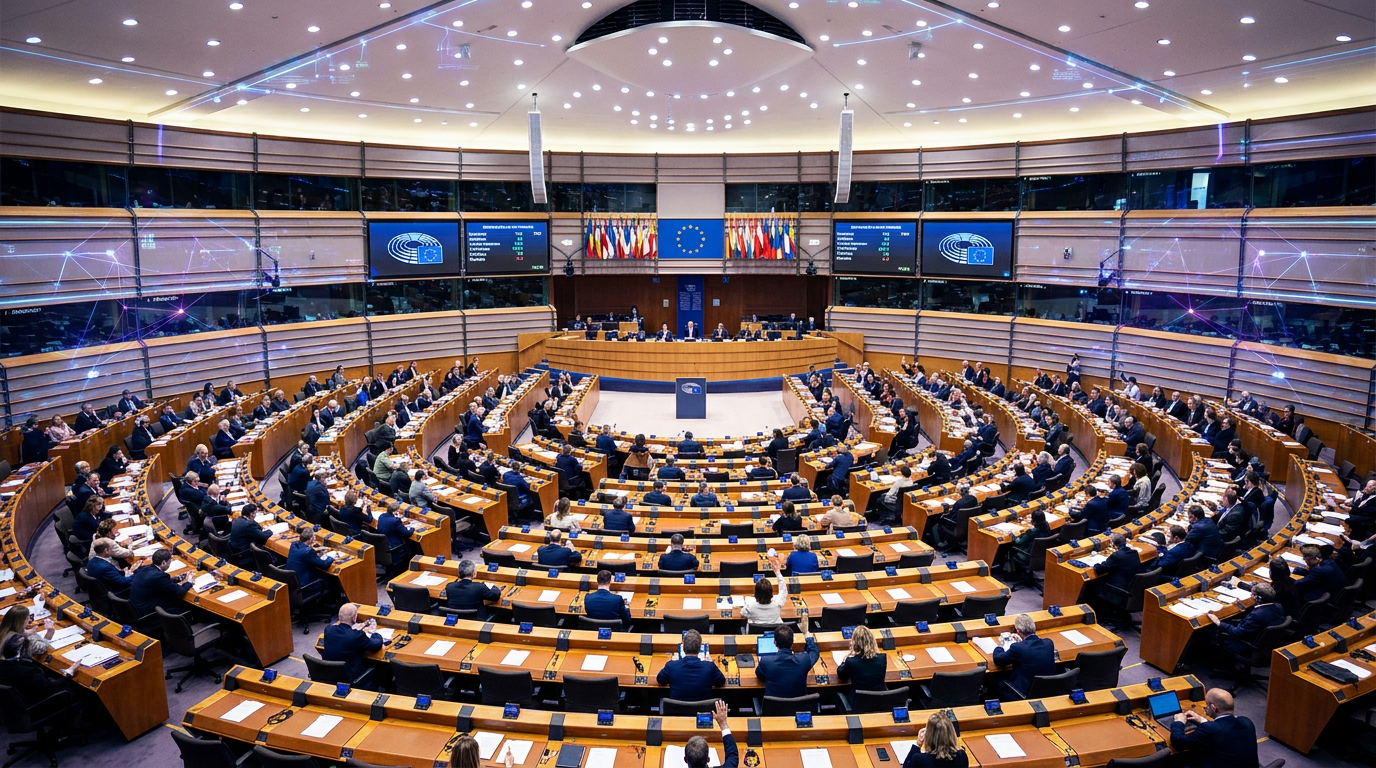
On June 16, 2026, the European Parliament voted overwhelmingly to delay the most stringent enforcement deadlines of the landmark EU AI Act. By a margin of 423 to 57, lawmakers approved the "Digital Omnibus on AI," a legislative package that fundamentally rewrites the compliance timeline for the world's first comprehensive artificial intelligence law.[1]
The vote averts what the European tech sector had warned would be a catastrophic regulatory cliff edge. Under the original text passed in 2024, strict requirements for "high-risk" AI systems were scheduled to take legal effect on August 2, 2026.[1][6]
The newly approved Omnibus pushes that deadline back by 16 months. Standalone high-risk systems—such as AI used in employment screening, credit scoring, and biometric identification—now have until December 2, 2027, to comply with the Act's rigorous auditing and governance mandates.[6][7]
For high-risk AI systems embedded as safety components in regulated physical products, such as medical devices, toys, or elevators, the delay is even longer. Those systems are now granted a reprieve until August 2, 2028, to align with broader sectoral safety regulations.[1][8]

The evidence supporting the delay centers on a severe logistical bottleneck within the EU's own regulatory apparatus. The original AI Act required companies to adhere to harmonized technical standards to prove their systems were safe. However, those standards had not yet been finalized by European standardization bodies, leaving the industry in a state of legal limbo.[4]
The political momentum for the delay was catalyzed by the September 2024 Draghi Report on EU competitiveness. The report delivered a stark diagnosis of the widening productivity gap between the European Union and the United States, attributing the shortfall largely to the tech sector and warning that over-regulation was stifling domestic innovation.[4][5]
Following the Draghi Report, the European Commission introduced the Digital Omnibus in November 2025 as a horizontal simplification effort. The goal was to eliminate overlapping regulations and reduce the compliance burden on European businesses attempting to catch up with American and Asian rivals.[2][8]

Following the Draghi Report, the European Commission introduced the Digital Omnibus in November 2025 as a horizontal simplification effort.
The most fiercely contested provision during the negotiations was the treatment of the industrial machinery sector. Germany, home to engineering giants like Siemens, lobbied aggressively to exempt industrial AI applications from the AI Act's scope, arguing that machinery was already heavily regulated by existing safety directives.[3]
The final text reflects a significant victory for the German industrial base. The machinery sector has been largely carved out of the AI Act's overlapping requirements, meaning industrial AI products will only need to comply with updated sectoral safety rules rather than facing double-jeopardy enforcement from the AI Office.[1][3]
The Omnibus also expands regulatory relief for smaller businesses. Previously, exemptions and simplified technical documentation requirements were reserved strictly for Small and Medium-Sized Enterprises (SMEs). The new legislation extends these privileges to "small mid-caps" (SMCs)—companies with up to 500 employees.[8]
While the legislation relaxes timelines for corporate compliance, it simultaneously accelerates enforcement against specific consumer harms. The Omnibus introduces a strict new prohibition on AI systems that generate non-consensual intimate imagery—often referred to as "nudifiers"—and child sexual abuse material.[1][6]
Providers and deployers of these malicious deepfake systems face an accelerated compliance deadline. They must implement adequate technical safeguards to prevent the generation of such material, or remove the systems from the EU market entirely, by December 2, 2026.[1]
Transparency mandates have also been placed on a faster track than the high-risk rules. Obligations requiring companies to add machine-readable watermarks to AI-generated content will take effect on December 2, 2026, granting companies a brief grace period to update their content provenance protocols.[1][8]

Despite the Parliament's decisive vote, a critical procedural hurdle remains. The Digital Omnibus is not yet binding law. It must be formally adopted by the European Council and published in the Official Journal of the European Union before August 2, 2026.[6]
If the Council fails to formalize the text before that date, the original AI Act provisions will automatically trigger, plunging the European tech sector into the exact regulatory chaos the Omnibus was designed to prevent. Legal experts advise organizations to maintain dual-track compliance preparations until the ink is officially dry.[6][7]
The compromise has drawn sharp criticism from privacy advocates and civil rights groups. Dutch Member of the European Parliament Kim van Sparrentak publicly condemned the delay during the trilogue negotiations, stating that "Big Tech is probably popping champagne" while companies that proactively prepared for the original safety rules are left at a disadvantage.[5]
How we got here
August 2024
The original EU AI Act officially enters into force.
September 2024
The Draghi Report warns that over-regulation is causing the EU to fall behind the US and Asia in tech competitiveness.
November 2025
The European Commission proposes the 'Digital Omnibus' to simplify digital regulations and delay AI compliance.
May 2026
EU legislators reach a provisional 4:30 AM agreement to delay the high-risk AI deadlines.
June 2026
The European Parliament formally approves the Digital Omnibus by a vote of 423 to 57.
August 2, 2026
The original 'cliff edge' deadline by which the Omnibus must be fully adopted to prevent the old rules from taking effect.
Viewpoints in depth
European Industrial Base
Advocates for regulatory simplification to maintain global competitiveness.
For the European tech and manufacturing sectors, the delay is viewed as a necessary rescue operation. Industry leaders, heavily influenced by the Draghi Report's warnings on the EU's lagging productivity, argued that the original August 2026 deadline was a suicide pact. Because the EU's own regulatory bodies had not yet finalized the technical standards required for compliance, companies were facing a scenario where they could not legally deploy AI systems even if they wanted to comply. The successful lobbying effort by Germany to carve out the machinery sector reflects a broader industrial consensus: Europe cannot regulate its way to technological leadership if those regulations actively prevent domestic companies from deploying AI.
Privacy & Civil Rights Advocates
Warns that the delay sacrifices fundamental rights to appease Big Tech.
Civil society organizations and privacy-focused lawmakers view the Digital Omnibus as a capitulation to corporate lobbying. By pushing the enforcement of high-risk AI rules to late 2027, advocates argue the EU is leaving citizens vulnerable to algorithmic bias, invasive workplace monitoring, and discriminatory credit scoring for an additional 16 months. Critics like Dutch MEP Kim van Sparrentak have highlighted the moral hazard of the delay, noting that it penalizes the conscientious European startups that invested heavily to meet the original 2026 deadline, while rewarding massive multinational tech firms that dragged their feet on compliance.
Pragmatic Policymakers
Views the delay as an unavoidable logistical necessity to prevent legal chaos.
For the architects of the legislation, the Digital Omnibus was less about ideological compromise and more about administrative reality. The European Commission recognized that enforcing the AI Act without the requisite harmonized standards in place would result in immediate, paralyzing litigation across the bloc. By extending the timeline, policymakers aim to give national competent authorities the breathing room needed to establish regulatory sandboxes and finalize the technical rulebooks. Furthermore, they emphasize that the Omnibus is not a total surrender; by accelerating the ban on non-consensual deepfakes to December 2026, regulators are attempting to triage the most immediate consumer harms while sorting out the complex corporate compliance frameworks.
What we don't know
- Whether the European Council will finalize the formal adoption and Official Journal publication before the August 2, 2026 deadline.
- How the 16-month delay will impact the timeline for other global AI regulatory efforts that were using the EU AI Act as a benchmark.
- Whether the newly granted 'small mid-cap' exemptions will create loopholes for mid-sized tech companies to deploy high-risk systems with minimal oversight.
Key terms
- High-Risk AI
- AI systems that pose significant threats to health, safety, or fundamental rights, such as tools used for biometric identification, credit scoring, or employment screening.
- Digital Omnibus
- A broad legislative package proposed by the European Commission designed to simplify the EU's digital regulatory framework and eliminate overlapping rules.
- Trilogue
- Informal tripartite negotiations between the European Parliament, the Council of the European Union, and the European Commission to reach a provisional agreement on legislative proposals.
- Harmonized Standards
- Technical specifications adopted by European standardization bodies that companies use to prove their products comply with EU law.
Frequently asked
When does the EU AI Act actually take effect now?
While general provisions are already active, the strict rules for 'high-risk' AI systems have been delayed from August 2026 to December 2027.
Does this delay apply to AI deepfakes?
No. The new legislation actually accelerates the timeline for banning non-consensual intimate imagery (nudifiers), setting a strict compliance deadline of December 2026.
Why was the deadline delayed?
The technical standards required for companies to prove their systems were safe had not yet been written by EU regulators, making the original 2026 deadline practically impossible to enforce.
Is the delay officially law yet?
Not quite. The European Parliament has approved it, but the European Council must formally adopt the text before August 2, 2026, for the delay to take legal effect.
Sources
Source coverage
8 outlets
3 viewpoints surfaced








[1]European ParliamentPragmatic Policymakers
Digital Omnibus on AI: Adoption in plenary
Read on European Parliament →[2]ReutersPragmatic Policymakers
EU countries and Parliament fail to reach deal on AI rules, talks to resume
Read on Reuters →[3]POLITICO EuropeEuropean Industrial Base
EU agrees to delay high-risk AI rules in win for industry
Read on POLITICO Europe →[4]Tech Policy PressPragmatic Policymakers
What the EU AI Omnibus Deal Changes for the AI Act and What Lies Ahead
Read on Tech Policy Press →[5]IAPPPrivacy & Civil Rights Advocates
EU AI Act reform talks stall as key compliance deadline looms
Read on IAPP →[6]Gibson DunnPragmatic Policymakers
Client Alert: EU Reaches Provisional Agreement on Digital Omnibus on AI
Read on Gibson Dunn →[7]DLA PiperPragmatic Policymakers
EU AI Act: Digital Omnibus proposes to defer high-risk compliance deadline
Read on DLA Piper →[8]White & CaseEuropean Industrial Base
Provisional Agreement Reached on the Digital Omnibus on AI
Read on White & Case →



Every angle. Every day.
Get ai stories with full source coverage and perspective breakdowns delivered to your inbox.