
US and Iranian Delegations Arrive in Switzerland for High-Stakes Peace Talks Amid Lebanon Tensions
Vice President JD Vance and Iranian officials have convened at a Swiss resort to negotiate a final peace deal, though ongoing Israeli strikes in Lebanon and the closure of the Strait of Hormuz threaten to derail the fragile ceasefire.
By Factlen Editorial Team
- US Administration
- Focused on securing a permanent end to the war, restricting Iran's nuclear program, and reopening global shipping lanes.
- Iranian Leadership
- Demands the lifting of crippling economic sanctions and insists the US must force Israel to halt strikes in Lebanon.
- Regional Mediators
- Prioritizes keeping both sides at the negotiating table to prevent a wider Middle Eastern conflict and economic collapse.
- Human Rights Advocates
- Demands transparency and accountability from the US military regarding the civilian casualties in the Minab school strike.
What's not represented
- · Lebanese civilians affected by ongoing strikes
- · Israeli government officials
Why this matters
These talks represent the most significant diplomatic effort to end the devastating US-Iran war that began in February 2026. A successful agreement would reopen the Strait of Hormuz and stabilize global energy markets, while a collapse could plunge the Middle East into a wider, uncontrollable regional conflict.
Key points
- US and Iranian delegations have arrived in Switzerland to negotiate a permanent end to the war that began in February 2026.
- The talks aim to implement the Islamabad Memorandum of Understanding, which initiated a 60-day window for a final settlement.
- Negotiations were delayed after Iran closed the Strait of Hormuz in protest of ongoing Israeli military strikes in Lebanon.
- The summit is overshadowed by a recently concluded US military investigation into a February strike that killed over 150 civilians at an Iranian school.
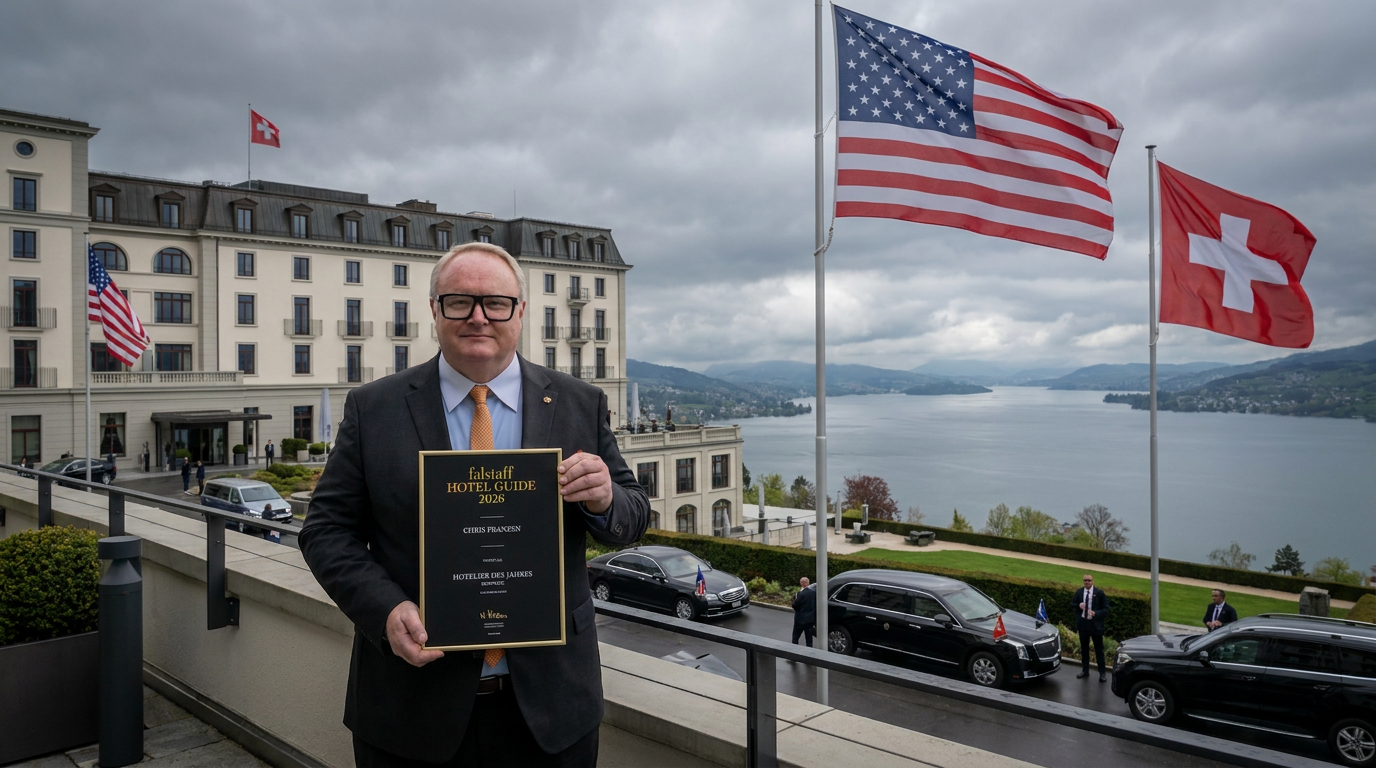
High-stakes peace negotiations between the United States and Iran have officially commenced at the Bürgenstock mountain resort in central Switzerland, marking the most significant diplomatic effort to end the devastating war that began in February 2026. The US delegation, led by Vice President JD Vance, and the Iranian delegation, headed by Parliament Speaker Mohammad Bagher Ghalibaf and Foreign Minister Abbas Araghchi, arrived over the weekend for talks mediated by Qatar and Pakistan. The summit aims to translate a fragile interim ceasefire into a permanent resolution to a conflict that has deeply destabilized the Middle East and global energy markets.[1][4][7]
The foundation for these critical talks is the 'Islamabad Memorandum of Understanding,' an interim agreement electronically signed last week by US President Donald Trump and Iranian President Masoud Pezeshkian. This accord initiated a strict 60-day diplomatic sprint to negotiate a final, comprehensive settlement. The core agenda for the technical teams focuses on restricting Iran's nuclear enrichment program, lifting crippling US economic sanctions, unfreezing billions of dollars in Iranian assets held overseas, and ensuring the permanent reopening of the Strait of Hormuz to international commercial shipping without the threat of military blockades.[2][8]
However, the diplomatic process has already encountered severe turbulence before the technical teams could even sit down at the negotiating table. The talks were initially scheduled to begin on Friday but were abruptly postponed after Iran delayed sending its delegation. Tehran's hesitation was a direct protest against ongoing Israeli military strikes targeting the Hezbollah militant group in southern Lebanon, which Iran views as a blatant violation of the broader regional de-escalation envisioned by the memorandum and a sign of bad faith from Washington.[3][8]

In retaliation for the continued fighting in Lebanon, the Iranian military announced on Saturday that it was once again closing the Strait of Hormuz to commercial transit. The vital waterway, which handles roughly 20 percent of the world's daily oil consumption, had only just begun to see stranded vessels cautiously move through following the preliminary ceasefire agreement. The sudden closure immediately spiked anxieties in global energy markets, threatening to send fuel prices soaring, and severely tested the durability of the US-brokered truce before talks even began.[1][3]
Vice President Vance, accompanied by White House envoys Jared Kushner and Steve Witkoff, attempted to downplay the hostilities before departing Joint Base Andrews for Switzerland. Vance stated that the United States is 'actively managing' the situation and expressed optimism about making tangible progress during his brief appearance at the summit. He acknowledged that securing a lasting ceasefire in Lebanon has now become a top priority alongside the nuclear issue, adding that the US must ensure both Israel and Lebanon remain secure while keeping the broader Iran deal intact.[1][8]
Vance stated that the United States is 'actively managing' the situation and expressed optimism about making tangible progress during his brief appearance at the summit.
Iranian officials have made it unequivocally clear that the conflict in Lebanon is inextricably linked to the broader peace process. Foreign Ministry spokesperson Esmail Baghaei warned that if key commitments are not upheld—specifically forcing Israel to halt its military operations—the entire memorandum of understanding will be jeopardized. Iranian negotiators arrived in Switzerland facing immense domestic pressure from hardliners in Tehran, who argue that the United States cannot be trusted to deliver on its promises or control its regional allies.[2][3]

Looming heavily over the negotiations is the unresolved legacy of the war's opening day. On February 28, 2026, a US Tomahawk cruise missile struck the Shajareh Tayyebeh Elementary School in the southern Iranian city of Minab. The devastating strike caused the building's roof to collapse on students and staff, killing at least 156 people, including more than 120 children. The incident immediately became one of the deadliest civilian casualty events in recent US military history, sparking international outrage and deep mourning across Iran.[5][6]
A recently concluded US military investigation reportedly found that the devastating strike was the result of a catastrophic intelligence failure. According to preliminary findings leaked to the press, US Central Command officers relied on seven-year-old outdated targeting data provided by the Defense Intelligence Agency. The obsolete data failed to identify that the building, which was previously adjacent to an Islamic Revolutionary Guard Corps naval base, had been converted into a co-educational primary school long before the conflict began, leading to the tragic misidentification of the target.[5]
International human rights organizations, including Amnesty International and Human Rights Watch, have forcefully condemned the strike as a potential war crime. They argue that the US military failed to take feasible precautions to avoid civilian harm and are demanding full transparency and accountability from the Pentagon. The organizations have called for an independent inquiry, noting that the laws of war strictly require attacking forces to verify that targets are military objectives and to suspend strikes if civilian presence is detected.[6]

President Trump recently addressed the Minab school bombing during a press conference at the G7 summit in Évian-les-Bains, France. When pressed about the civilian casualties and the military investigation, Trump remarked, 'Nobody did that on purpose. Mistakes are made, war is nasty.' He then directed further inquiries on the matter to Defense Secretary Pete Hegseth, while simultaneously threatening to 'bomb the hell' out of Iran if they violated the terms of the new agreement, underscoring the fragile and volatile nature of the current diplomatic environment.[5]
Critics and lawmakers have expressed growing concern that the Trump administration and Secretary Hegseth may attempt to bury the full findings of the military investigation under classified status. There is widespread skepticism in Washington and Tehran that the US government will formally apologize or release the unredacted report. This perceived lack of accountability continues to fuel anger among Iranian citizens and complicates the diplomatic atmosphere for the Iranian delegation at the Bürgenstock resort, who face demands for justice back home.[5]
As the technical teams from the US, Iran, Qatar, and Pakistan settle in for what is expected to be a grueling negotiation process, the immediate focus remains on preventing the fragile ceasefire from collapsing entirely. With US intelligence warning that Israeli Prime Minister Benjamin Netanyahu intends to continue military operations in Lebanon, the path to a lasting US-Iran peace deal remains fraught with regional tripwires. Negotiators must now race against the 60-day clock to untangle years of hostility and secure a permanent end to the war.[8]
How we got here
Feb 28, 2026
The US-Iran war begins; a US missile strikes a school in Minab, killing over 150 civilians.
Mid-June 2026
The US and Iran sign the Islamabad Memorandum of Understanding, establishing a 60-day window for a final peace deal.
June 20, 2026
Iran announces the closure of the Strait of Hormuz in protest of ongoing Israeli strikes in Lebanon.
June 21, 2026
US and Iranian delegations arrive at the Bürgenstock resort in Switzerland to begin technical negotiations.
Viewpoints in depth
US Administration's View
The US seeks to quickly finalize the peace deal to stabilize energy markets while managing regional allies.
The US delegation, led by Vice President JD Vance, views the 60-day window as a critical opportunity to permanently end the conflict and secure global shipping routes. While acknowledging the complication of Israel's ongoing campaign in Lebanon, the administration hopes to compartmentalize the issues, focusing primarily on Iran's nuclear program and the Strait of Hormuz. President Trump's approach combines the promise of sanctions relief with the threat of renewed military force if Iran fails to comply.
Iranian Leadership's View
Tehran demands immediate sanctions relief and insists the US must rein in Israeli military actions.
For the Iranian delegation, the peace talks are heavily contingent on the US demonstrating its ability to control its allies, specifically regarding the conflict in Lebanon. Hardliners in Tehran remain deeply skeptical of American promises, pointing to the devastating Minab school strike as evidence of US recklessness. Iran is using its control over the Strait of Hormuz as primary leverage to ensure that billions in frozen assets are released and that the ceasefire applies comprehensively across the region.
Regional Mediators' View
Qatar and Pakistan are focused on preventing a total collapse of the fragile ceasefire.
As the primary mediators, Qatari and Pakistani officials are working to keep both parties at the table despite the escalating rhetoric and the closure of the Strait of Hormuz. They view the successful implementation of the Islamabad Memorandum as essential to preventing a wider regional war that could devastate the economies of neighboring states. Their immediate goal is to untangle the technical details of sanctions relief to build baseline trust between Washington and Tehran.
What we don't know
- Whether the US will formally apologize or release the unredacted military investigation report regarding the Minab school strike.
- If the United States can successfully pressure Israel to halt its military operations in Lebanon to satisfy Iranian demands.
- How long the Strait of Hormuz will remain closed to commercial shipping if the technical talks stall.
Key terms
- Islamabad Memorandum of Understanding
- An interim ceasefire agreement signed in June 2026 by the US and Iran, establishing a 60-day window to negotiate a permanent end to their war.
- Strait of Hormuz
- A narrow, strategically vital waterway between the Persian Gulf and the Gulf of Oman through which roughly 20 percent of the world's oil supply passes.
- Tomahawk Missile
- A long-range, all-weather, subsonic cruise missile used by the US military for precision land-attack strikes.
Frequently asked
Why are the US and Iran holding peace talks in Switzerland?
The talks at the Bürgenstock resort aim to finalize the 'Islamabad Memorandum of Understanding,' an interim agreement signed to end the war that began between the two nations in February 2026.
Why was the Strait of Hormuz closed again?
Iran announced the closure of the vital shipping lane in protest of ongoing Israeli military strikes against Hezbollah in Lebanon, which Tehran views as a violation of the broader regional ceasefire.
What happened at the Minab school?
On February 28, 2026, a US Tomahawk missile struck a primary school in Minab, Iran, killing over 150 civilians. A US military investigation reportedly found the strike relied on outdated targeting data.
Sources
Source coverage
8 outlets
4 viewpoints surfaced







[1]The GuardianHuman Rights Advocates
US-Iran talks in Switzerland get under way as strait of Hormuz remains closed
Read on The Guardian →[2]Al JazeeraIranian Leadership
US-Iran talks in Switzerland: Is Lebanon top of agenda; who is attending?
Read on Al Jazeera →[3]Associated PressUS Administration
U.S. and Iran to talk Sunday in Switzerland as Tehran says it closed Strait of Hormuz again
Read on Associated Press →[4]Swiss Federal Department of Foreign AffairsRegional Mediators
Memorandum of Understanding between the USA and Iran
Read on Swiss Federal Department of Foreign Affairs →Four months after the horrific Iran school bombing, fears grow that Trump and Hegseth will bury the truth
Read on The Guardian →[6]Amnesty InternationalHuman Rights Advocates
USA/Iran: Those responsible for deadly and unlawful US strike on school that killed over 100 children must be held accountable
Read on Amnesty International →[7]Anadolu AgencyIranian Leadership
US, Iranian delegations arrive in Switzerland for technical talks
Read on Anadolu Agency →[8]The Washington PostUS Administration
U.S. and Iranian negotiators meet in Switzerland to hash out peace plan
Read on The Washington Post →


Every angle. Every day.
Get news politics stories with full source coverage and perspective breakdowns delivered to your inbox.