
The Science of Rucking: Why Weighted Hiking is the Ultimate Low-Impact Workout
Adding a weighted pack to your walk or hike transforms a simple stroll into a full-body workout that boosts cardiovascular health, builds bone density, and burns significantly more calories without the joint strain of running.
By Factlen Editorial Team
- Sports Cardiology
- Medical professionals focused on heart health and joint preservation.
- Fitness & Longevity Coaches
- Advocates for functional, sustainable, and outdoor-based movement.
- Bone Health Specialists
- Experts focused on skeletal density and osteoporosis prevention.
What's not represented
- · Physical therapists treating overload injuries
- · Traditional ultralight hikers
Why this matters
As we age, finding exercise that builds muscle and bone without destroying joints becomes critical. Rucking offers a highly accessible, science-backed way to achieve the cardiovascular benefits of running and the strength benefits of weightlifting in a single outdoor activity.
Key points
- Rucking involves walking with a weighted backpack, transforming a standard hike into a full-body cardiovascular and strength workout.
- The exercise burns up to three times as many calories as regular walking and provides similar cardiovascular benefits to jogging, but with significantly less joint impact.
- Weight-bearing movement stimulates osteoblast cells, making rucking a highly effective intervention for building bone density and preventing osteoporosis.
- A properly fitted rucksack can improve posture by pulling the shoulders back and forcing the core and spinal muscles to engage.
- Beginners should start with a light load of 5 to 10 percent of their body weight and focus on maintaining a brisk pace before adding more resistance.
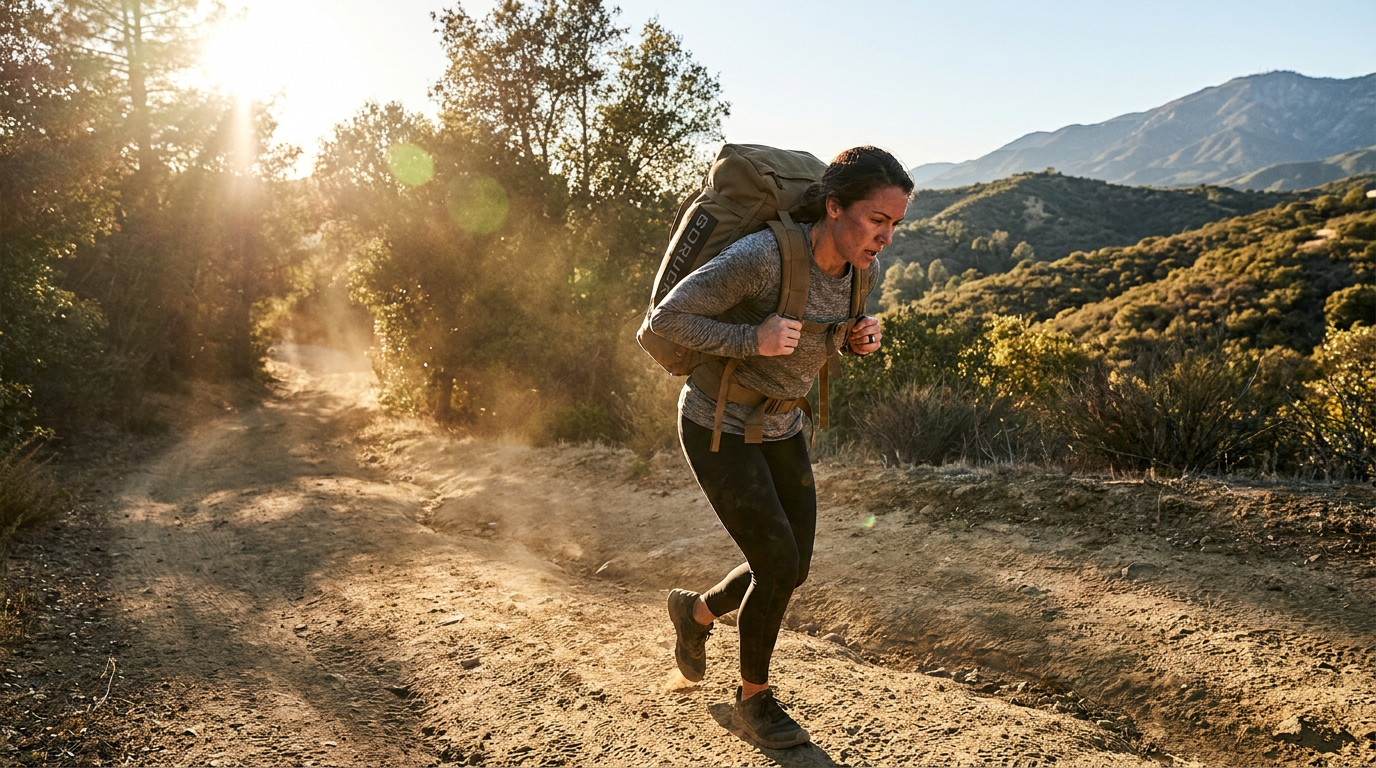
You see them increasingly on suburban trails, city sidewalks, and local parks: people walking with seemingly overstuffed backpacks, moving with deliberate purpose. This is not just heavy commuting or a hiker lost in the urban jungle; it is the rapidly growing fitness practice known as rucking. By simply adding weight to a walk, fitness enthusiasts are transforming a basic human movement into a highly efficient, full-body workout. As the fitness industry pivots away from high-intensity, joint-punishing regimens toward sustainable longevity, rucking has emerged as a frontrunner for people of all ages.[3]
The concept of rucking is elegantly simple and deeply historical. Derived from military "ruck marches," it involves walking or hiking with a weighted rucksack or vest. For centuries, militaries around the world have used load-carriage as a foundational tool to build endurance, strength, and mental toughness in soldiers. Today, that same principle has been distilled for the civilian population. Whether you are carrying a specialized plate-loaded backpack or simply a standard bookbag filled with water bottles, the fundamental mechanics remain the same: you are forcing your body to move more mass across a distance.[1][4]
The transition from military punishment to mainstream wellness trend has been swift. Over the past two decades, Special Forces veterans began adapting military ruck marches into civilian fitness events and manufacturing purpose-built gear. This grassroots movement caught the attention of longevity experts, physical therapists, and mainstream fitness media, who recognized the profound physiological benefits of the practice. It bridges the gap between the casual accessibility of a neighborhood walk and the rigorous demands of a gym-based strength and conditioning program.[3][8]
At the core of rucking's appeal is its remarkable impact on cardiovascular health. Walking is universally praised as a healthy baseline activity, but for many, it fails to elevate the heart rate enough to trigger significant cardiovascular adaptations. Rucking solves this intensity deficit. The added resistance forces the heart to pump more vigorously to supply oxygen to the working muscles. Cardiologists note that rucking provides comparable cardiovascular conditioning to jogging, increasing stamina and aerobic capacity, but without the severe biomechanical stress associated with running.[6]

Physiologically, rucking excels at keeping the body in "Zone 2" cardio. Zone 2 is an aerobic state where the heart is working at roughly 60 to 70 percent of its maximum capacity—hard enough to break a sweat, but moderate enough that you can still hold a conversation. Sports scientists revere Zone 2 training because it maximizes fat oxidation, builds a massive aerobic base, and improves mitochondrial function without requiring extensive recovery time. Rucking naturally dials the body into this highly efficient metabolic state.[5][8]
Because of this sustained effort, the caloric expenditure of rucking is significantly higher than that of unweighted walking. Depending on the individual's body weight, the pace, the terrain, and the load carried, rucking can burn two to three times as many calories as a standard walk. In fact, research suggests that a brisk ruck can rival the caloric burn of a moderate jog. This makes it a highly time-efficient exercise for those looking to manage their weight without having to endure the high-impact nature of traditional running.[2][4]
The dramatic reduction in joint impact is perhaps rucking's greatest mechanical advantage. Running involves a "flight phase" where both feet leave the ground; consequently, each footfall strikes the earth with forces up to three times the runner's body weight. Over time, this repetitive impact can degrade cartilage and lead to chronic knee, hip, and ankle issues. Rucking, by contrast, is a walking gait. One foot is always in contact with the ground, which drastically reduces peak impact forces, making it a viable, long-term cardiovascular solution for those with joint sensitivities.[2][6]
The dramatic reduction in joint impact is perhaps rucking's greatest mechanical advantage.
Beyond the heart and lungs, rucking is a potent form of active resistance training that engages muscles far beyond the lower body. While the glutes, quadriceps, and calves do the primary work of moving the load forward, the upper body is far from passive. The core musculature must continuously fire to stabilize the shifting weight of the pack. Simultaneously, the muscles of the upper back, shoulders, and traps are engaged to support the straps and maintain an upright posture against the downward pull of gravity.[1][5]

Counterintuitively, carrying a heavy backpack can actually improve spinal health and posture when done correctly. Modern lifestyles often lead to "tech neck" and a hunched, forward-leaning posture. A properly fitted and weighted rucksack acts as a physical cue, pulling the shoulders back and down. This forces the wearer to engage their posterior chain and stand taller. Over time, this continuous, low-level activation strengthens the postural muscles along the spine, which can help alleviate chronic lower back pain caused by weakness and poor alignment.[5]
While the muscular and cardiovascular benefits are impressive, the most significant medical endorsement for rucking comes from the field of bone health. As humans age, bone mineral density naturally declines, leading to osteopenia and, eventually, osteoporosis. The medical consensus for combating this decline is weight-bearing aerobic exercise. Because rucking combines continuous movement with a significant external load, it provides the precise mechanical stress required to fortify the skeletal system against age-related decay.[1][2]
The underlying mechanism relies on the body's cellular response to physical stress. When bones are subjected to the compressive forces of a weighted pack, it stimulates the activity of osteoblasts—the specialized cells responsible for synthesizing new bone tissue. This mechanical loading signals the body to reinforce the structural integrity of the hips, spine, and lower extremities. It is a natural, biological adaptation that literally builds a denser, more resilient skeleton, proving that bones, much like muscles, require resistance to grow stronger.[7][8]
For aging populations, particularly postmenopausal women who are at the highest risk for rapid bone loss, rucking offers a highly accessible therapeutic intervention. Studies utilizing weighted vests and backpacks have demonstrated measurable improvements in bone mineral density and a corresponding decrease in fracture risks. By safely introducing load-bearing movement into daily routines, individuals can actively combat the onset of osteoporosis without needing to navigate complex gym equipment or heavy barbells.[4][7]

The benefits of rucking extend well beyond the physical, offering profound mental health advantages. Because it is inherently an outdoor activity, rucking forces practitioners out of climate-controlled environments and into nature. Exposure to green spaces and natural sunlight has been clinically shown to lower cortisol levels, reduce anxiety, and improve overall mood. The steady, rhythmic cadence of a ruck march provides a meditative quality, allowing the mind to clear while the body works.[3][6]
Despite its accessibility, rucking is not without its risks, and experts caution against the "more is better" mentality. The most common injuries associated with the practice stem from ego and impatience—loading too much weight too soon, or attempting to run while wearing a heavy pack. Excessive loads can lead to lower back strain, stress fractures in the feet, or severe plantar fasciitis. The goal is to stimulate the body, not to replicate the grueling, joint-destroying selection courses of elite military units.[1][8]
To mitigate these risks, physical therapists and fitness coaches emphasize a conservative progression model. Beginners are advised to start with a load of just 5 to 10 pounds, or roughly 5 to 10 percent of their total body weight. The initial focus should be on maintaining a brisk pace—aiming for a 15 to 20-minute mile—and ensuring perfect posture. Only after the body has adapted to this baseline over several weeks should the weight or distance be incrementally increased.[1][4]

As practitioners progress, the quality of their gear becomes increasingly important. While a standard school backpack is sufficient for light loads, it can quickly become a liability as the weight increases. Purpose-built rucksacks are designed to keep the weight high and tight against the upper back, preventing the pack from swaying or pulling the lumbar spine into hyperextension. Specialized cast-iron ruck plates also distribute the load more evenly than a shifting pile of books or dumbbells.[5]
Ultimately, rucking sits at the perfect intersection of simplicity and scientific efficacy. It requires no gym membership, no steep learning curve, and minimal equipment, yet it delivers a comprehensive suite of physiological benefits. By simply putting weight on our backs and walking, we tap into a primal movement pattern that builds a stronger heart, denser bones, and a more resilient mind. In an era of overly complicated fitness routines, rucking proves that sometimes the most effective path to health is simply carrying a heavy load.[8]
How we got here
7th Century B.C.
Roman legions and early militaries utilize heavy pack marches as foundational endurance training for soldiers.
Early 2000s
Special Forces veterans begin adapting military ruck marches into civilian fitness events, launching specialized gear companies.
2020s
Medical professionals and longevity experts widely endorse rucking for its dual cardiovascular and bone-density benefits, pushing it into the mainstream.
Viewpoints in depth
Sports Cardiology
Medical professionals focused on heart health and joint preservation.
Cardiologists and sports medicine physicians view rucking as an ideal solution for patients who need rigorous cardiovascular conditioning but cannot tolerate the biomechanical impact of running. By elevating the heart rate into Zone 2, rucking maximizes fat oxidation and improves aerobic capacity without subjecting the knees and hips to the repetitive flight-phase impact of a jog. They emphasize that the added weight forces the heart to work harder at a lower velocity, making it a highly efficient, joint-sparing alternative for lifelong heart health.
Bone Health Specialists
Experts focused on skeletal density and osteoporosis prevention.
For endocrinologists and bone health experts, rucking is primarily a mechanical intervention for the skeleton. They point to the science of osteoblast stimulation—where compressive forces on the bones signal the body to build denser tissue. Because rucking is a weight-bearing aerobic exercise, it provides a continuous, low-level stress to the hips, spine, and legs. This makes it a frontline recommendation for combating age-related bone loss, particularly for postmenopausal women who need safe, accessible ways to increase their skeletal resilience.
Fitness & Longevity Coaches
Advocates for functional, sustainable, and outdoor-based movement.
Longevity experts and fitness coaches champion rucking for its holistic benefits, bridging the gap between strength training and mental wellness. They argue that humans are evolutionarily designed to carry loads over long distances, making rucking a highly functional movement pattern. Beyond the physical metrics of calorie burn and muscle activation, these coaches highlight the psychological benefits of outdoor exercise. Getting out of the gym and into nature lowers cortisol, reduces stress, and provides a sustainable fitness habit that can be maintained well into old age.
What we don't know
- The long-term effects of carrying extreme military-style loads (over 50 pounds) on the civilian lumbar spine remain under-researched.
- The exact optimal ratio of weight-to-distance that maximizes bone density improvements without accelerating joint wear is still being studied.
Key terms
- Rucking
- The fitness practice of walking or hiking while carrying a weighted backpack or vest.
- Zone 2 Cardio
- An aerobic exercise intensity where the heart works at 60-70% of its maximum, optimizing fat burning and endurance while still allowing you to hold a conversation.
- Osteoblasts
- Specialized cells in the body responsible for synthesizing new bone tissue, which are stimulated by weight-bearing exercise.
- Osteopenia
- A condition characterized by lower-than-normal bone density, which can serve as a precursor to osteoporosis if left unmanaged.
- Flight Phase
- The moment during running when both feet are off the ground, leading to high-impact forces when the foot strikes the earth.
Frequently asked
Do I need a special backpack to start rucking?
No, beginners can start with any sturdy standard backpack loaded with books or water bottles. However, as you increase the weight, a purpose-built rucksack is recommended to keep the load high and tight against your back, preventing lower back strain.
How much weight should I carry when I first start?
Experts recommend starting with 5 to 10 pounds, or roughly 5% to 10% of your body weight. It is crucial to let your muscles and joints adapt to the load before incrementally adding more weight.
Is rucking bad for your knees or lower back?
When done correctly with appropriate weight, rucking is actually beneficial for joint and spine health. It is much lower impact than running, and a properly fitted pack can improve posture by pulling the shoulders back and engaging the core.
Does rucking build muscle?
Yes, rucking is a form of active resistance training. While it primarily targets the glutes, quads, and calves, it also requires continuous engagement from the core, shoulders, and upper back to stabilize the load.
Sources
Source coverage
8 outlets
3 viewpoints surfaced








[1]WebMDSports Cardiology
What Is Rucking?
Read on WebMD →[2]HealthlineBone Health Specialists
Rucking: A Low-Impact, High Cardio Exercise Option
Read on Healthline →[3]National GeographicFitness & Longevity Coaches
Why fitness experts swear by this simple military-inspired exercise
Read on National Geographic →[4]Kelsey-Seybold ClinicSports Cardiology
Rucking: What is it?
Read on Kelsey-Seybold Clinic →[5]HealfFitness & Longevity Coaches
Rucking is rocking the wellbeing scene
Read on Healf →[6]South Denver Cardiology AssociatesSports Cardiology
Heart Health Benefits Associated with Rucking
Read on South Denver Cardiology Associates →[7]HyperwearBone Health Specialists
The How and Why of Rucking for Osteoporosis
Read on Hyperwear →[8]Factlen Editorial TeamFitness & Longevity Coaches
Synthesis by Factlen editorial team
Read on Factlen Editorial Team →
Every angle. Every day.
Get fitness stories with full source coverage and perspective breakdowns delivered to your inbox.