
Why Gardeners Are Putting Down Their Shovels: The Science of No-Dig Gardening
By leaving the soil undisturbed, regenerative gardening preserves delicate fungal networks that help plants survive drought, resist disease, and sequester carbon.
By Factlen Editorial Team
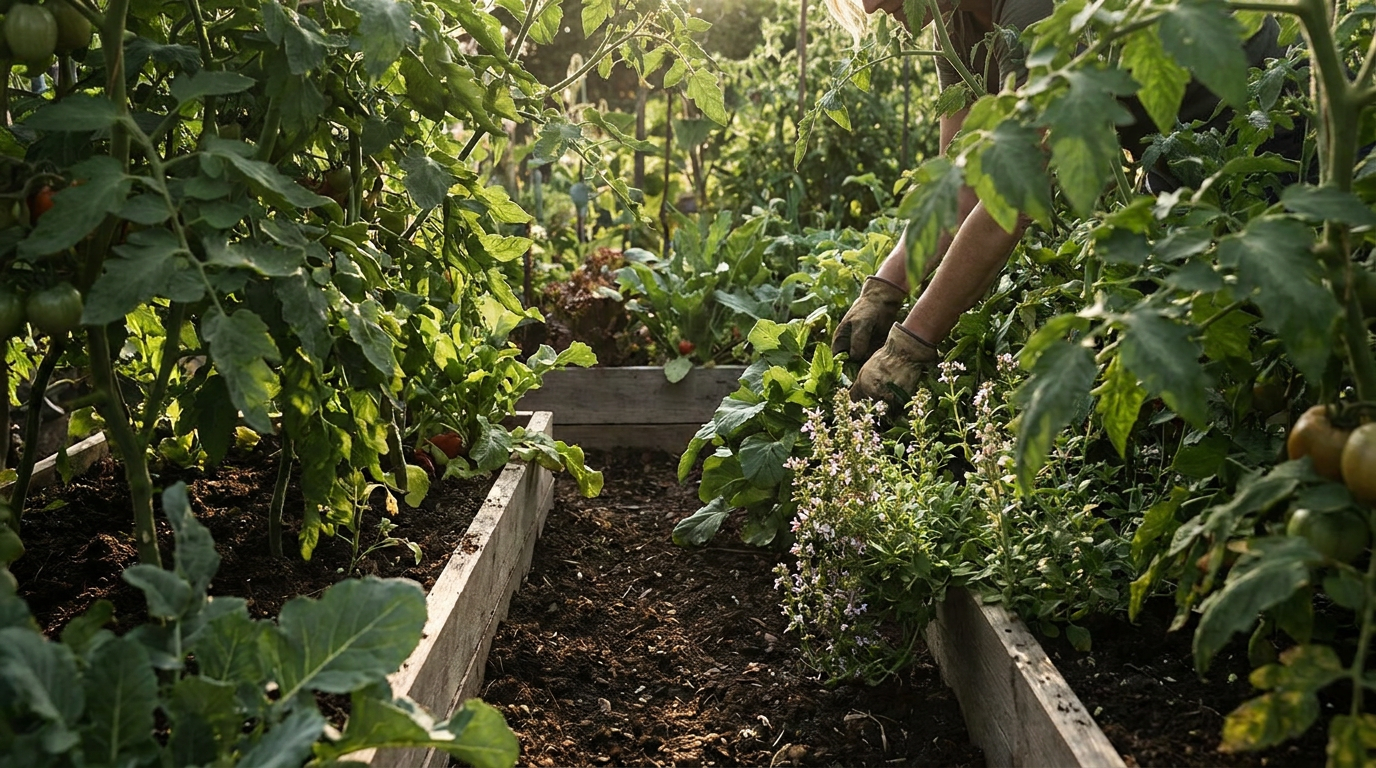
- Regenerative Gardeners
- Advocate for zero soil disturbance to build organic matter and reduce labor.
- Soil Scientists
- Study the symbiotic relationships between plant roots and fungal networks.
- Traditional Cultivators
- Believe mechanical tilling is sometimes necessary for compacted or poor soils.
What's not represented
- · Commercial fertilizer manufacturers
- · Large-scale industrial farmers
Why this matters
Adopting no-dig practices can drastically reduce the physical labor of gardening while increasing crop yields and lowering water usage. On a larger scale, treating soil as a living ecosystem turns backyards into active carbon sinks that help mitigate climate change.
Key points
- No-dig gardening involves leaving the soil undisturbed and building planting beds from the top down using compost and organic matter.
- Traditional tilling destroys delicate underground fungal networks and releases stored carbon dioxide into the atmosphere.
- Mycorrhizal fungi act as a secondary root system, mining the soil for water and nutrients in exchange for plant sugars.
- Intact soil microbiomes significantly improve a garden's drought tolerance and natural resistance to pests and diseases.
- While establishing a no-dig bed requires an initial investment in compost, it drastically reduces weeding, watering, and physical labor over time.
Spring arrives, and millions of gardeners fire up their rototillers or grab their spades, ready to turn the earth. For generations, digging has been synonymous with gardening, viewed as the essential first step to prepare the ground for a new season of growth.[6]
But a quiet revolution is taking root in backyards and community plots. Known as "no-dig" or regenerative gardening, this approach asks growers to put down their shovels and leave the soil entirely undisturbed.[5][7]
The core premise is simple but scientifically profound: healthy soil is not just dirt, but a complex, living ecosystem. By not digging, gardeners preserve the delicate, microscopic networks that naturally feed and protect plants.[4]
To understand why no-dig works, one must look at the soil microbiome. A single teaspoon of healthy soil contains billions of microorganisms, including bacteria, nematodes, and, crucially, fungi.[2]
The star players in this underground ecosystem are mycorrhizal fungi. The term comes from the Greek words for fungus ("myco") and root ("rhiza"), describing a symbiotic relationship that dates back roughly 500 million years to when plants first moved from water to land.[2][3]

These fungi attach to plant roots and extend microscopic, thread-like filaments called hyphae far into the surrounding soil. This network, known as the mycelium, effectively acts as a massive secondary root system for the plant.[1][3]
The relationship is a perfect biological trade. Plants photosynthesize, turning sunlight and carbon dioxide into sugars, which they pump down into their roots to feed the fungi. In exchange, the fungi "mine" the soil for water and essential nutrients like phosphorus, delivering them back to the plant.[1][3]
This fungal network is so extensive that it can cover up to 700 times more soil volume than the plant's roots alone. It even connects different plants together, allowing them to share resources in what scientists playfully call the "wood wide web."[3]
This fungal network is so extensive that it can cover up to 700 times more soil volume than the plant's roots alone.
Traditional digging and tilling physically slice through these delicate mycelial networks. When a rototiller churns the earth, it destroys the fungal infrastructure, forcing the soil microbiome to rebuild from scratch every season.[1][6]
Digging also exposes dormant weed seeds to the sunlight they need to germinate, creating more work for the gardener. Furthermore, turning the soil exposes organic matter to oxygen, which accelerates decomposition and releases stored carbon dioxide into the atmosphere.[4][6]
So, how does one garden without digging? The method relies on building soil from the top down, mimicking how nature builds soil on a forest floor through falling leaves and decaying plant matter.[4][7]

A common technique is "sheet mulching." Gardeners lay down a biodegradable weed barrier, such as plain cardboard, directly over grass or existing weeds. They then top the cardboard with a thick layer of compost—usually four to six inches deep.[6]
Seeds or seedlings are planted directly into this compost layer. Over the course of a few months, the cardboard breaks down, smothering the weeds below while allowing the new plants' roots to penetrate the native soil.[6]
Instead of mechanical tilling, no-dig gardeners rely on biological tilling. Earthworms and beetles move up and down through the soil profile, naturally aerating the earth and mixing the top-dressed compost into the lower layers.[5]
The benefits of this hands-off approach are well-documented. Because the fungal networks remain intact, plants are significantly more resilient to drought. The hyphae can access microscopic pockets of moisture that plant roots cannot reach.[1][3]

Additionally, undisturbed soil acts as a powerful carbon sink. Regenerative practices lock carbon underground in the form of organic matter, rather than releasing it through mechanical agitation.[4][5]
While the no-dig method is highly effective, it does require a shift in mindset. It can be expensive or labor-intensive to source the initial volume of compost needed to establish the beds.[6]
Viewpoints in depth
Regenerative Advocates
Argue that working with nature's existing systems is more efficient and sustainable.
Proponents of the no-dig method emphasize that nature never tills its own soil. By mimicking the natural accumulation of organic matter found on forest floors, gardeners can drastically reduce their physical labor and water usage. They view the soil not as an inert medium to hold plants, but as a living organism that requires feeding and protection from mechanical destruction.
Soil Microbiologists
Focus on the complex, microscopic ecosystems that drive plant health.
Scientists studying the soil microbiome point to the vast, untapped potential of mycorrhizal networks. They argue that modern agriculture's reliance on synthetic fertilizers has made plants 'lazy,' bypassing the need for symbiotic relationships. By restoring these fungal webs, microbiologists believe we can naturally breed plants that are more resilient to pests, diseases, and extreme weather events.
Traditional Cultivators
Maintain that some soils require mechanical intervention to become productive.
While acknowledging the benefits of organic matter, some traditional horticulturists point out the practical limitations of strict no-dig rules. They argue that severely compacted urban soils, heavy clay, or land devoid of organic life often require initial mechanical aeration—like double-digging or broadforking—to allow water and roots to penetrate before a no-dig system can be successfully established.
What we don't know
- How long it takes for a fully mature mycorrhizal network to re-establish in soil that has been heavily tilled for decades.
- The exact mechanisms by which different plant species use fungal networks to communicate chemical warning signals about pests.
- Whether commercial mycorrhizal inoculants are as effective as native, locally adapted fungal strains in the long term.
Key terms
- Mycorrhizal fungi
- Beneficial fungi that form a symbiotic relationship with plant roots, exchanging soil nutrients and water for plant-produced sugars.
- Hyphae
- Microscopic, thread-like filaments created by fungi that spread through the soil to absorb water and nutrients.
- Mycelium
- The extensive, root-like network formed by a mass of branching hyphae beneath the soil surface.
- Sheet mulching
- A no-dig technique that involves layering cardboard or newspaper over existing vegetation, followed by compost, to create a new planting bed.
- Soil microbiome
- The community of microorganisms, including bacteria, fungi, and nematodes, that live in the soil and interact with plant roots.
Frequently asked
Can I start a no-dig garden on top of grass?
Yes. The most common method is 'sheet mulching,' where you lay cardboard directly over the grass to smother it, and then add a thick layer of compost on top.
Do I need to buy mycorrhizal fungi powder?
Usually not. If you use compost and avoid tilling, native fungi will naturally colonize the soil. However, commercial powders can help kickstart the process in heavily degraded or sterilized dirt.
How do I deal with weeds without digging?
No-dig gardens typically have fewer weeds because dormant seeds aren't brought to the surface. The weeds that do appear are easily pulled by hand from the loose, friable compost layer.
Is no-dig gardening expensive?
The initial setup can be costly if you need to purchase large volumes of compost to create the first beds. However, long-term costs drop significantly as you require less water, fertilizer, and labor.
Sources
Source coverage
7 outlets
3 viewpoints surfaced







[1]Royal Horticultural SocietySoil Scientists
Mycorrhizal fungi
Read on Royal Horticultural Society →[2]National Botanic Garden of WalesSoil Scientists
Growing with fungi
Read on National Botanic Garden of Wales →[3]BBC Gardeners' WorldTraditional Cultivators
What is mycorrhizal fungi and how does it work?
Read on BBC Gardeners' World →[4]Noble Research InstituteTraditional Cultivators
Soil Health Principles
Read on Noble Research Institute →[5]Center for Environmental HealthRegenerative Gardeners
What does “Regenerative” mean?
Read on Center for Environmental Health →[6]Rural SproutRegenerative Gardeners
Our Journey with No-Dig Gardening
Read on Rural Sprout →[7]Factlen Editorial TeamSoil Scientists
Synthesis by Factlen editorial team
Read on Factlen Editorial Team →

Every angle. Every day.
Get home stories with full source coverage and perspective breakdowns delivered to your inbox.