
The Biological Engineering Behind the 2026 World Cup's Perfect Pitches
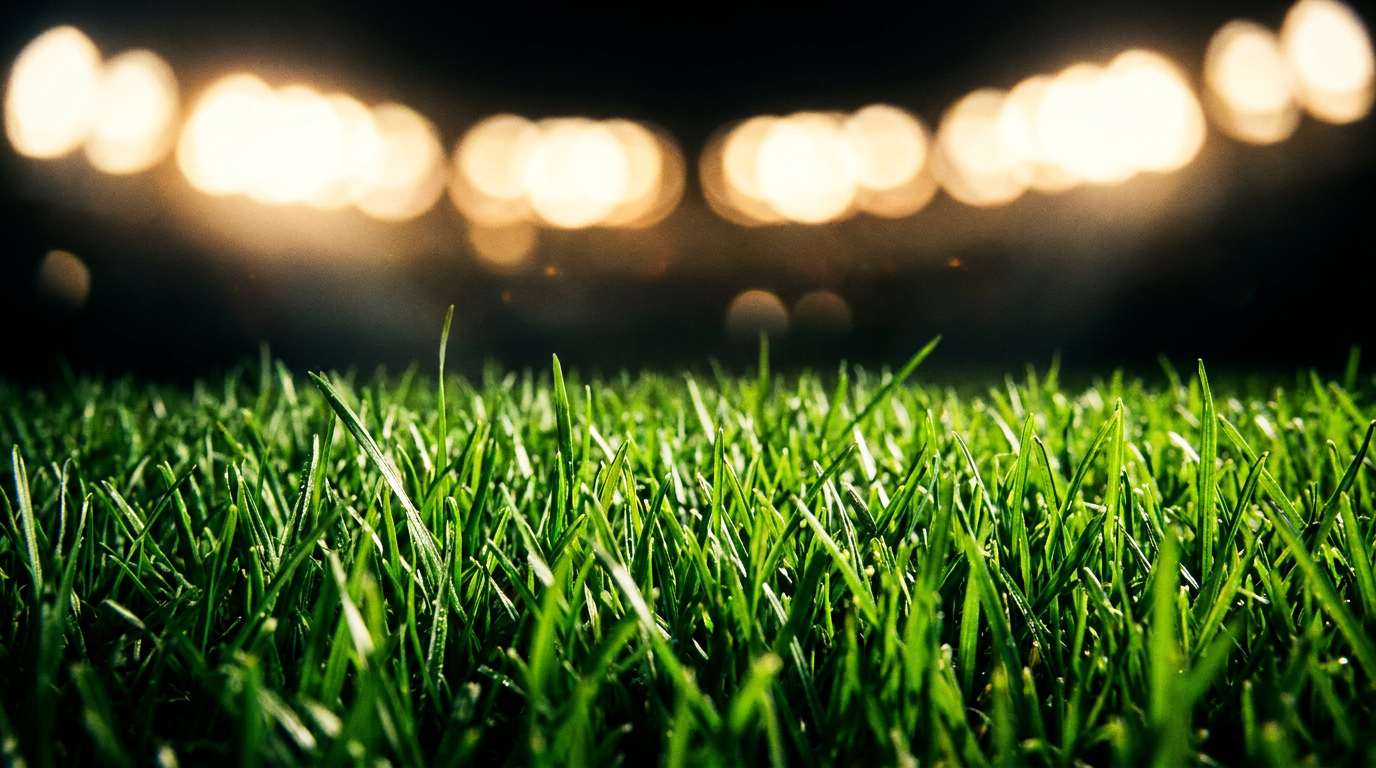
To deliver identical natural grass across 16 diverse stadiums—including five indoor domes—scientists executed the largest sports agronomy project in history.
By Factlen Editorial Team
- Sports Agronomists
- Focuses on the biological consistency, turf survival in extreme indoor conditions, and the scientific execution of the project.
- Player Welfare Advocates
- Focuses on injury prevention, biomechanical safety, and the necessity of natural grass over artificial turf.
- Tournament Organizers
- Focuses on the logistical scale, ensuring identical playing conditions across 16 venues, and delivering a flawless global broadcast.
What's not represented
- · Environmental advocates concerned about the carbon footprint of massive indoor grow-light arrays
- · Local sod farmers who scaled their operations to meet FIFA's exact specifications
Why this matters
The 2026 World Cup is the most-watched event in human history. A single slip on a subpar pitch can end a career or alter a nation's fate, making the biological consistency of the grass a critical, multi-million-dollar scientific endeavor.
Key points
- FIFA mandated natural grass for all 104 matches of the 2026 World Cup, including five domed stadiums.
- The University of Tennessee and Michigan State University led a five-year research project to engineer the pitches.
- Pitches feature a 12-inch sand root zone, vacuum ventilation, and hybrid synthetic stitching for stability.
- Indoor stadiums utilize massive LED grow-light arrays to keep the imported sod alive without sunlight.
- Biomechanical simulators were used to ensure the turf provides safe traction and identical ball roll across all climates.
When the 2026 FIFA World Cup kicked off on June 11, billions of viewers tuned in to watch the world's greatest athletes. But beneath the cleats of every player lies an invisible, multi-million-dollar scientific triumph: the grass itself.[3][7]
FIFA's mandate for the expanded 104-match tournament was uncompromising. Every game, across 16 stadiums in three countries and multiple climate zones, had to be played on pristine natural grass to ensure peak performance and minimize injuries.[5]
The biological and engineering challenge was unprecedented. Five of the host venues are fully domed stadiums where natural grass cannot innately survive, and the tournament takes place during the searing heat of a North American summer.[4]

To solve this, FIFA enlisted two of the world's premier turfgrass research institutions: the University of Tennessee (UT) and Michigan State University (MSU). Led by UT's John Sorochan and MSU's Trey Rogers, the team spent five years engineering the perfect pitch.[1][2]
The core biological claim driving the project is that playing surfaces must offer identical biomechanical responses regardless of geography. A ball must bounce and roll with the exact same physics in the high altitude of Mexico City as it does in coastal Boston.[6]
Evidence from the universities' research facilities demonstrates how this consistency is achieved. The agronomy teams developed specific "recipes" of Kentucky bluegrass, perennial ryegrass, and Bermudagrass tailored to each region's climate, yet managed to identical heights and densities.[5][6]
However, the grass species is only the surface layer. The true engineering marvel lies underground. The pitches are constructed on a foundation of gravel and a vacuum ventilation system, topped with exactly 12 inches (30 centimeters) of engineered sand.[1][6]

The pitches are constructed on a foundation of gravel and a vacuum ventilation system, topped with exactly 12 inches (30 centimeters) of engineered sand.
To ensure the grass does not tear under the immense shear force of elite athletes, the natural sod is reinforced with synthetic fibers. This hybrid stitching stabilizes the root zone, allowing the pitch to perform consistently across multiple high-intensity matches.[1][5]
The most daunting obstacle was the five domed stadiums, such as BC Place in Vancouver. Grass requires sunlight, which domes block. The agronomy teams had to replicate the sun and wind indoors.[1][4]
Researchers constructed state-of-the-art shade houses and asphalt test pads to simulate stadium floors. They deployed massive arrays of LED grow lights and precision irrigation systems to keep the imported sod alive and actively recovering between matches.[2][3]

Player safety heavily influenced the turf's biological design. Using a biomechanical simulator known as the fLEX Device, scientists replicated the exact foot strikes, accelerations, and decelerations of soccer players to measure traction and joint stress.[2]
The logistical execution required military precision. In the weeks leading up to the June 11 kickoff, sod grown on plastic at specialized farms was harvested and transported via refrigerated trucks to stadiums, some located hours away.[6]
Because the sod was grown on plastic, its root system remained intact and dense, allowing it to be laid down like a massive living carpet over the prepared sand bases just in time for the opening ceremonies.[5][6]

How we got here
1994
MSU researchers pioneer the first portable indoor natural grass system for the World Cup in Detroit.
2021
FIFA partners with the University of Tennessee and Michigan State University to begin R&D for the 2026 tournament.
April 2024
UT hosts the first FIFA Pitch Research Field Day, bringing together pitch managers from all 16 host stadiums.
May 2026
Sod grown on plastic is harvested and shipped via refrigerated trucks to stadiums across North America.
June 11, 2026
The 2026 FIFA World Cup kicks off on the newly engineered natural grass pitches.
Viewpoints in depth
Sports Agronomists
Focuses on the biological consistency and the scientific execution of the project.
For the researchers at the University of Tennessee and Michigan State University, the World Cup is the ultimate test of modern agronomy. Their primary concern is ensuring that the biological systems they designed—from the specific cultivars of Bermudagrass to the 12-inch sand root zones—function perfectly under extreme stress. They argue that with the right combination of LED lighting, vacuum ventilation, and hybrid stitching, natural grass can be sustained in any environment, setting a new standard for stadium infrastructure worldwide.
Player Welfare Advocates
Focuses on injury prevention and the necessity of natural grass over artificial turf.
Player unions and sports biomechanists have long campaigned against artificial turf, citing higher rates of non-contact joint injuries and severe turf burns. From their perspective, the multi-million-dollar investment in natural grass is a non-negotiable requirement for player safety. They point to data from the fLEX Device testing, which shows that natural grass reinforced with hybrid fibers provides the optimal balance of traction and release, protecting athletes' knees and ankles during high-speed decelerations.
Tournament Organizers
Focuses on the logistical scale and delivering a flawless global broadcast.
For FIFA and local stadium operators, the pitch is the stage for the most-watched event in history. Their priority is logistical reliability and aesthetic perfection. They must coordinate the transportation of refrigerated sod across thousands of miles and ensure that the grass looks vibrant on 4K television broadcasts. While they rely on the agronomists for the science, their ultimate metric for success is a tournament free of surface-related controversies or match delays.
What we don't know
- Whether the indoor pitches will maintain their structural integrity through the later knockout stages of the tournament.
- The total energy expenditure required to power the LED grow lights and vacuum ventilation systems across the five domed stadiums.
Key terms
- Hybrid turf
- Natural grass reinforced with synthetic fibers stitched into the root zone to prevent the surface from tearing under heavy use.
- Agronomy
- The science of soil management and crop production, applied in this context to the engineering of high-performance sports turf.
- fLEX Device
- A biomechanical testing machine that simulates the forces of an athlete's foot strike to measure turf safety and traction.
- Root zone
- The engineered layer of sand and nutrients beneath the grass where roots establish themselves and draw moisture.
Frequently asked
Why did FIFA mandate natural grass for all stadiums?
Players strongly prefer natural grass due to lower injury risks and predictable ball behavior. FIFA requires it to ensure the highest standard of safety and play for the World Cup.
How is grass kept alive inside domed stadiums?
Agronomists use massive arrays of LED grow lights, specialized vacuum ventilation systems, and precisely controlled irrigation to replicate sunlight and wind indoors.
What happens to the engineered pitches after the World Cup?
In many stadiums, the shallow-stitched sod will be removed at the end of the tournament to prepare the venues for the upcoming NFL season or other events.
Sources
Source coverage
7 outlets
3 viewpoints surfaced







[1]University of TennesseeSports Agronomists
One Team Beneath the Game: The Collaboration Powering World Cup 2026
Read on University of Tennessee →[2]Michigan State UniversitySports Agronomists
MSU turfgrass takes center stage at FIFA World Cup 2026
Read on Michigan State University →[3]FIFATournament Organizers
FIFA Pitch Research Project in Tennessee striving to create the perfect pitches for 2026
Read on FIFA →[4]Sports Business JournalPlayer Welfare Advocates
Power Players: FIFA World Cup 2026 — John Sorochan, University of Tennessee
Read on Sports Business Journal →[5]GCM OnlinePlayer Welfare Advocates
World Cup 2026: A showcase for natural grass
Read on GCM Online →[6]Bridge MichiganSports Agronomists
Michigan State grows grass science for FIFA World Cup
Read on Bridge Michigan →[7]Factlen Editorial TeamTournament Organizers
Synthesis by Factlen editorial team
Read on Factlen Editorial Team →

Every angle. Every day.
Get science stories with full source coverage and perspective breakdowns delivered to your inbox.